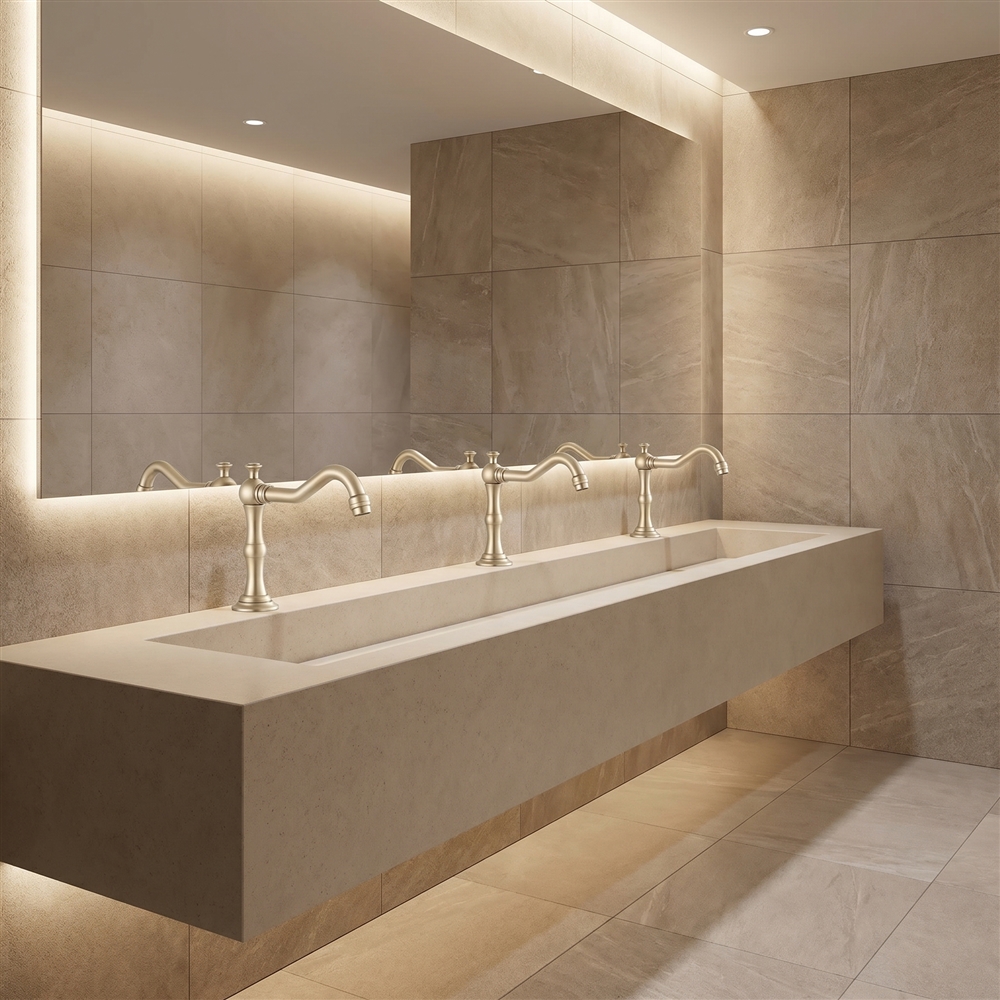
BathSelect ADA-Compliant Touchless Faucets for Public Buildings
Public airport, school, hospital, and office restroom facilities must meet three key goals: accessibility, sanitation, and efficiency. Meeting those goals begins with fixtures that are accessible to everyone, even those with limited mobility, minimizing water use and germ transfer. ADA-accessible touchless sensor faucets such as BathSelect’s touchless line of products are designed to meet this need.
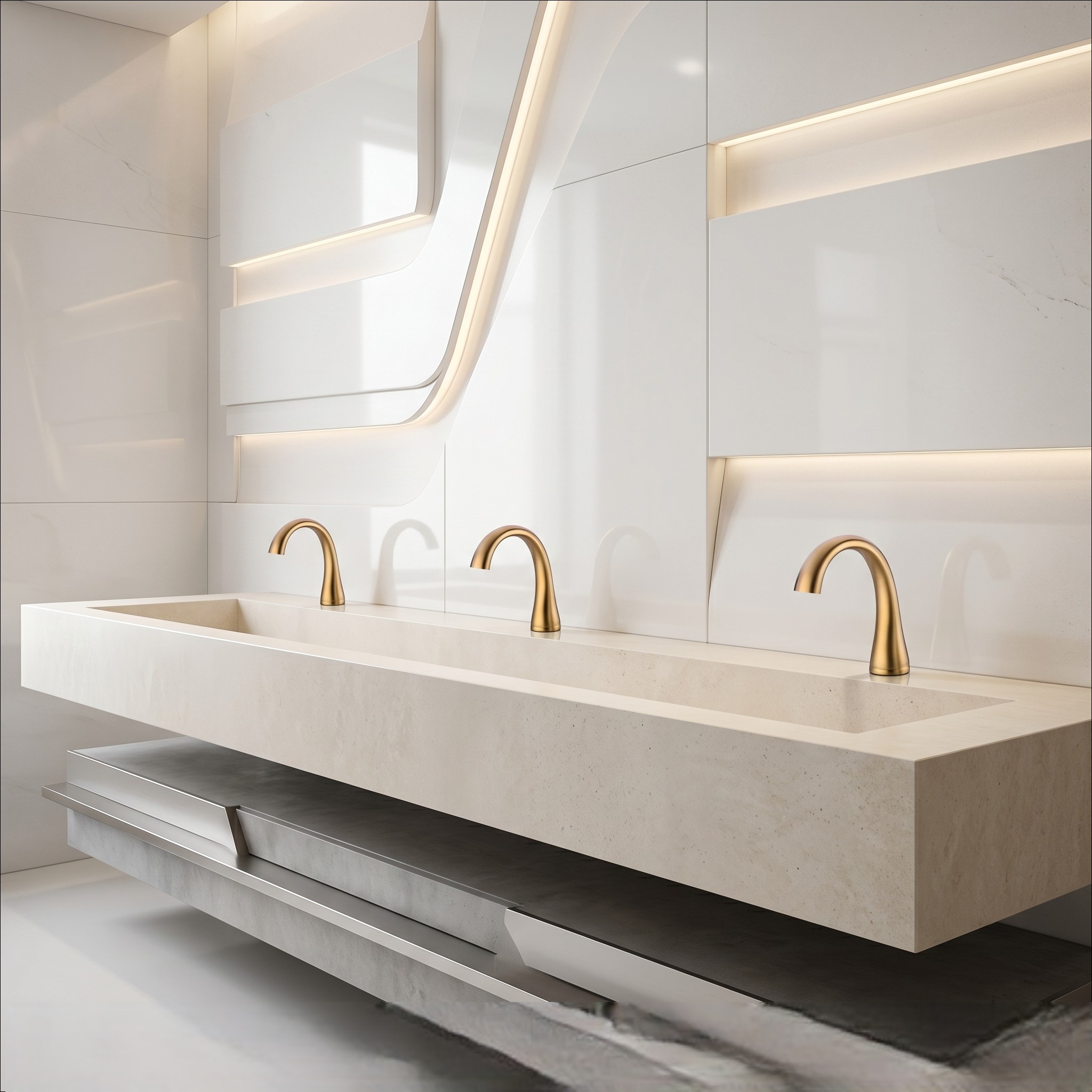
Why ADA Compliance and Touchless Design are Important
Enabling it with functional components
Traditional faucet handles can be a hindrance. Rotating knobs or turning handles is often a challenge for individuals with arthritis, diminished grip strength, or other mobility limitations. The ADA Standards for Accessible Design mandate operable parts, like faucet controls, to be usable with one hand, not to need tight grasping, pinching, or twisting, and not to take more than five pounds of force. According to U.S. Access Board guidelines , sensor faucets meet these mandates when installed correctly because they do not involve gripping or twisting.
The hygiene advantage of touchless operation
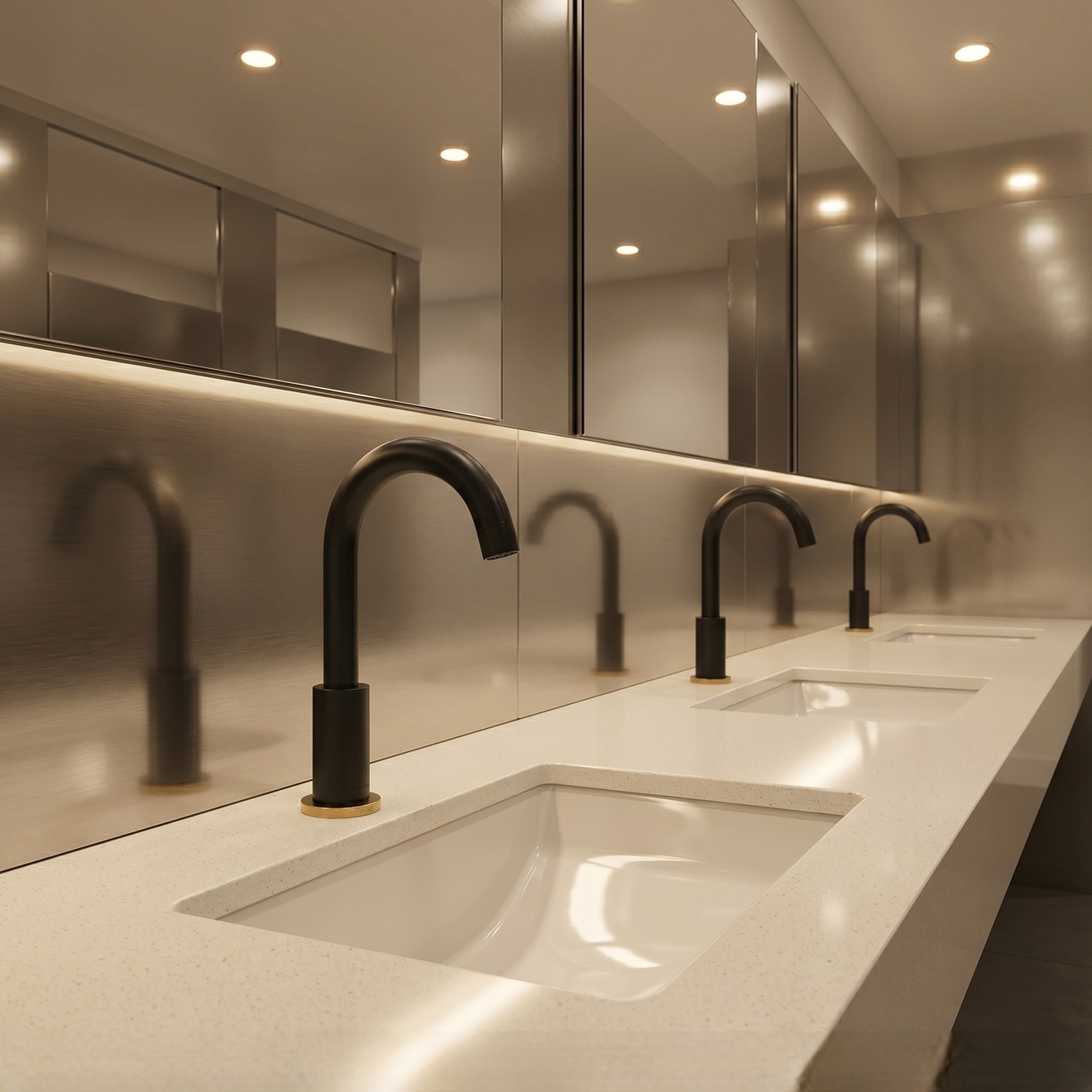
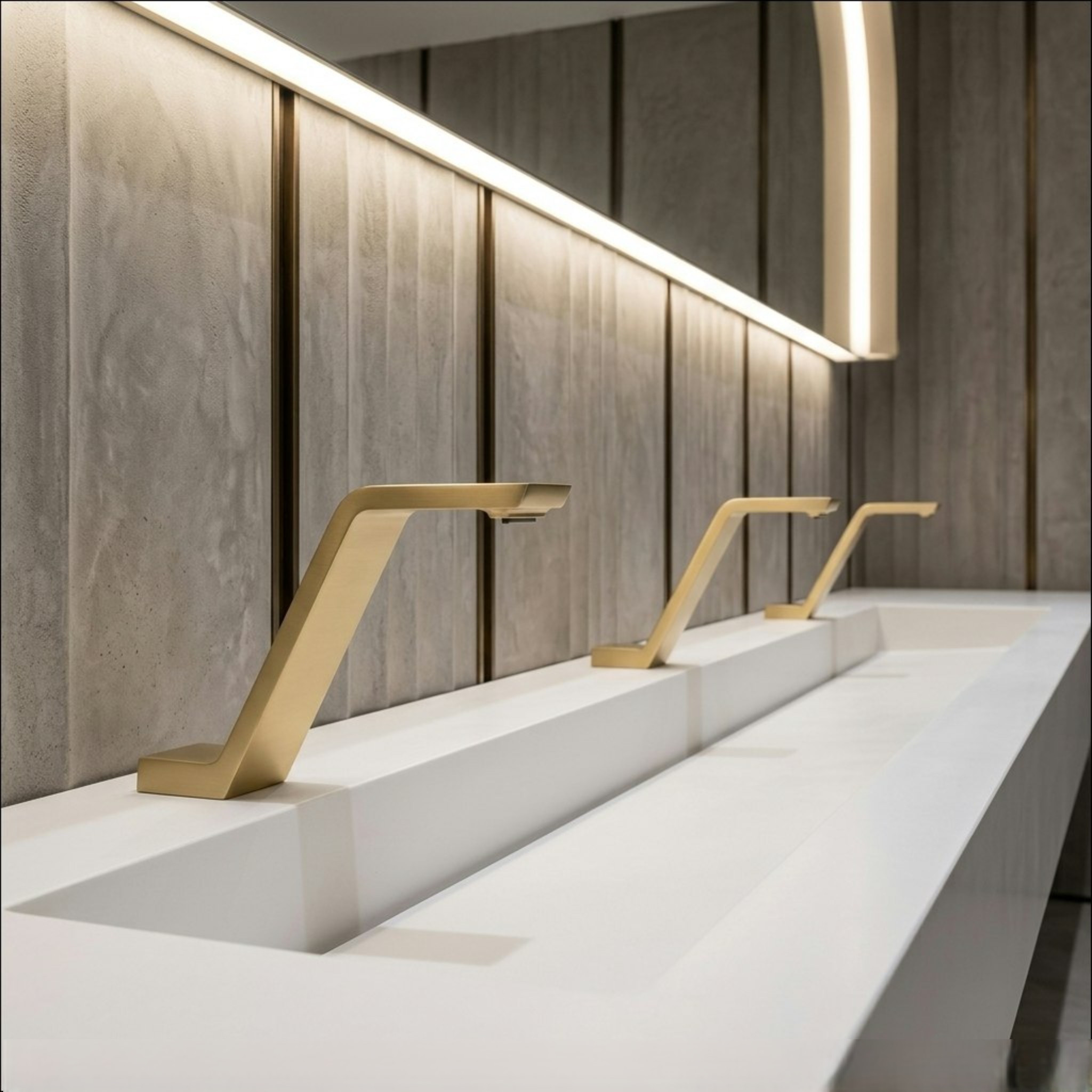
Aside from accessibility, touchless faucets also have a role in public health. The CDC lists handwashing as one of the best ways of preventing disease transmission. Traditional faucets, though, pose a paradox: humans wash their hands, only to touch a grimy handle afterwards. A touchless sensor faucet eliminates this final point of contact, improving compliance and hygiene in busy restrooms.
ADA Standards in Sinks and Lavatories
Section 309: Single-handed operation of faucets
Section 309 of the ADA states that faucet controls must be single-handed and not necessitate excessive effort. Sensor faucets inherently meet these requirements since they are turned on by the mere action and not by physical clasp or turning.

Section 606: Layout of lavatory
ADA Section 606 deals with the lavatory as a whole. The Access Board guidelines for lavatories require that the rim or counter shall not be more than 34 inches above the floor, with forward approach clearance and adequate knee and toe space. Exposed pipes should be insulated or otherwise guarded. Water shall flow for a minimum of ten seconds when a metering faucet is used. Sensor faucets circumvent this problem by providing water as long as hands are sensed. The Whole Building Design Guide quick chart is a useful visual aid.
A Note on ADA “Certification”
It should be noted that there is no formal “ADA certification” for faucets. Compliance is based on both a set of product characteristics and installation conditions. A well-designed faucet will remain noncompliant if installed at the improper height or coordinated with inaccessible trim pieces.
| ADA Coordination Area | Article Requirement | Design Consideration |
|---|---|---|
| Operable Parts | Single-handed operation without tight grasping, pinching, or twisting | Touchless controls remove the need to physically operate a faucet handle |
| Lavatory Height | Rim or counter not more than 34 inches above the floor | Coordinate fixture, counter, and basin before installation |
| Approach | Forward approach with knee and toe clearance | Coordinate cabinetry, plumbing, and accessories |
| Metering Faucets | Water flows for a minimum of ten seconds | Sensor operation can continue while hands remain detected |
Hygiene and Sustainability Benefits of Touchless Faucets
Health benefit and risk reduction
The sanitary benefit of touchless faucets is especially significant in public places. A large body of research compiled by the CDC shows that washing hands the right way really cuts down on both stomach bugs and colds. Touchless faucets help even more because you walk away without touching the handle afterward.
Read More
However, some experts in hospitals and clinics have raised questions. They worry that germs could grow on the electronic components of these hands-free faucets. One Johns Hopkins study sounded the alarm, but infection-control specialists made clear that with routine flushing and upkeep, touchless faucets are still suitable. In non-healthcare facilities like schools or offices, the advantages of convenience and cleanliness plainly exceed the drawbacks.
Water and energy savings
From the environmental side, touchless faucets are also an improvement. The EPA WaterSense program specifies that faucets must be at least 20 percent more water-efficient than the baseline, according to ASME A112.18.1/CSA B125.1 testing . Most cities now have the requirement for public toilets to be up to a maximum of 0.5 gallons per minute at 60 psi, as cited in ICC plumbing codes.
Read More
BathSelect features 0.5 gpm and 1.0 gpm aerator models. Auto-shutoff technology eliminates wasted water when users leave the sink, and pressure-compensating aerators provide a consistent, comfortable flow no matter the building pressure. These advantages make touchless faucets perfect for projects seeking LEED certification or more comprehensive sustainability initiatives.
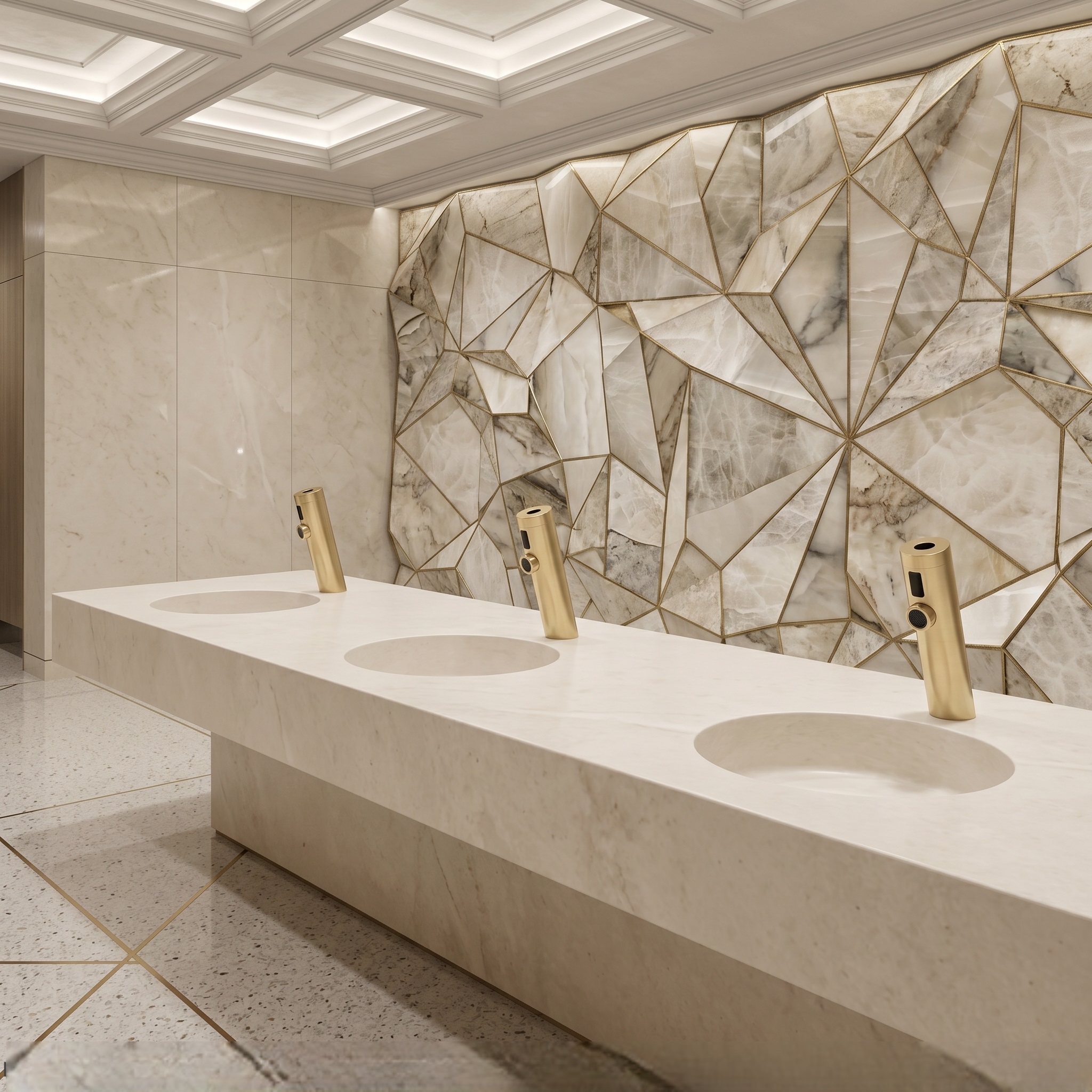
BathSelect’s ADA-Compliant Touchless Faucets
BathSelect has established a broad portfolio of ADA-compliant sensor faucets designed for use in public and commercial areas. Several models have adjustable sensing ranges to accommodate varied basin shapes, like this restroom faucet. Power flexibility is also a major benefit, with the availability of both AC and DC power, illustrated in the BathSelect automatic sensor faucet.
Read More
Another priority is durability. Items like the chrome commercial auto faucet utilize solid brass build and feature filters to safeguard solenoid valves. Water conservation is handled with flow rates as low as 0.5 gpm, included in products such as the faucet and soap dispenser set. For the bigger job with a need for coordinated appearance, BathSelect also offers entire faucet and soap dispenser sets, including public space ADA-compliant solutions.
BathSelect places a premium on ASME/CSA and NSF/ANSI 61 compliance so that water-contact parts are designed to potable water safety standards.

Adjustable Sensing
Several models have adjustable sensing ranges to accommodate varied basin shapes.
Power Flexibility
Both AC and DC power configurations are available within the BathSelect automatic sensor faucet portfolio.
Flow Control
Product configurations include water-conserving flow rates as low as 0.5 gpm.
Real-World Advice for Designers and Facilities Managers
Design considerations
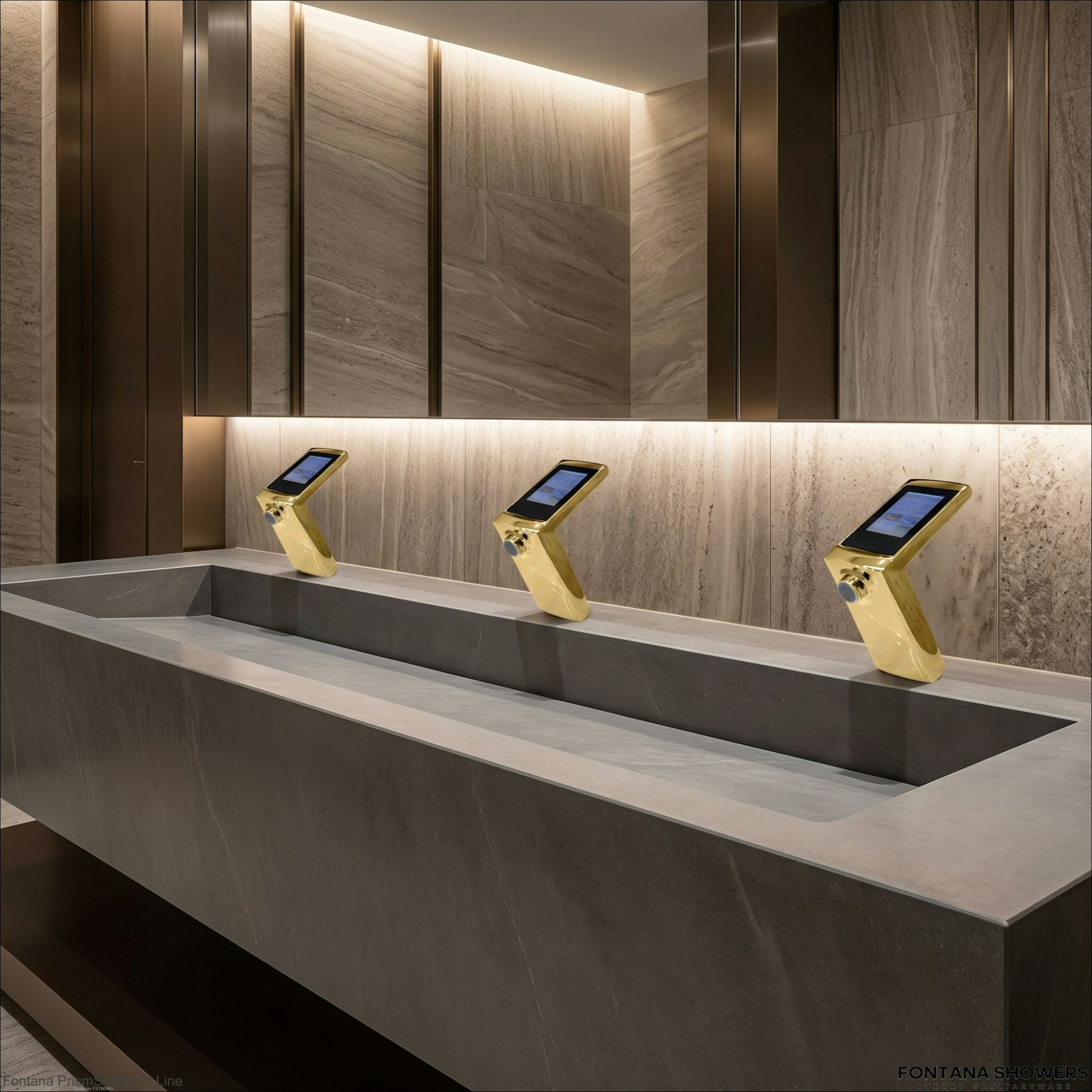
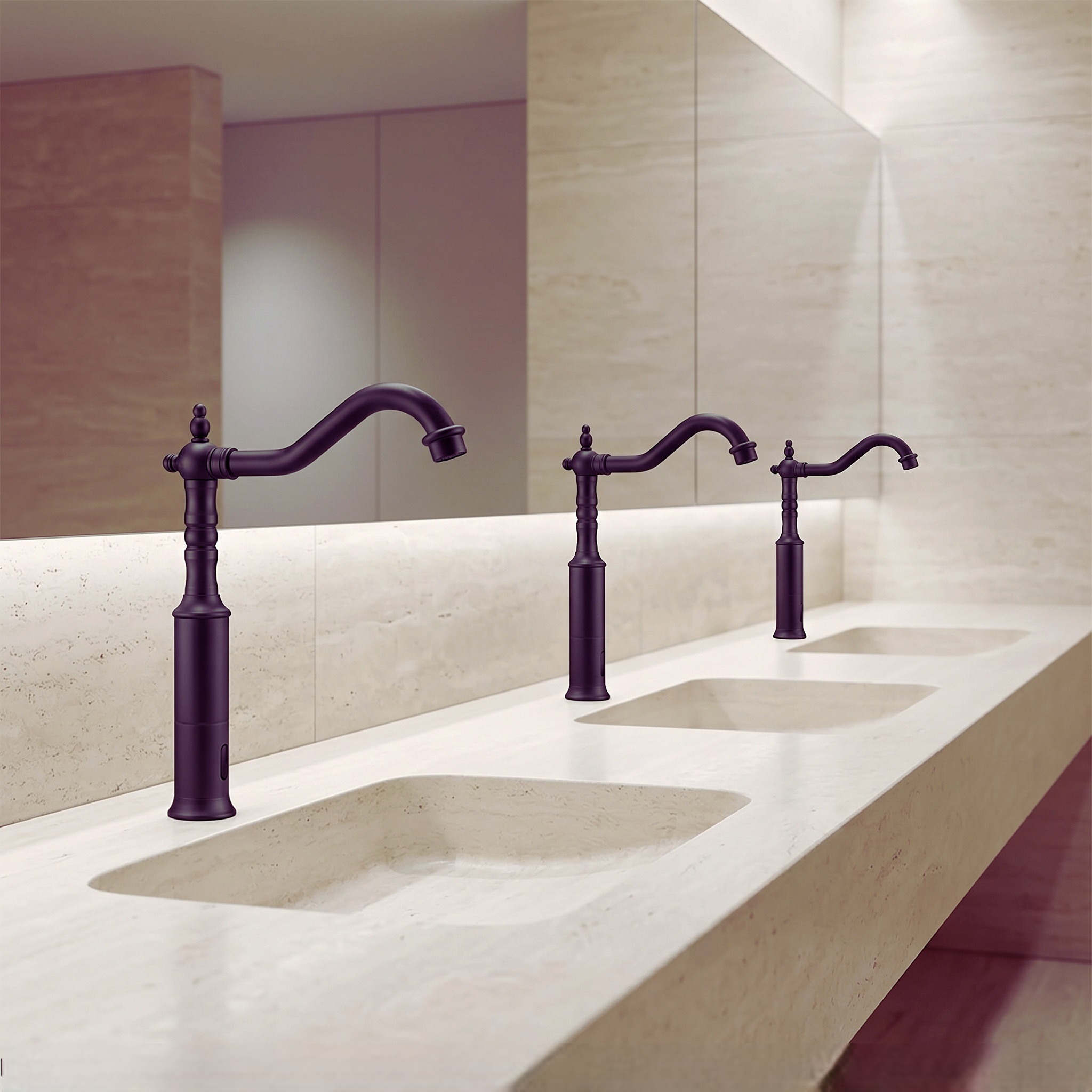
In detailing touchless faucets, success hinges on coordination of product and installation. Designers must ensure sinks are no more than 34 inches high, that there is a minimum of 30 inches of unobstructed forward approach, and that knee and toe clearance is to ADA §306 standards. Soap dispensers and hand dryers must be located in reach ranges so the entire handwashing process is within reach.
Maintenance and user experience
Maintenance planners need to schedule routine work such as flushing, cleaning strainers, and replacing batteries where appropriate. Placing signage showing CDC-recommended handwashing procedures enforces practices and adds to the benefit of touchless fixture installation.
Achieving compliance and sustainability
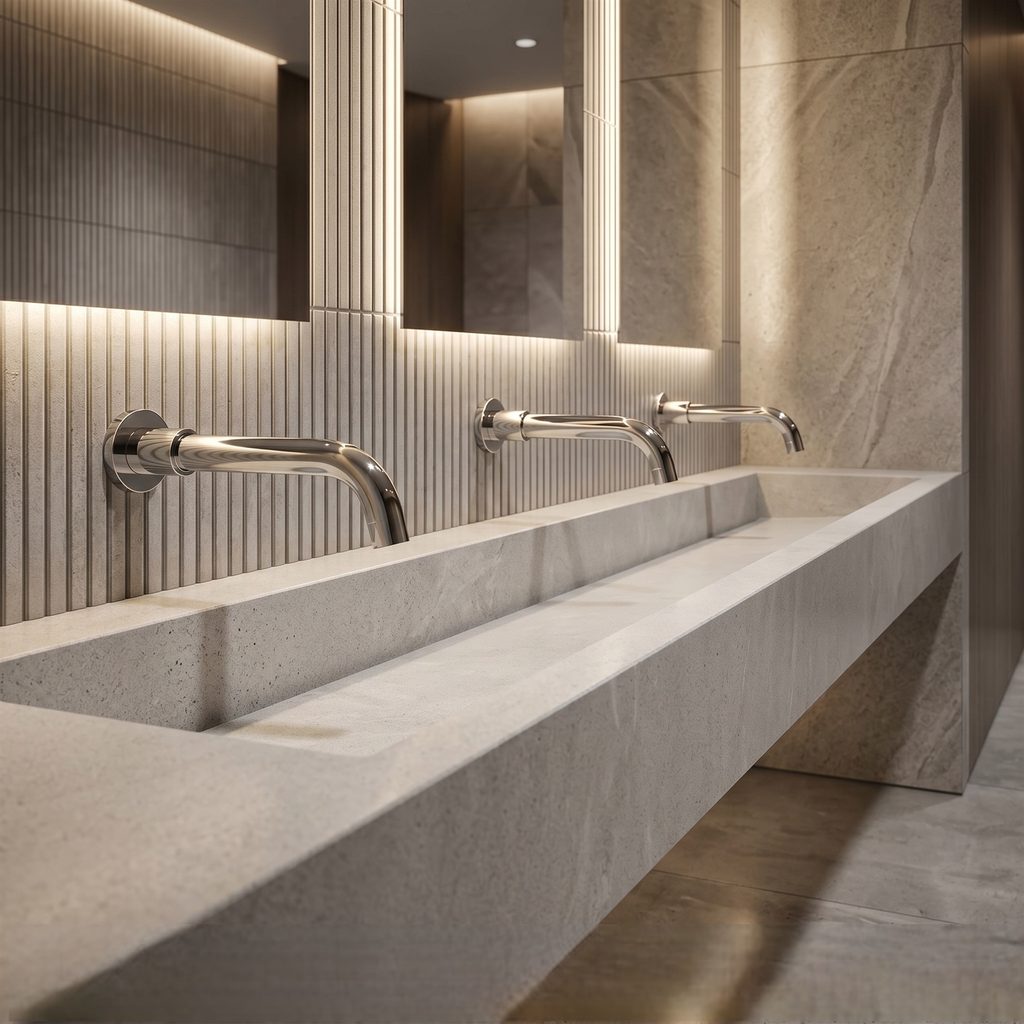
The optimal designs blend compliance and sustainability: compliance with ADA accessibility standards, conservation through WaterSense flow rates, and performance for years of heavy traffic. BathSelect’s portfolio accommodates all three.
Additional Specification Considerations for Public-Building Touchless Faucets
ADA coordination is only one part of a successful touchless faucet specification. Public-building projects also benefit from clearly documented sensor behavior, basin compatibility, power strategy, service access, commissioning requirements, and maintenance expectations. Addressing these items during design can reduce callbacks and helps the installed fixture perform as intended after occupancy.
Sensor type, detection zone, and basin coordination
Touchless performance depends on the relationship between the sensor, spout, basin geometry, finish reflectivity, and the position of the user’s hands. Infrared systems typically detect reflected light and therefore benefit from careful range adjustment and a clear optical path. Radar-based systems detect movement differently and may be useful where lighting, steam, or concealed sensor placement complicates optical sensing. The practical design question is not simply which technology is newer, but whether the sensing field is compatible with the selected sink and the expected user position. For a deeper technical comparison, see BathSelect Sensor Technology Explained: IR vs. Radar in Commercial Faucets .
During submittal review, architects and plumbing engineers should confirm the adjustable detection range, automatic calibration behavior if provided, maximum run time, shutoff delay, and any installation limits associated with reflective surfaces. These details are especially important for integrated countertops, shallow basins, dark solid-surface materials, and highly polished sinks where the sensing environment may differ from a standard lavatory installation.
Power strategy and service access
Power configuration should be treated as an architectural and MEP coordination item rather than a late procurement choice. Battery-powered faucets simplify some retrofit conditions, while hardwired or transformer-based systems can be preferable where facilities teams want centralized electrical coordination. Regardless of power type, the control box, solenoid, batteries, transformers, filters, stops, and cable connections must remain accessible after casework and countertops are installed. Service technicians should not need to remove fixed millwork or disturb finished surfaces to perform routine work.
A useful specification should state the required power source, acceptable backup strategy, cable routing, transformer location, battery access, and clearance for replacing service components. These requirements can be coordinated with the broader process described in How to Specify Touchless Faucets in Architectural Projects , which organizes touchless-faucet selection around performance, installation, documentation, and long-term maintenance.
Commissioning should verify the installed system
Touchless faucets should be commissioned at the actual lavatory rather than accepted solely on the basis of factory settings. A basic commissioning check can confirm that hands are detected where users naturally place them, the faucet stops promptly after hands leave the sensing zone, the selected aerator controls splash, and the fixture does not trigger from nearby movement. Water temperature, supply pressure, shutoff behavior, and visible leakage should also be checked. In multi-fixture restrooms, testing every representative basin type is more useful than assuming one successful installation proves all locations are coordinated.
The closeout package should identify replacement batteries or power components, aerator and strainer service procedures, sensor adjustment instructions, and the location of concealed control equipment. Establishing these records at turnover gives facility teams a repeatable maintenance baseline and reduces unnecessary replacement of complete faucets when a filter, power source, connection, or calibration setting is the actual cause of a performance problem.
Institutional specification checklist
- Confirm faucet mounting, spout reach, basin geometry, and backsplash clearance.
- Document sensor type, detection range, shutoff timing, and adjustment method.
- Coordinate AC, DC, battery, transformer, and service-access requirements.
- State the required flow rate and verify the selected outlet at project pressure.
- Coordinate tempered-water strategy and accessible shutoff or service locations.
- Require product data, installation instructions, and maintenance information at closeout.
Connect accessibility to the full plumbing specification
Accessibility language is strongest when it is coordinated with the fixture schedule, plumbing drawings, interior elevations, and the written specification. The faucet may satisfy operability requirements, yet the completed handwashing station can still fail the design intent if the basin is too high, knee clearance is obstructed, accessories are outside reach ranges, or service hardware intrudes into required clear space. The specification should therefore connect ADA criteria with measurable requirements for mounting, flow, materials, controls, and access.
For institutional work, the broader Architectural Specification Guide for Commercial Bath Faucets provides additional context on duty cycle, hydraulic performance, water efficiency, finish durability, potable-water documentation, temperature control, rough-in, submittals, and service planning. Using those criteria alongside accessibility requirements creates a more complete basis for design and procurement.
Plan for lifecycle consistency
Standardization can be valuable on campuses, airports, schools, healthcare facilities, and office portfolios with many restrooms. Limiting unnecessary variation in aerators, batteries, control boxes, filters, and service tools can simplify spare-parts inventories and technician training. Where multiple faucet finishes or form factors are used for architectural reasons, facilities teams can still benefit from consistent internal components and maintenance procedures.
Read More
Lifecycle planning should also consider cleaning protocols. Sensor windows, decorative finishes, aerators, and exposed trim need cleaning methods that do not damage coatings or interfere with sensing. Operations staff should know which components are intended for routine cleaning, which parts require periodic inspection, and which adjustments should be performed only during commissioning or service. This approach keeps accessibility, hygiene, water efficiency, and maintainability aligned throughout the useful life of the restroom rather than treating them as separate design objectives.
Conclusion
For public spaces, touchless faucets with ADA accessibility are a three-fold advantage: improved accessibility, more sanitation, and lower environmental impact. BathSelect’s sensing faucets, with adjustable sensitivity, dual power, and aerator water-saving, offer a good solution for schools, airports, offices, and health-related spaces.
Read More
Realized compliance requires integration outside the fixture. The faucet’s designed height, clear vertical clearance, and deliberate positioning of supportive accessories need to come together. Streamlined implementation of BathSelect’s ADA-compliant, touchless controls, in an intelligently engineered restroom configuration, enables architects and facility managers to design accessible, long-lasting, and sanitary restroom spaces, meeting the entire range of user needs with uncompromising reliability.