
 IR sensing
 ToF sensing
 Water quality
 Compliance durability
 ADA planning
 Design integrationIR sensingToF sensingWater qualityCompliance durabilityADA planningDesign integration
 Brand comparison
 Airport planning
 Control logic
 Water Quality planning
 Service strategy
 Standards alignmentBrand comparisonAirport planningControl logicWater Quality planningService strategyStandards alignment
About us
Commercial Bath Faucets is a resource for commercial faucets and touchless restroom fixtures.
Research Scope
We publish practical research, specification guidance, and field-informed insights on modern commercial bathroom faucet systems.
Our coverage evaluates design approaches, flow performance, sensor behavior, and long-term maintenance outcomes.
Project Integration Hub
Use our checklists and technical resources to make smarter restroom design decisions.
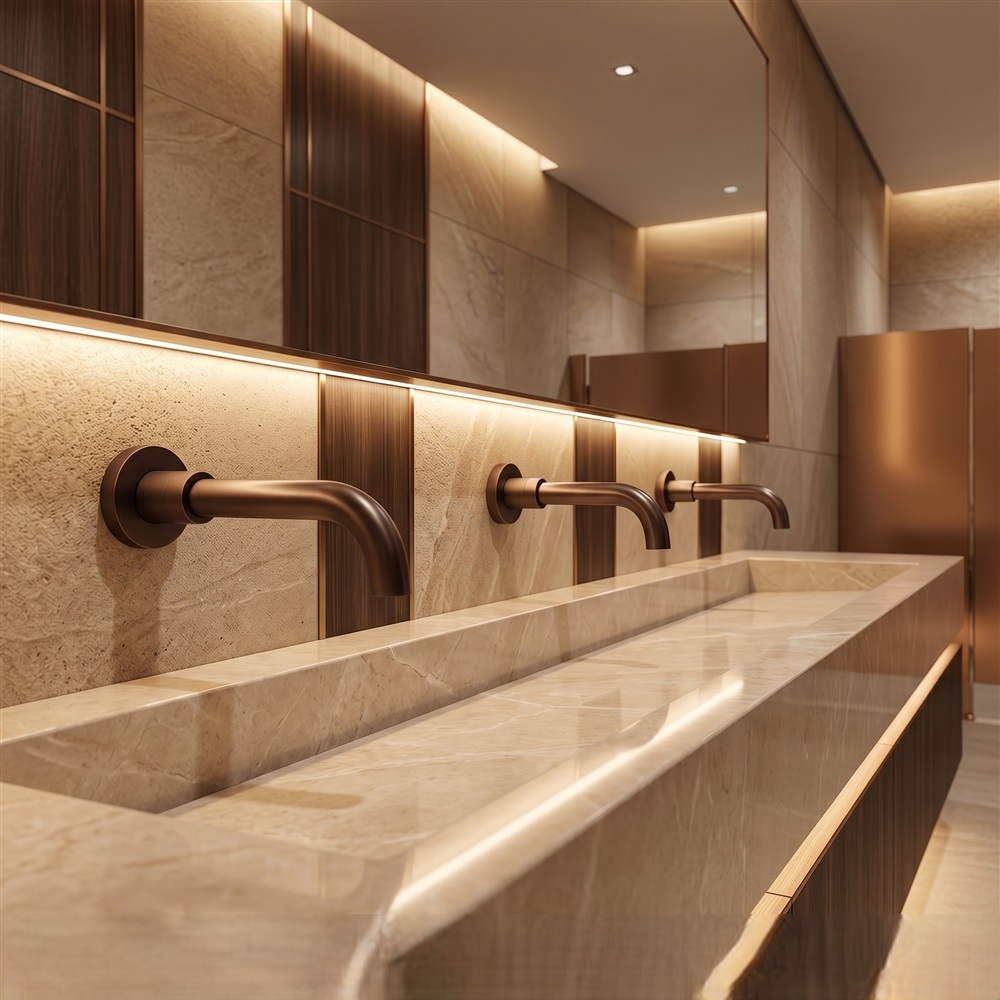

Commercial Faucet Planning
Coordinate sensor performance, basin geometry, power, and lifecycle service before the fixture schedule is locked.
Commercial faucet selection works best when the faucet is treated as part of a coordinated handwashing system rather than as a stand-alone trim item. Sensor behavior, water delivery, sink dimensions, power access, temperature control, cleaning procedures, and replacement-part strategy can all influence whether a restroom performs reliably after turnover.
Design the activation zone around real user behavior.
Touchless faucet performance depends on more than the sensor specification printed on a product sheet. The sensor must recognize hands where users naturally place them, remain stable around reflective surfaces, and stop water promptly when the user leaves the detection zone. Counter material, backsplash reflectivity, mirror position, sink depth, ambient lighting, and the relationship between the sensor window and the basin can all affect perceived reliability. During design review, teams should therefore examine the complete faucet-and-basin assembly instead of approving the faucet independently.
For high-traffic facilities, commissioning criteria should include activation consistency, false-trigger checks, shutoff timing, flow delivery, and behavior after a temporary loss of power. Adjustable detection settings can be useful, but they should not become a substitute for correct fixture geometry. A model that performs well in one lavatory may require different calibration when paired with a deeper or more reflective basin.
Coordinate before approval
- Sensor location and normal hand position.
- Spout reach, stream landing point, and splash control.
- Timeout behavior and nuisance activation risk.
- Accessible service access for the solenoid and electronics.
Match the faucet to the sink instead of specifying each in isolation.
Spout reach, outlet height, basin depth, drain location, counter thickness, and bowl shape determine where the water stream lands and how much splash reaches the user or surrounding counter. This coordination is especially important in public restrooms because repeated splash can increase cleaning demand, create visible mineral deposits, and leave counters wet during peak use. A low-flow outlet can support water-efficiency goals, but the final choice should still provide a comfortable handwashing pattern at the expected supply pressure.
Wall-mounted faucets require another level of rough-in control because the finished wall, carrier, basin, and outlet projection must align before installation. Deck-mounted faucets simplify some dimensional coordination, but they still require sufficient underside access for supplies, mixing components, control boxes, and future maintenance. Sink selection should also account for accessible knee and toe clearances where applicable, along with the reach needed to use soap and hand-drying equipment as part of one continuous handwashing sequence.
Check together on the drawings
- Spout projection relative to the basin centerline.
- Outlet height and expected splash envelope.
- Deck penetrations, counter thickness, and underside clearances.
- Drain, soap dispenser, and hand-dryer coordination.
Plan for the maintenance model that will exist after occupancy.
Battery, hardwired, and hybrid power strategies can all work in commercial restrooms, but they create different responsibilities for installers and facility teams. Battery systems may simplify retrofits where electrical work is difficult, while hardwired systems can reduce routine battery replacement in high-use buildings. Hybrid arrangements can provide useful continuity, provided the sequence of operation and replacement procedures are documented clearly. The best choice depends on traffic level, available electrical infrastructure, owner maintenance practices, and the accessibility of control components.
Lifecycle planning should also address filters, strainers, aerators, cartridges, solenoids, mixing valves, sensors, and replacement power components. When these parts are concealed behind inaccessible panels or crowded beneath a shallow sink, even a minor service task can become disruptive. Good specifications identify service zones, spare-part expectations, cleaning limitations, and commissioning responsibilities before procurement. This approach supports more predictable maintenance and can reduce the risk that a technically capable faucet becomes difficult to own over its service life.
Document for operations
- Power source, backup strategy, and battery type where applicable.
- Filter and aerator cleaning or replacement access.
- Solenoid, valve, and mixing component locations.
- Turnover requirements for settings, parts, and O&M information.
Commercial Restroom Applications
Compare fixture performance in demanding environments.
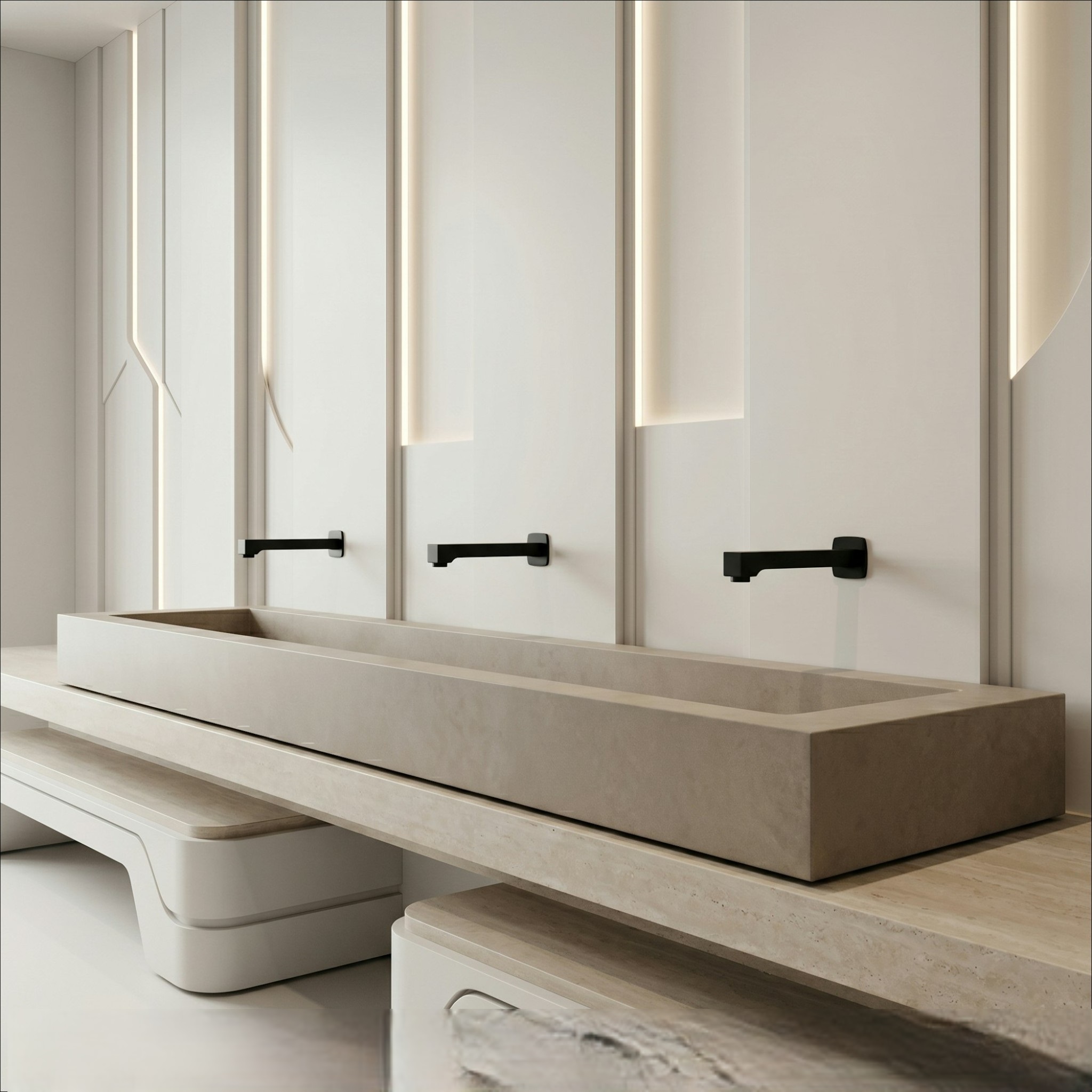
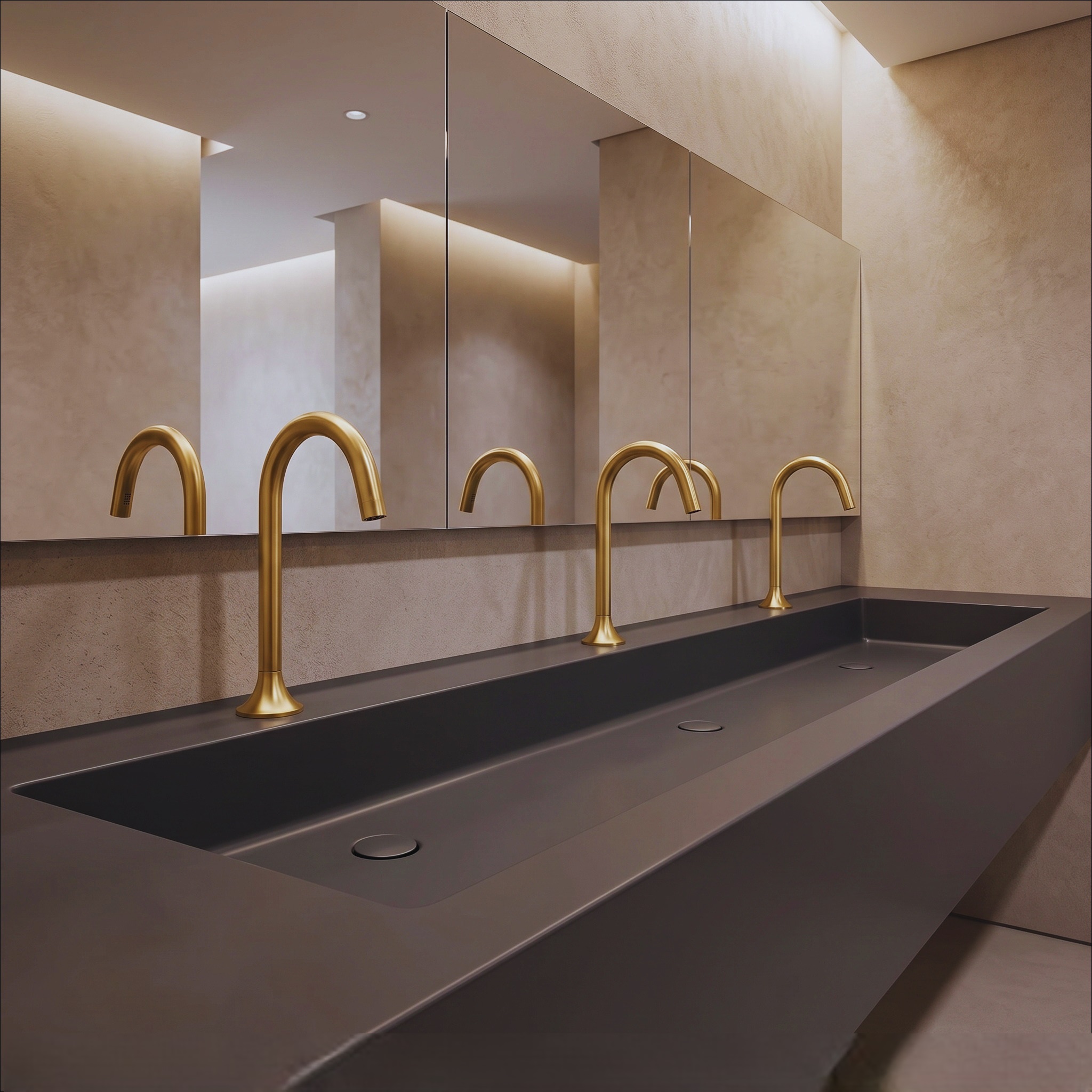
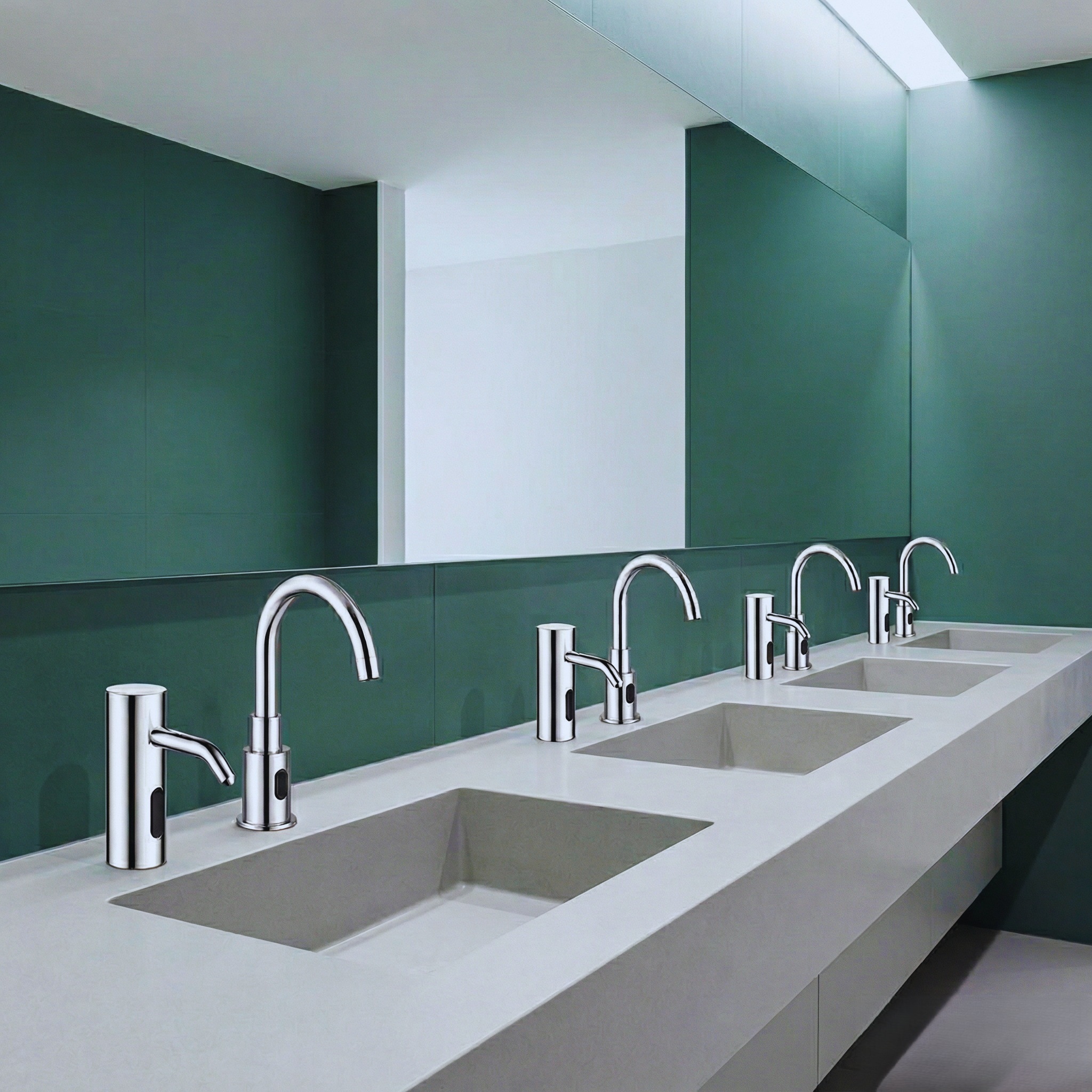
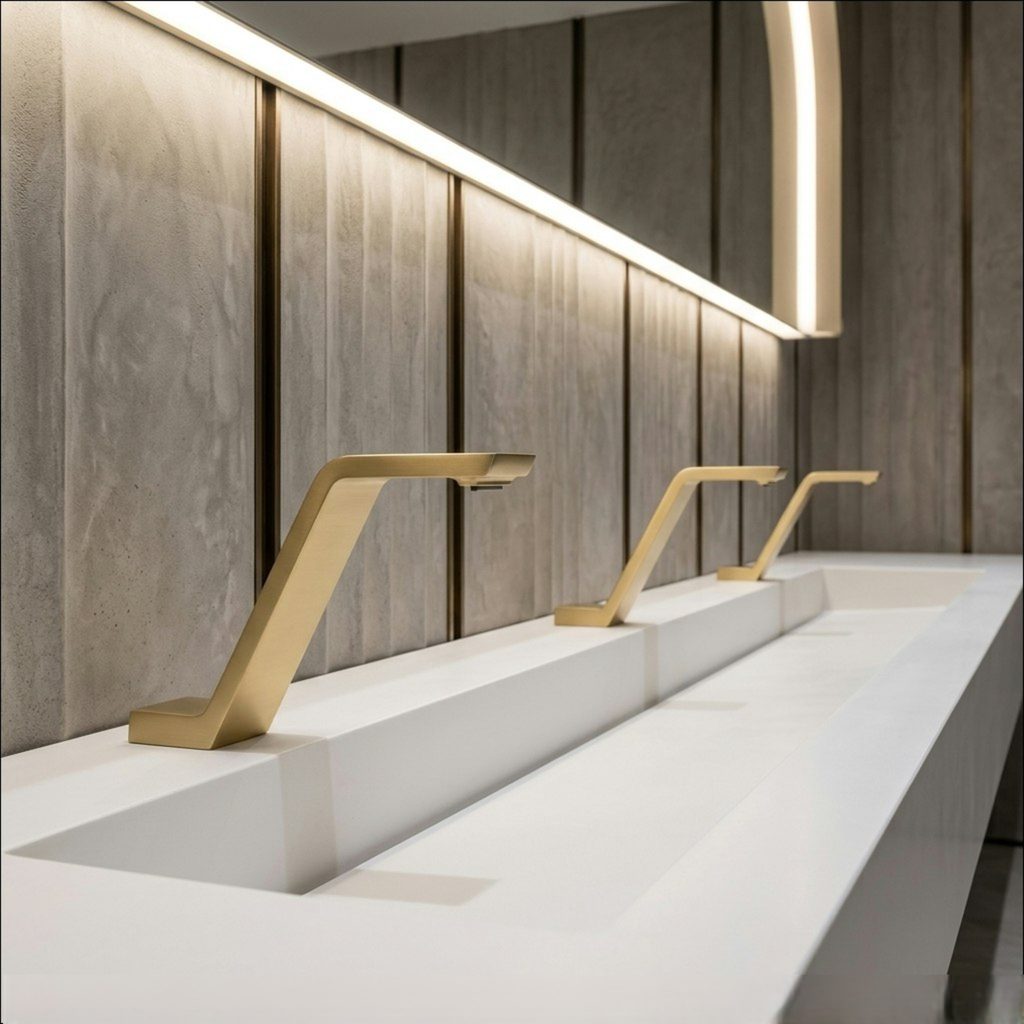
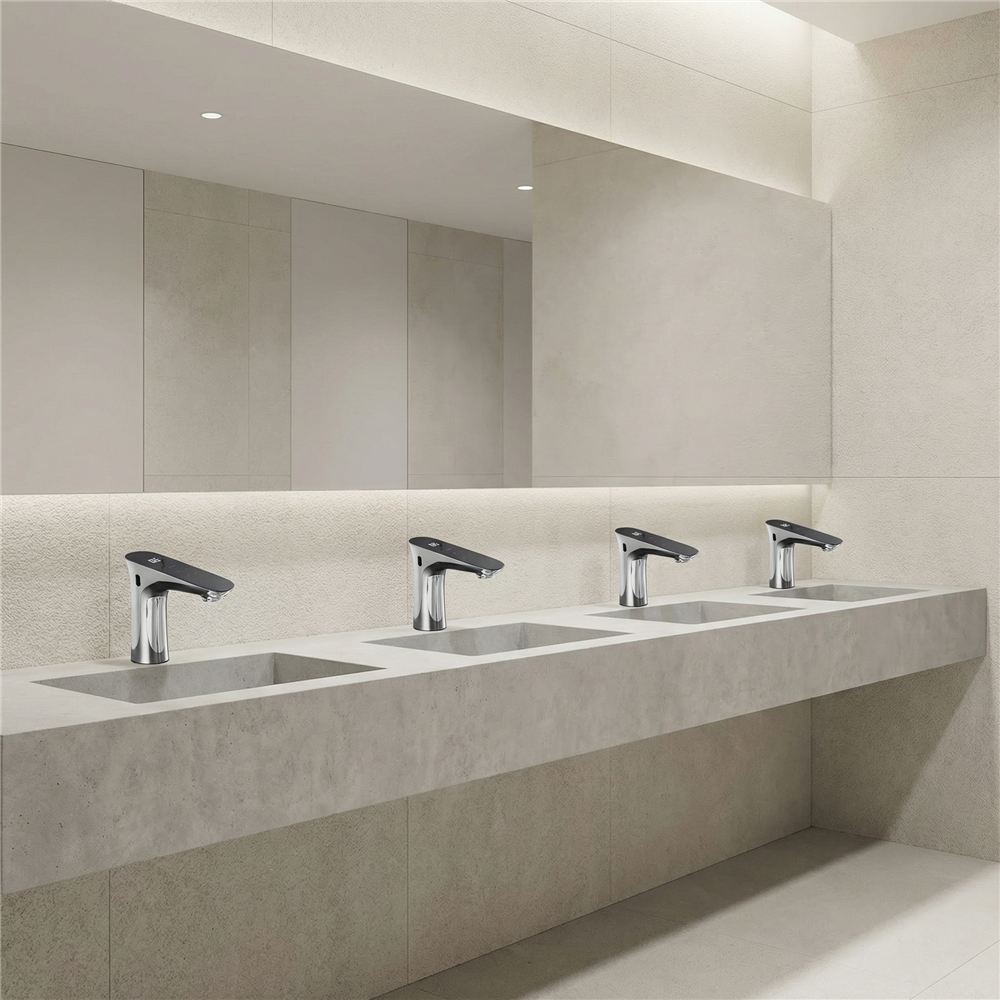
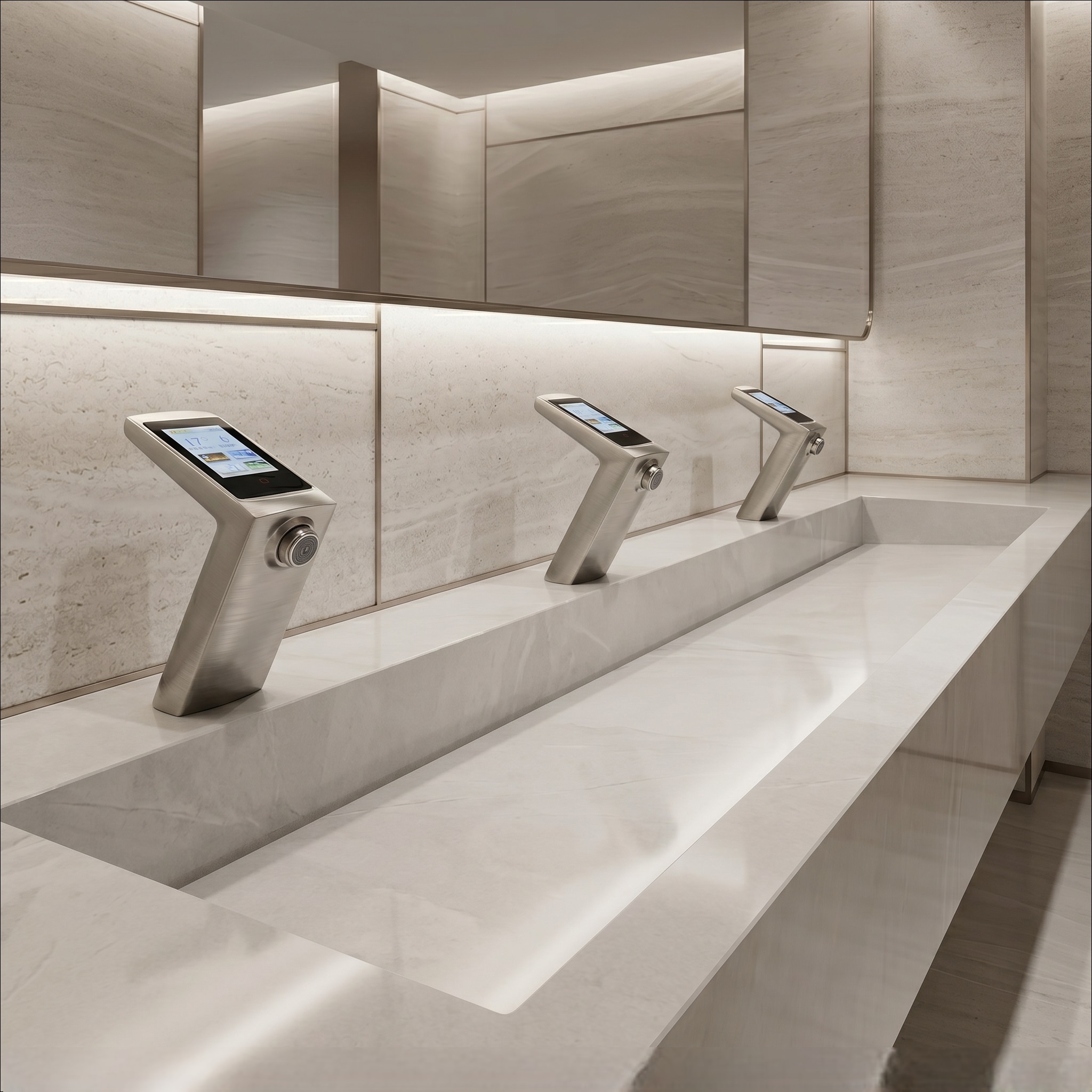
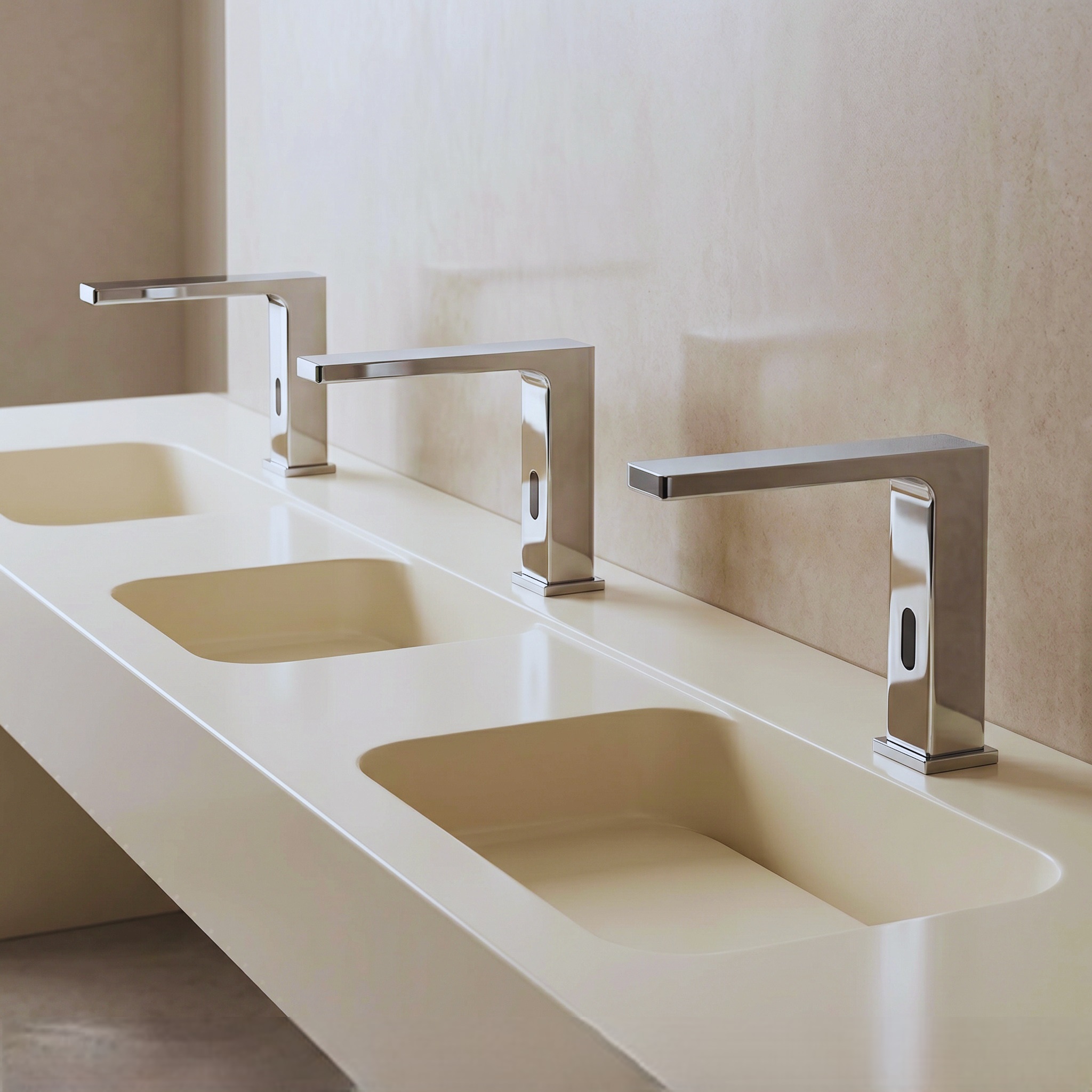
Application context can change the right mounting strategy, power approach, flow target, finish, and maintenance plan. The image wall keeps those operational conditions visible during early design review.
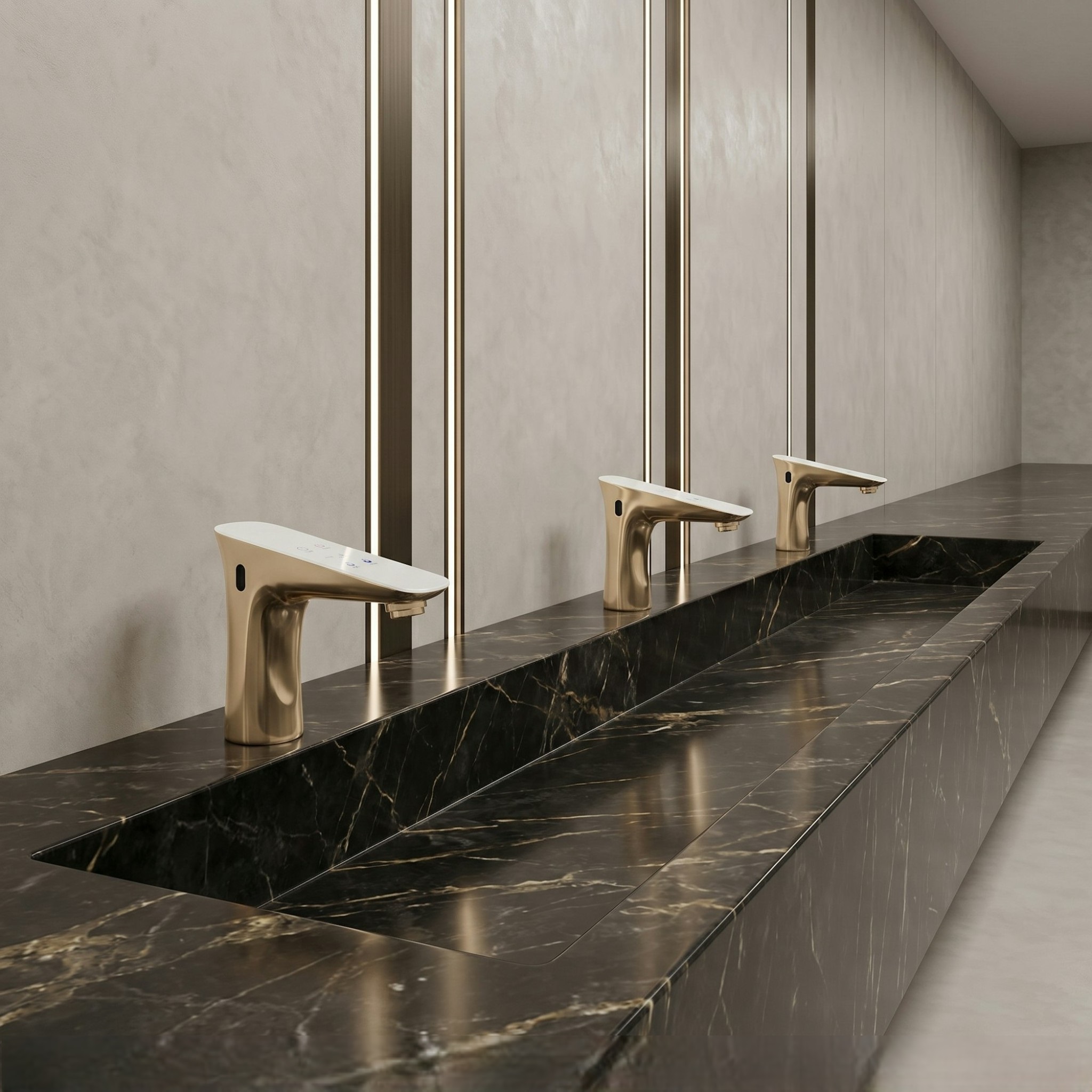 Wall-mount coordination
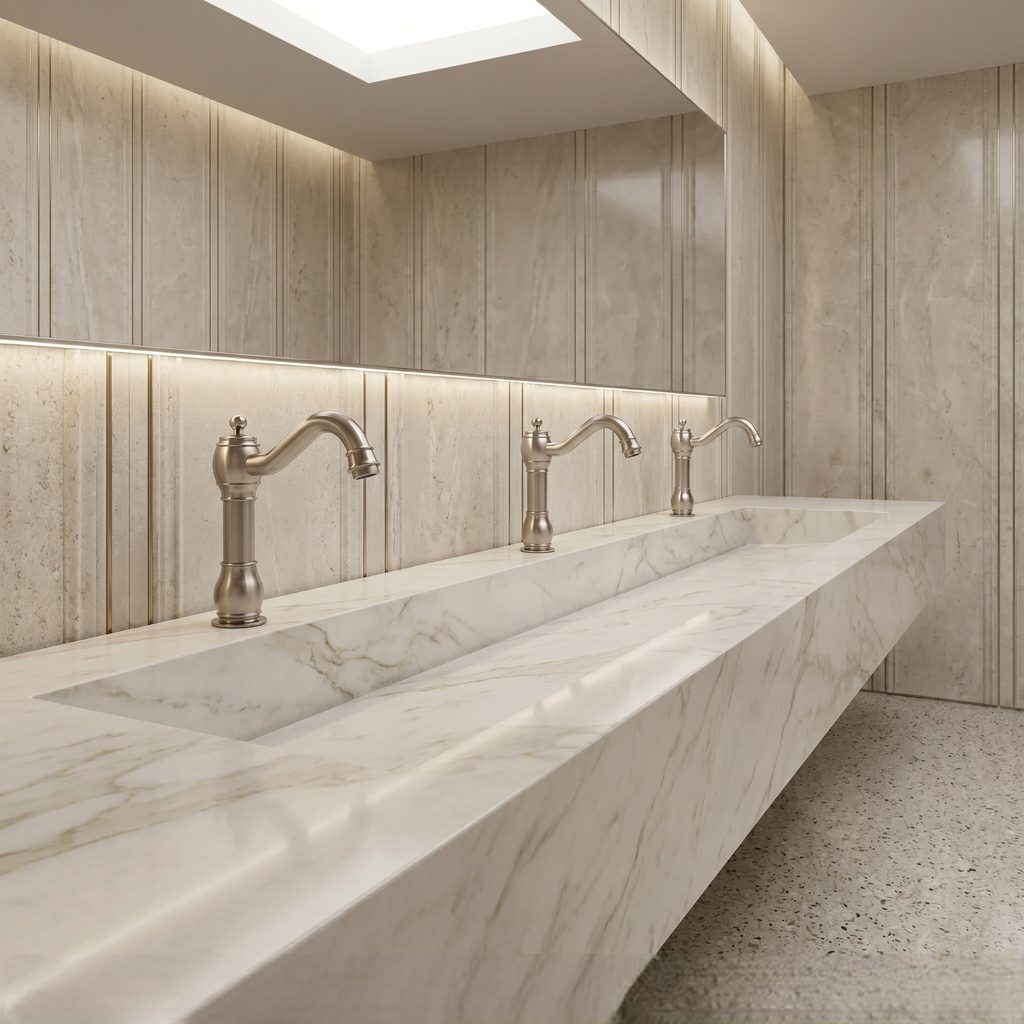 IR sensing
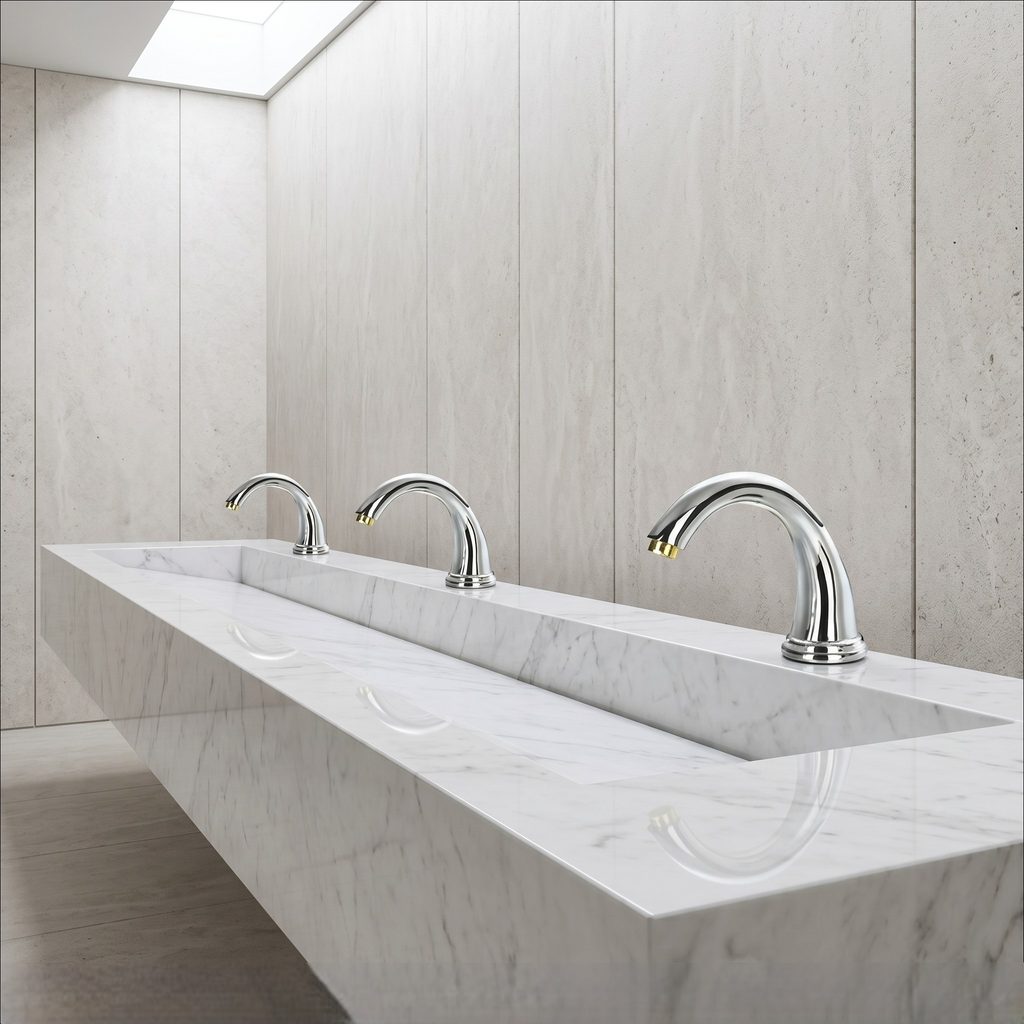 Flow control
 Power planning
 Hospitality designWall-mount coordinationIR sensingFlow controlPower planningHospitality designWater Quality
 Operations
 Design integration
 Commissioning guidanceLifecycle planningWater QualityOperationsDesign integrationCommissioning guidanceLifecycle planning
 Service access
 Smart restroom systemCompliance qualityADA coordinationRetrofit strategyService accessSmart restroom systemCompliance qualityADA coordinationRetrofit strategy
Smart Technology Emphasis
Integrate smart sensors, water efficiency, and precise design.
Explore planning references and performance benchmarks used by architects and engineers when evaluating smart restroom systems.
Sensor TechnologyCompare IR and ToF sensing
Study detection range, surface reflectivity, ambient light, hand position, calibration tolerances, nuisance activations, and the conditions that influence reliable response.
Explore sensor architecture →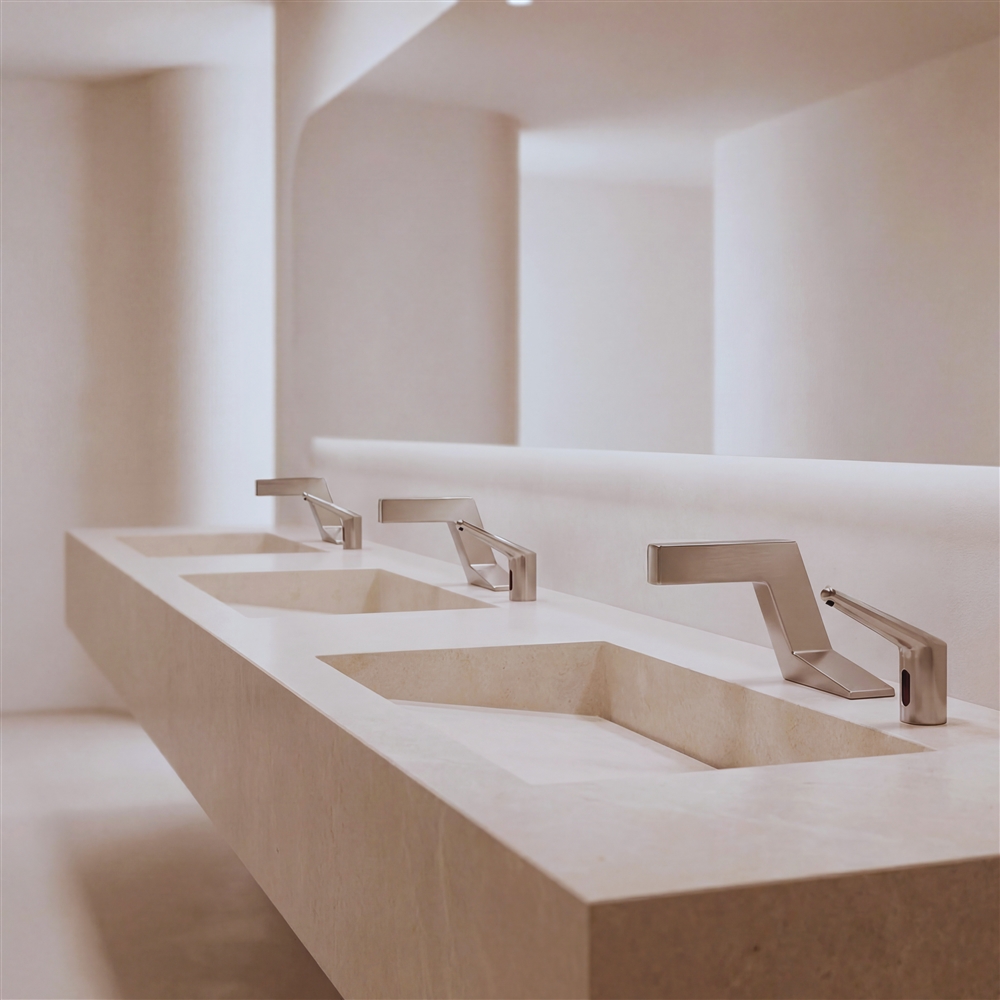 Smart Restrooms
Plan the complete restroom system
Coordinate touchless faucets, soap dispensers, flush valves, occupancy sensing, leak alerts, dashboards, power, service access, and maintenance workflows.
Open the smart restroom guide →Water EfficiencyCoordinate flow and sustainability
Review flow rate, run time, outlet selection, pressure, splash control, user experience, indoor water use reduction, and LEED or WELL documentation needs.
Study LEED and WELL alignment →ComplianceVerify lead-free documentation
Connect the exact faucet model and wetted components to NSF/ANSI/CAN 61, NSF/ANSI/CAN 372, lead-free requirements, flow data, and third-party listings.
Review lead-free compliance →AccessibilityPlan accessible public lavatories
Coordinate natural sensor activation, clear floor space, knee clearance, reach, protected piping, safe temperature, soap placement, and a logical handwashing path.
Open the ADA planning guide →HealthcareAddress healthcare performance
Evaluate touch-free workflow, water hygiene safeguards, auto-purge options, cleanability, AC/DC continuity, service access, submittals, and commissioning requirements.
Review healthcare guidance →TransportationProcure for airport demand
Balance passenger volume, water control, vandal resistance, accessible use, rapid service, power strategy, spare parts, commissioning, and lifecycle cost.
Open the airport procurement guide →Fixture ComparisonCompare commercial faucet brands
Assess design range, specification support, maintenance fit, power flexibility, service access, documentation, replacement parts, and project-specific limitations.
Compare leading brands →Specification Framework
Turn product data into smarter project decisions.
A practical commercial faucet review should connect fixture performance with rough-in conditions, accessibility, water use, cleaning, replacement parts, and the owner’s maintenance model.
Selection Criteria
Compare mounting type, control method, flow characteristics, finish, power, valve arrangement, and basin compatibility before narrowing the fixture schedule.
Installation Coordination
Check deck or wall conditions, clearances, power routing, mixing requirements, supply access, and service zones before final rough-in dimensions are issued.
Commissioning Review
Confirm sensing range, activation behavior, shutoff response, flow delivery, splash performance, temperature control, and cleaning modes at turnover.
Maintenance Planning
Document filters, aerators, batteries, solenoids, cartridges, spare parts, cleaning procedures, and access paths so facility teams can reduce avoidable downtime.
Project Examples
Real-world commercial installation examples.
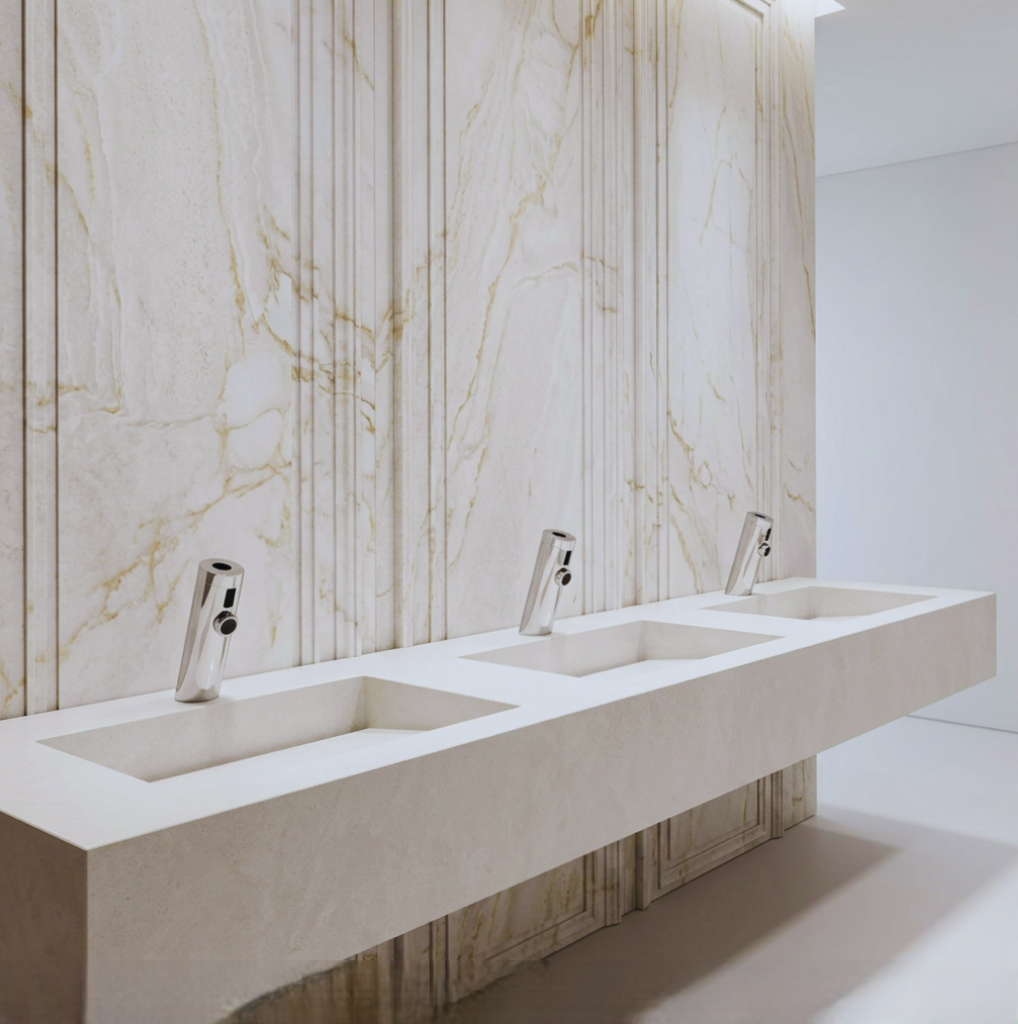
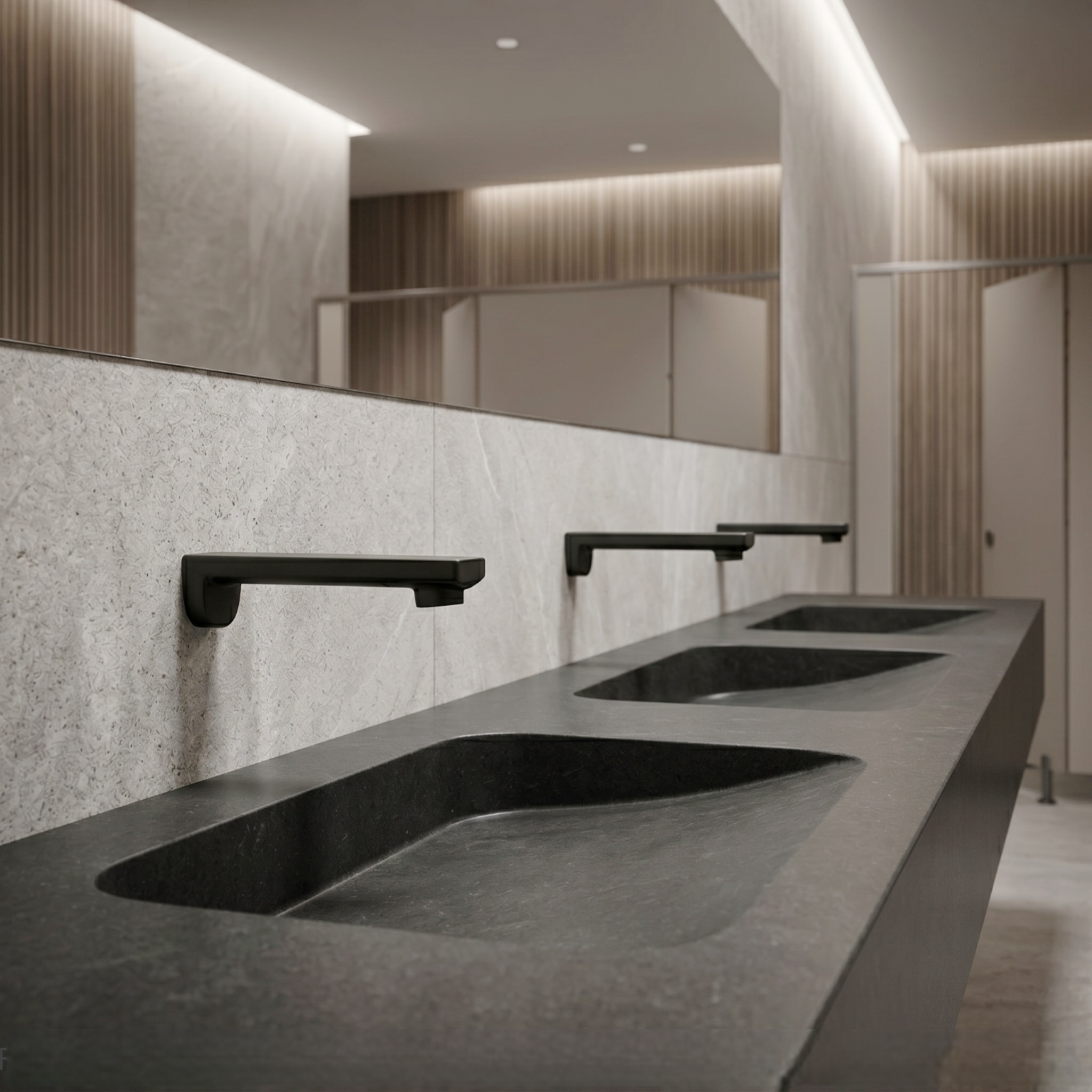
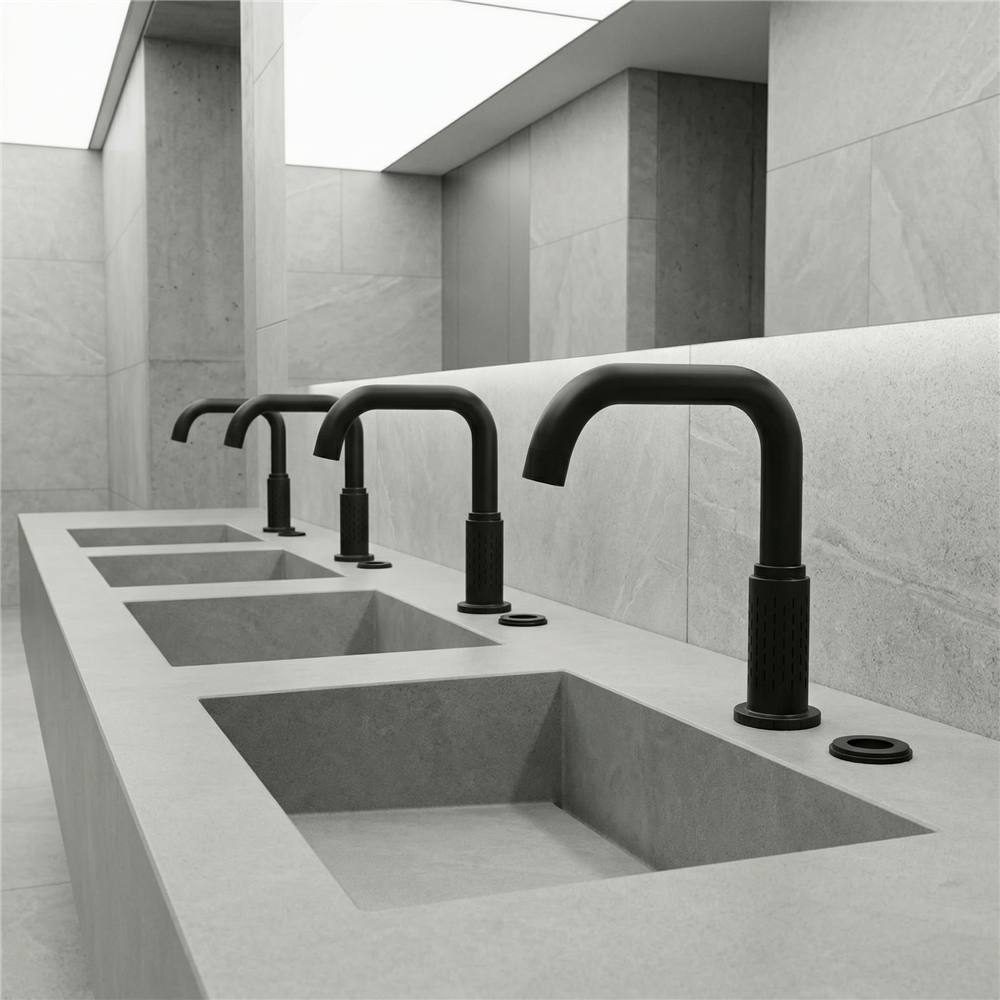
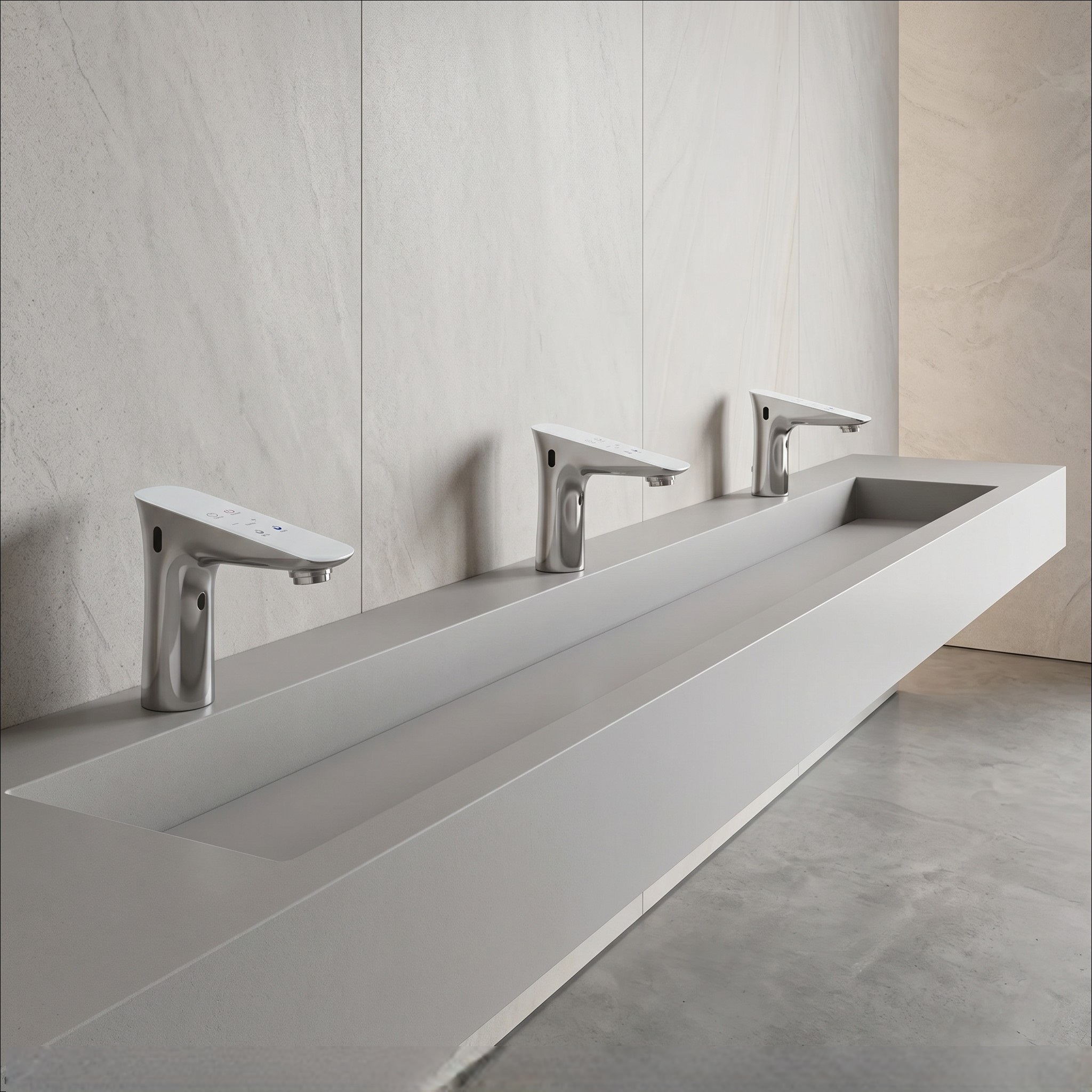
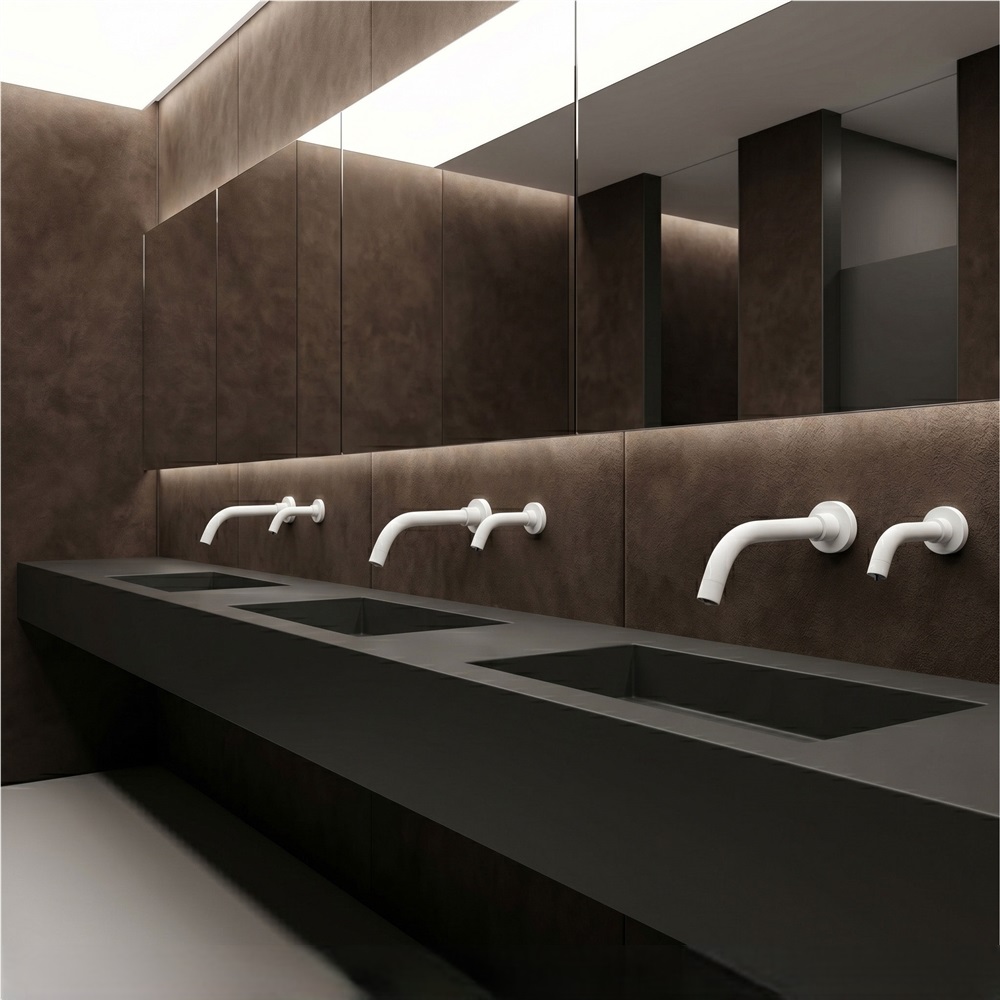
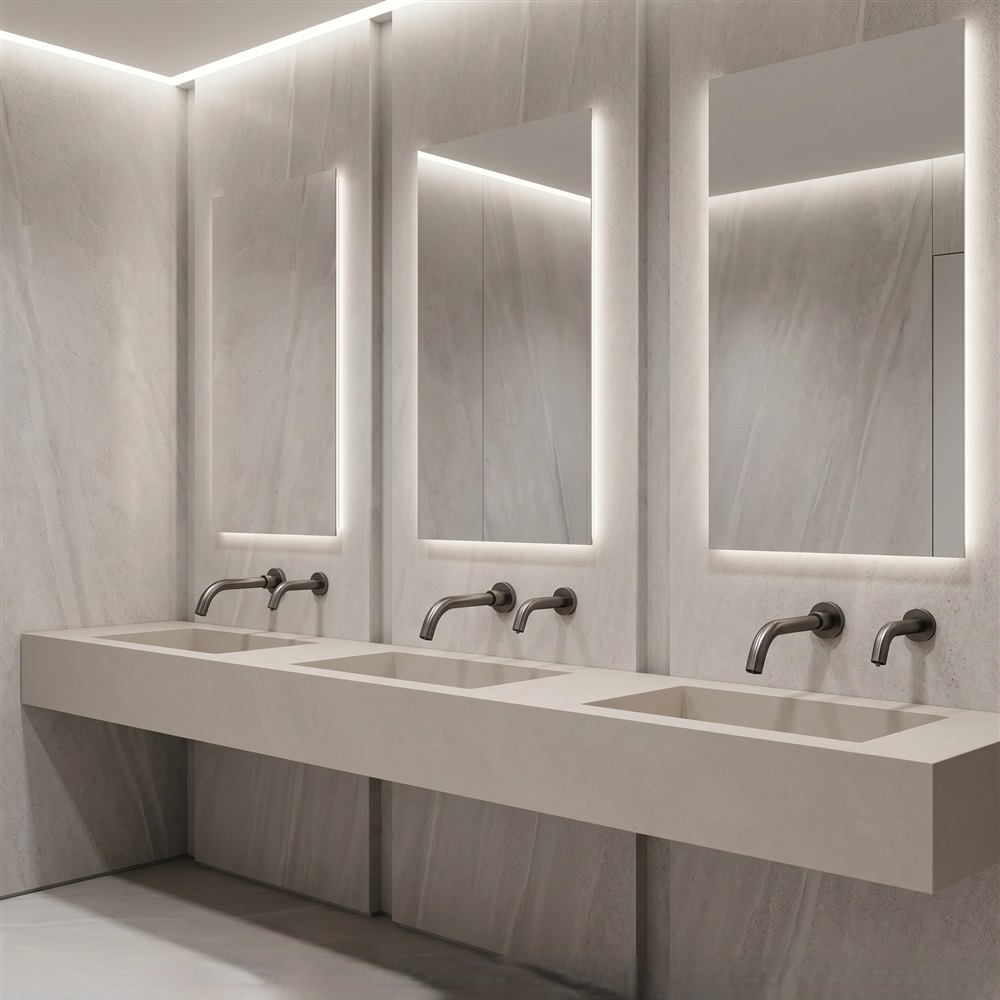
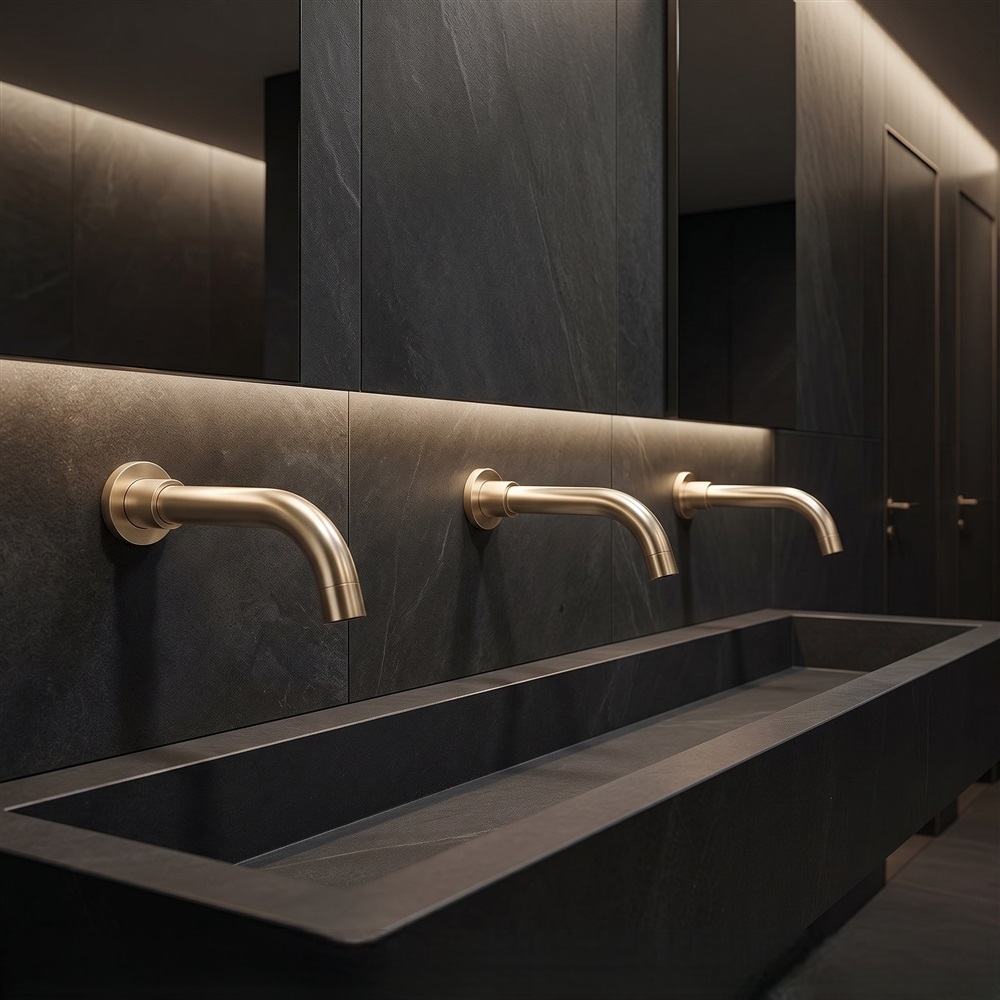
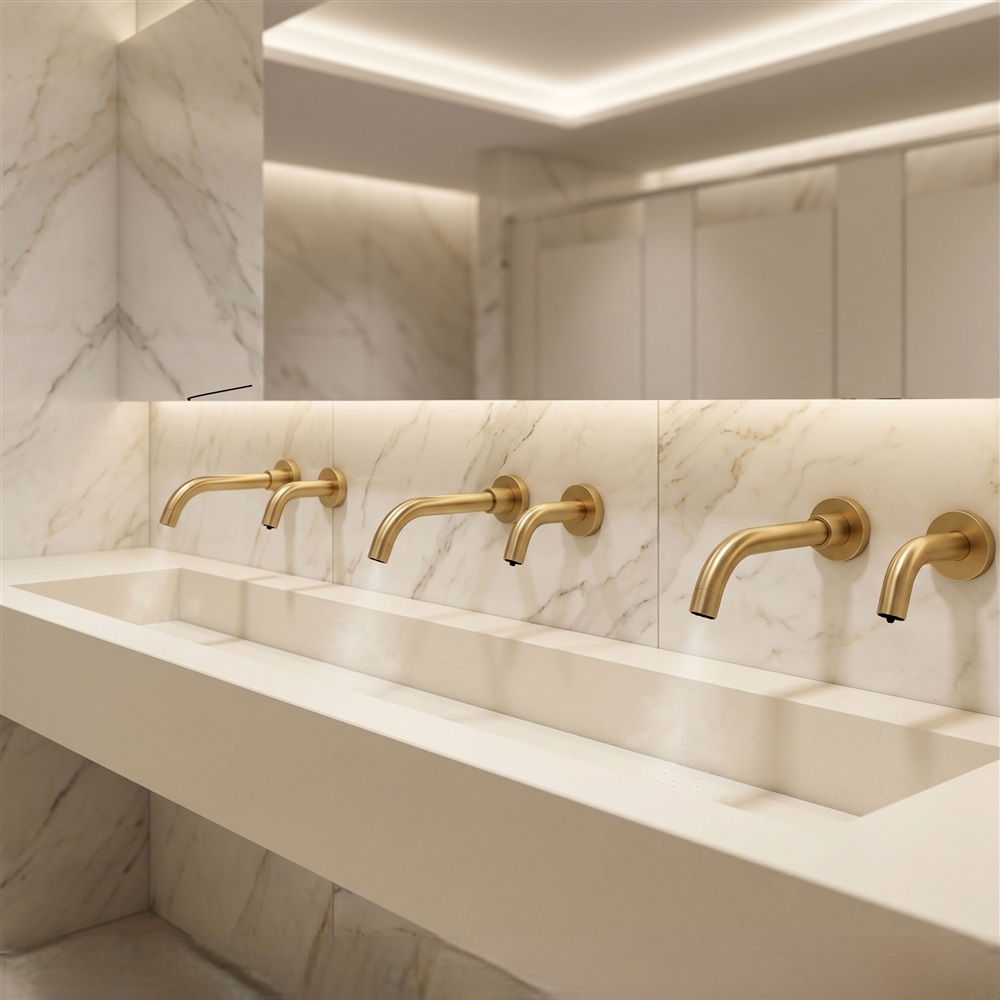
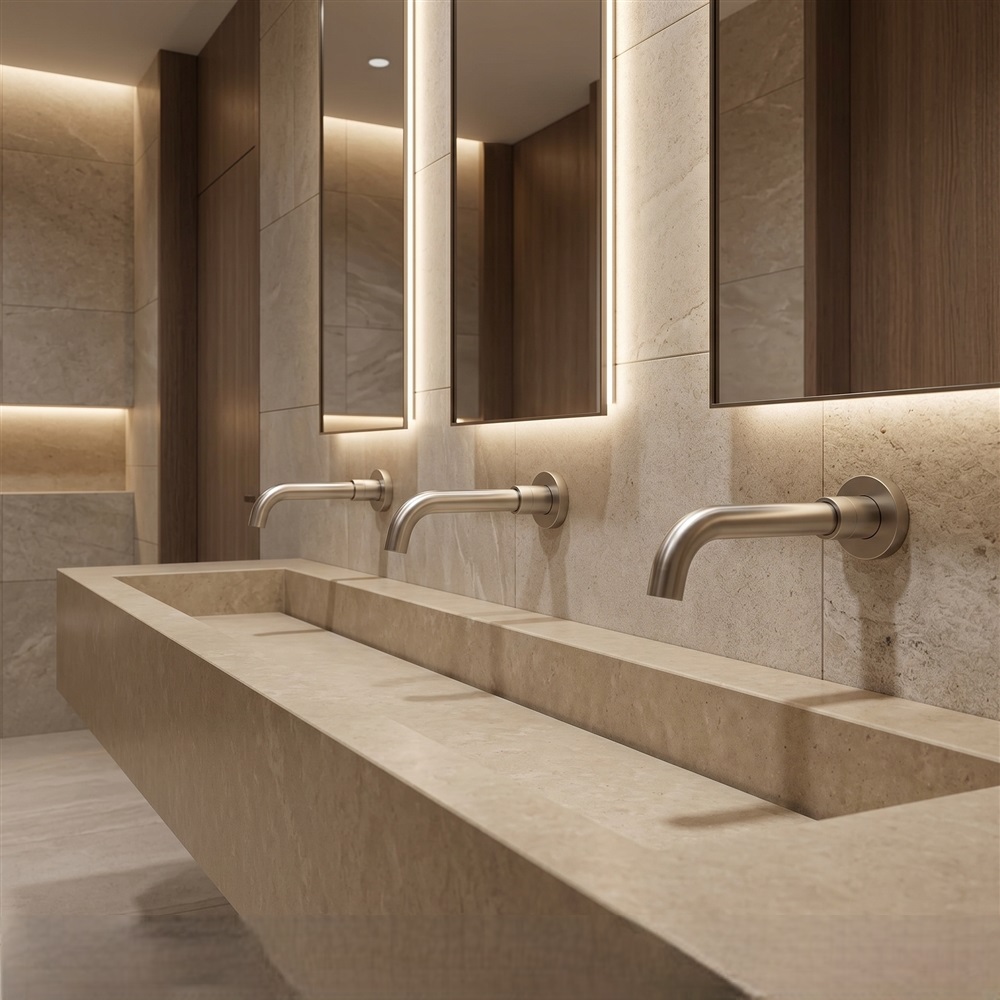
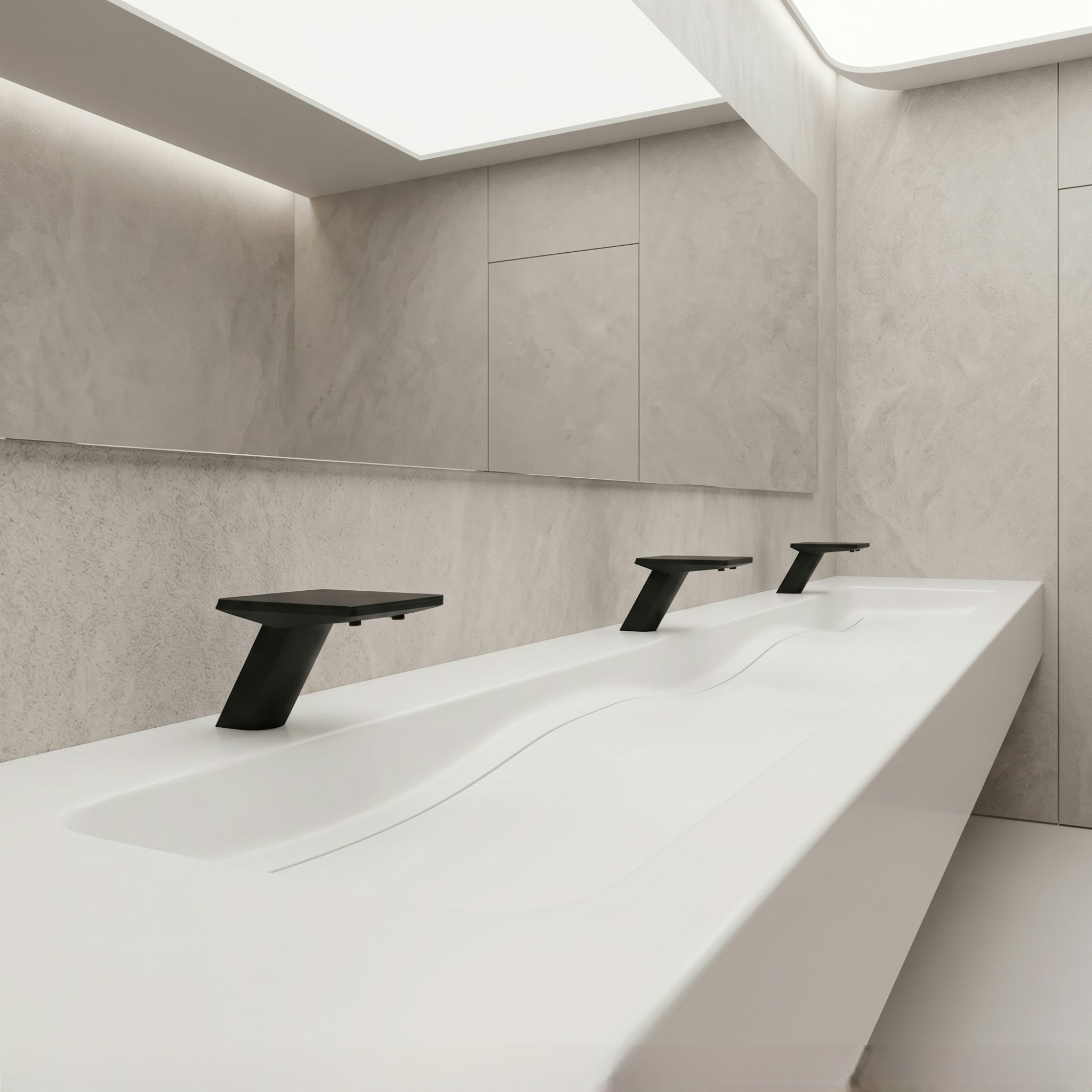
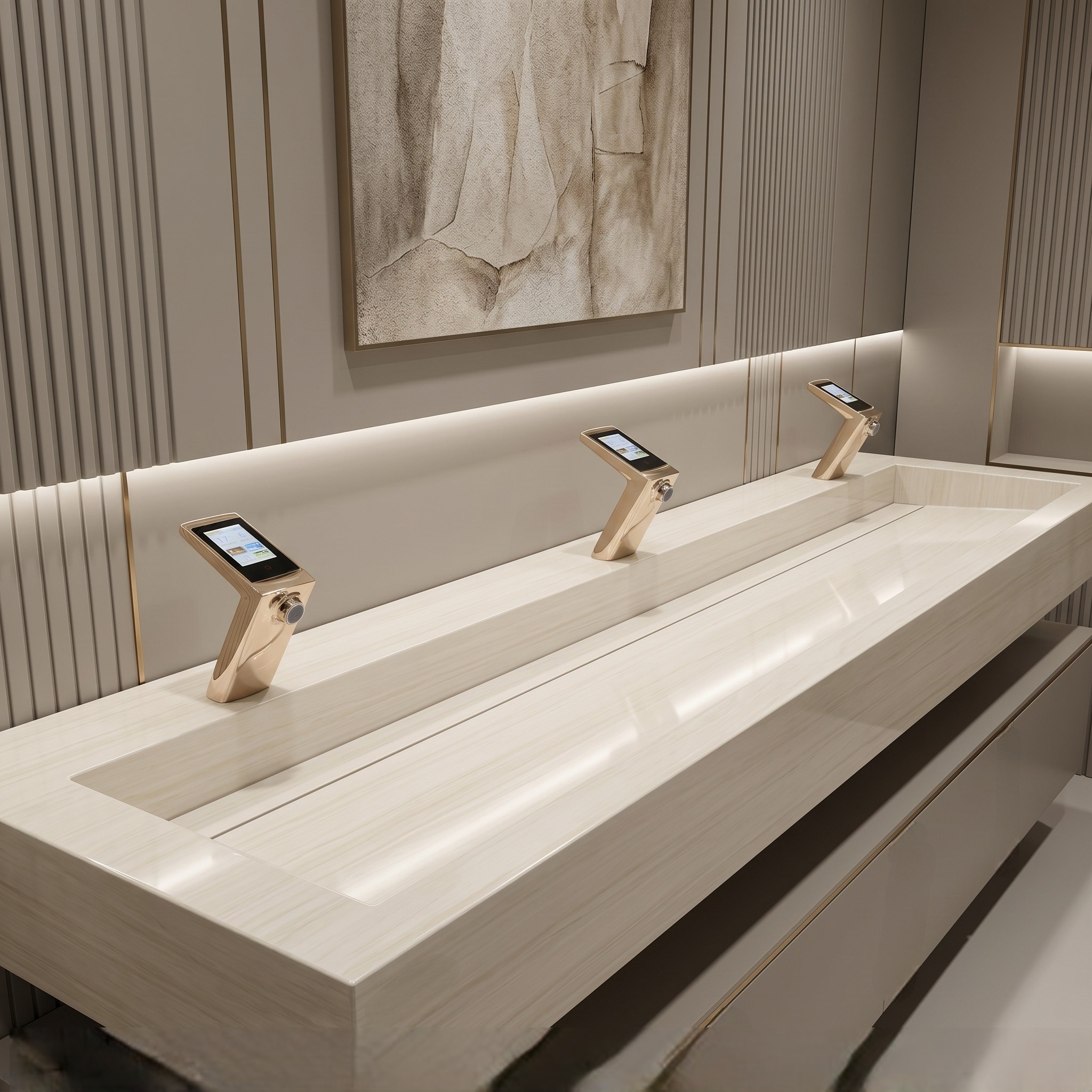
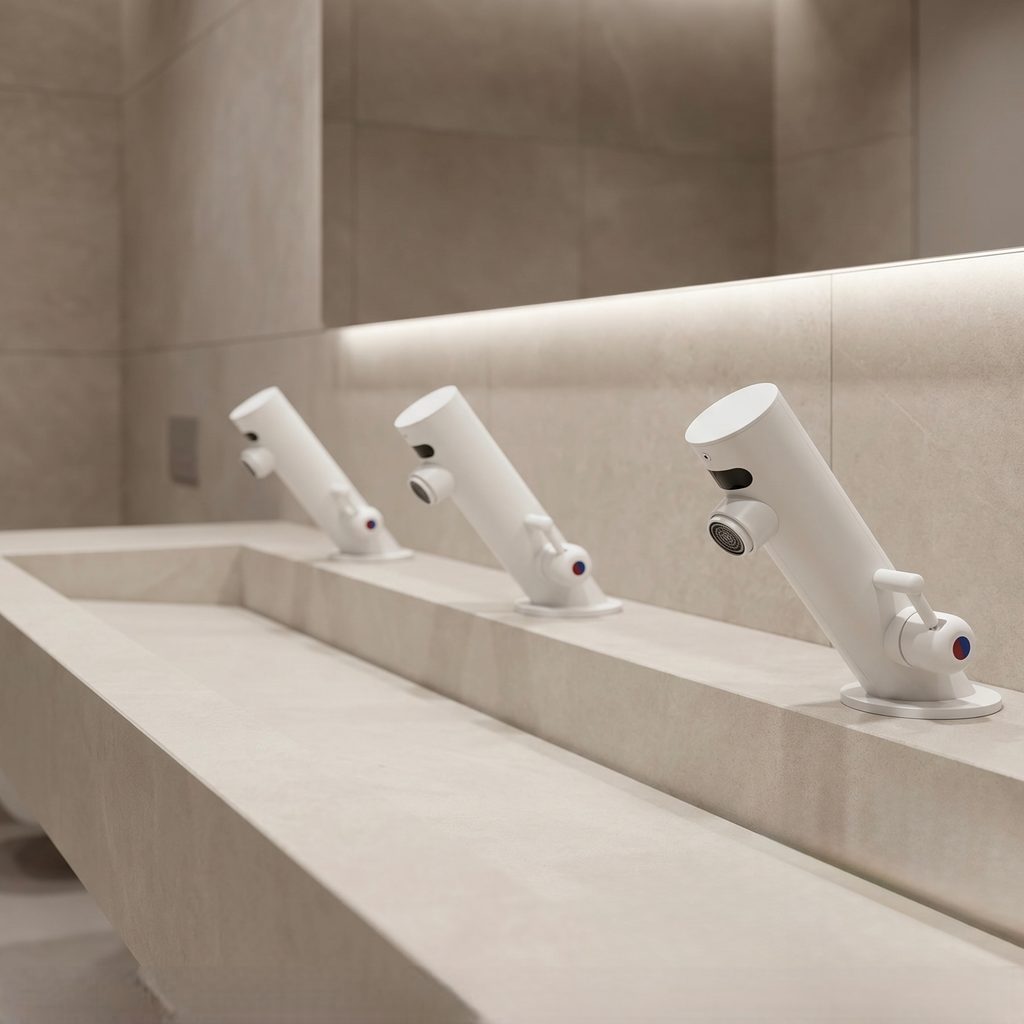
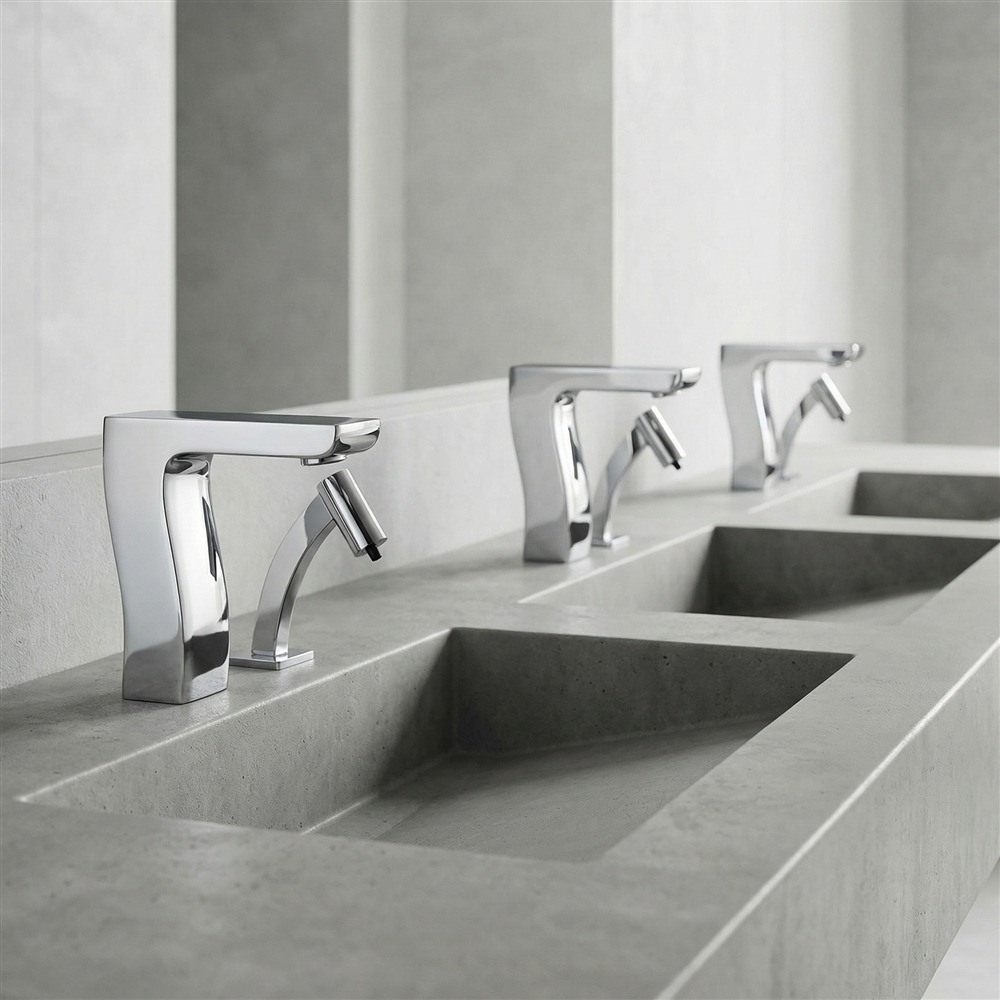
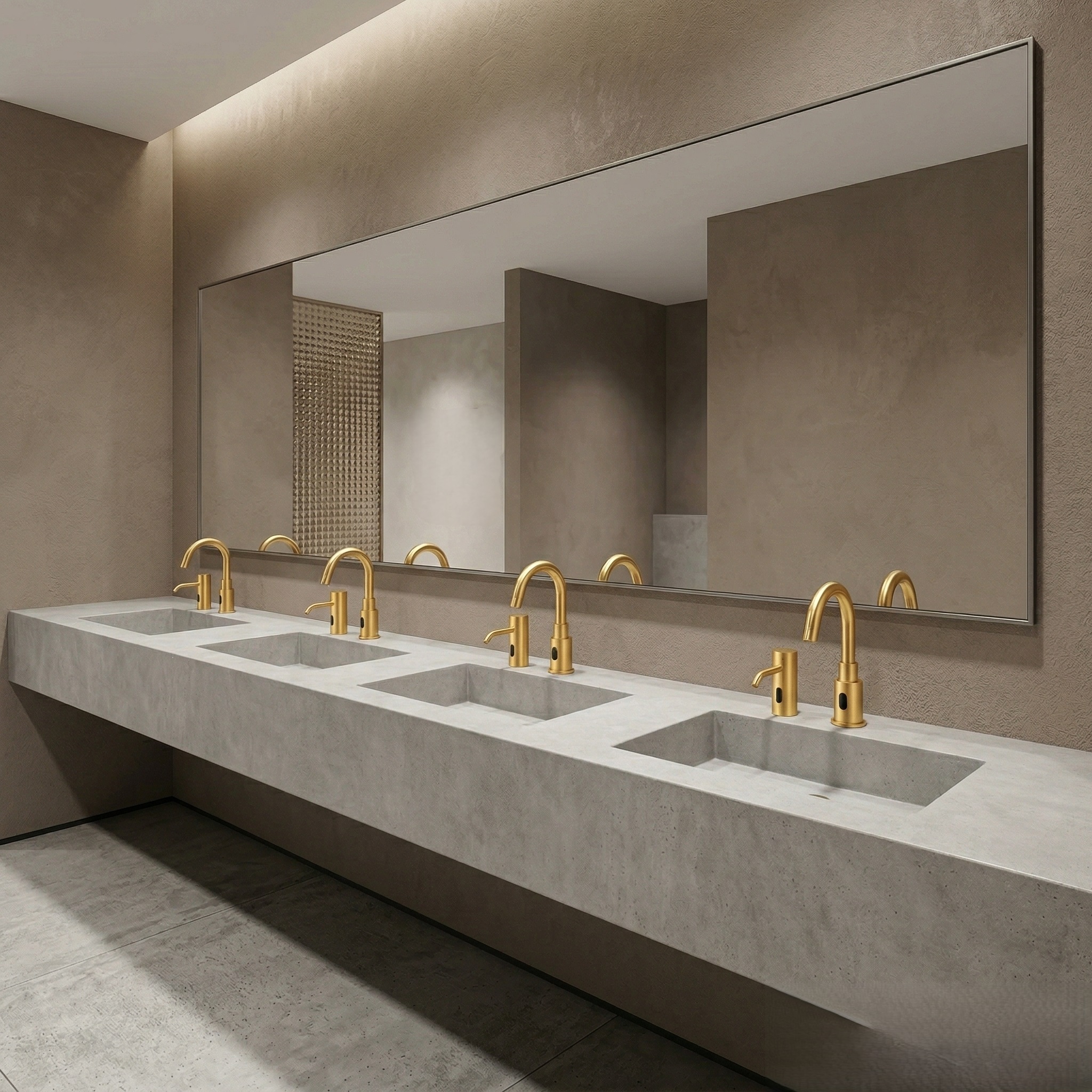
Use the gallery as a visual coordination reference for spout reach, basin relationship, finish selection, sensor placement, and the service conditions surrounding commercial handwashing fixtures.
IR and ToF sensing within real sink conditions
Testimonials
AEC and facility feedback on installation and maintenance.
Whether we are dealing with architects and engineers, facility managers, and so on, it is clear that the level of commitment we have towards quality and innovation

Touchless fixtures reduced rework and simplified specifications.
Project feedback can help teams identify coordination issues that are easy to miss when decisions are based only on product appearance or a single performance metric.
View project context →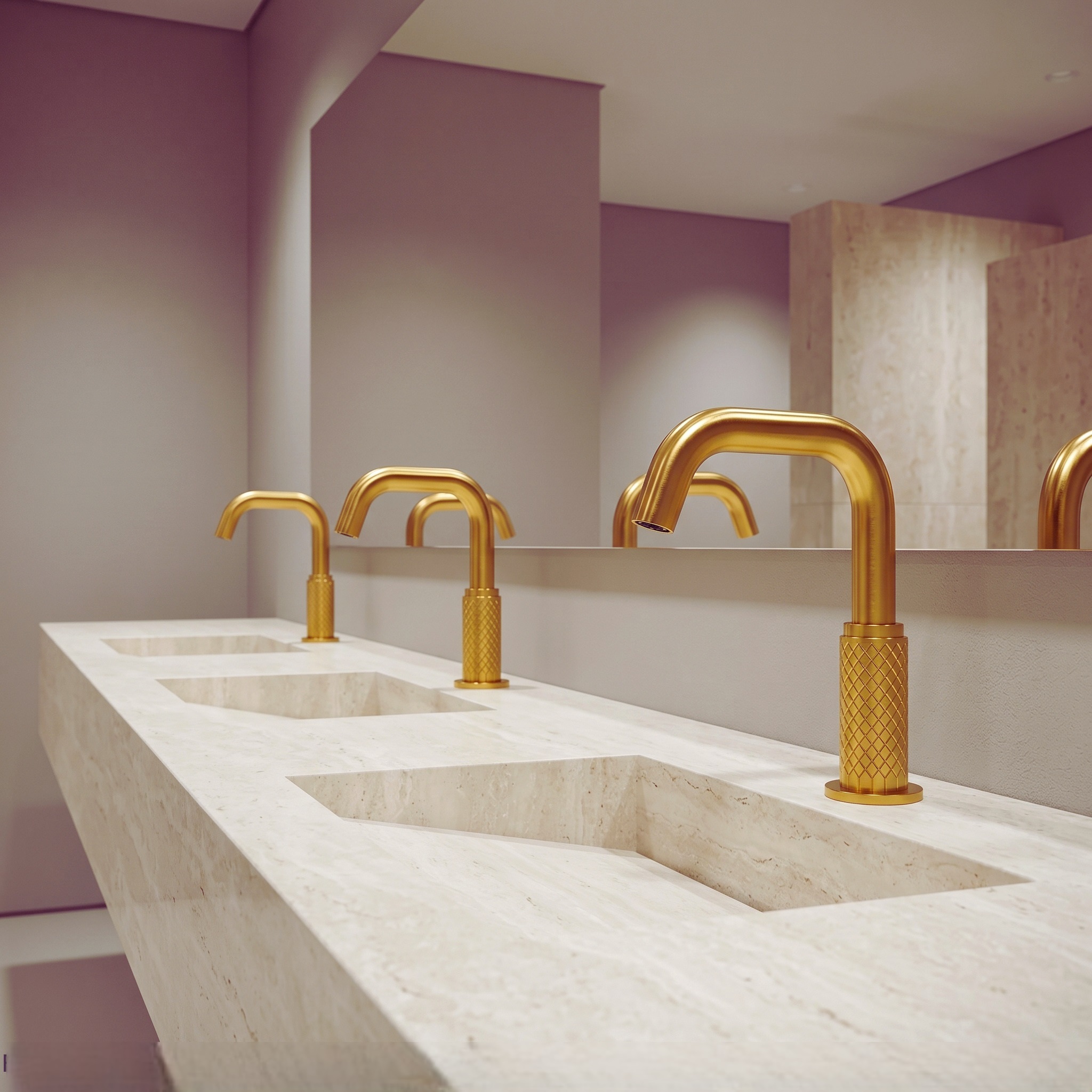
Reliable, elegant faucets built for busy environments.
Field observations are most useful when they are considered alongside traffic level, cleaning procedures, water conditions, service access, and the project’s operational priorities.
Review planning topics →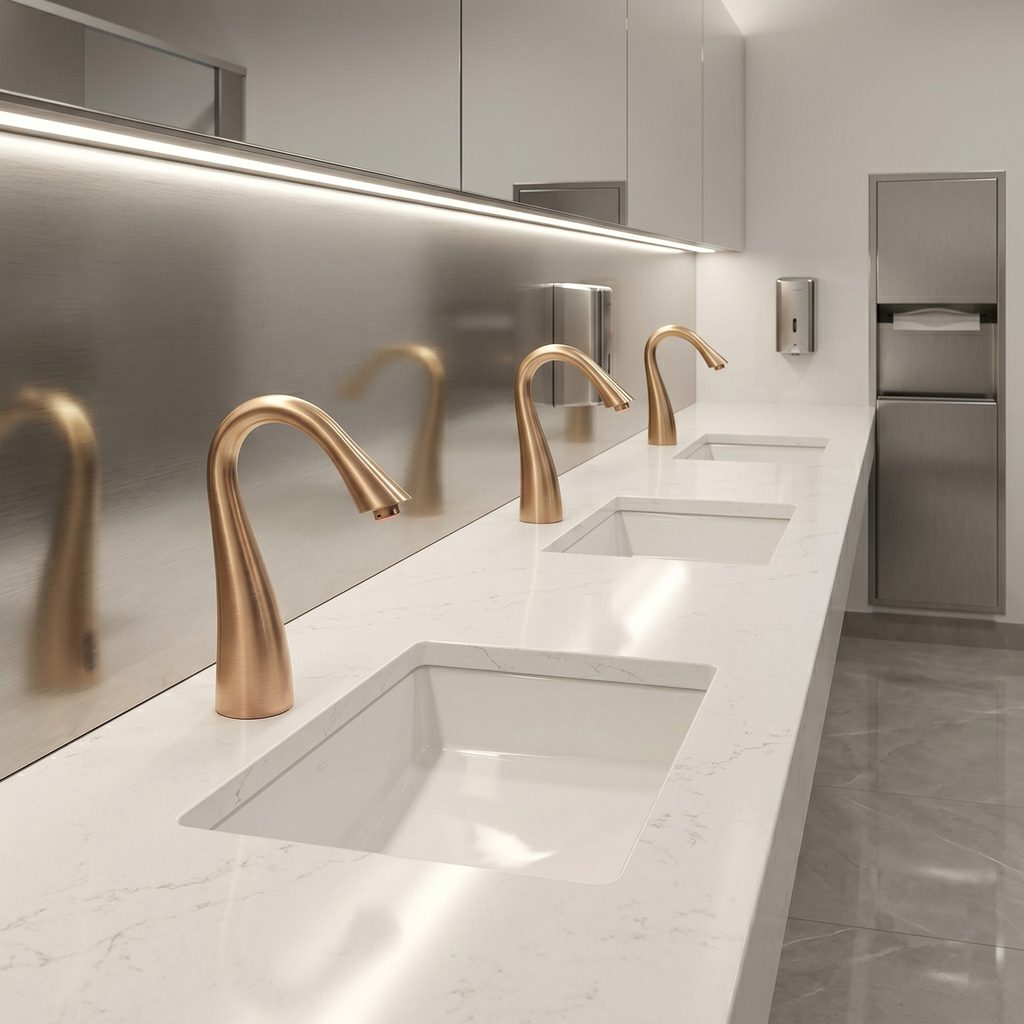
The customer service is excellent, as well as products.
The customers from the hospitality industry are shocked at the elegance for the products thay have to offer.
Explore specification resources →Explore the Resource Library
Our team
A collective of designers, engineers, and innovators shaping the future of smart restroom solutions.