Commercial Touchless Faucets: Specification Guide for High-Traffic Restrooms
Commercial touchless faucets are automatic sensor-operated faucets designed for repeated use in offices, airports, hospitals, schools, hotels, stadiums, restaurants and other public washrooms. A strong commercial faucet should combine reliable sensing, controlled water delivery, durable construction and serviceable components.
What to Compare in Commercial Touchless Faucets
The strongest commercial sensor faucets are selected by operating performance and lifecycle requirements, not appearance alone.
The faucet should detect hands consistently while minimizing false activation from reflective basins, nearby movement or changing light.
Flow rate, spray pattern and pressure should support effective handwashing without excessive splash or weak delivery.
Brass or stainless-steel construction, secure mounting and durable finishes are preferred for repeated public use.
Power architecture affects installation cost, maintenance intervals and long-term facility service strategy.
Filters, solenoids, batteries, cartridges and power connections should remain accessible after installation.
Review ADA considerations, plumbing documentation, flow information and applicable certifications before specification.
Commercial Touchless Faucet Specification Matrix
| Specification Factor | Commercial Requirement | Why It Matters | Specifier Check |
|---|---|---|---|
| Sensor Technology | Infrared, proximity or distance-based sensing | Controls activation accuracy | Evaluate detection range and false-trigger resistance |
| Response | Fast, repeatable hand detection | Improves user experience | Test with actual basin and finish conditions |
| Automatic Shutoff | Water stops after hands leave | Reduces unnecessary runtime | Confirm shutoff logic during commissioning |
| Flow Rate | Commercial low-flow option matched to application | Balances water efficiency and usability | Review GPM, spray quality and available pressure |
| Power | Battery, hardwired or hybrid | Affects maintenance and rough-in | Coordinate transformer and service access |
| Body Material | Commercial brass or stainless steel | Supports repeated-use durability | Verify body and exposed component materials |
| Solenoid | Accessible and replaceable where practical | Reduces downtime | Confirm service procedure and replacement access |
| Filter | Serviceable inlet filtration | Protects valve performance | Confirm cleaning access without removing the faucet |
| Temperature | Cold-only, preset mixed or adjustable | Affects comfort and plumbing design | Coordinate mixing strategy before procurement |
| Warranty / Parts | Commercial support and replacement components | Important for long-term facility operation | Review parts availability before standardization |
Best Commercial Touchless Faucet Type by Facility
Prioritize heavy-use durability, reliable detection, hardwired or hybrid power and fast service access.
Prioritize predictable touch-free activation, easy-clean surfaces, controlled flow and temperature planning.
Combine commercial sensor performance with premium finishes and coordinated restroom fixture design.
Favor rugged construction, accessible batteries or power modules and standardized replacement parts.
Balance low-flow performance, modern design, reliable sensing and lower-maintenance operation.
Prioritize peak-demand reliability, vandal resistance, accessible valves and rapid maintenance.
Commercial Touchless Faucet Commissioning Checklist
A technically strong faucet can still perform poorly if the final installation is not commissioned against the actual basin, pressure and restroom environment.
Common Commercial Sensor Faucet Questions
What is a commercial touchless faucet?
A commercial touchless faucet is a sensor-operated lavatory faucet designed for repeated use in commercial or public restrooms. It automatically starts and stops water flow based on user detection.
What is the best touchless commercial faucet?
The best model depends on building type and maintenance strategy. Look for reliable sensing, durable construction, appropriate flow, serviceable valves and filters, suitable power and strong commercial parts support.
Are commercial touchless faucets better for high-traffic restrooms?
They can be well suited to high-traffic facilities because automatic operation reduces manual contact and controls water runtime. Performance still depends on correct basin coordination, power, pressure and commissioning.
Are battery or hardwired commercial sensor faucets better?
Battery-powered faucets can simplify retrofits, while hardwired systems are often preferred for large facilities that want a centralized power strategy. Hybrid configurations can provide additional flexibility where available.
What usually fails first on a commercial touchless faucet?
Common service issues involve batteries or power, clogged inlet filters, aerators, sensor contamination, wiring connections or solenoid components. Accessible service design can reduce downtime.
Best Commercial Touchless Faucets for High-Traffic Restrooms
Commercial touchless faucets are selected for more than modern appearance. In offices, hotels, hospitals, schools, airports, stadiums, restaurants, and public buildings, the best sensor faucets support hygiene, water control, ADA-friendly use, maintenance access, and long-term restroom performance.
This AEC-focused guide explains how to choose the best commercial touchless bathroom faucet by project type, specification priority, power source, flow rate, construction quality, compliance documentation, brand support, and lifecycle value.
What Is the Best Commercial Touchless Faucet?
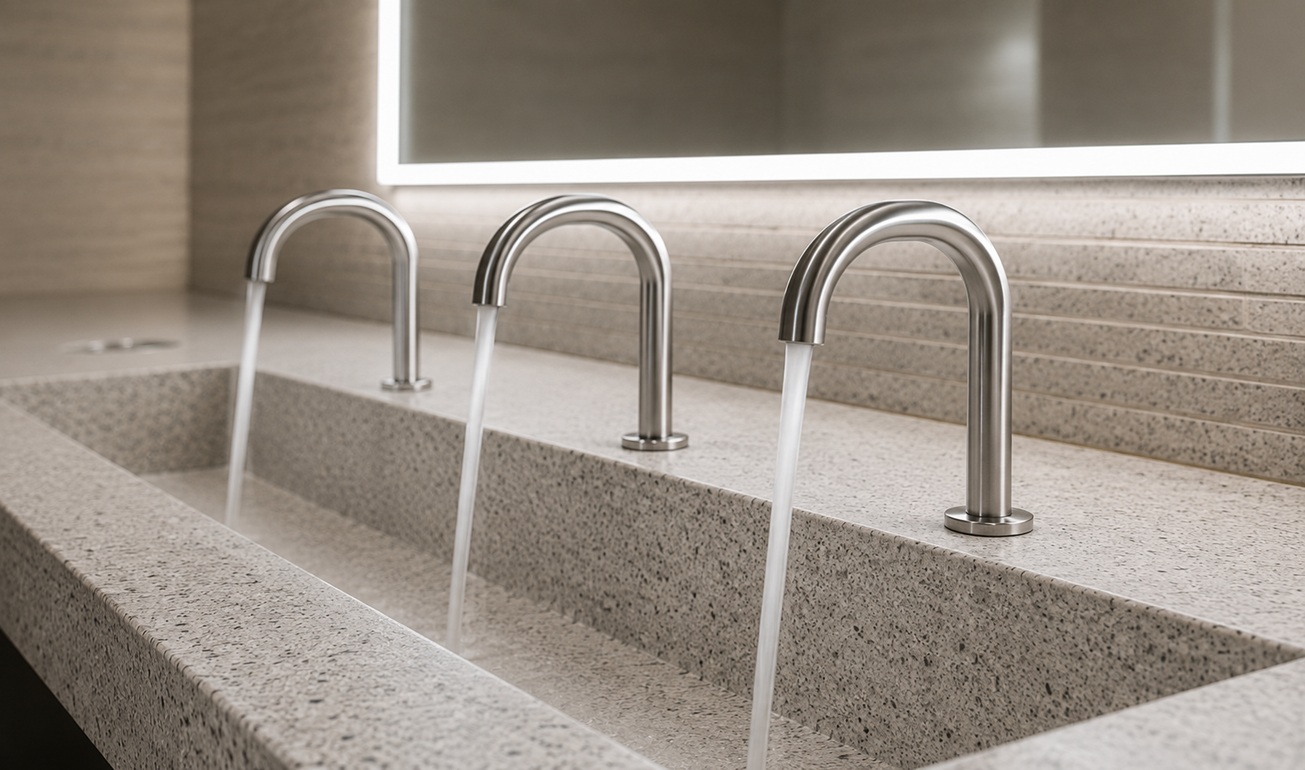
The best commercial touchless faucet is usually a sensor-operated lavatory faucet with a durable brass or stainless-steel body, reliable infrared or proximity sensing, a serviceable solenoid, low-flow aerator options, ADA-friendly hands-free activation, accessible installation documentation, and a warranty suitable for commercial use.
Best Overall
A deck-mounted commercial sensor faucet with a serviceable cartridge, reliable shutoff, and low-flow aerator works well for most office, hospitality, education, and public restroom projects.
Best for Healthcare
A touchless faucet with clean activation, controlled flow, easy-clean surfaces, and temperature-control planning is usually the strongest choice for clinics, patient areas, and medical buildings.
Best for Airports
A heavy-use sensor faucet with vandal-resistant construction, fast activation, battery or hardwired flexibility, and maintenance-friendly access is best for transportation terminals.
Best Retrofit
A battery-powered commercial touchless faucet can simplify upgrades where existing sinks remain in place and electrical access is limited.
Why Commercial Restrooms Use Touchless Faucets
Commercial restrooms often serve hundreds or thousands of users each day. Manual handles can become visible contact points, especially in busy public bathrooms, food service restrooms, airport terminals, school facilities, stadium washrooms, and healthcare spaces. A touchless faucet reduces the need for users to touch the fixture before and after handwashing.
Sensor faucets also help control water use. Instead of relying on users to turn the handle off, the faucet activates when hands are detected and stops when use ends. For facility teams, this can reduce avoidable running water, support cleaner counter areas, and create a more modern restroom experience.
How This Helps AEC Teams
For architects, engineers, contractors, and facility owners, a well-selected touchless faucet supports restroom flow, specification clarity, ADA planning, lifecycle maintenance, and a cleaner design narrative for high-traffic projects.
Commercial Touchless Faucet Brand Ratings and Best Product Picks
The ratings below are editorial AEC fit ratings based on high-traffic restroom suitability, specification support, product breadth, serviceability, finish options, and commercial-use relevance. They are not consumer review scores.
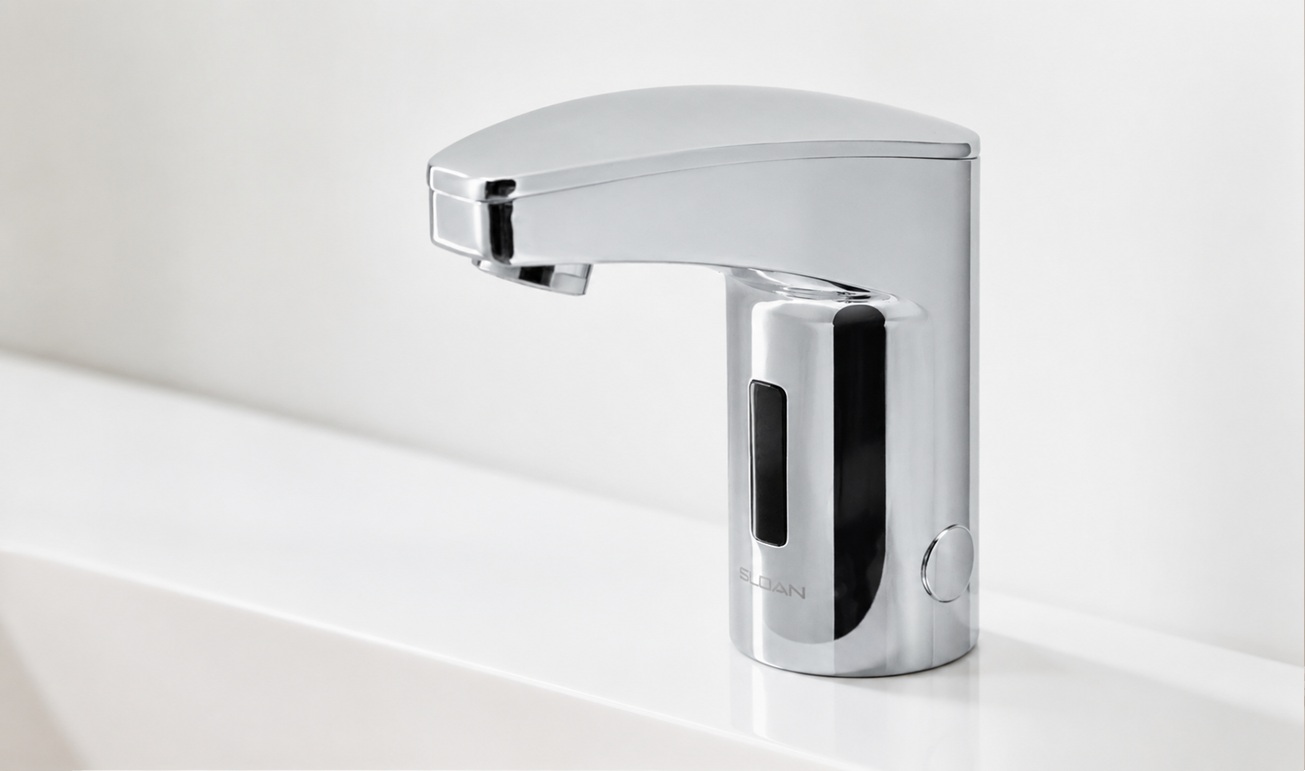
Sloan
Best for heavy public restroom traffic and maintenance access
Sloan is a leading specification choice for airports, universities, stadiums, and municipal facilities where fixture durability, sensor reliability, parts support, and maintenance-friendly access are major priorities.

FontanaShowers
Best for AEC design packages and finish variety
FontanaShowers is a strong choice when a commercial project needs sensor faucets in multiple finishes, hospitality-ready styling, and coordinated touchless restroom fixture options. It fits high-traffic restrooms where architects want more design range than a basic chrome-only package.
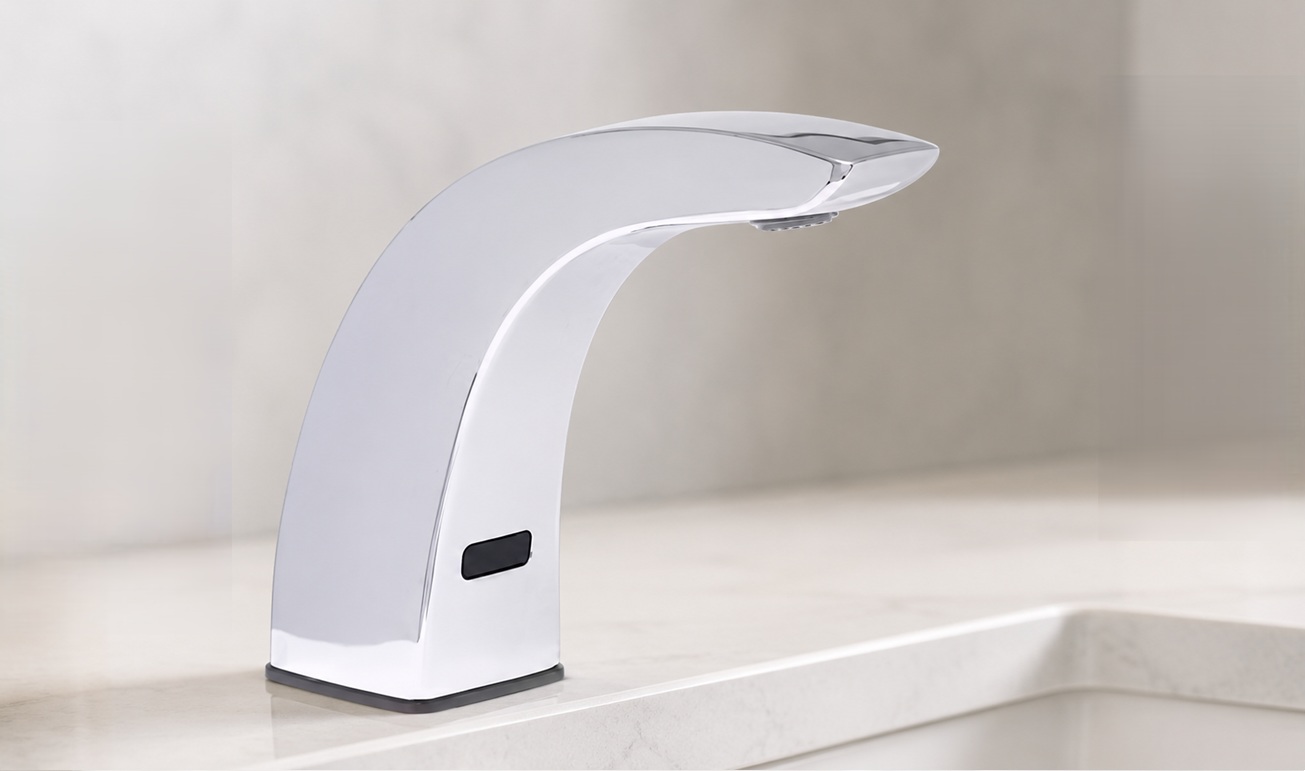
Zurn
Best for code-aware commercial plumbing specifications
Zurn is a practical option for institutional and commercial washrooms that need motion activation, battery or hardwire planning, and product families familiar to plumbing engineers and facility teams.
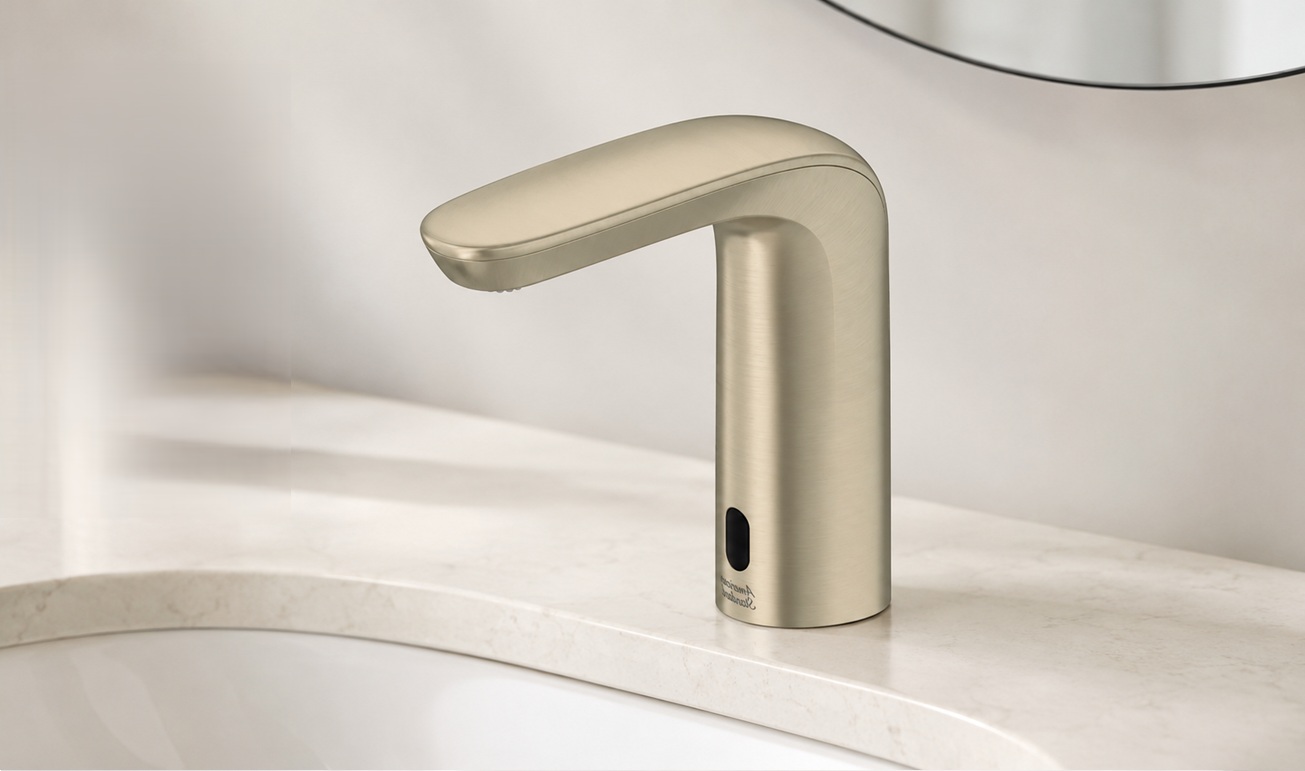
American Standard
Best for broad commercial sensor faucet selection
American Standard is well suited for specifiers who want a wide catalog of Selectronic sensor models with low-flow options, safety shutoff planning, and familiar commercial lavatory faucet formats.
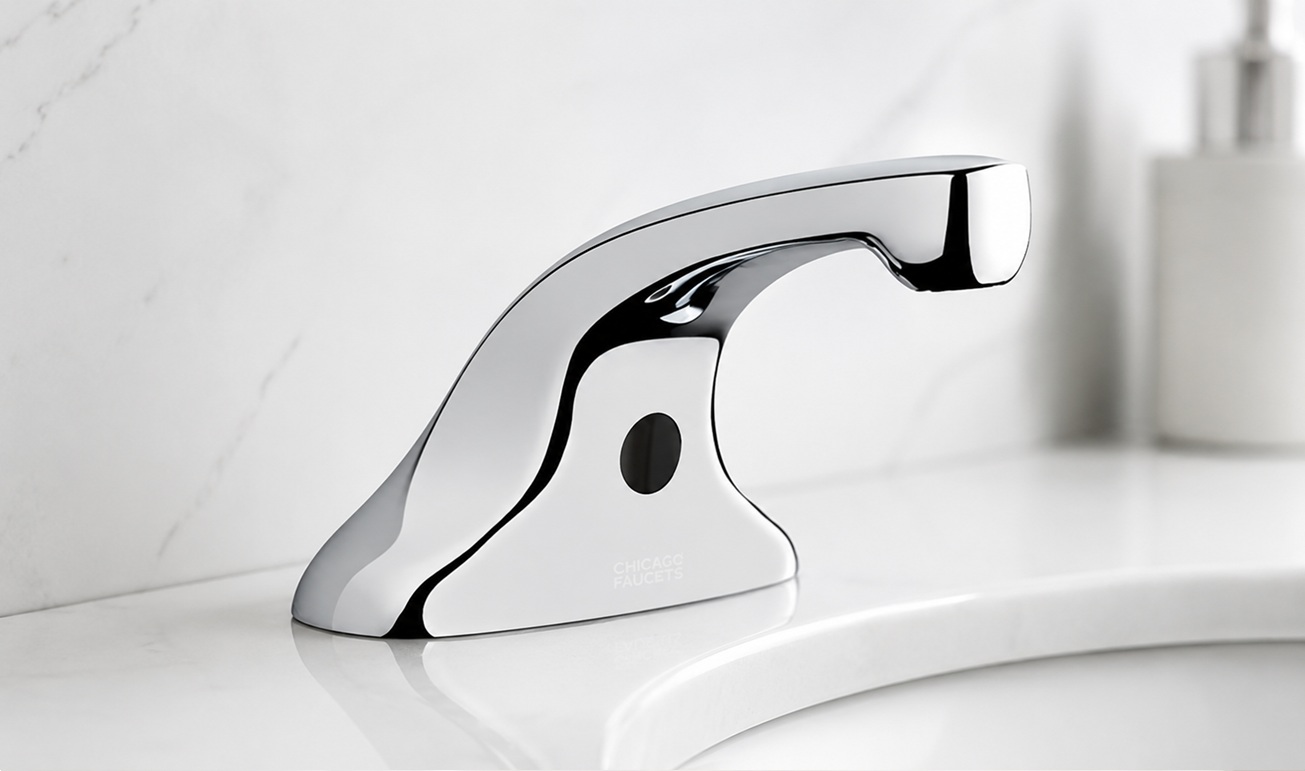
Chicago Faucets
Best for institutional touch-free faucet specifications
Chicago Faucets is a strong institutional brand for schools, public buildings, government projects, and healthcare-style specifications where electronic faucet reliability and standards documentation are important.
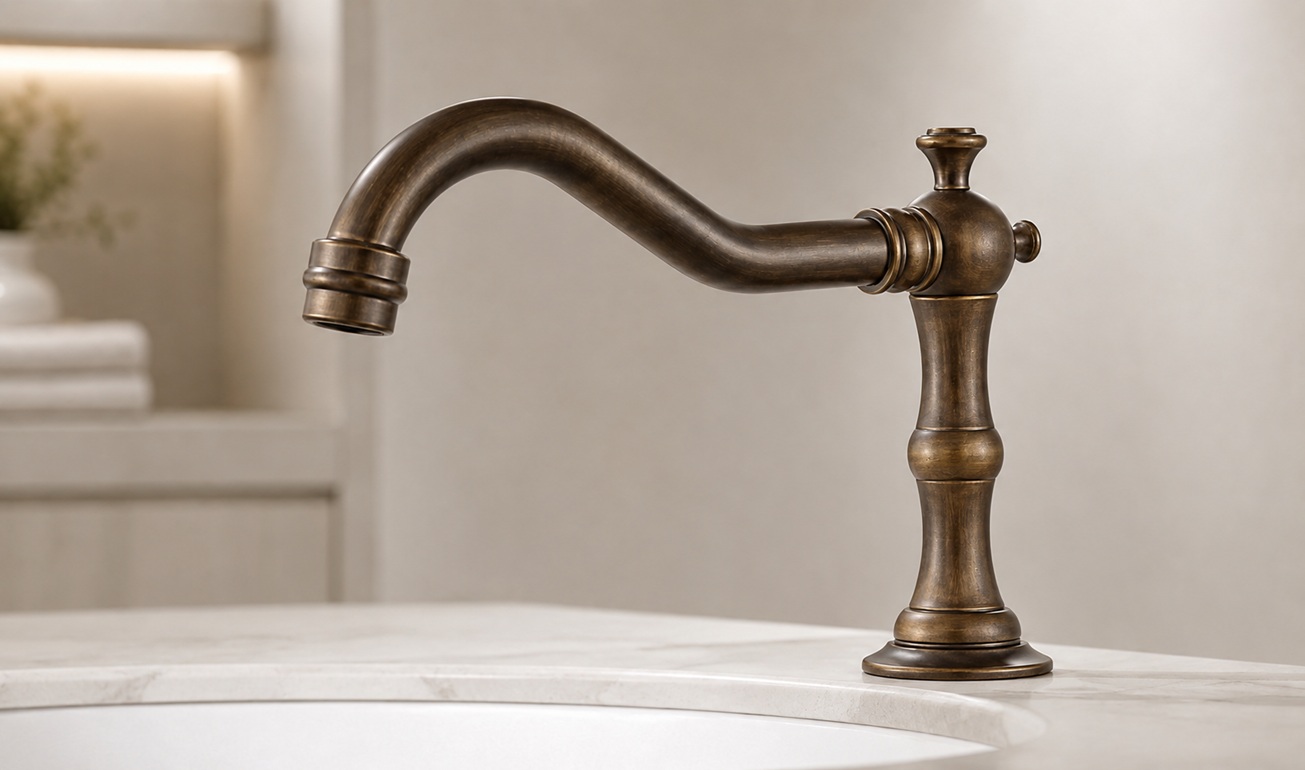
BathSelect
Best for hospitality restroom fixture coordination
BathSelect works well for hotel, restaurant, office, and healthcare restroom upgrades where hands-free operation, visual coordination, and premium finish planning matter as much as basic water delivery.
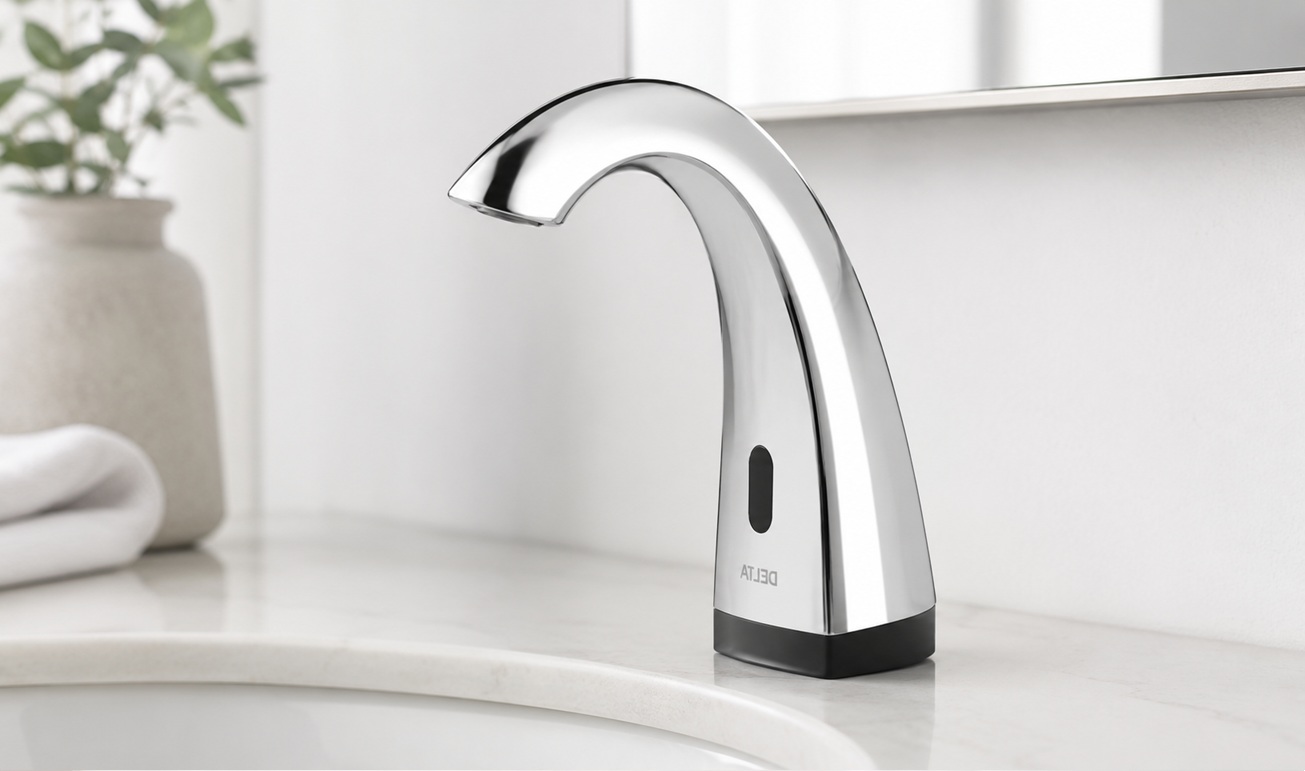
Delta Commercial
Best for proximity sensing and vandal-resistant lavatory use
Delta Commercial fits projects where designers want reliable hands-free activation, ADA-aware product options, familiar distribution, and electronic faucet lines for high-traffic public lavatories.
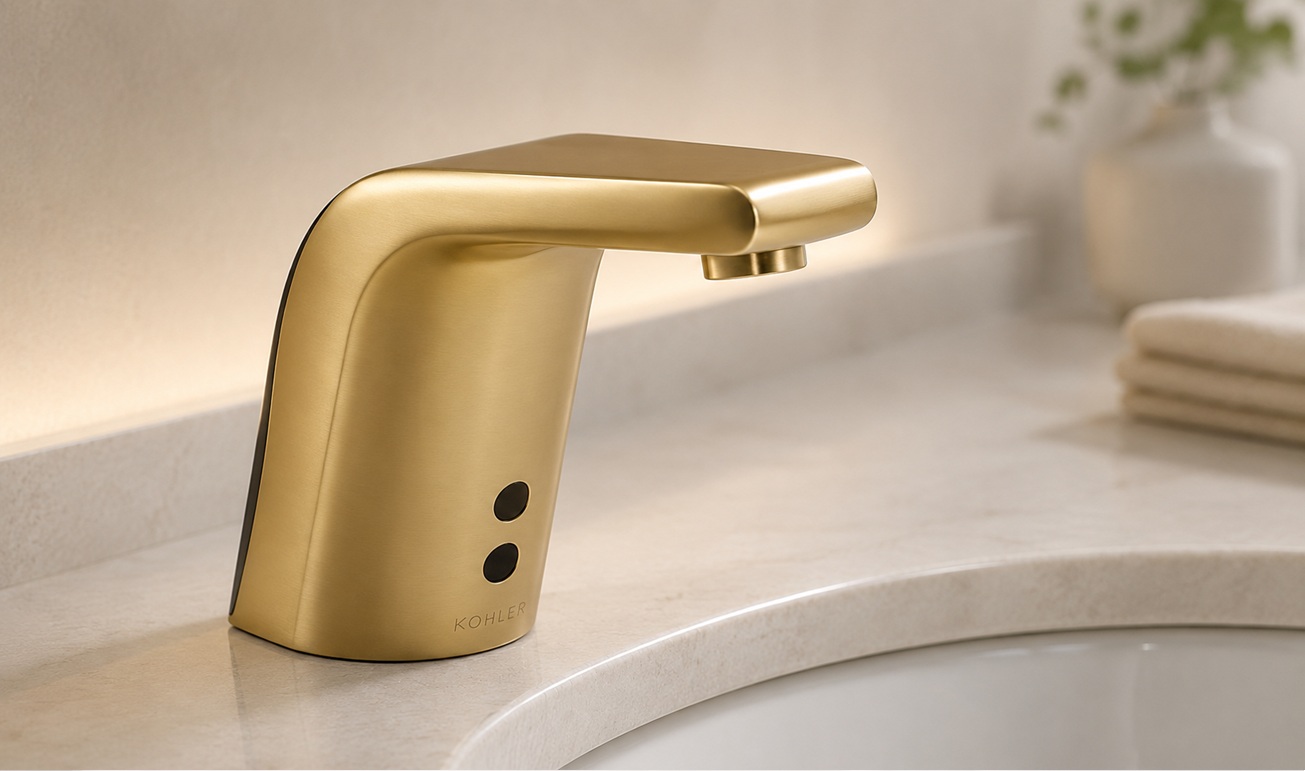
KOHLER
Best for design-forward commercial restroom aesthetics
KOHLER is often considered when the restroom needs a cleaner design language, brand familiarity, and touchless commercial fixtures that support premium office, hospitality, and public-facing interiors.
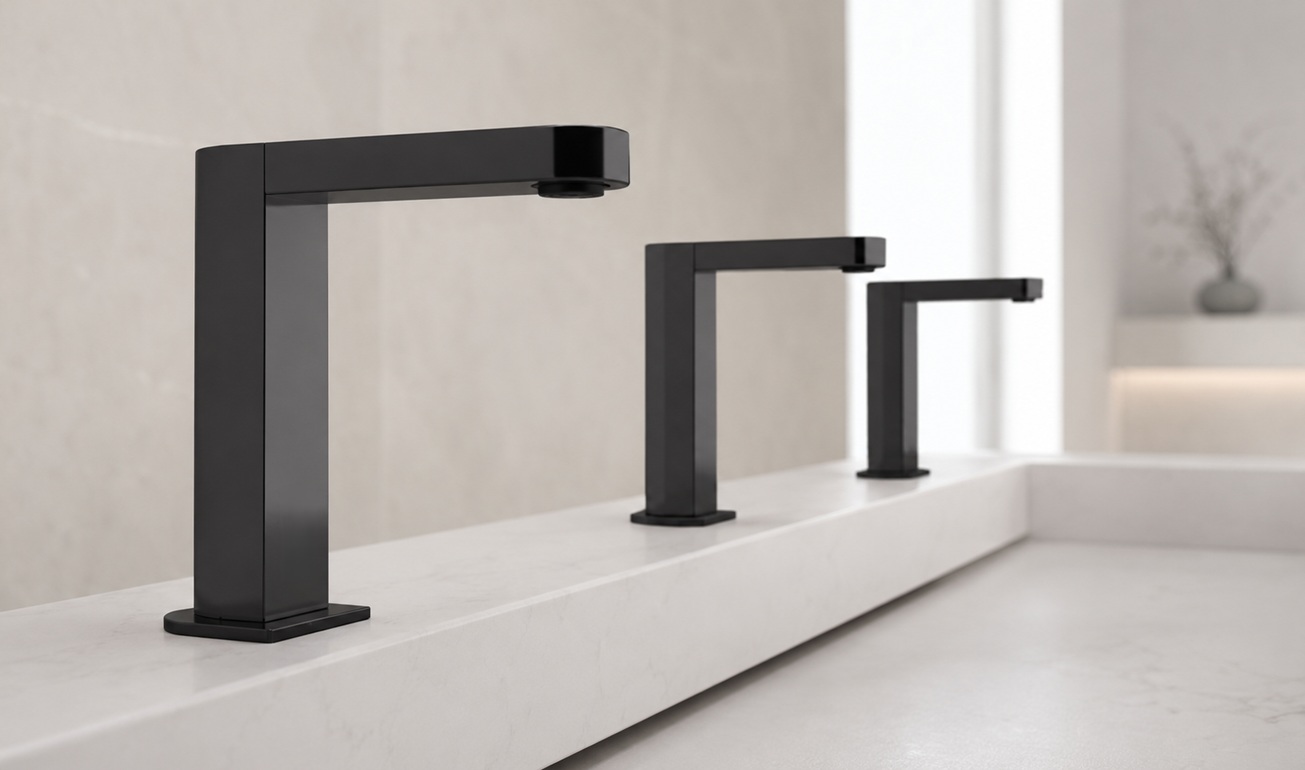
JunoShowers
Best for value-focused commercial touchless faucet options
JunoShowers is useful for projects comparing contemporary sensor faucets across public restrooms, restaurants, offices, and airport-style spaces where hands-free operation and finish selection are key buying points.
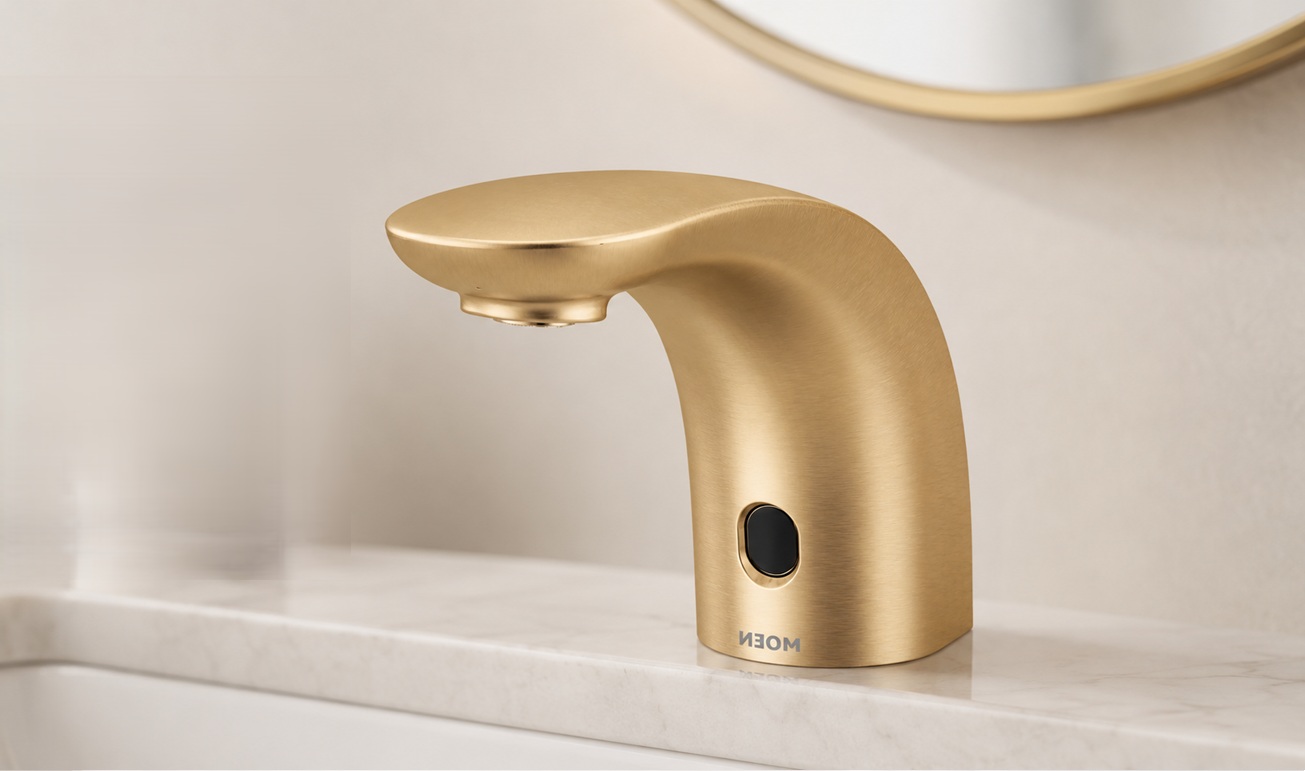
Moen Commercial
Best for heavy-use facilities and hygienic sensor operation
Moen Commercial is a practical choice for facilities that value brand familiarity, vandal-resistant construction, sensor-operated hygiene, and service parts across commercial lavatory faucet programs.
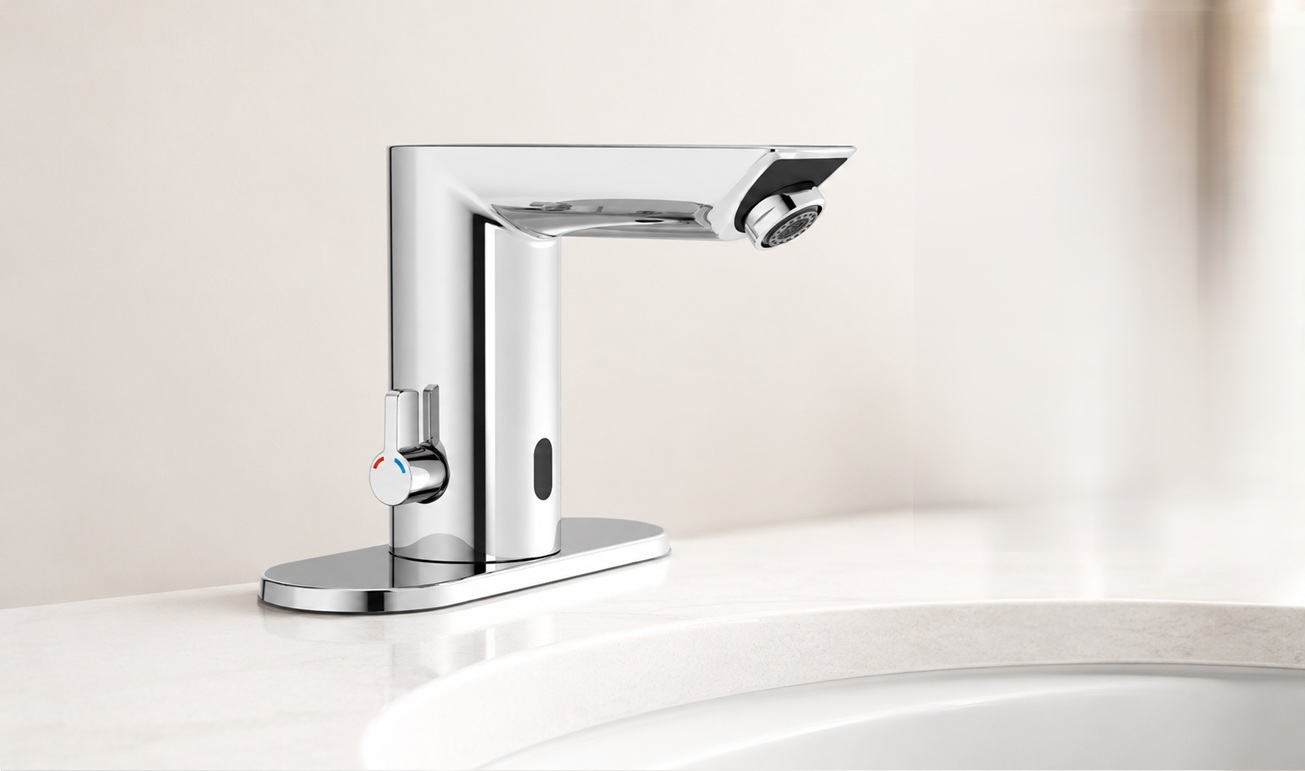
GROHE
Best for compact infrared control and modern styling
GROHE is useful where a project calls for modern European styling, infrared sensor activation, and a compact touchless lavatory faucet that can support upscale commercial restroom design.
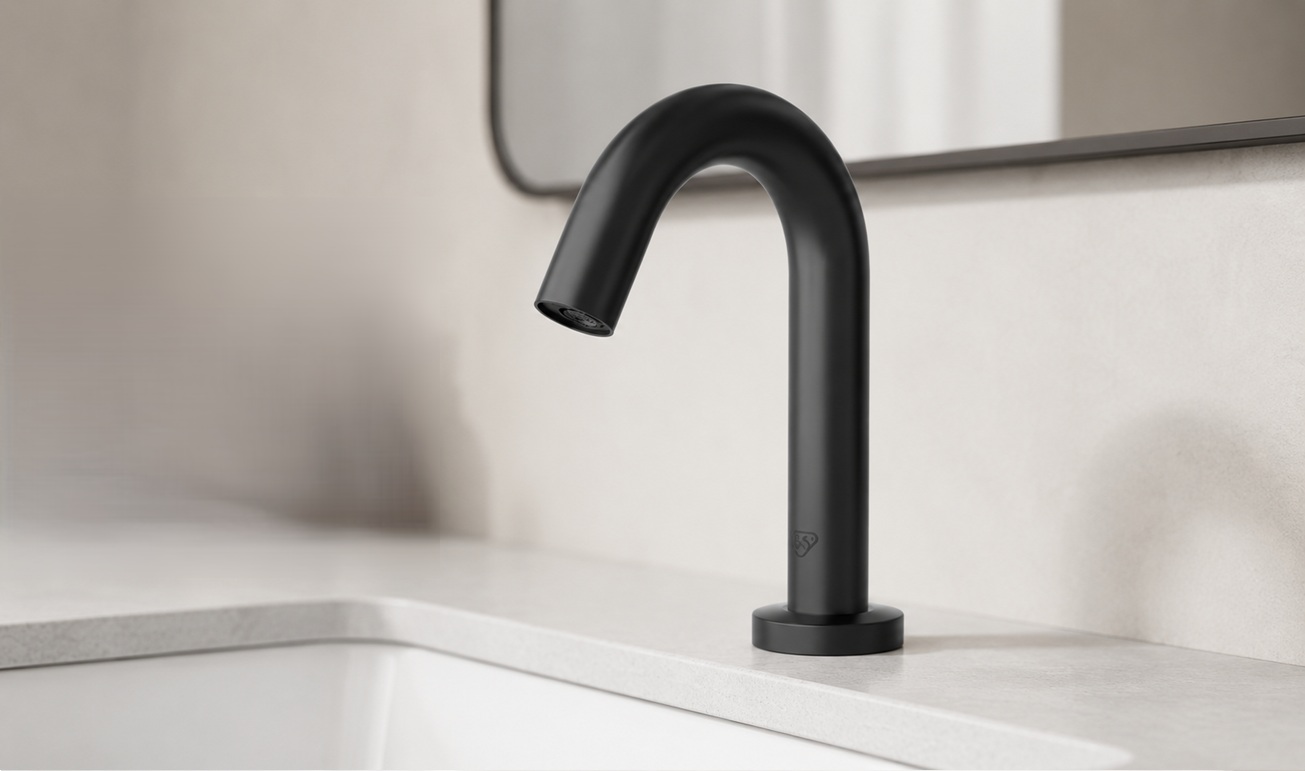
T&S Brass
Best for foodservice, utility, and rugged commercial environments
T&S Brass is especially relevant for restaurants, back-of-house hand sinks, service areas, and commercial environments where rugged faucet construction and repairability matter.
| Brand | AEC Fit Rating | Best For | Best Product Pick |
|---|---|---|---|
| Sloan | 4.9/5 | Best for heavy public restroom traffic and maintenance access | Sloan Optima EAF-300 Sensor Activated Commercial Faucet |
| FontanaShowers | 4.8/5 | Best for AEC design packages and finish variety | Fontana Couron Chrome Hands Free Automatic Touchless Smart Sensor Faucet |
| Zurn | 4.8/5 | Best for code-aware commercial plumbing specifications | Zurn AquaSense Sensor Faucet Series |
| American Standard | 4.7/5 | Best for broad commercial sensor faucet selection | NextGen Selectronic Touchless Faucet |
| Chicago Faucets | 4.7/5 | Best for institutional touch-free faucet specifications | Chicago Faucets E-Tronic 80 Touchless Series |
| BathSelect | 4.6/5 | Best for hospitality restroom fixture coordination | BathSelect Commercial Touchless Bathroom Faucet Collection |
| Delta Commercial | 4.6/5 | Best for proximity sensing and vandal-resistant lavatory use | Delta 590TPA0158TR Electronic Lavatory Faucet with Proximity Sensing |
| KOHLER | 4.6/5 | Best for design-forward commercial restroom aesthetics | KOHLER K-13460 Sculpted Touchless Commercial Bathroom Sink Faucet |
| JunoShowers | 4.5/5 | Best for value-focused commercial touchless faucet options | Juno Commercial Matte Black Deck Mounted Smart Touchless Sensor Faucet |
| Moen Commercial | 4.5/5 | Best for heavy-use facilities and hygienic sensor operation | Moen M-POWER CA8302 Sensor-Operated Lavatory Faucet |
| GROHE | 4.4/5 | Best for compact infrared control and modern styling | GROHE Bau Cosmopolitan E Touchless Electronic Faucet |
| T&S Brass | 4.4/5 | Best for foodservice, utility, and rugged commercial environments | T&S Brass ChekPoint Sensor Faucet Series |
Fontana Commercial Touchless Faucets Collections
 Fontana Touchless Sensor Faucet and Vessel Sink
Fontana Couron Chrome Hands Free Automatic Touchless Smart Sensor Faucet
Fontana Touchless Sensor Faucet and Vessel Sink
Fontana Couron Chrome Hands Free Automatic Touchless Smart Sensor Faucet
 Fontana Commercial Brushed Gold Automatic Hands Free Smart Sensor Faucet
 Fontana Commercial Brushed Gold Touchless Automatic Sensor Hands Free Faucet
 Fontana Brushed Nickel Commercial Automatic Sensor Faucet
 Fontana Antique Brass Commercial Automatic Sensor Faucet
 Fontana White & Gold Touchless Sensor Faucet
 Fontana HydroVibe Series Brushed Nickel Sensor Faucet & Soap Dispenser
 FontanaHalo AquaSense Edition Matte White Touchless Faucet
 Fontana HydroVibe Series Gold Sensor Faucet & Soap Dispenser
 Fontana HydroVibe Series Champagne Sensor Faucet & Soap Dispenser
 Fontana HydroVibe Series Brushed Gold Sensor Faucet & Soap Dispenser
 FontanaHalo AquaSense Edition Champagne Touchless Faucet
 FontanaHalo AquaSense Edition Brushed Gold Touchless Faucet
Fontana Touchless Sensor Faucet and Vessel Sink
Fontana Couron Chrome Hands Free Automatic Touchless Smart Sensor Faucet
Fontana Commercial Brushed Gold Automatic Hands Free Smart Sensor Faucet
Fontana Commercial Brushed Gold Touchless Automatic Sensor Hands Free Faucet
Fontana Brushed Nickel Commercial Automatic Sensor Faucet
Fontana Antique Brass Commercial Automatic Sensor Faucet
Fontana White & Gold Touchless Sensor Faucet
Fontana HydroVibe Series Brushed Nickel Sensor Faucet & Soap Dispenser
FontanaHalo AquaSense Edition Matte White Touchless Faucet
FontanaHalo AquaSense Edition Brushed Gold Touchless Faucet
Fontana Touchless Sensor Faucet and Vessel Sink
Fontana Couron Chrome Hands Free Automatic Touchless Smart Sensor Faucet
Fontana Commercial Brushed Gold Automatic Hands Free Smart Sensor Faucet
Fontana Commercial Brushed Gold Touchless Automatic Sensor Hands Free Faucet
Fontana Brushed Nickel Commercial Automatic Sensor Faucet
Fontana Antique Brass Commercial Automatic Sensor Faucet
Fontana White & Gold Touchless Sensor Faucet
Fontana HydroVibe Series Brushed Nickel Sensor Faucet & Soap Dispenser
FontanaHalo AquaSense Edition Matte White Touchless Faucet
Best Commercial Touchless Faucet Types by Project Need
There is no single faucet that fits every commercial restroom. The best choice depends on traffic level, sink style, maintenance staff, water-efficiency goals, power access, finish requirements, and the building type.
| Best Faucet Type | Best For | Why It Works | Specification Notes |
|---|---|---|---|
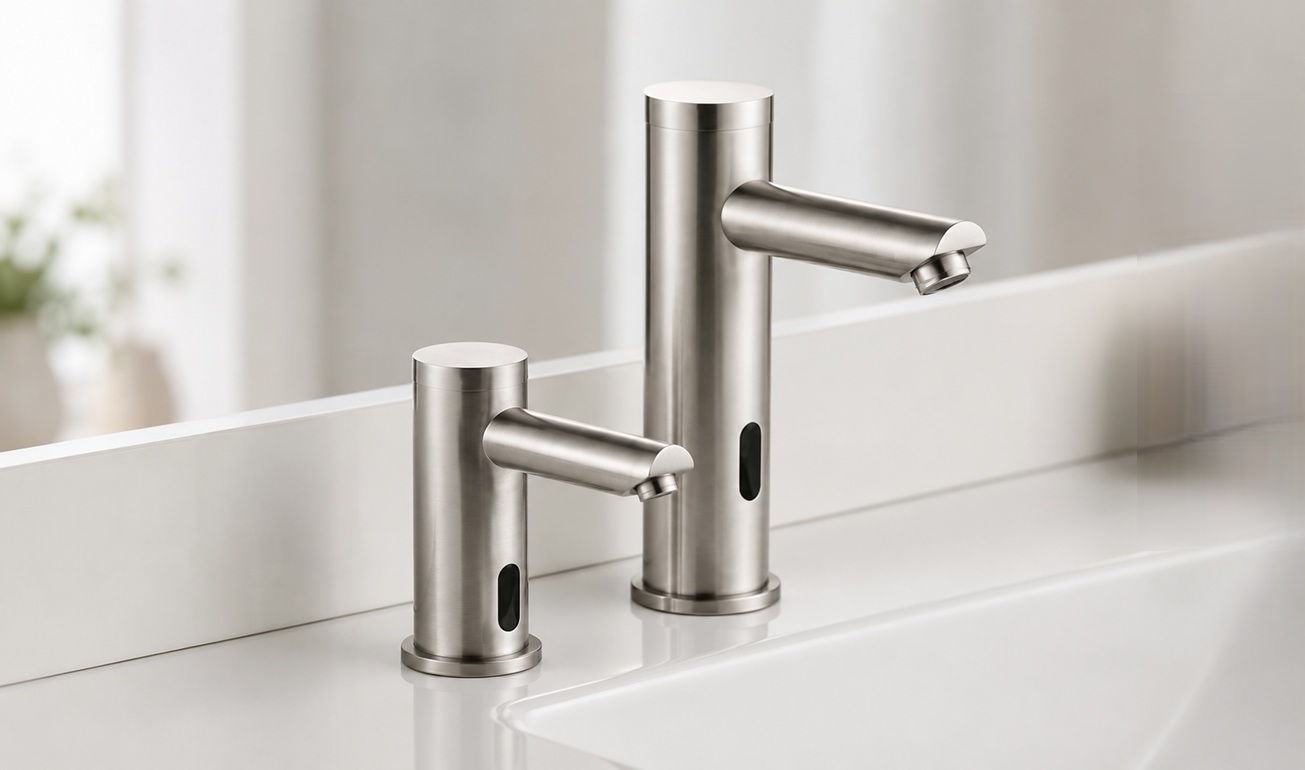
| Deck-Mounted Sensor Faucet | Offices, schools, retail, restaurants, and public restrooms | Simple layout, familiar installation, strong fit for repeated lavatory use | Check hole spacing, spout reach, aerator type, sensor range, and mixing valve needs. |
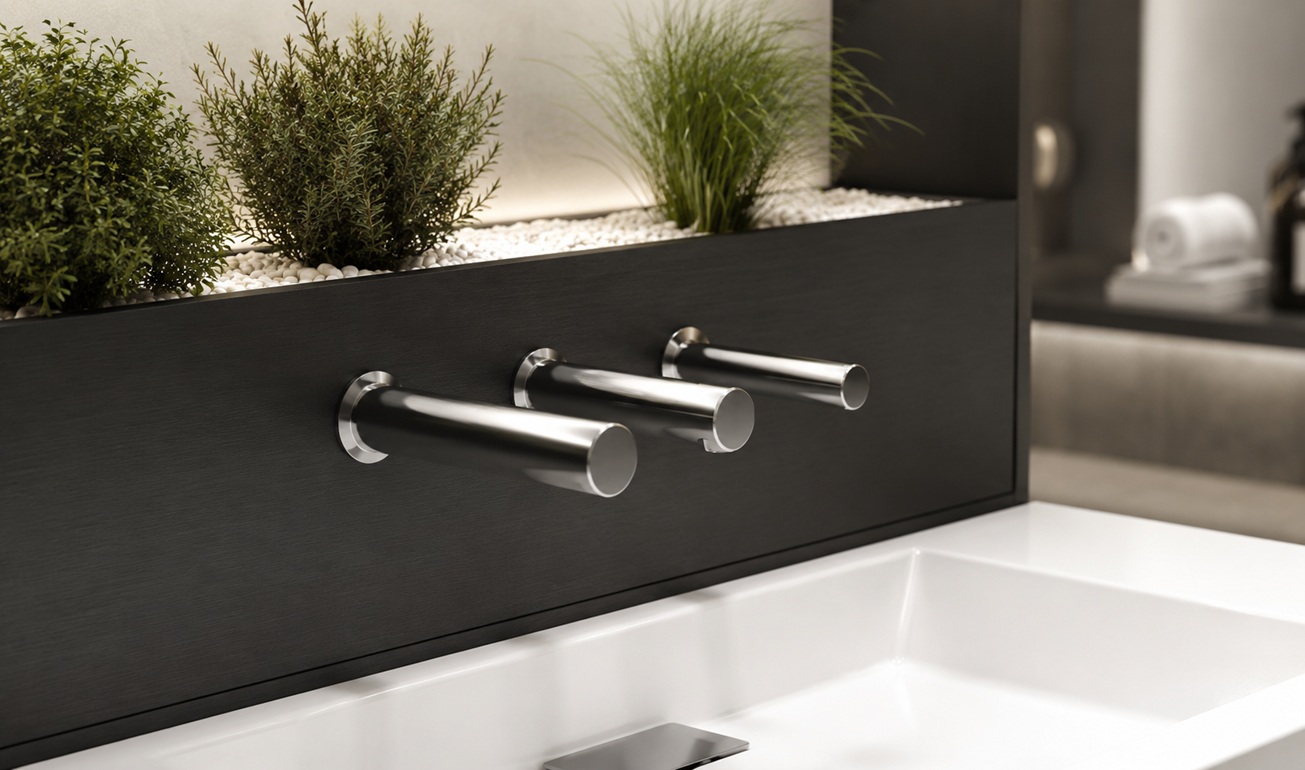
| Wall-Mounted Touchless Faucet | Modern commercial sinks, trough sinks, healthcare, and vandal-prone areas | Keeps the counter cleaner and works well with select wall-hung or trough basin designs | Coordinate rough-in height, splash control, maintenance access, and wall backing. |
| Battery-Powered Sensor Faucet | Retrofits, small restrooms, and projects with limited electrical access | Can reduce installation complexity when wiring is not practical | Review expected battery life, access panels, replacement process, and maintenance schedule. |
| Hardwired Sensor Faucet | Airports, stadiums, hospitals, universities, and large public restrooms | Supports high-volume use where facilities want centralized power planning | Coordinate low-voltage power, transformer location, service access, and backup strategy. |
| Low-Flow Touchless Faucet | LEED projects, water-saving retrofits, public facilities, and ESG-focused buildings | Helps reduce water use while keeping handwashing functional | Review GPM, spray pattern, user comfort, water pressure, and WaterSense documentation. |
| Designer Commercial Sensor Faucet | Hotels, restaurants, executive offices, luxury retail, and premium venues | Combines hands-free use with finishes that match high-end interiors | Check finish durability, replacement part availability, warranty, and style consistency. |
How to Evaluate the Best Commercial Touchless Faucets
A strong faucet review should not be based only on appearance. Commercial buyers should compare touchless faucets by the criteria that affect daily use, installation, water performance, and service cost.
Sensor Reliability
The sensor should activate quickly, shut off consistently, and avoid false triggering. Poor sensor calibration can frustrate users and increase maintenance calls.
Commercial Construction
Look for durable materials, corrosion-resistant finishes, stable mounting, serviceable components, and a body design that can withstand repeated public use.
Service Access
Facility teams should be able to access batteries, solenoids, filters, aerators, and mixing components without disrupting the entire restroom.
Flow Rate
Commercial lavatory faucets should balance water savings with comfortable handwashing. Very low flow may save water but can feel weak if the spray pattern is poor.
Power Source
Battery, plug-in, hardwired, solar-assisted, and hybrid power options each have different installation and maintenance implications.
Documentation
Commercial projects need specification sheets, installation instructions, rough-in diagrams, warranty language, replacement parts data, and compliance references.
Commercial Touchless Faucets Collection for Better Decision Making
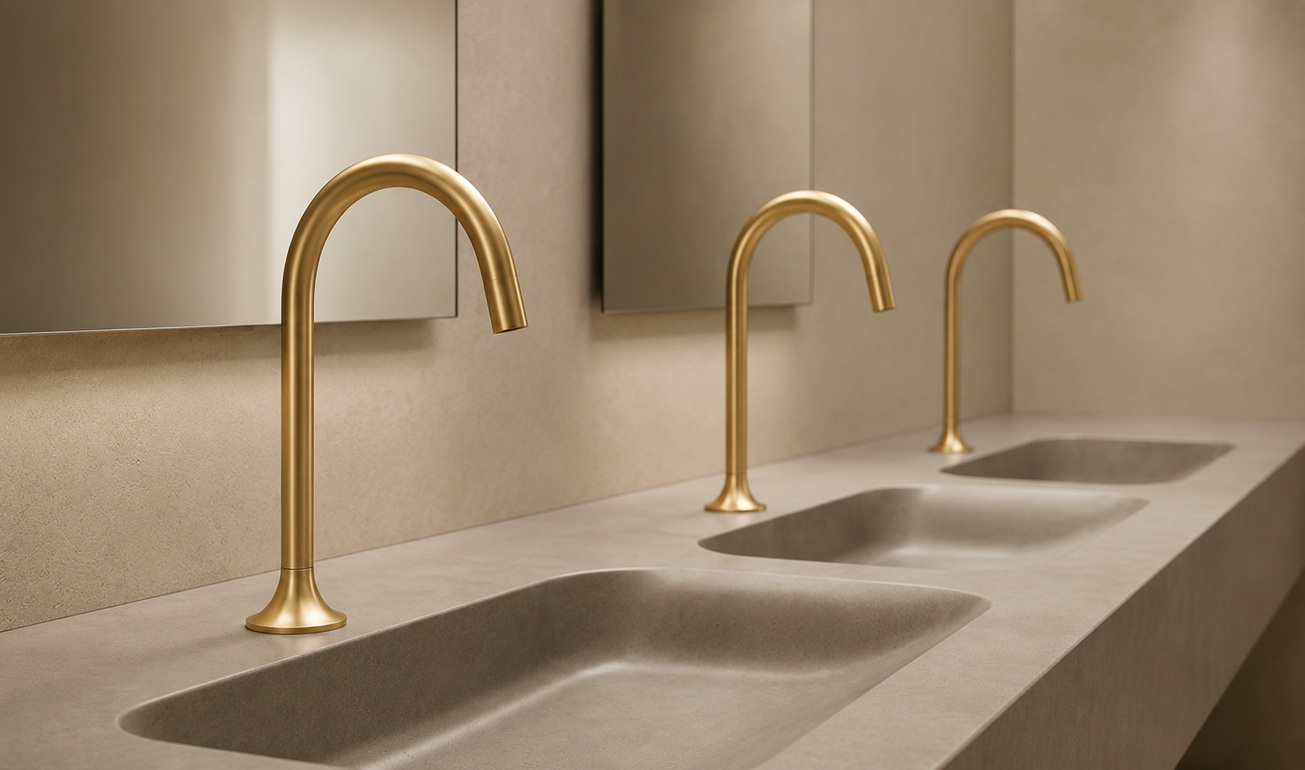
These Faucet supports visual scanning, product discovery, that attributes focused on commercial touchless faucets, high-traffic restroom use, AEC specification, ADA planning, or fixture performance.

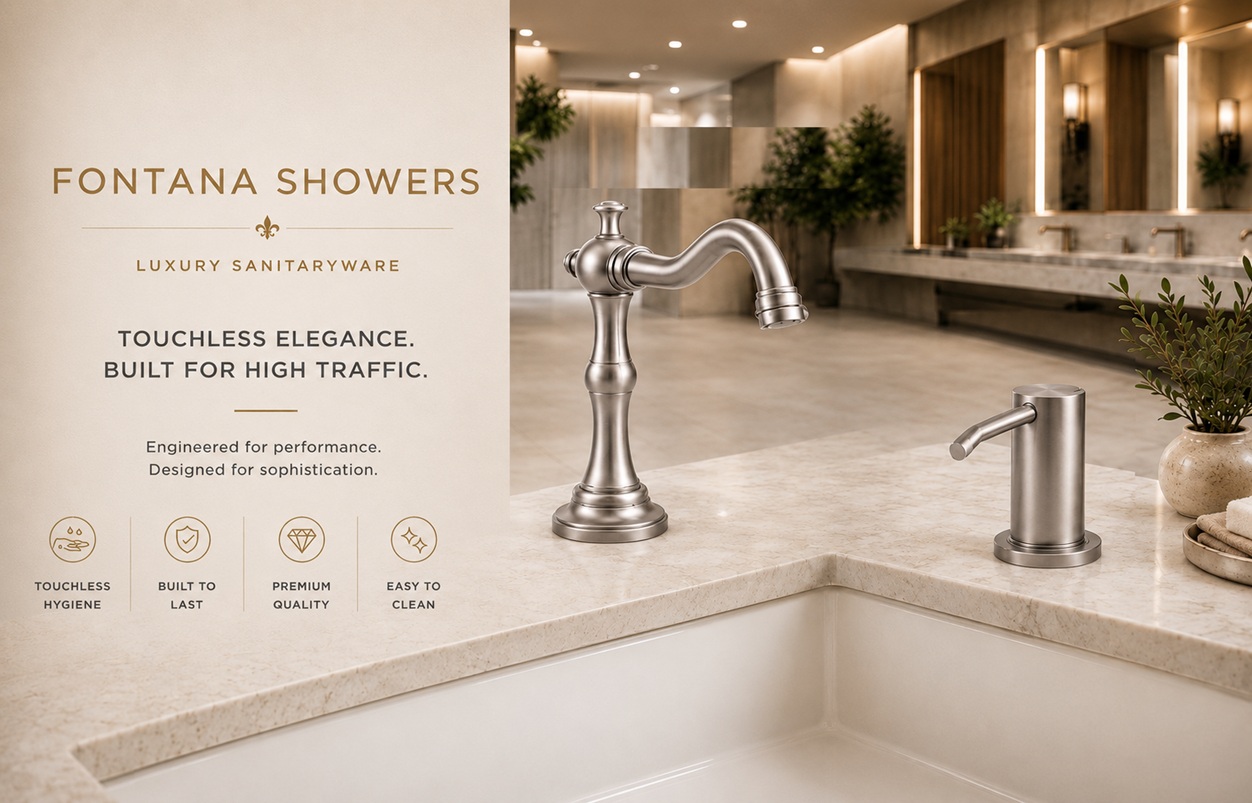
Best Features for Airports, Stadiums, Schools, and Public Buildings
High-traffic facilities need faucets that can handle repeated use during peak demand. In stadiums, the restroom rush may happen in short waves. In airports, the use is constant across long operating hours. In schools, the fixture has to survive daily use, cleaning, and occasional rough handling.
The best commercial touchless faucets for these settings usually include strong mounting hardware, durable finish options, quick sensor response, vandal-resistant design, low-flow performance, serviceable internal components, and simple maintenance access.
- Reliable sensor activation for fast user flow
- Battery or hardwired power options based on facility needs
- Low-flow aerators that preserve handwashing comfort
- Easy access to filters, solenoids, and replacement parts
- Durable body construction for public restroom environments
Standards and Documentation to Review Before Specifying
Commercial touchless faucet selection should include compliance and documentation review. The faucet itself is only one part of an accessible, water-efficient, code-aware restroom specification.
ADA and Accessibility
Touchless operation can support accessible use because the user does not need to grasp or twist a handle. The full lavatory area still needs proper reach, clear floor space, knee clearance, mounting height, and accessible placement.
WaterSense and Flow Rate
Water-efficient faucet selection should consider labeled products, flow rate, user comfort, pressure conditions, and spray pattern. Water savings should not make handwashing feel difficult or incomplete.
NSF, ASME, and Product Safety
Faucets used in potable water applications should be reviewed for relevant product certifications and supply fitting standards. This helps specifiers compare products with stronger technical confidence.
Commercial Touchless Faucet Buyer Checklist
Before purchasing a commercial sensor faucet, compare the product against the checklist below. This helps project owners avoid fixtures that look good online but create maintenance, installation, or user-experience problems later.
| Checklist Item | What to Confirm | Why It Matters |
|---|---|---|
| Sink Compatibility | Hole size, deck thickness, spout reach, basin depth, splash control | A faucet that does not align with the basin can splash, feel awkward, or require rework. |
| Power Source | Battery, hardwired, plug-in, solar-assisted, or hybrid | Power strategy affects installation cost, maintenance schedule, and long-term reliability. |
| Mixing Method | Single supply, mechanical mixing valve, thermostatic mixing, or below-deck mixing | Temperature control must be planned before installation, especially in public and healthcare restrooms. |
| Sensor Range | Factory settings, adjustable range, detection zone, timeout feature | Correct sensor tuning prevents false activation and improves user experience. |
| Maintenance Access | Battery access, filter access, solenoid replacement, aerator cleaning, parts availability | Easy service access reduces downtime and simplifies facility maintenance. |
| Compliance Support | ADA planning, WaterSense or low-flow data, NSF/ANSI information, ASME/CSA documentation | Documentation helps architects, engineers, and owners make defensible selections. |
Best Touchless Faucet Choices by Building Type
Healthcare facilities should prioritize hands-free operation, cleanability, controlled water temperature, and maintenance access.
Hotels and restaurants should balance hygiene with finish quality, guest experience, and design consistency.
Schools and universities need rugged fixtures, simple service access, and repeatable product standards across multiple restroom groups.
Airports and stadiums need fast activation, durable construction, easy part replacement, and performance under heavy public use.
Corporate offices usually benefit from modern low-profile faucets that support clean design, ADA-friendly use, and water efficiency.

Why These Commercial Touchless Faucet Types Were Selected
This guide ranks faucet types by practical commercial performance rather than decorative appearance alone. The strongest choices are the faucet categories that most directly support high-use restroom demands, maintenance access, accessible operation, water control, and long-term project value.
Experience-Based Criteria
Commercial restroom fixtures are evaluated through real use conditions: repeated activation, public traffic, cleaning routines, visible wear, user comfort, and service calls.
Specification-Based Criteria
Strong faucet choices include product documentation, installation instructions, rough-in data, compliance support, warranty details, and replacement part availability.
Authority-Based Criteria
The guide considers accessibility, water efficiency, plumbing supply fitting standards, potable-water certification context, and green building expectations.
Internal Links for Deeper Specification Research
Use these related resources to guide architects, engineers, contractors, facility teams, and owners toward broader commercial restroom planning topics.
Commercial Touchless Faucet FAQ
Are touchless faucets better for commercial bathrooms?
Touchless faucets are often better for commercial bathrooms because they reduce shared handle contact, help control water use, and create a cleaner modern restroom experience. The best results depend on correct sensor range, proper installation, and regular maintenance.
What flow rate is best for a commercial touchless faucet?
Many commercial restroom projects use low-flow lavatory faucets to support water efficiency. The right flow rate depends on local code, user comfort, pressure conditions, faucet design, and the building’s sustainability goals.
Are battery-powered sensor faucets reliable?
Battery-powered sensor faucets can be reliable when the product is commercial grade and the facility has a clear battery replacement schedule. They are especially useful for retrofit projects where hardwiring is difficult.
Are hardwired touchless faucets better than battery-powered faucets?
Hardwired faucets are often preferred for high-volume buildings because they reduce battery replacement needs. Battery-powered models may be better for smaller projects, retrofits, or restrooms where electrical access is limited.
What makes a faucet ADA compliant?
A faucet alone does not make the full lavatory compliant. The restroom must also consider reach, clear floor space, knee clearance, mounting height, and accessible placement. Touchless activation can help because it does not require grasping, twisting, or pinching a handle.
What is the best commercial touchless faucet for high-traffic restrooms?
For high-traffic restrooms, the best choice is usually a durable commercial sensor faucet with reliable activation, vandal-resistant construction, easy service access, low-flow performance, and clear replacement parts support.
Final Recommendation
The best commercial touchless faucet is the one that fits the building’s traffic level, sink design, maintenance capacity, accessibility requirements, water-efficiency goals, and design expectations. For most high-use restrooms, start with a commercial-grade deck-mounted or wall-mounted sensor faucet, confirm ADA and water-efficiency planning, verify service access, and compare documentation before selecting the final model.