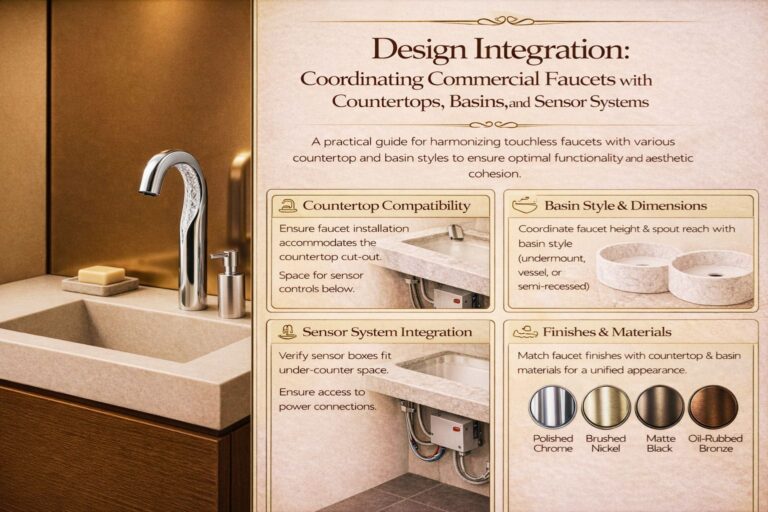
Guide for High-Traffic Restrooms
Commercial bathroom fixtures are selected for durability, hygiene, accessibility, water efficiency, maintenance access, and long-term value. In high-traffic buildings, the right combination of faucets, sinks, toilets, urinals, flush valves, soap dispensers, drains, and shower fixtures can improve daily restroom performance while reducing avoidable service problems.
This guide explains how to choose commercial bathroom fixtures for offices, schools, hotels, hospitals, airports, stadiums, restaurants, public buildings, and other busy facilities.
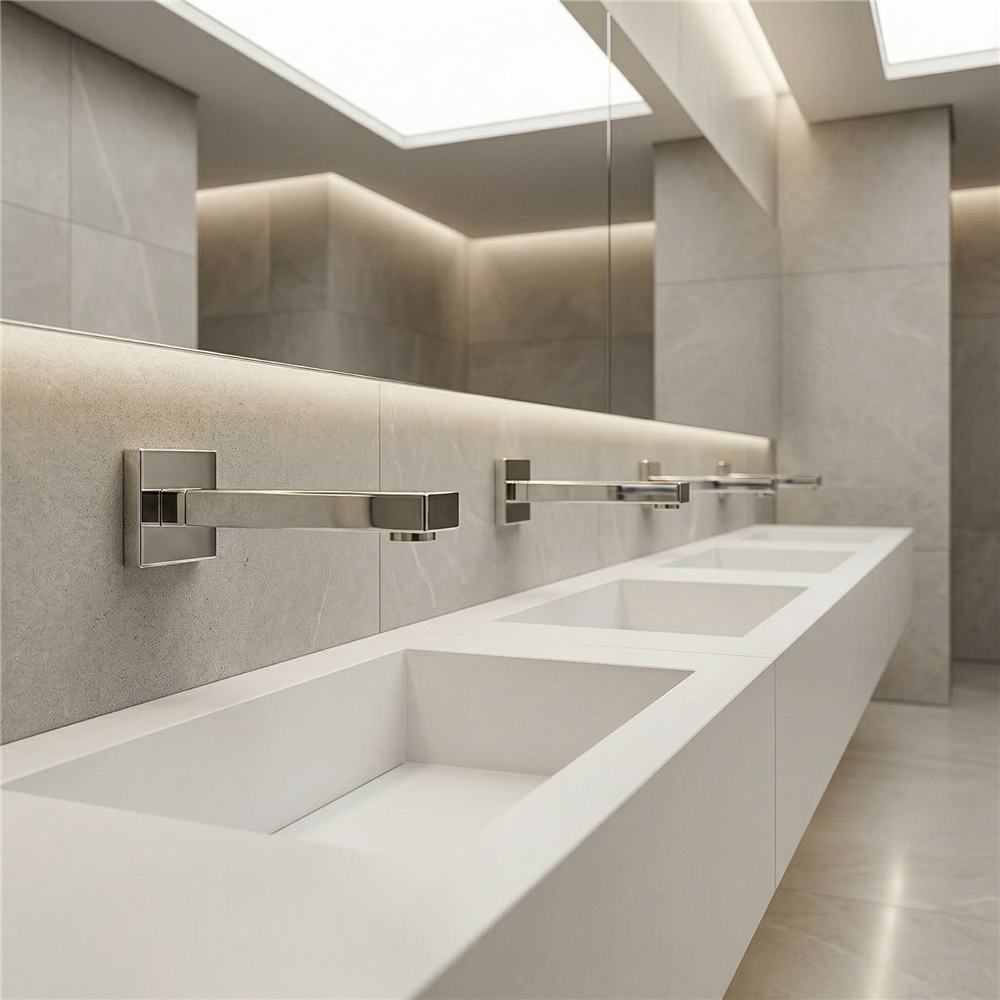
What Are Commercial Bathroom Fixtures?
Commercial bathroom fixtures are restroom products designed for repeated daily use in public, institutional, hospitality, healthcare, education, transportation, and workplace environments. They include the visible products users interact with, as well as the plumbing components that support reliable operation behind the scenes.
Faucets
Manual, metering, touchless, deck-mounted, wall-mounted, low-flow, and ADA-friendly faucets used for commercial handwashing areas.
Sinks
Wall-hung lavatories, countertop sinks, trough sinks, stainless steel basins, solid-surface wash stations, and vandal-resistant options.
Toilets and Urinals
Floor-mounted, wall-hung, flushometer, tank-type, high-efficiency, water-saving, and institutional-grade restroom fixtures.
Flush Valves
Manual, sensor-operated, battery-powered, hardwired, exposed, concealed, water-saving, and commercial-grade flush valve systems.
Why Commercial Bathroom Fixtures Matter
Commercial restrooms are judged by cleanliness, function, appearance, and reliability. A faucet that leaks, a sink that splashes, a flush valve that fails, or a dispenser that is hard to refill can quickly affect the user experience and increase maintenance work.
The best commercial bathroom fixture choices are not based only on style. Project teams should review traffic level, building type, accessibility requirements, water usage, cleaning routines, power access, replacement parts, warranty support, and installation documentation before making a final selection.
A strong specification helps architects, contractors, facility managers, and owners avoid fixtures that look attractive at first but perform poorly under real commercial use.
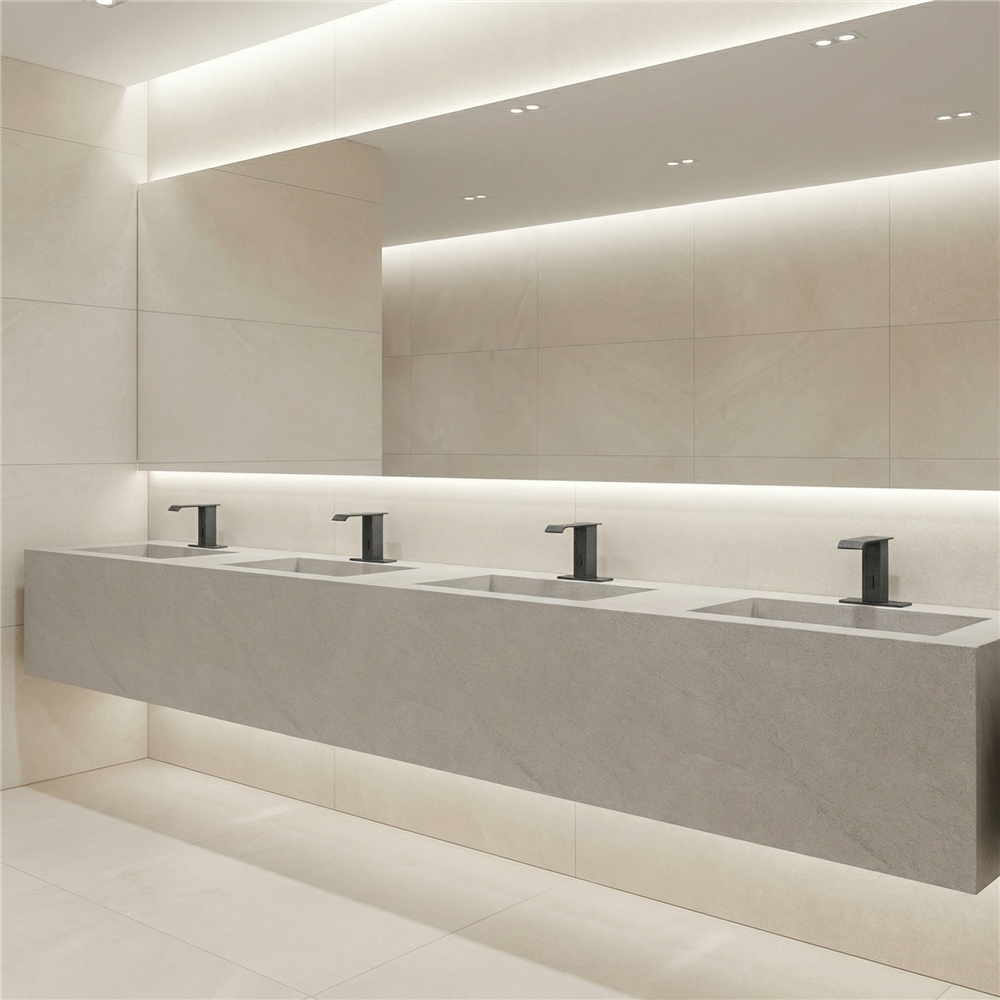
Commercial Bathroom Fixture Categories to Compare
A complete commercial bathroom fixture plan should look at every fixture group as part of one connected restroom system. Faucets, sinks, toilets, urinals, flush valves, soap dispensers, and accessories should work together for hygiene, water control, user comfort, service access, and visual consistency.
| Fixture Category | Common Options | Best For | Selection Notes |
|---|---|---|---|
| Commercial Faucets | Manual, metering, touchless, deck-mounted, wall-mounted, low-flow | Offices, schools, hotels, healthcare, airports, stadiums | Review sensor reliability, spout reach, flow rate, ADA-friendly operation, power source, and maintenance access. |
| Commercial Sinks | Wall-hung lavatories, counter sinks, trough sinks, stainless steel, solid surface | Public restrooms, healthcare, restaurants, schools, workplace bathrooms | Confirm basin depth, splash control, mounting height, ADA clearance, durability, and compatibility with selected faucets. |
| Commercial Toilets | Flushometer, tank-type, wall-hung, floor-mounted, high-efficiency | High-use restrooms, public buildings, hospitality, education, healthcare | Compare flush performance, water use, carrier requirements, bowl type, service access, and code requirements. |
| Commercial Urinals | Flushometer, low-flow, waterless, wall-mounted, sensor-operated | Stadiums, airports, schools, offices, public venues | Check flush volume, drain requirements, maintenance routines, odor control, mounting height, and water-efficiency goals. |
| Flush Valves | Manual, sensor, exposed, concealed, battery, hardwired | Toilets and urinals in busy commercial restrooms | Review valve type, rough-in, battery access, sensor range, water pressure, vandal resistance, and replacement parts. |
| Soap Dispensers | Manual, automatic, deck-mounted, wall-mounted, bulk-fill, cartridge-based | Handwashing stations, healthcare, offices, schools, hotels, airports | Compare refill method, capacity, drip control, sensor operation, finish match, and maintenance labor. |
| Shower Fixtures | Commercial showerheads, valves, hand showers, thermostatic controls | Gyms, dormitories, hotels, wellness centers, locker rooms | Review water efficiency, anti-scald protection, vandal resistance, flow performance, and cleaning access. |
Best Commercial Bathroom Fixtures by Building Type
Each building type has a different restroom priority. A school restroom needs rugged fixtures and easy service. A hotel restroom needs design consistency and guest appeal. A healthcare restroom needs cleanability, accessibility, and dependable handwashing support.
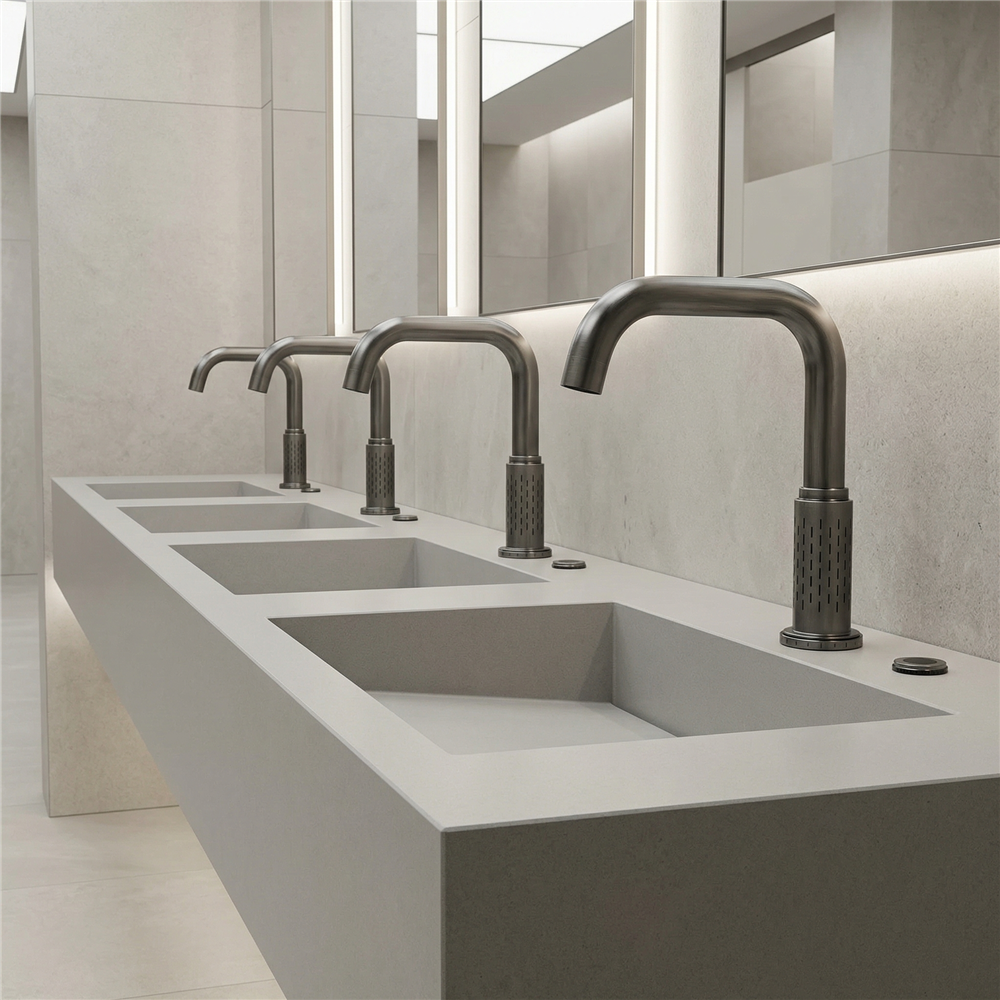
Airports, Stadiums, and Public Buildings
Large public facilities need commercial bathroom fixtures that can handle heavy use, fast user flow, vandal exposure, and frequent cleaning. Sensor faucets, durable sinks, exposed or concealed flush valves, and high-efficiency toilets are common choices for these environments.
Hotels, Offices, and Restaurants
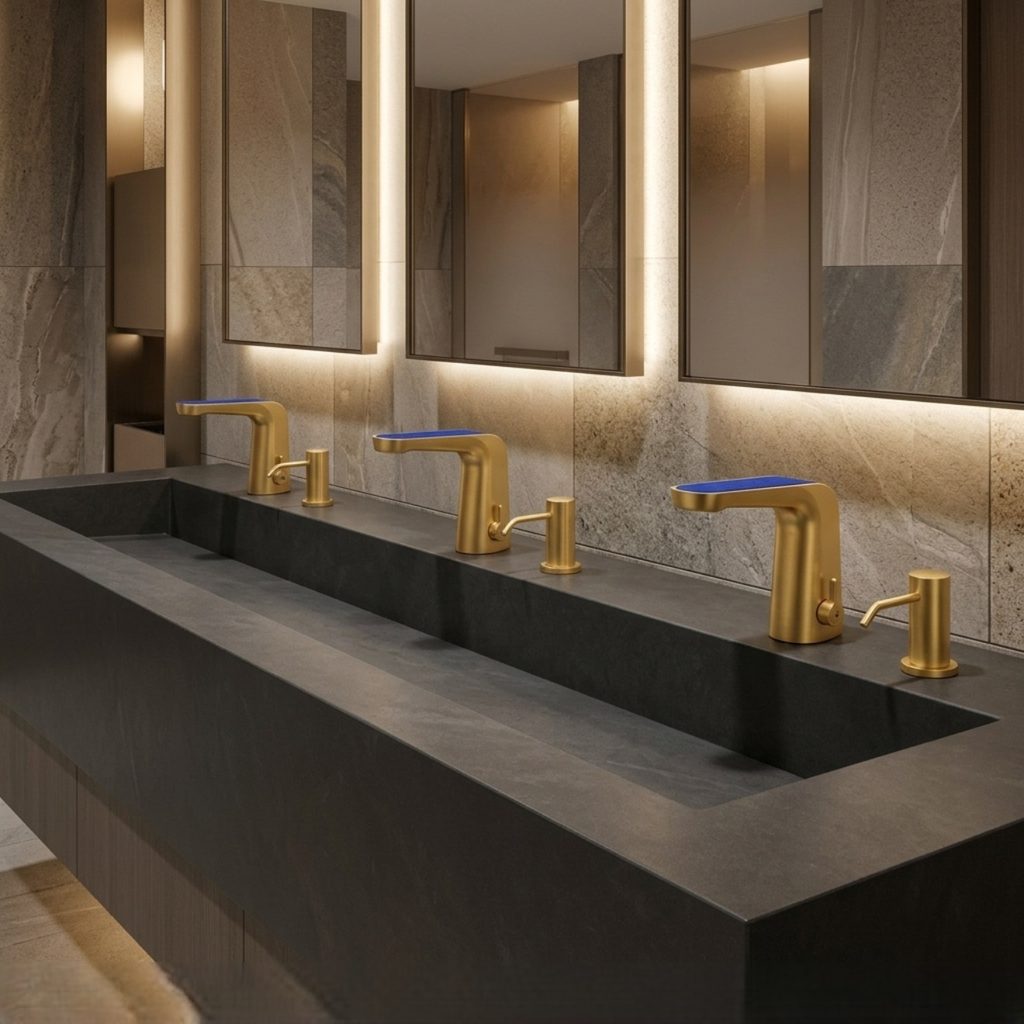
Guest-facing and customer-facing restrooms need a balance of function and presentation. Finish consistency, attractive faucet design, quiet operation, reliable soap dispensing, and clean counter areas can improve the overall impression of the property.
Healthcare, Schools, and Universities
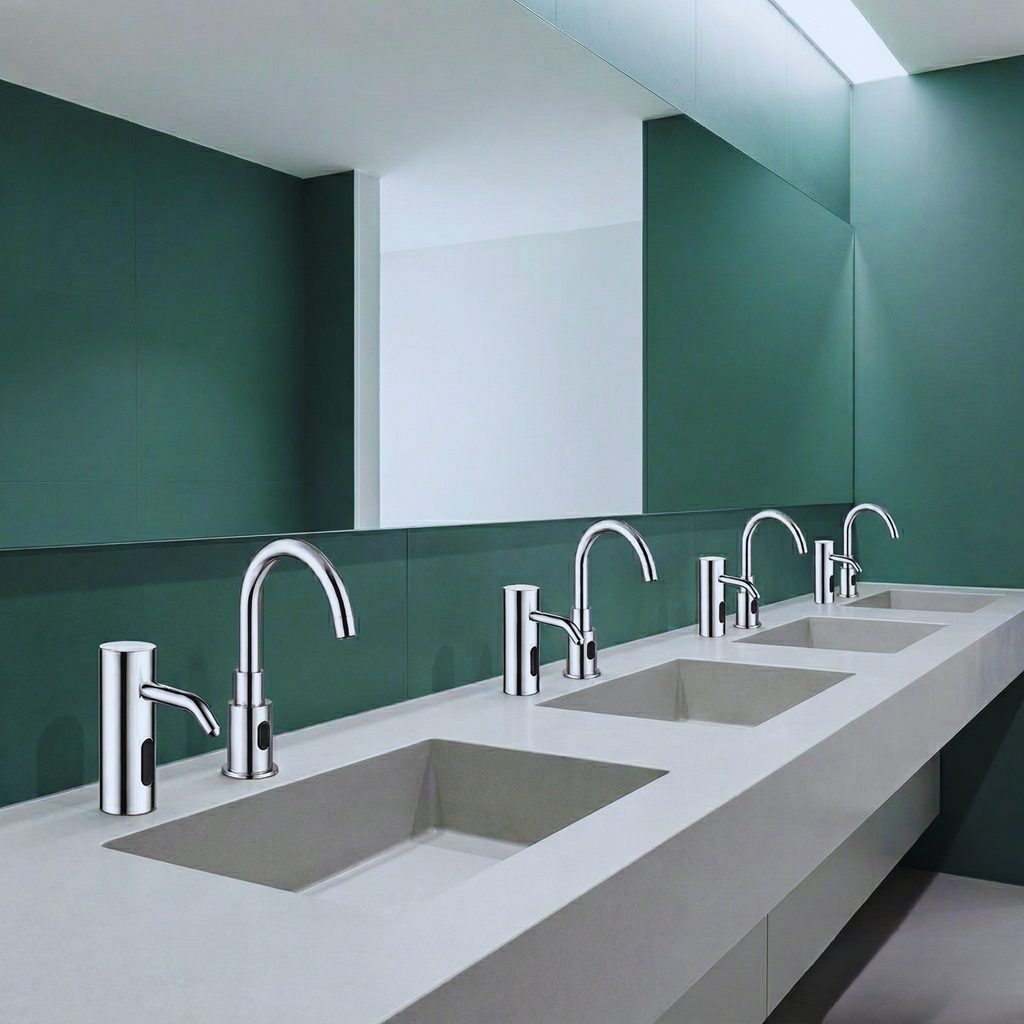
Healthcare and education facilities need practical fixtures that support hand hygiene, ADA-friendly use, easy cleaning, and repeatable maintenance. Standardized faucet, sink, toilet, and flush valve selections can simplify long-term facility management.
What Makes a Commercial Fixture “Commercial Grade”?
A commercial-grade bathroom fixture should be built for repeated use, frequent cleaning, stable mounting, service access, and long-term parts support. In many projects, the difference between a low-cost fixture and a true commercial fixture becomes clear after the first year of daily use.
Durable materials such as solid brass, stainless steel, vitreous china, heavy-duty carriers, corrosion-resistant finishes, and serviceable internal components can improve fixture life. Good documentation also matters because contractors, architects, engineers, and facility managers need clear specifications before and after installation.
- Commercial installation documentation
- Reliable replacement parts availability
- Warranty language suitable for commercial use
- ADA and code-aware specification support
- Water-efficiency and product-standard references
- Maintenance-friendly access to serviceable components
Commercial Bathroom Fixture Standards to Review
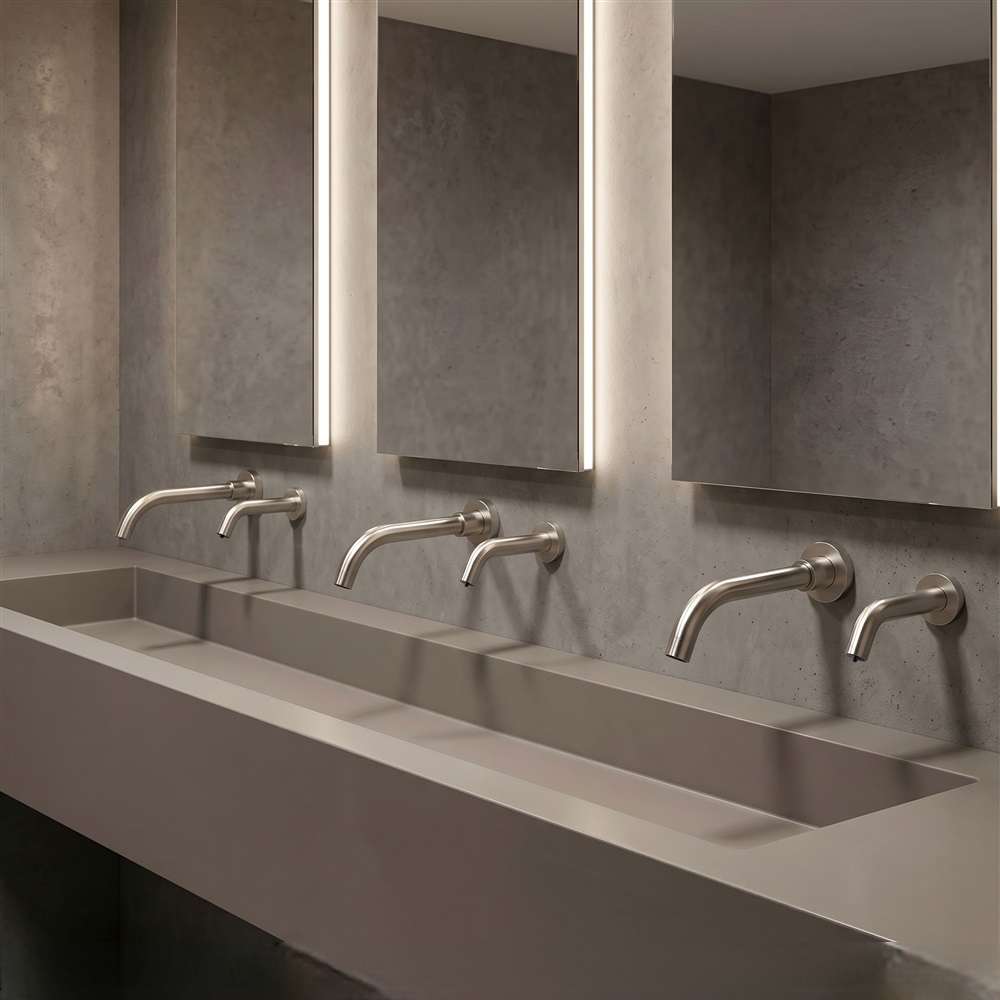
Commercial bathroom fixture selection should include accessibility, water use, product safety, plumbing code, and sustainability review. Requirements can vary by jurisdiction and project type, so product documentation should be checked during specification rather than after installation.
ADA Accessibility
Accessible commercial restrooms must consider lavatory access, reach, clear floor space, knee clearance, faucet controls, mirror placement, toilet clearance, grab bars, and related restroom layout requirements.
WaterSense and Efficiency
Water-efficient faucets, toilets, urinals, and shower fixtures can help reduce operating costs and support green building goals. Flow rates and flush volumes should be selected for both efficiency and real performance.
Product Certification
Faucets and plumbing products used with drinking water should be reviewed for relevant certification and health-effect standards. This is especially important for commercial projects with formal specification requirements.
Plumbing Supply Fittings
Commercial faucets, shower fittings, metering fittings, supply stops, and related products should be checked against applicable plumbing supply fitting standards and local code requirements.
Fixture Count and Code
Commercial restroom design must account for the minimum number and type of fixtures needed for the building occupancy, use group, and local plumbing code requirements.
LEED and Sustainability
Projects pursuing green building goals should compare indoor water-use reduction requirements, eligible WaterSense-labeled products, and fixture documentation before final selection.
Commercial Bathroom Fixture Buying Guide
Before selecting fixtures, compare products by how they will perform after installation. A strong commercial restroom specification should reduce callbacks, simplify maintenance, support code-aware design, and create a better user experience.
| Buying Factor | What to Check | Why It Matters |
|---|---|---|
| Traffic Level | Daily users, peak restroom demand, cleaning frequency, vandal exposure | High-traffic restrooms need stronger mounting, durable finishes, serviceable parts, and reliable performance. |
| Material Quality | Solid brass, stainless steel, vitreous china, corrosion-resistant finishes, heavy-duty carriers | Material quality affects fixture life, appearance, repair frequency, and cleaning resistance. |
| ADA Planning | Reach range, faucet controls, lavatory height, knee clearance, toilet clearance, grab bars | Accessibility is a layout and product-selection issue, not only a fixture label. |
| Water Efficiency | Faucet flow rate, toilet flush volume, urinal flush volume, shower flow, WaterSense data | Efficient fixtures can reduce water use while supporting sustainability and operating-cost goals. |
| Maintenance Access | Aerators, cartridges, solenoids, batteries, filters, flush valve parts, soap refill access | Easy access can reduce downtime and make routine maintenance faster. |
| Installation Requirements | Rough-in, supply lines, wall backing, carriers, power source, sink compatibility | Incorrect coordination can lead to installation delays, splash issues, and costly rework. |
| Documentation | Spec sheets, installation guides, repair parts, warranty, certifications, BIM or CAD files | Good documentation helps architects, contractors, and facility managers specify with confidence. |
Common Commercial Bathroom Fixture Selection Mistakes
Many restroom problems begin before installation. Choosing fixtures only by price, finish, or product photo can create performance issues later. Commercial restrooms need products that match the building, user volume, maintenance plan, and compliance needs.
Choosing Residential-Grade Fixtures
Residential-style products may not have the durability, warranty support, service access, or documentation needed for commercial restroom use.
Ignoring Sink and Faucet Compatibility
A faucet with the wrong spout reach or flow pattern can cause splash problems even when the fixture is technically high quality.
Forgetting Maintenance Labor
A fixture that is difficult to service can cost more over time than a higher-quality option with better access and available parts.
Overlooking Power Requirements
Touchless faucets, automatic flush valves, and sensor dispensers need a clear battery, hardwired, or hybrid power strategy.
Specifying Water Savings Alone
Low-flow products should still provide a comfortable user experience and meet the performance needs of the restroom.
Skipping Compliance Review
ADA planning, local plumbing code, potable-water certification, and sustainability documentation should be reviewed before purchase.
How to Compare Commercial Bathroom Fixture Brands
A useful commercial fixture guide should explain why certain products or brands deserve consideration. Strong comparisons should be based on evidence that helps buyers make a practical decision for real buildings.
Experience
Look for products suitable for real commercial environments, including public restroom traffic, cleaning routines, user behavior, and facility maintenance needs.
Expertise
Compare flow rates, flush volumes, rough-in requirements, fixture compatibility, ADA planning, power options, and serviceable components.
Authority
Prioritize products with clear documentation, recognized certifications, code-aware specification support, and strong manufacturer resources.
Trust
Review warranty terms, replacement part availability, installation guides, repair instructions, commercial support, and long-term service expectations.
Lifecycle Value
Compare total cost beyond purchase price, including installation, water use, maintenance, cleaning, downtime, repairs, and replacement cycles.
Project Fit
The best fixture depends on the building type, restroom traffic, design goals, operating budget, sustainability targets, and facility team capacity.
Commercial Bathroom Fixture FAQ
What are commercial bathroom fixtures?
Commercial bathroom fixtures are faucets, sinks, toilets, urinals, flush valves, soap dispensers, shower fixtures, drains, and related restroom products designed for repeated use in commercial, public, institutional, and hospitality buildings.
What fixtures are required in a commercial restroom?
Commercial restroom fixture requirements depend on building occupancy, local plumbing code, accessibility rules, and project type. Most commercial restrooms include lavatories, faucets, toilets, flush valves, accessories, and sometimes urinals, showers, or specialty fixtures.
Are touchless fixtures better for commercial bathrooms?
Touchless faucets, automatic flush valves, and sensor soap dispensers can reduce shared contact points and improve the user experience. They should be selected with reliable sensors, proper power planning, and accessible maintenance in mind.
What is the best material for commercial bathroom fixtures?
Strong commercial fixture materials include solid brass for faucets, stainless steel for basins and accessories, vitreous china for toilets and urinals, and corrosion-resistant finishes for visible hardware. The best material depends on the fixture type and environment.
How do commercial fixtures help reduce water use?
Low-flow faucets, efficient toilets, water-saving urinals, metering controls, and touchless operation can reduce unnecessary water use when properly specified and maintained.
How should facility managers choose commercial bathroom fixtures?
Facility managers should compare fixture durability, maintenance access, replacement parts, warranty support, water efficiency, accessibility, cleaning requirements, and installation documentation before selecting products.
Final Recommendation
The best commercial bathroom fixture package is durable, accessible, water-efficient, easy to maintain, and appropriate for the building’s traffic level. Before selecting products, compare faucet and sink compatibility, toilet and flush valve performance, soap dispenser service access, ADA planning, water-use targets, product certifications, installation requirements, and long-term replacement part support.