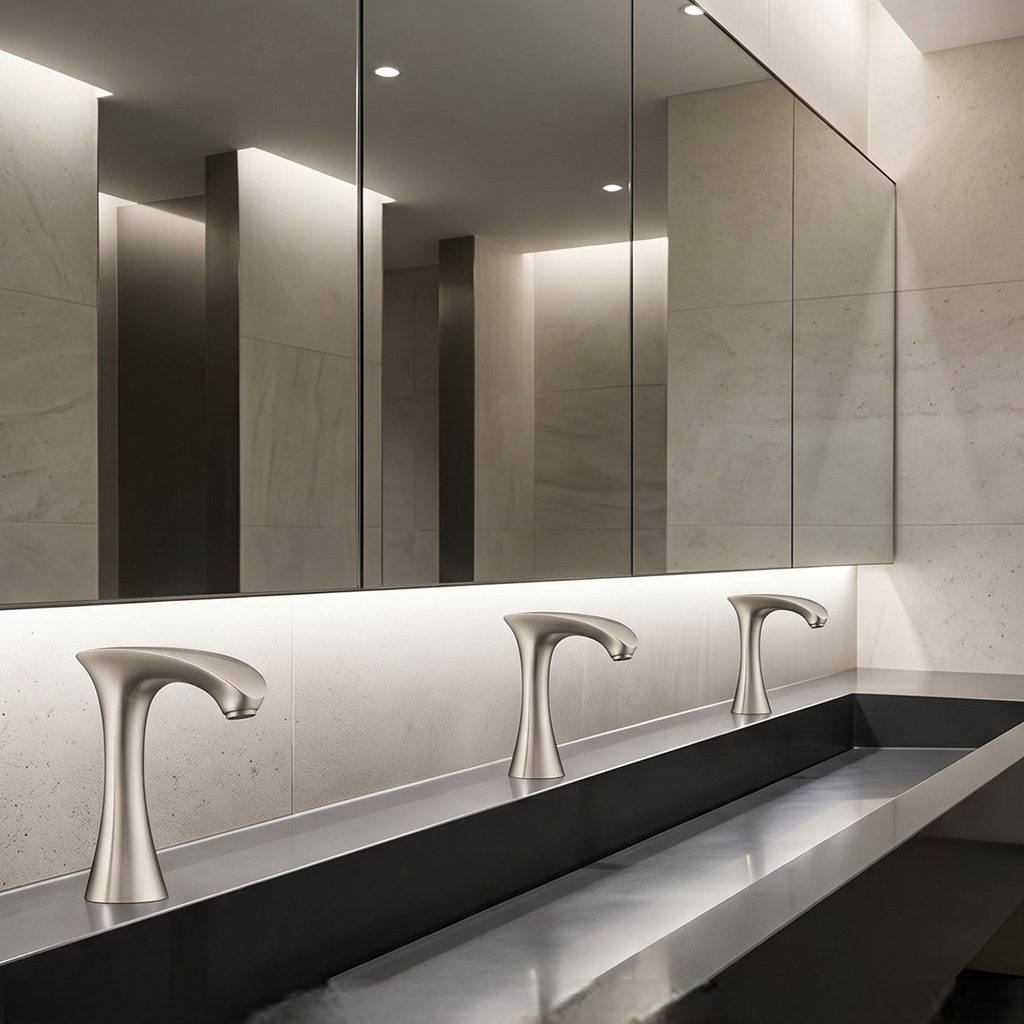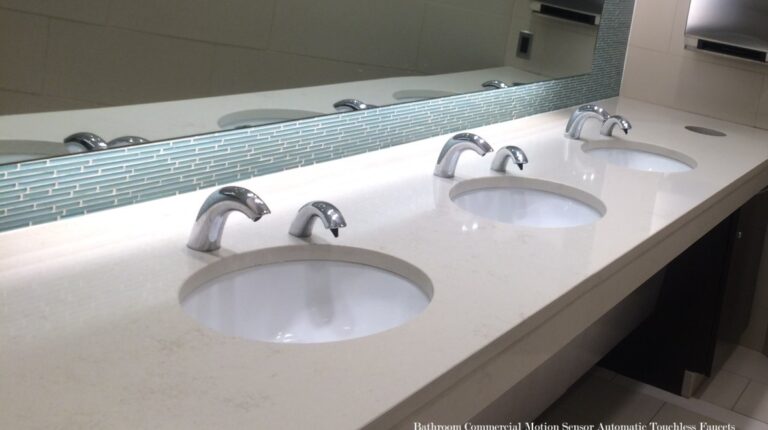
Commercial Bath Faucets for Institutional Facilities: AEC Selection Guide
For institutional projects, the right commercial bath faucet is one that matches the facility’s duty cycle, accessibility requirements, water-efficiency targets, pressure conditions, hygiene strategy, and maintenance capabilities. In healthcare, education, transportation, government, and other high-use buildings, specifiers should compare faucet type, flow rate, operating pressure, material construction, temperature control, power requirements, service access, and applicable compliance documentation before selecting a fixture.
This architectural specification guide explains how to select a commercial bath faucet for institutional projects and translate those decisions into Division 22 specifications and plumbing fixture schedules. It covers codes and standards, manual, metering, and touchless options, durability, installation coordination, commissioning, and documentation requirements. Examples of commercial faucet categories and sensor faucet configurations are available in the FontanaShowers Commercial Bathroom Faucets category and the Touchless Sensor Faucets category, which illustrate common configurations and data points published in product listings.
Commercial Bath Faucet for Institutional Projects: Project Drivers and Performance Requirements
Duty Cycle And Use Case Classification
Institutional projects typically fall into three usage bands that should drive specification detail:
- High throughput public washrooms, such as airports and arenas, where vandal resistance, rapid serviceability, and consistent shutoff behavior are primary.
- Clinical and patient care environments, where touchless actuation, predictable temperature control, and hygiene-oriented flow behavior are emphasized.
- Controlled access restrooms for staff and administrative areas, where standardization and maintenance efficiency often outweigh advanced features.
Read More
For touchless faucets, define shutoff timing and adjustment ranges as enforceable requirements, because timing influences both water use and user satisfaction. Many commercial sensor listings disclose factory shutoff settings and operating behavior, such as the published shutoff behavior and pressure range in the Solo Commercial Automatic Touchless Sensor Faucet product documentation.
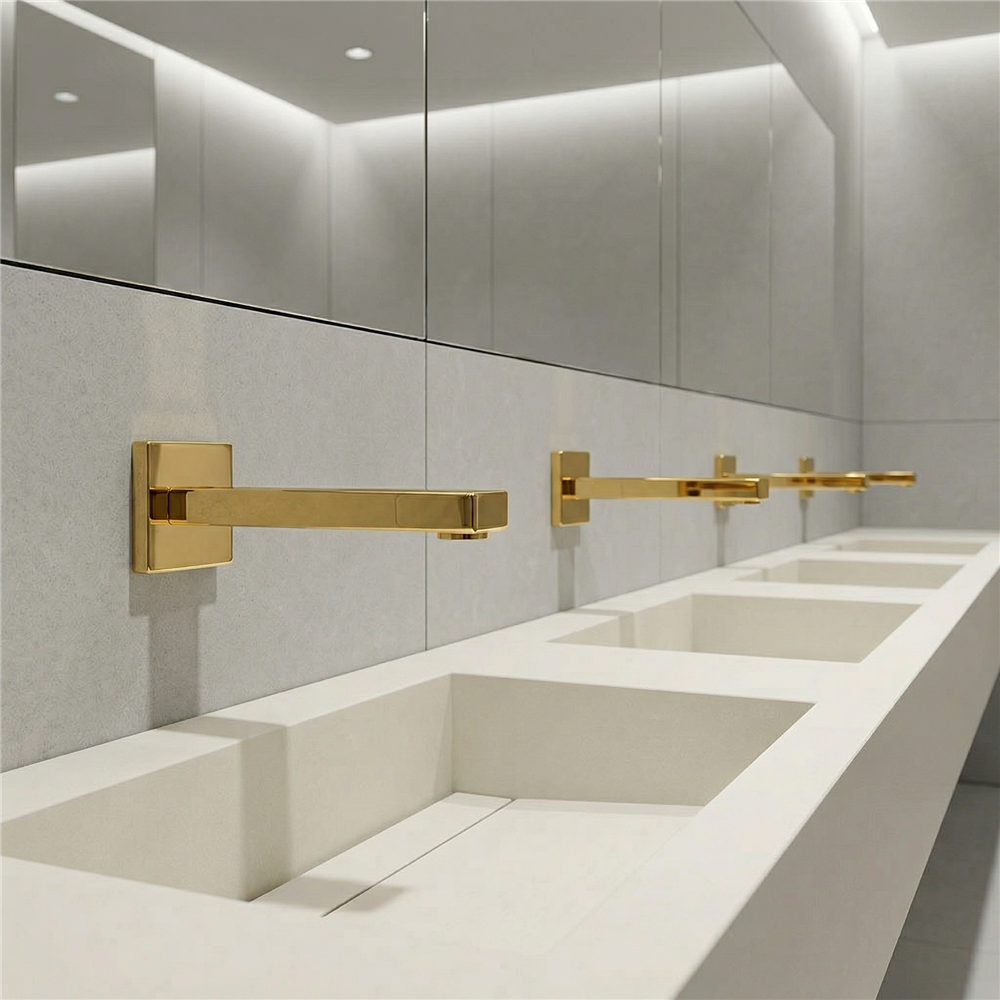
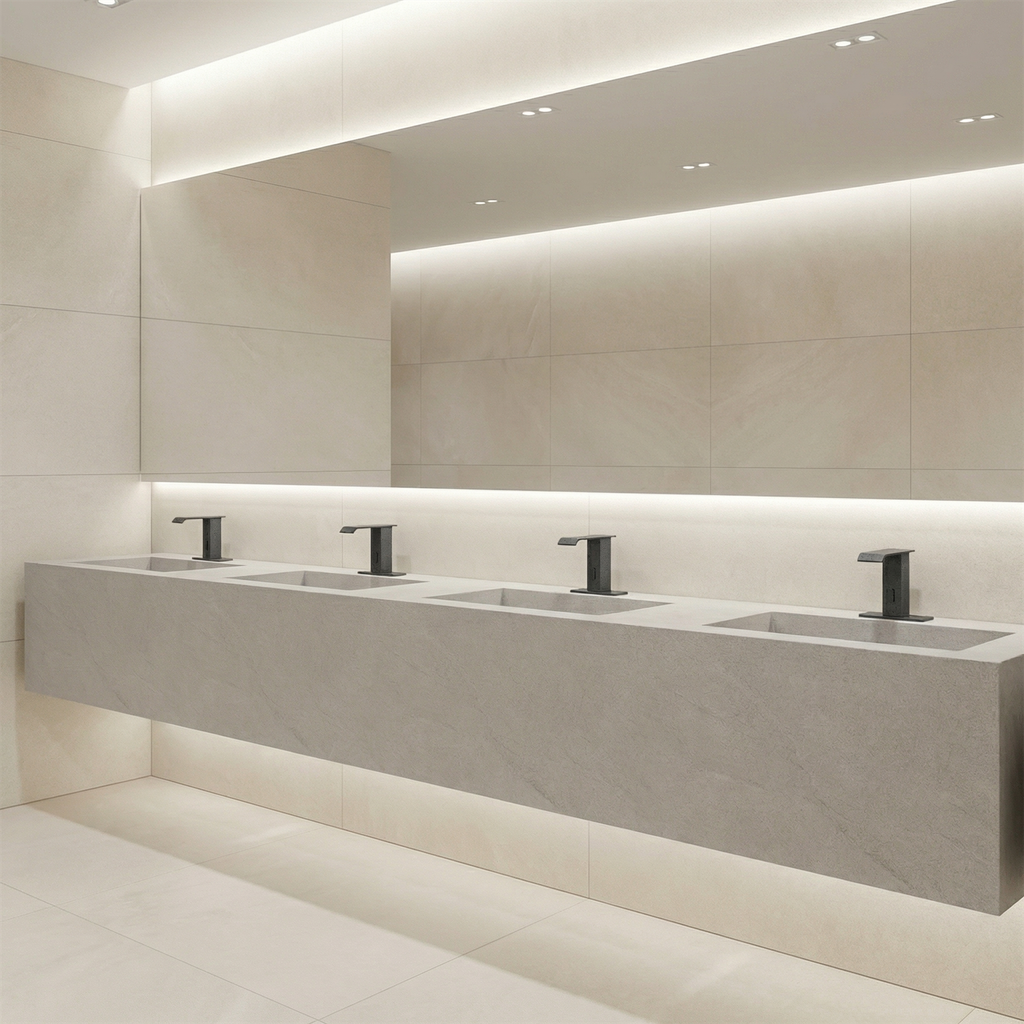
Hydraulic Performance & Operating Pressure Range
Institutional buildings tend to see wide pressure swings because of booster pumps, vertical pressure loops, and peak demand overlap. Specs need to include:
- A working pressure rating compatible with the design envelope.
- Stable output volume during normal pressure variations, with pressure-compensating outlets if necessary.
- A defined outlet regime, including an aerated stream or a laminar stream based on splash control and infection control aims.
Read More
When documenting performance criteria, it is important to include both design pressure assumptions and faucet operating requirements supported with manufacturer information where available, such as pressure information available in a commercial sensor faucet cut sheet, such as in the Solo Commercial Automatic Touchless Sensor faucet .
Water Efficiency Targets
Water use constraints should be defined early in design and carried through fixture schedules. Where WaterSense alignment is required by the owner or sustainability program, reference the EPA criterion that WaterSense-labeled bathroom sink faucets and accessories use a maximum of 1.5 gallons per minute, as described in the EPA WaterSense Bathroom Faucets guidance.
If local codes impose lower flow limits, include a schedule showing maximum flow by space type and occupancy, and require contractor confirmation of installed flow controls during closeout.

Codes, Standards, And Compliance Documentation

Accessibility Requirements For Operable Parts
Faucet controls, overrides, and accessories must satisfy accessibility requirements for operable parts. For design and specification language, the U.S. Access Board guidance on operable parts provides a clear reference point in ADA Chapter 3: Operable Parts .
Two specification practices reduce field ambiguity:
- Require operability consistent with operable parts requirements for any manual control, including handles and mixing levers.
- For sensor faucets, address any manual override requirements and ensure those controls also follow operable parts.
Plumbing Supply Fittings Standards
Faucet products go through tests based on the Harmonized Standard for Plumbing Supply Fittings used for a North American commercial installation. The scope statement in ASME A112.18.1/CSA B125.1 Plumbing Supply Fittings can be referenced in Division 22 to support a non-proprietary requirement for compliance.
The language of the specification must include requirements stating that faucets and associated accessories shall be certified and labeled to a given standard, with supporting certification documents to be provided if asked for.
Drinking Water Exposure and Lead Level of Expectations
Where water faucets distribute drinkable water, health effects and lead methodology may need to be documented by institutional owners. NSF provides an overview of materials and products covered by NSF ANSI 61 in NSF/ANSI 61: Drinking Water System Components – Health Effects , which can be referenced in specifications for drinking water contact components.
Read More
For lead content methodology, include NSF ANSI 372 compliance documentation where required. A plain language overview of the standard’s intent and regulatory relevance is available in ANSI’s summary on NSF/ANSI 372 and lead-free regulations .
Technology Options And Selection Impacts
Manual Lever And Two Handle Faucets
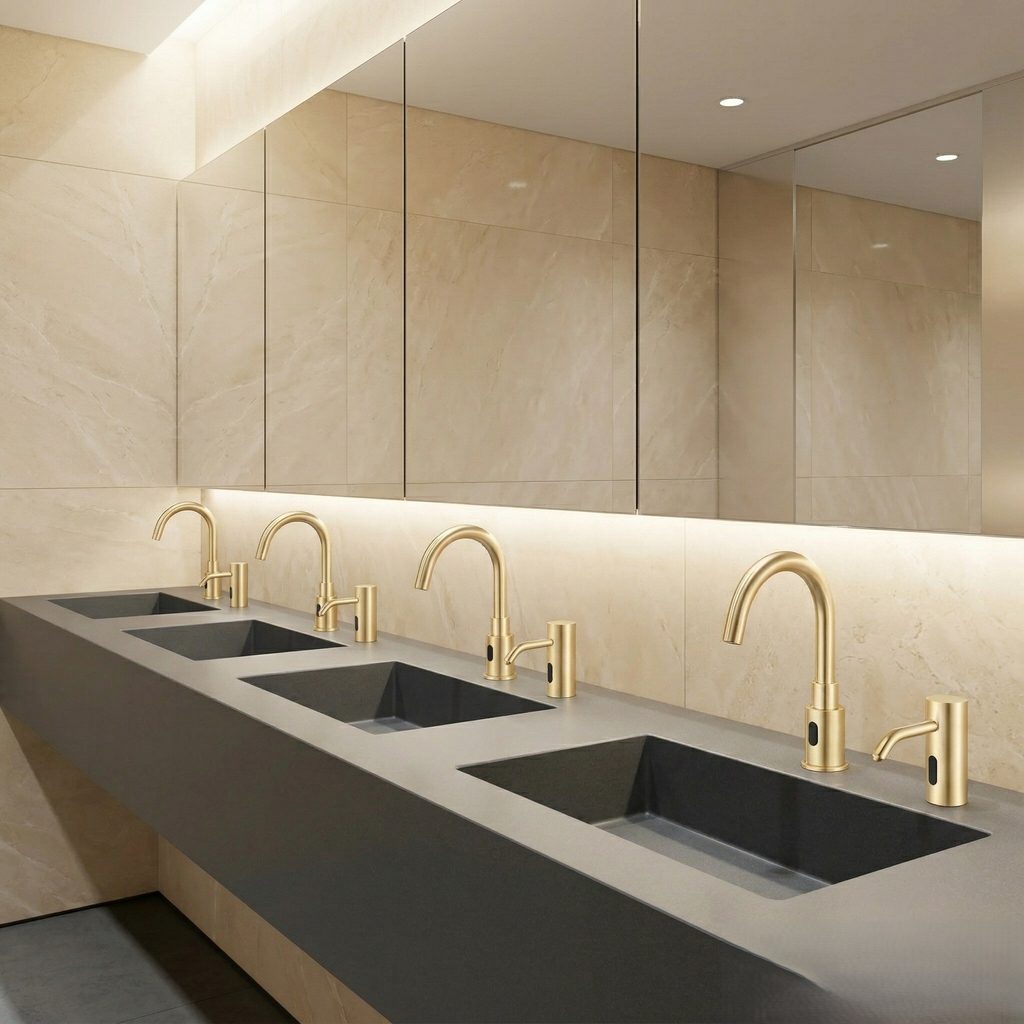
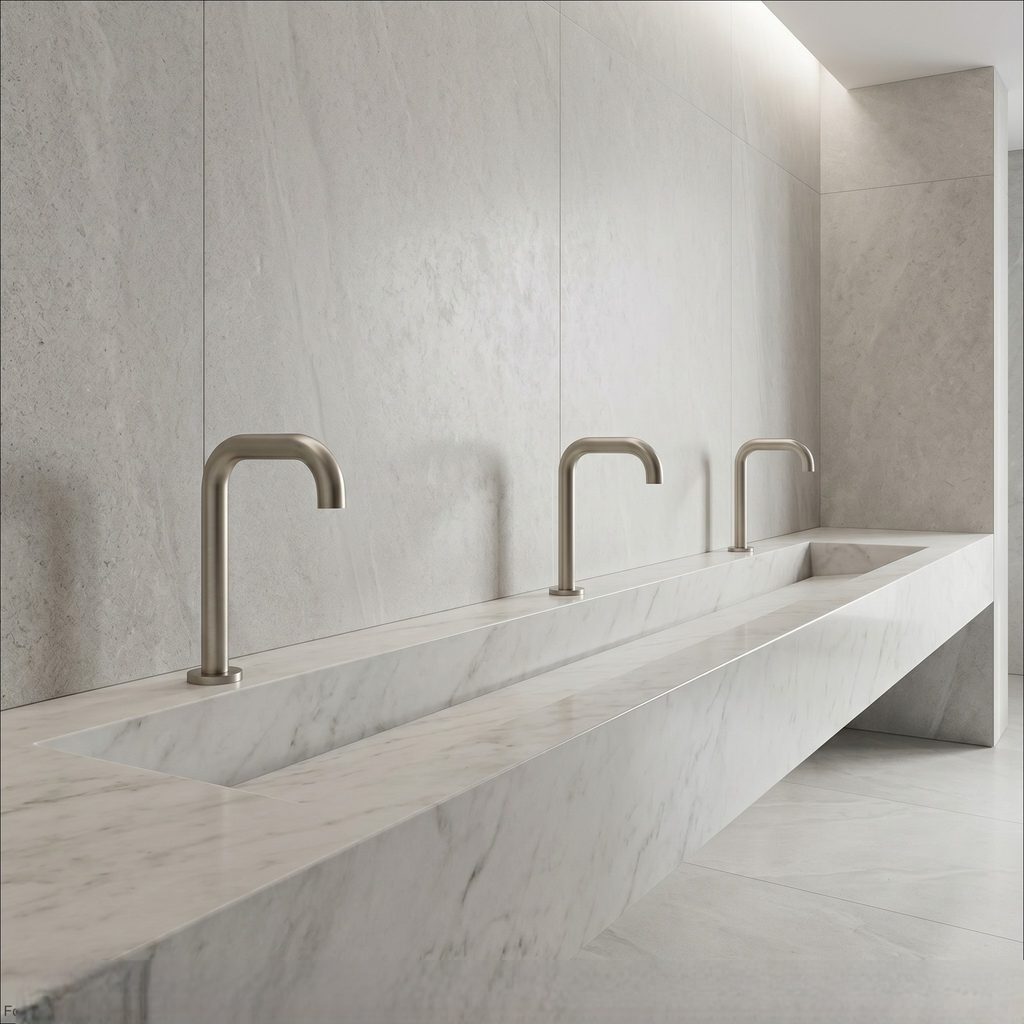
Manual faucets remain appropriate where electronic maintenance is undesirable, power availability is limited, or owner standards prefer standardized cartridges. For institutional use, include requirements for ceramic disc cartridges, replaceable aerators, and standardized inlet sizes and stops to reduce spare parts complexity.
Read More
Manual faucets can be made accessible when specifications include requirements with respect to handle design and pressure, based on guidelines offered in ADA chapter 3: Operable Parts , and guidelines related to operable parts.
Metering Faucets
Metering faucets are used where water control is primary, and users require a predictable run cycle. Specify cycle time or volume, reset behavior, and serviceability of the metering mechanism. Confirm that cycle duration supports accessibility and usability for the expected occupant population.
Touchless Sensor Faucets
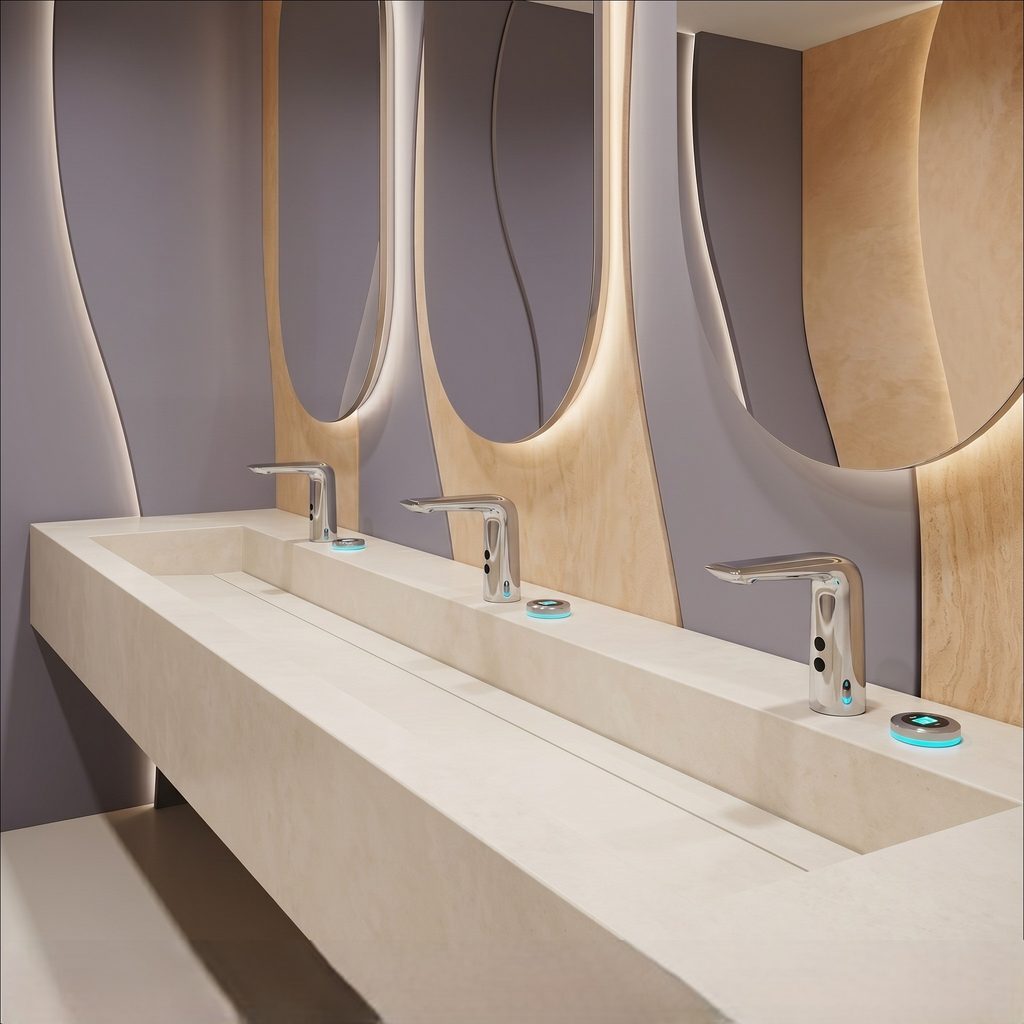
Touchless faucets are frequently selected for high-traffic public restrooms and certain healthcare settings to reduce touch points. Where touchless faucets are specified, document:
- Sensor type detection and its adjustment capability.
- Time out and shut-off behaviour. Default and settable ranges
- Power loss fail-safe behavior, including any default closed or default open logic.
- Mixing and temperature limiting strategy to include how the tempered water is supplied and controlled.
Read More
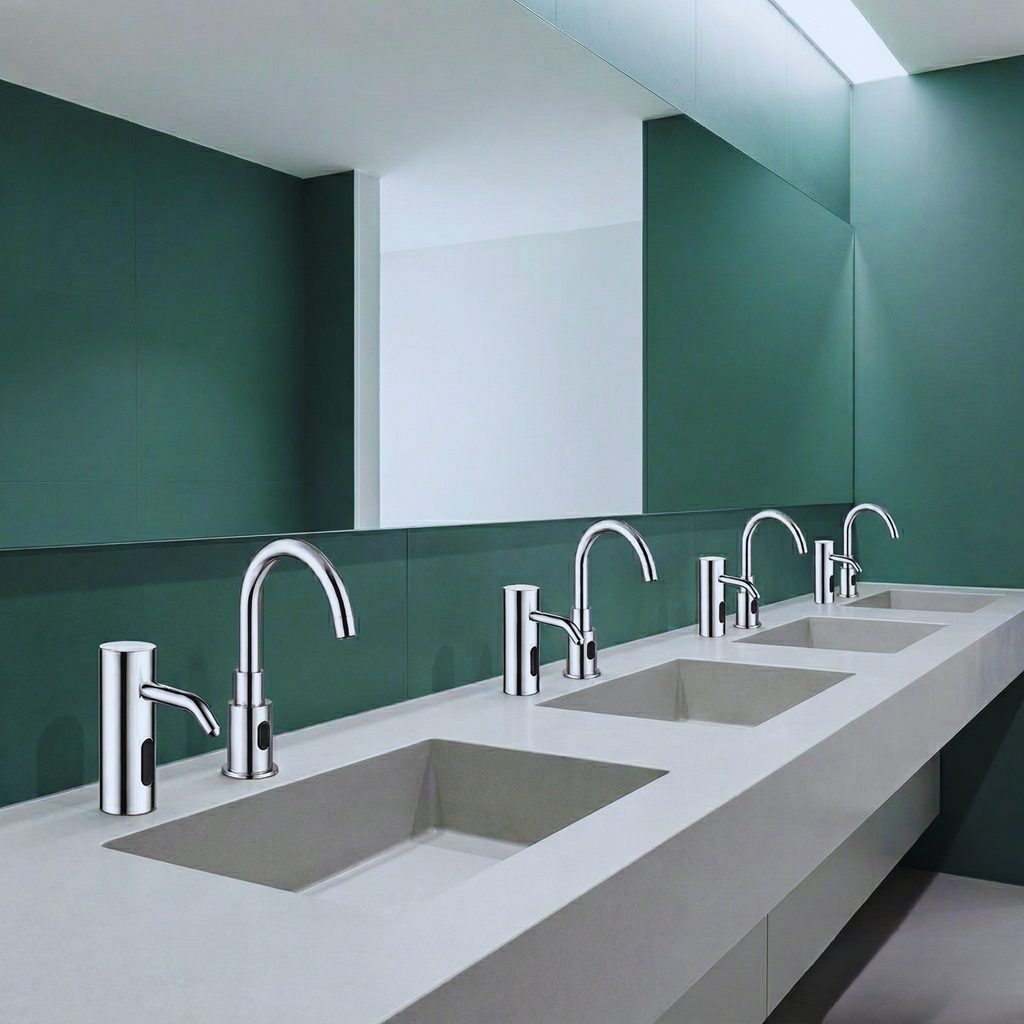
Commercial product pages can be used to provide enforceable baseline values for such items as shutoff timing and operating characteristics. For example, the listing of the Solo Commercial Automatic Touchless Sensor Faucet documents sensor operation and shutoff behavior that can be translated into specification requirements.
For combination configurations, the Automatic Sensor Faucet and Soap Dispenser page illustrates typical paired fixture sets used in coordinated institutional washroom designs.
Materials, Finishes, and Durability Considerations
Body Material and Internal Components
For institutional durability, provide corrosion resistant construction and serviceable internals. When procurement policy requires lead-free compliance for potable contact, add submittal requirements consistent with the project’s regulatory basis, including such references as NSF/ANSI 61: Drinking Water System Components – Health Effects and ANSI’s summary on NSF/ANSI 372 .

Completion Performance Under Cleaning Protocols
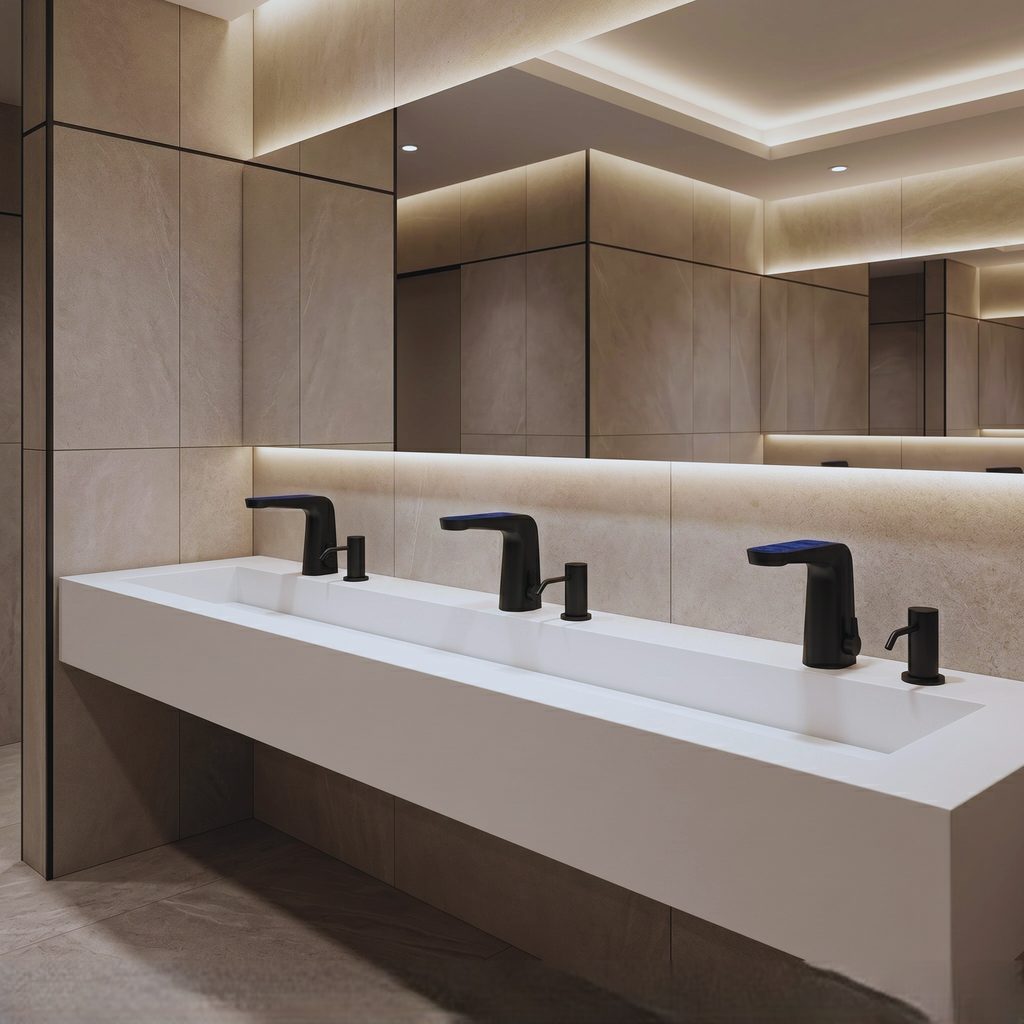
The finish should be compatible with the facility’s type and frequency of cleaning agents. In high-use cleaning situations, specify finishes that are supported by the manufacturer’s cleaning recommendations. Finishes that disintegrate after disinfection products have been used should be avoided. To make specifications simpler and avoid inconsistencies, one can choose bathroom products based on standard categories, such as commercial categories, including FontanaShowers Commercial Bathroom Faucets and Touchless Sensor Faucets.
Temperature Control and Scald Risk Management
Institutional projects should not be specified to rely on faucet trim alone for scald control; rather, the mixing strategy and temperature limits must be defined at the system level:
- Provide central or point of use thermostatic mixing where required by the building program and local code.
- Require maximum outlet temperature limits by room type in the fixture schedule.
- Coordinate sensor faucet compatibility with tempered supply and temperature-limiting devices.
Installation Coordination And Submittal Requirements
Rough In, Mounting, And Access
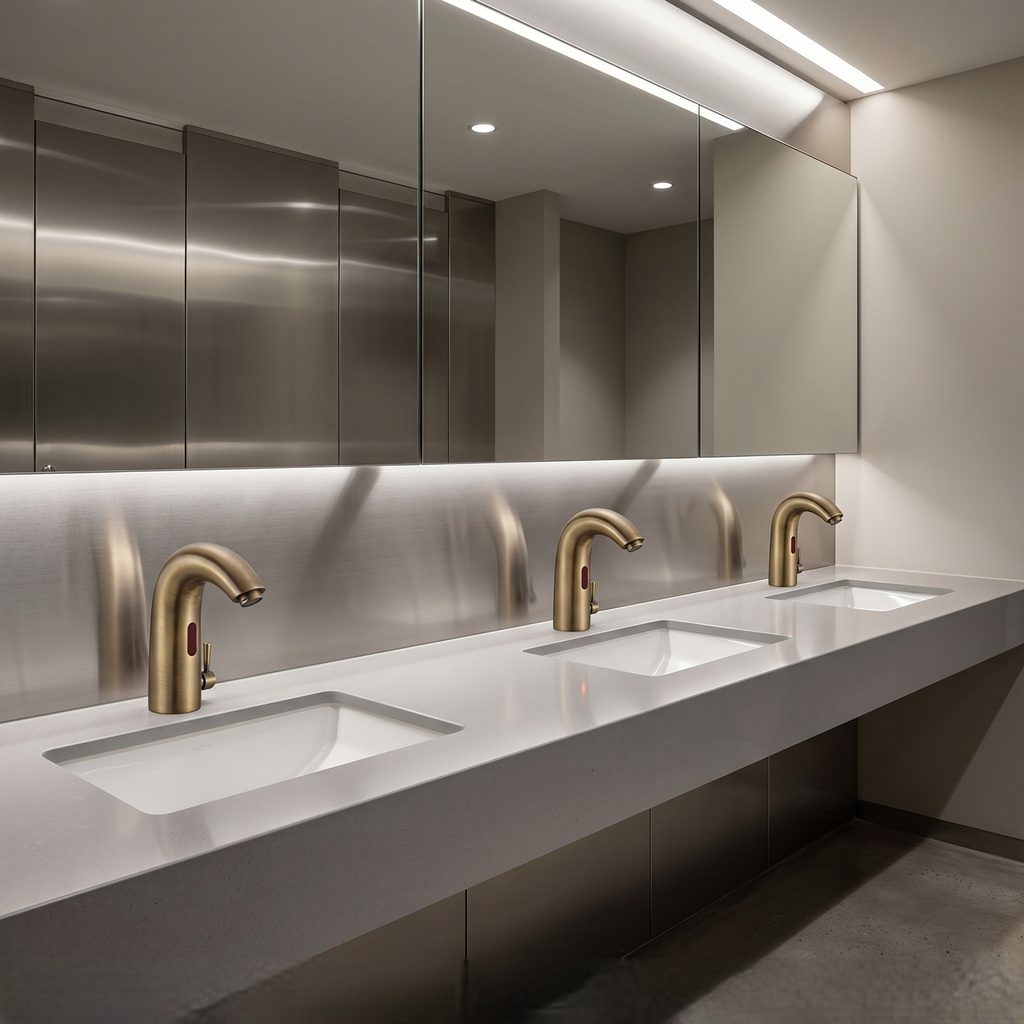
Specifications should define mounting type, deck thickness accommodation, inlet configuration, and service access. For sensor faucets, define the location and accessibility of control modules and power supplies. Where casework is involved, require access panels sized for battery replacement and control module service.
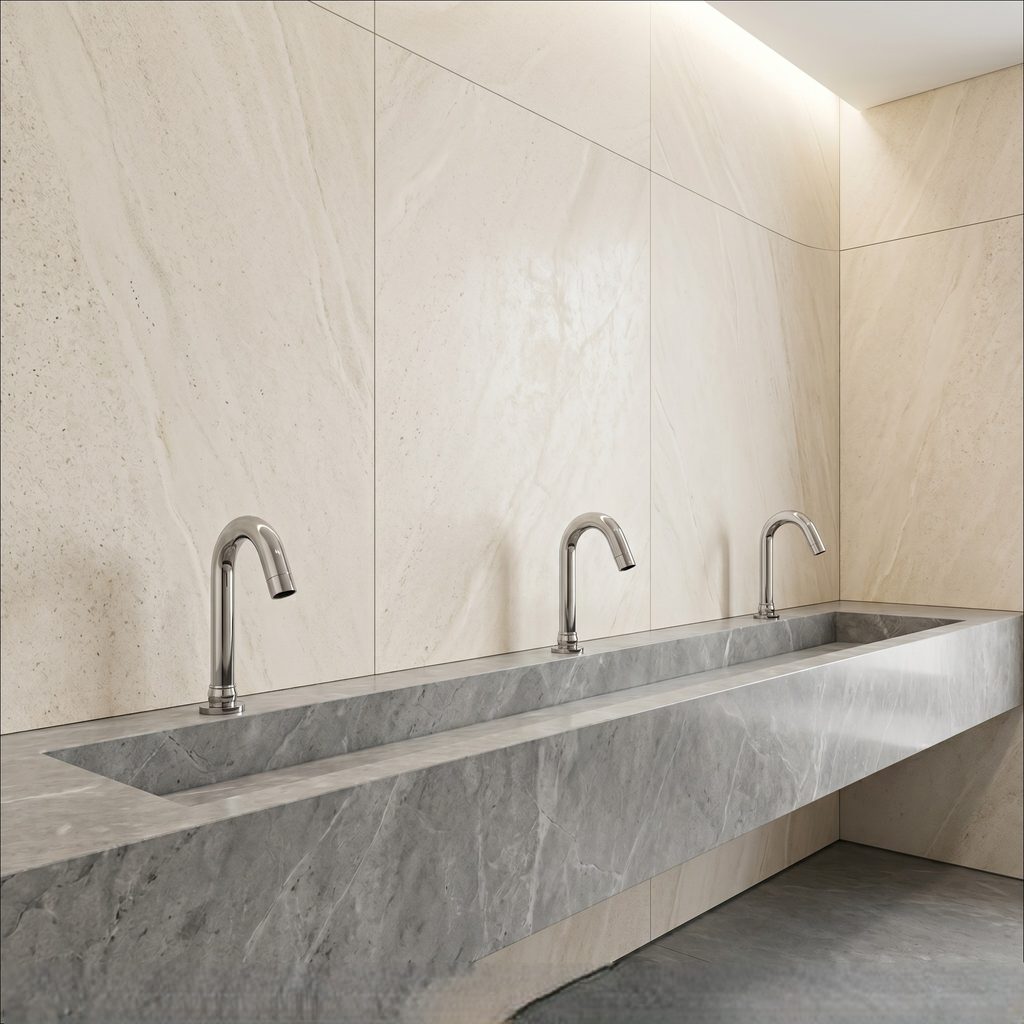

Power Strategy And Controls For Sensor Faucets
For touchless faucets, require submittal information for power type, wiring or cable routing, and service access. Product data often states power options and installation scope, such as the power supply options described in the Solo Commercial Automatic Touchless Sensor Faucet documentation.
Catalogs And Project Documentation Support
If the owner expects robust documentation libraries for procurement and maintenance, reference a manufacturer’s catalog library requirement. For example, the FontanaShowers Commercial Bathroom Fixtures Catalog page demonstrates a published catalog resource that can be used as a documentation benchmark in submittal requirements.

Neutral Comparison Table
| Selection Factor | Manual Lever Faucet | Metering Faucet | Touchless Sensor Faucet |
|---|---|---|---|
| Accessibility Risk | Medium, dependent on handle geometry and force per operable parts guidance | Medium, dependent on push force and cycle timing | Low for actuation, confirm any overrides align with operable parts guidance in ADA Chapter 3: Operable Parts |
| Water Use Control | Dependent on user behavior | High, fixed cycle | Minimal touch points, common in high-traffic restrooms as seen across Touchless Sensor Faucets |
| Maintenance Profile | Low to medium | Medium | Medium to high, includes electronics and power management |
| Hygiene Considerations | Higher touch points | Reduced touch points | Minimal touch points, common in high-traffic restrooms, as seen across Touchless Sensor Faucets |
| Upfront Cost | Lowest | Medium | Highest |
| Commissioning Needs | Low | Low to medium | Medium, includes sensor tuning and power verification |

Conclusion
Commercial bath faucet selection for institutional projects requires disciplined alignment among accessibility, hydraulic performance, water efficiency, durability, and maintainability. Specifications should convert these drivers into measurable requirements, including listings to ASME A112.18.1/CSA B125.1 , explicit flow targets aligned with EPA WaterSense Bathroom Faucets where applicable, operable parts requirements supported by ADA Chapter 3: Operable Parts , and potable water contact documentation consistent with NSF/ANSI 61 and lead content methodology such as NSF/ANSI 372 when required. Where touchless systems are chosen, commissioning and service access requirements must be well documented in order to have seamless performance in the life span of the facility.