
BathSelect Sensor Technology Explained: IR vs. Radar in Commercial Faucets
Why sensor choice matters in commercial restrooms
In high-traffic restrooms, touchless faucets improve hygiene, cut water waste, and make user flow smoother. But not all “touchless” systems work the same way. BathSelect and other manufacturers rely mainly on two sensing approaches: infrared (IR) reflectance and radio-frequency radar (microwave or mmWave). Each method detects hands differently and responds uniquely to steam, lighting, and reflective sink surfaces. The choice may affect the reliability, cost, along with user satisfaction (BathSelect product catalog).
How the sensors work
Infrared (IR) reflectance
IR faucets release short bursts of infrared light and measure reflections from nearby hands. When the reflected signal passes a threshold, the faucet gets activated. This is an affordable technique and is widely used, but it relies on clear optics and stable reflection patterns. Research from Silicon Labs and Vishay shows how geometry, distance, and reflectivity determine accuracy.
Read More
Performance can suffer when dirt, water droplets, or condensation cover the sensor window, scattering or blocking light (Optical Detectors Guide).
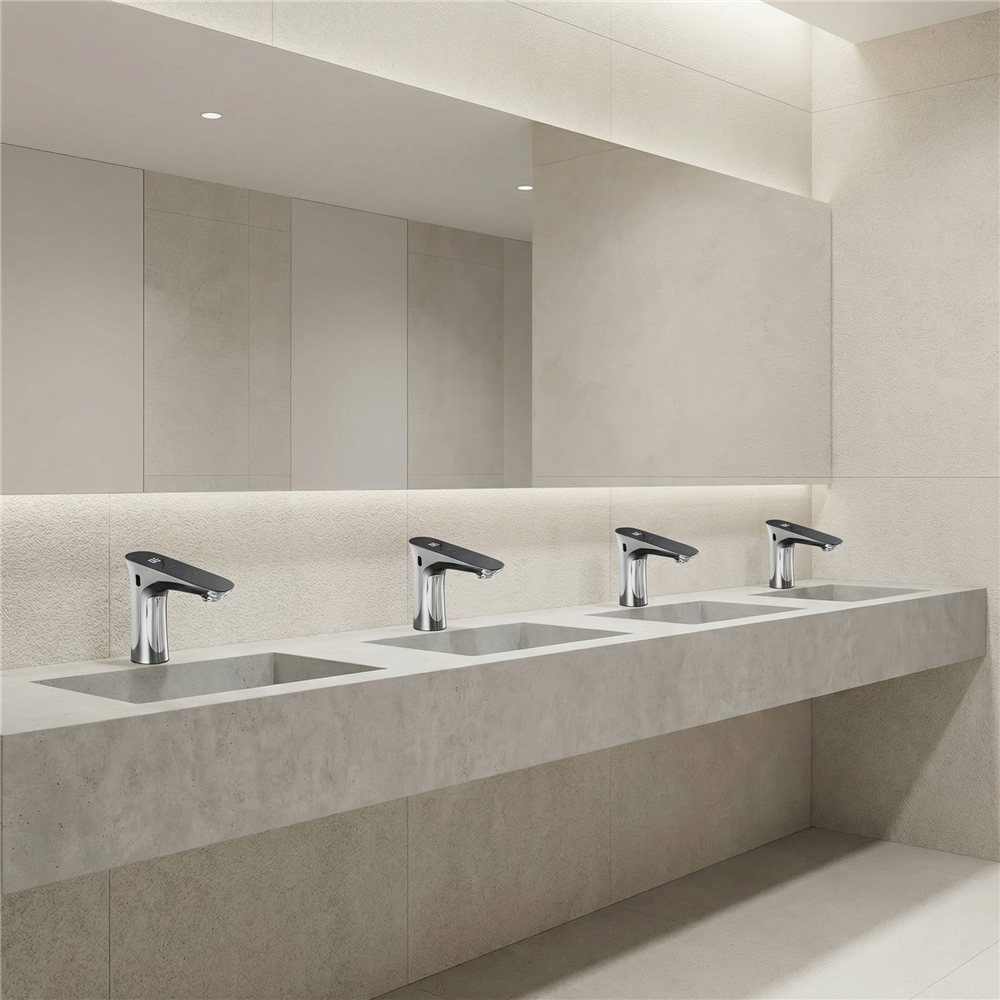
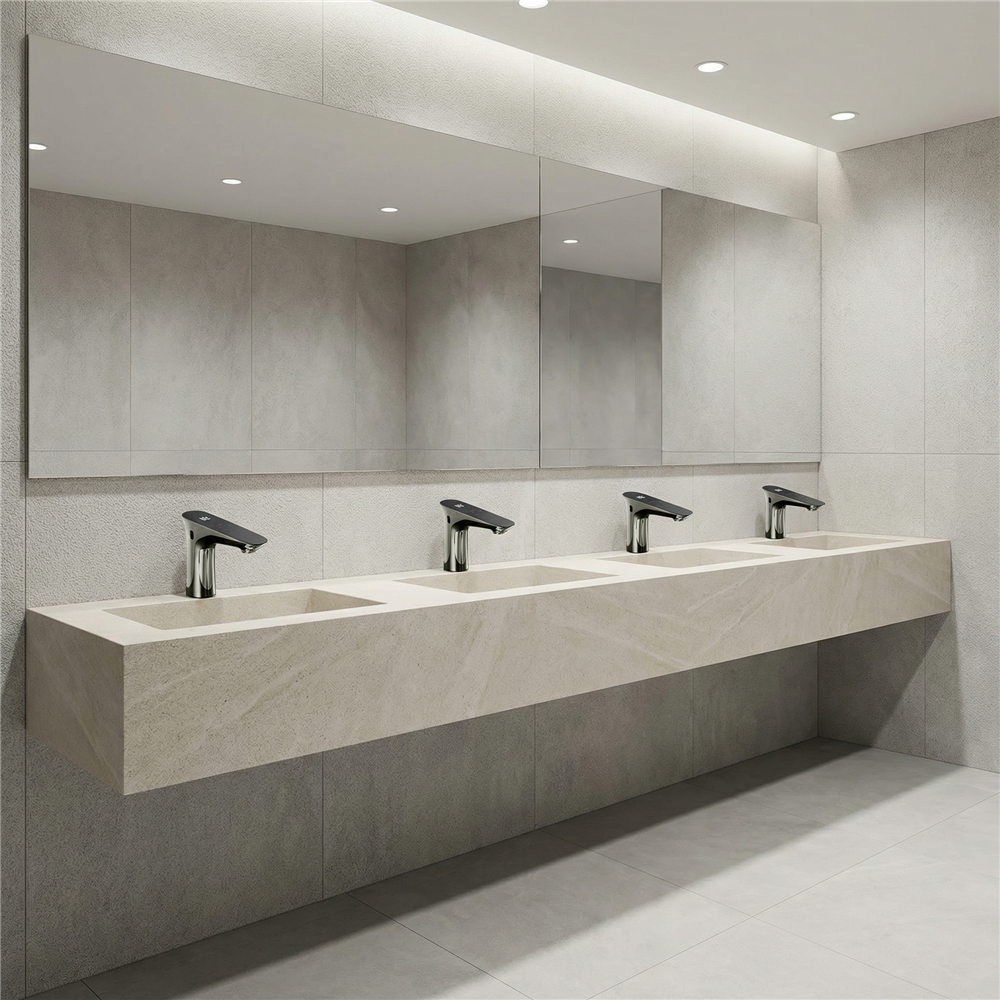
Radar (microwave / mmWave)
Radar faucets emit radio waves (commonly 24 or 60 GHz) and analyze the returned signal. Unlike IR, radar does not depend on light conditions or a visible line of sight. It works in darkness, through thin covers, and in steamy environments. Modern mmWave platforms from Texas Instruments and Infineon describe how radar measures range, motion, and even angle, giving designers more flexibility.
Read More
Radar sensors can be hidden behind non-metallic fascias, allowing sleek or vandal-resistant faucet designs (Dornbracht TOUCHFREE).
IR and radar sensing at a glance
| Design Factor | Infrared (IR) | Radar / mmWave |
|---|---|---|
| Detection principle | Reflected infrared light | Returned radio-frequency signal |
| Visible optical path | Generally required | Not necessarily required |
| Lighting sensitivity | May be affected by optical conditions | Does not depend on ambient visible light |
| Steam and condensation | Sensor window condition can affect performance | Generally less dependent on optical surface clarity |
| Installation tuning | Detection-zone calibration | Range and field adjustment |
| Design integration | Visible sensor window is common | Sensor may be concealed behind suitable non-metallic material |
Comparing reliability in the field
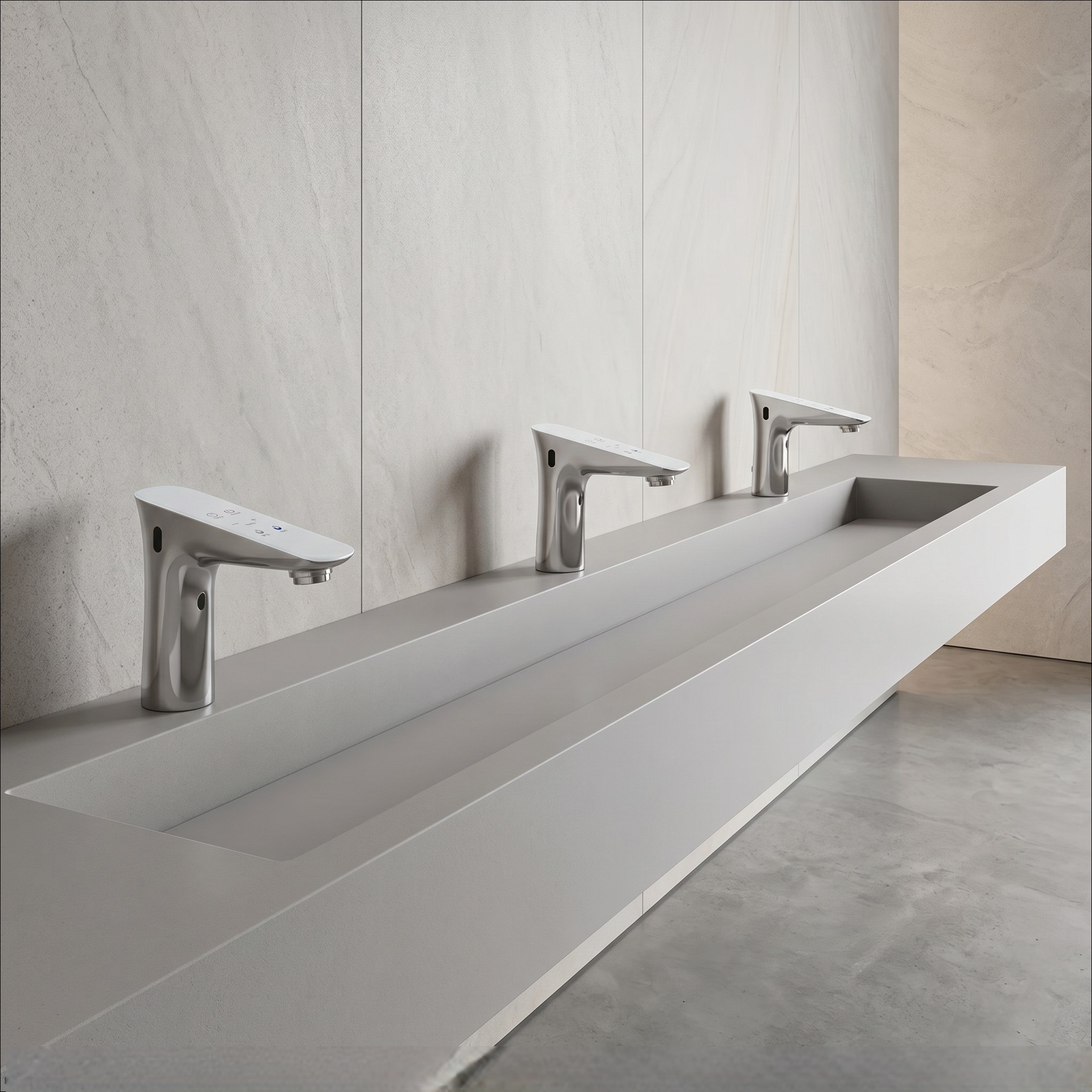
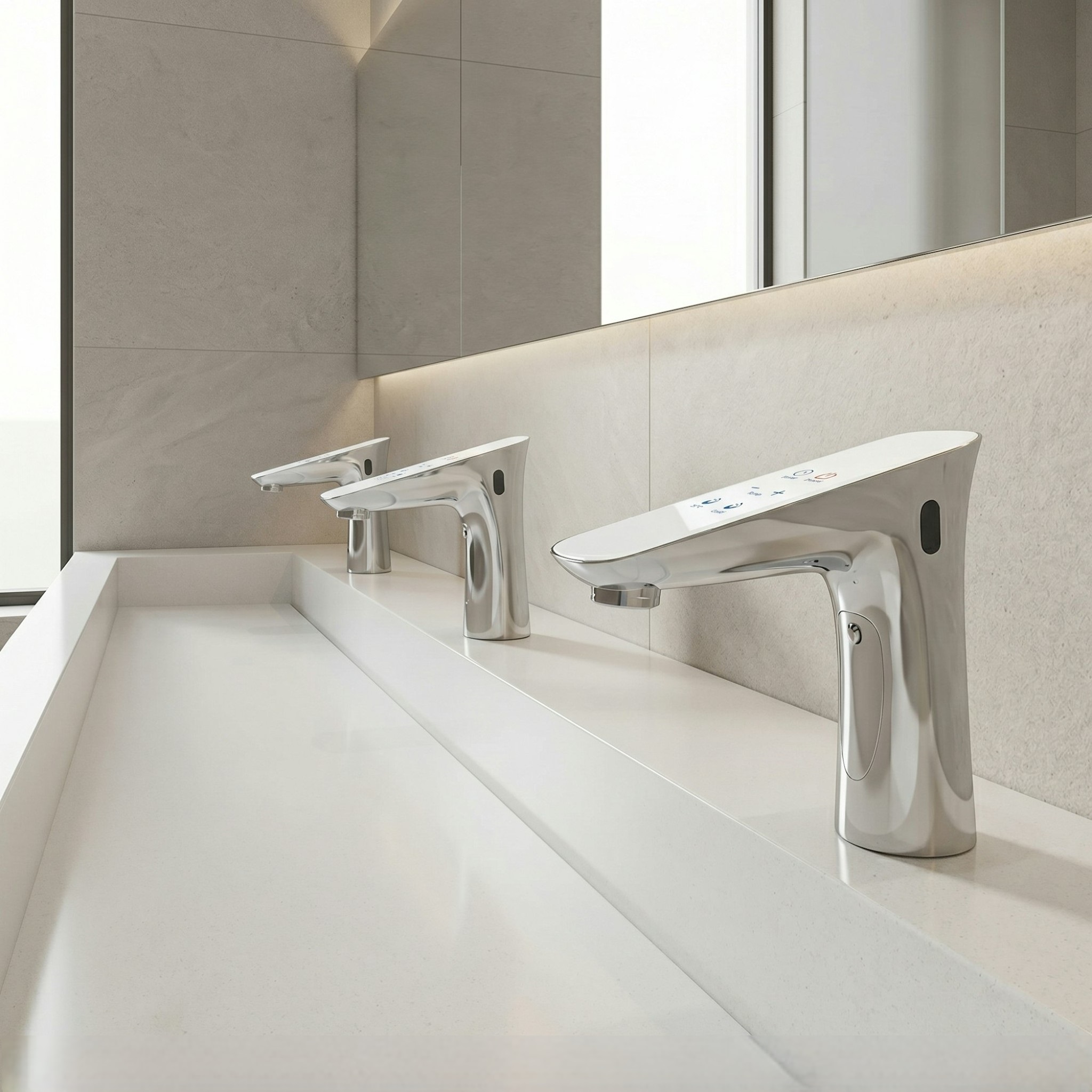
IR sensors are sensitive to reflective surfaces, chrome finishes, and sink geometry. A highly polished basin can cause false triggers or missed detections. Many IR faucets now include auto-calibration to adjust the detection zone depending on sink depth and color (BathSelect features).
Read More
Radar sensors, on the other hand, are largely unaffected by glare, steam, or water droplets. Their main challenge is “over-reach,” where the sensor detects movement outside the basin if the field isn’t properly tuned. Configurable radar modules, such as Infineon’s 24 GHz sensors, allow installers to narrow the range and reduce false activations.
Hygiene outcomes
One of the biggest selling points of both IR and radar faucets is touchless hygiene. Users avoid re-contaminating their hands after washing.
Read More
Some early healthcare studies raised concerns about bacterial buildup in certain electronic faucet internals, but follow-up reviews from the Association for Professionals in Infection Control (APIC) emphasized that results were brand-specific and largely preventable with proper maintenance. When installed and maintained properly, both IR and radar systems increases hygiene in public restrooms.
Water savings in practice
Touchless faucets are mostly marketed as water-saviors, but studies show mixed results.
Read More
The Alliance for Water Efficiency found that outcomes depend heavily on settings such as run-on time and aerator choice. Poorly tuned faucets may actually increase consumption, while correctly configured systems cut usage substantially. Both IR and radar systems help eliminate “walk-away” waste, where water keeps running after the user leaves.
Installation and maintenance
IR systems
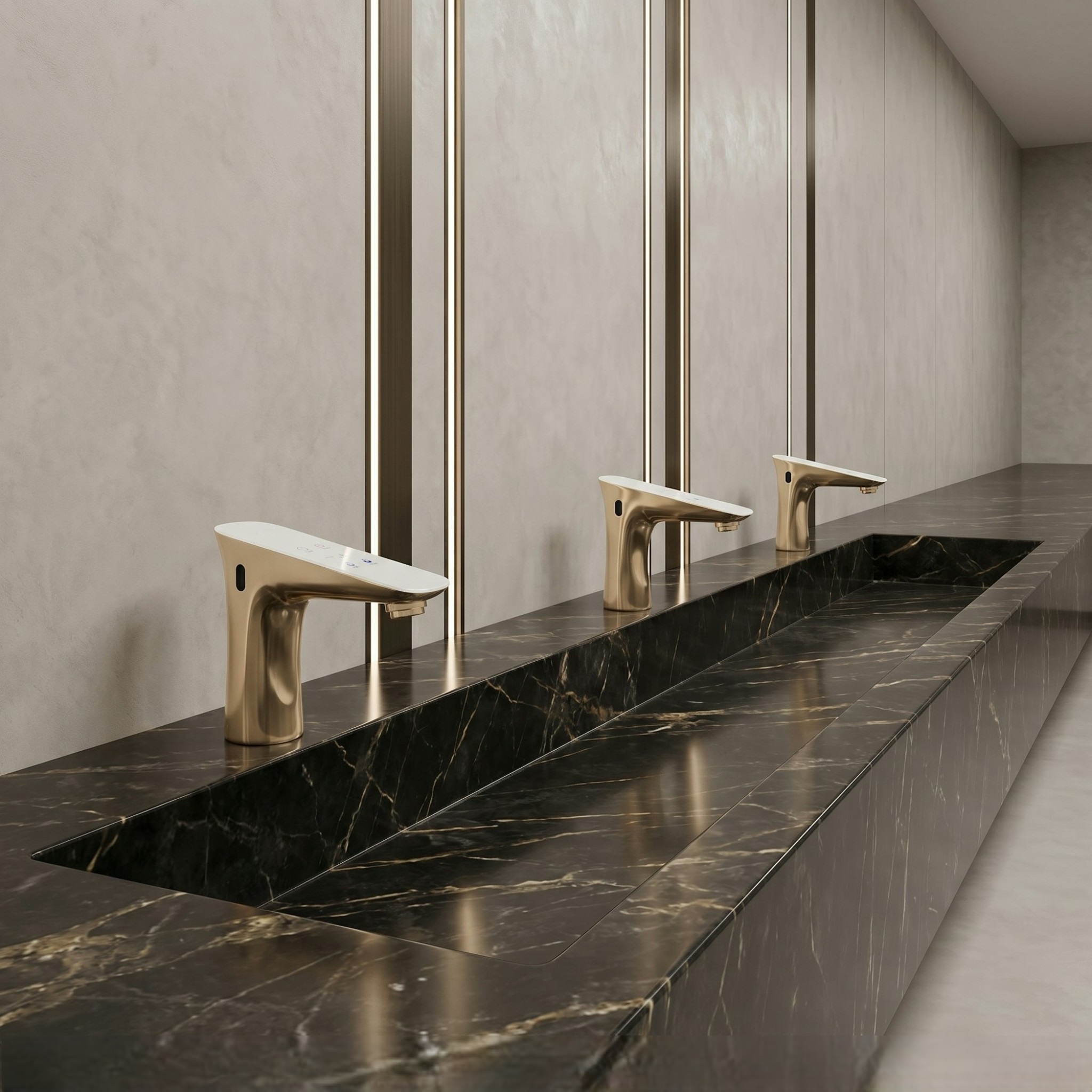
IR faucets require clear optical paths. Streight sunlight, dirt, or water spots on the sensor window can result in misfires.
Read More
Regular cleaning and ensuring sensitivity calibration during installation help maintain reliability (Vishay design guide).
Radar systems
Radar sensors are required to carefully range the adjustment to prevent the detection of movement outside the sink.
Read More
Installers can take advantage of through-surface mounting, which hides the sensor behind protective panels and reduces vandalism risk (Infineon radar technology).
Cost and lifecycle considerations
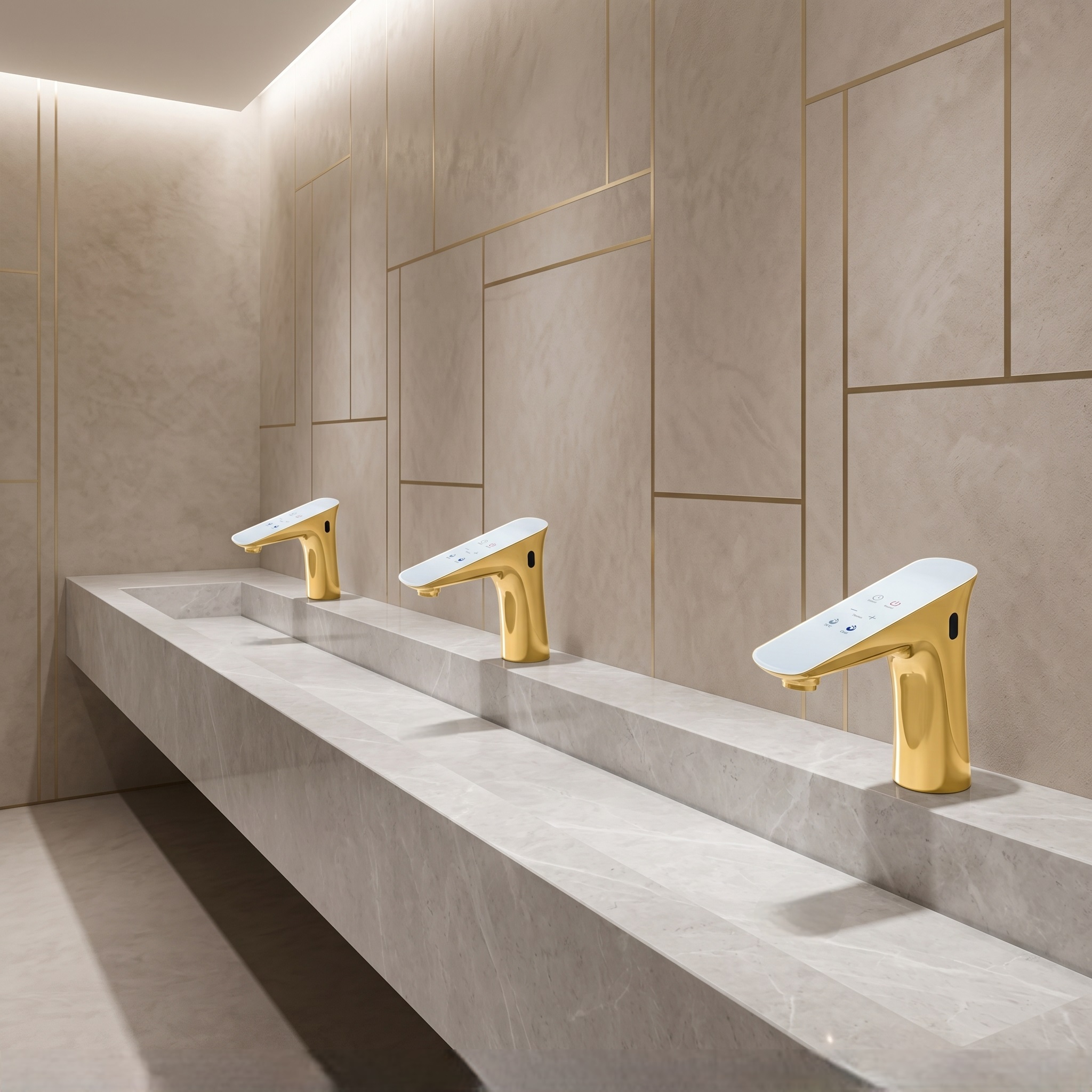
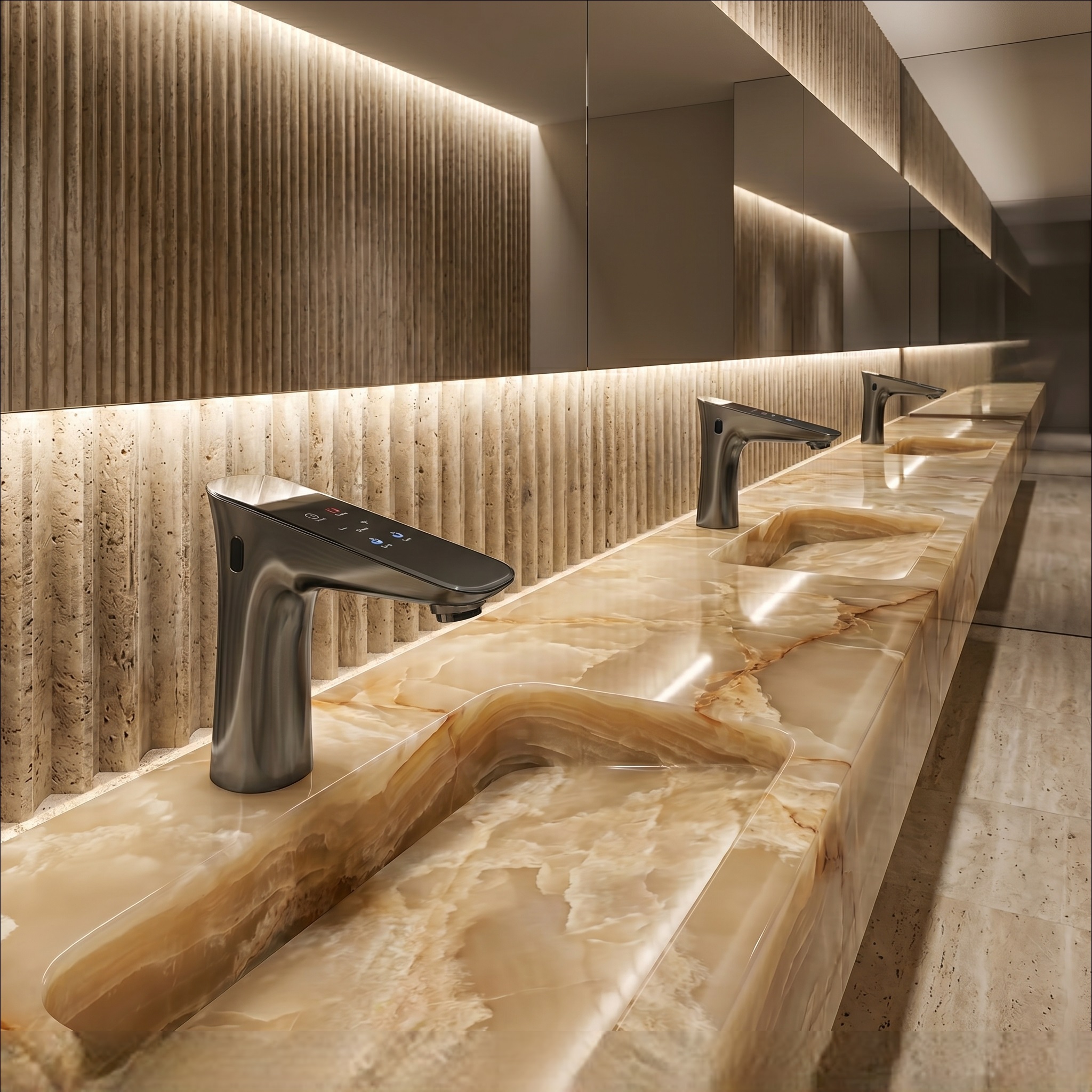
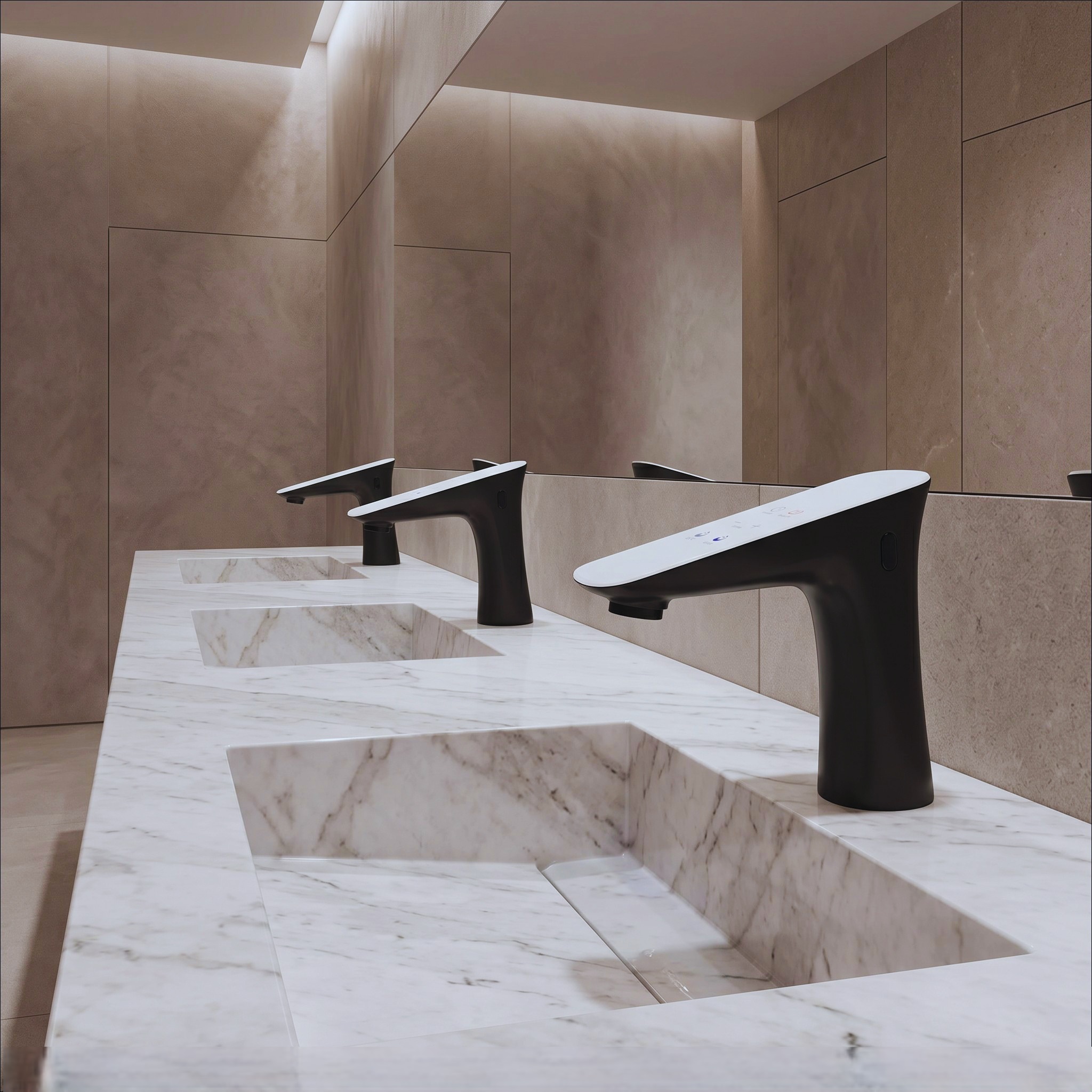
Infrared remains the most affordable option, with a broad supplier base and minimal power needs (Silicon Labs IR guide). Radar is more expensive, but modern single-chip mmWave platforms have reduced cost and energy consumption, making them viable even for battery-powered faucets (Texas Instruments 60-GHz radar).
Read More
Some advanced systems combine sensors with hydro-turbine generators in the valve box, harvesting energy from water flow to extend battery life (Sloan hybrid energy faucets).
Which technology fits best?
Infrared: Best for well-lit restrooms with standard sinks, where cost control is imperative, and cleaning staff can easily wipe the sensor window. BathSelect’s IR range, which auto-adjusts detection zones, is suited to the majority of commercial deployments.
Radar: Perfect for steam-heavy or dimly lit areas or those driven by design with the sensor hidden. lines like Dornbracht TOUCHFREE already demonstrate how radar unlocks new form factors and improves reliability.
| Project Condition | Design Consideration |
|---|---|
| Standard commercial restroom | IR offers familiar installation requirements and broad availability. |
| Reflective basin environment | Sensor field and basin geometry should be coordinated carefully. |
| Steam-heavy environment | Radar sensing may reduce dependence on optical clarity. |
| Concealed sensor design | Radar can support through-surface sensing behind suitable non-metallic materials. |
| Lifecycle planning | Consider sensor calibration, cleaning access, power, and maintenance capability. |
Looking ahead
Emerging mmWave radar technologies are enabling finer detection zones and even gesture-based controls, potentially distinguishing between hands in the bowl and nearby movement (TI radar whitepaper).
Read More
At the same time, Bluetooth-enabled commissioning apps are simplifying the setup of both IR and radar faucets, making it easier to tune range and run-on times across an entire facility (American Standard Pro app).
Conclusion
Both the IR faucet and the radar faucet provide enormous advantages when it comes to hygienic and water management standards. However, the two work best under different settings. In typical commercial restroom settings, IR continues to prove the most economical and efficacious technology, including auto-calibration and proper maintenance. However, the increased installation cost of the radar faucet makes it outstanding for settings that dampen IR performance, including steam and low-light restrooms.
Read More
The choice of the right technology in a BathSelect will depend on the environmental considerations, designing needs, and the maintenance available. With the right commissioning and maintenance, either of these systems will enable the ‘just works’ aspect in a way that the facility, the team, and the user want.