
Commercial Restroom Design Trends for Modern High-Traffic Facilities
Commercial restroom design is moving toward cleaner layouts, touchless fixture systems, water-efficient performance, ADA-aware planning, durable materials, better privacy, and easier maintenance. For offices, hotels, schools, airports, stadiums, healthcare buildings, restaurants, and public facilities, restroom design now affects hygiene, user trust, sustainability, and long-term operating cost.
This guide explains the most important commercial restroom design trends and how to apply them when selecting faucets, sinks, toilets, urinals, flush valves, soap dispensers, hand dryers, accessories, and restroom layouts.
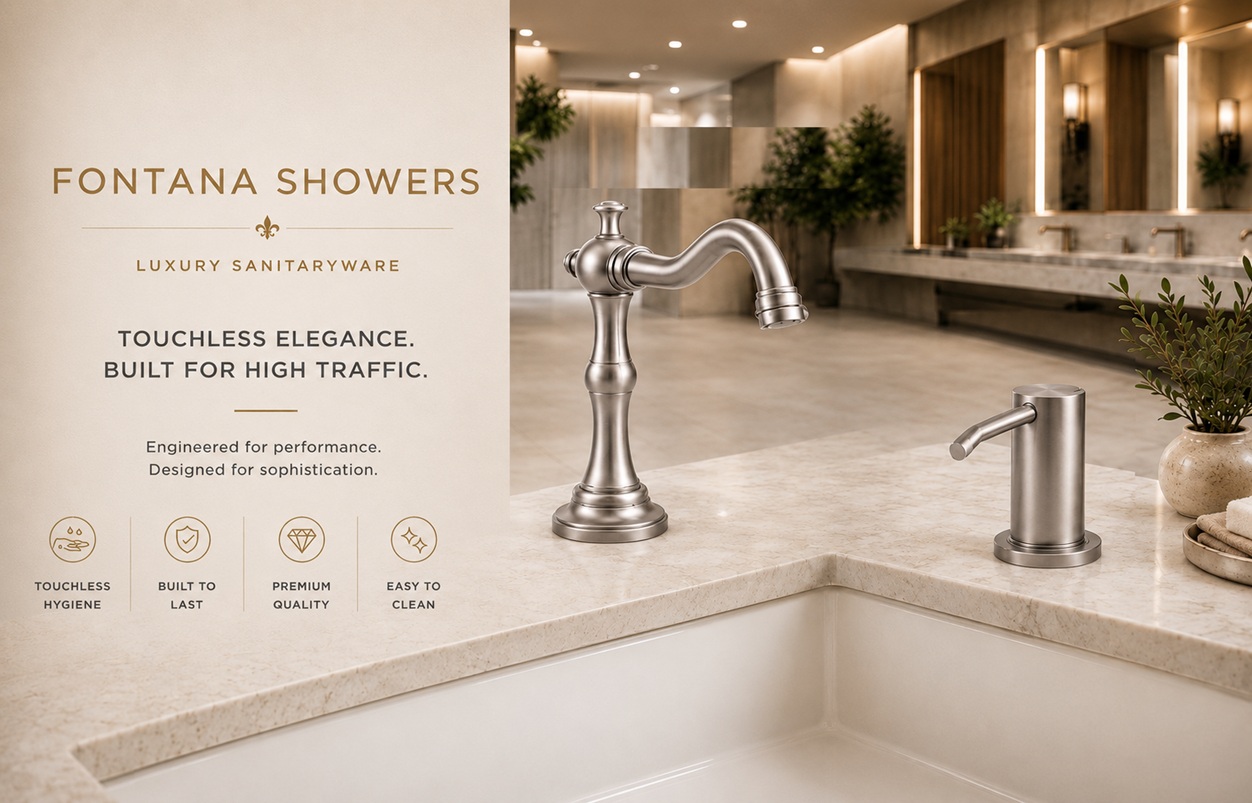
What Are the Biggest Commercial Restroom Design Trends?
The biggest commercial restroom design trends are touchless fixtures, coordinated handwashing stations, water-saving plumbing products, ADA-aware layouts, privacy-forward restroom planning, durable easy-clean surfaces, sensor-based maintenance, sustainable fixture packages, and hotel-inspired finishes for public and workplace restrooms.
Touchless Fixtures
Sensor faucets, automatic soap dispensers, touchless flush valves, and hands-free dryers reduce shared contact points and improve the user experience.
Water Efficiency
Commercial restrooms are using low-flow faucets, efficient toilets, water-saving urinals, and smart fixture planning to support operating goals.
Accessibility
Modern restroom design treats ADA planning as a core design requirement instead of a late-stage code correction.
Better Maintenance
Facilities are prioritizing fixtures with easy service access, durable finishes, available parts, and layouts that reduce cleaning labor.
Commercial Restrooms Are Becoming Performance Spaces
Commercial restrooms are no longer treated as back-of-house necessities. In hotels, restaurants, offices, airports, healthcare buildings, and public venues, the restroom can influence how visitors judge cleanliness, safety, and property quality.
The strongest restroom designs combine user comfort with practical facility needs. A polished restroom still needs durable materials, reliable plumbing fixtures, accessible layouts, proper clearances, cleaning efficiency, and replacement part support.
That is why today’s design trend is not only about making restrooms look modern. It is about creating commercial bathrooms that function better under real use, reduce maintenance friction, and support long-term building operations.

Top Commercial Restroom Design Trends to Watch
These trends are practical for commercial facilities because they affect hygiene, accessibility, water use, maintenance, traffic flow, and user confidence.
1. Fully Touchless Handwashing Zones
One of the strongest commercial restroom design trends is the move from single touchless products to coordinated touchless handwashing zones. Instead of installing only a sensor faucet, facilities are combining automatic faucets, automatic soap dispensers, touch-free dryers or towel dispensers, and touchless flush valves.
This approach supports a cleaner user journey because the visitor can wash, soap, rinse, dry, and exit with fewer shared contact points.
2. Coordinated Faucet and Soap Dispenser Design
Restroom design is becoming more coordinated. Matching faucet and soap dispenser finishes can make commercial handwashing stations feel intentional instead of assembled from unrelated parts.
This trend is especially useful in hotels, offices, restaurants, retail spaces, and hospitality restrooms where the restroom appearance affects the brand experience.

3. High-Traffic Durability
Airports, stadiums, schools, and transportation facilities need fixtures that survive repeated use, public exposure, cleaning chemicals, and peak restroom rushes.
Designers are choosing vandal-resistant fixtures, wall-protected layouts, solid mounting systems, serviceable flush valves, durable sinks, and finishes that hold up under daily cleaning.
Commercial Restroom Trends by Design Priority
The best design trend depends on the building’s priority. A healthcare restroom may focus on hand hygiene and accessibility. A hotel restroom may focus on finish quality and guest impression. A stadium restroom may focus on user flow and fixture durability.
| Design Priority | Recommended Trend | Best Fixture Choices | Why It Matters |
|---|---|---|---|
| Hygiene | Touchless restroom systems | Sensor faucets, automatic soap dispensers, touchless flush valves, hands-free dryers | Reduces shared contact points and supports a cleaner handwashing experience. |
| Water Savings | Efficient plumbing fixtures | Low-flow faucets, WaterSense-labeled toilets, efficient urinals, metered controls | Helps reduce restroom water use and supports sustainability goals. |
| Accessibility | ADA-aware restroom planning | Accessible lavatories, proper faucet placement, compliant clearances, accessible toilet rooms | Improves usability and reduces costly layout corrections after design review. |
| Maintenance | Service-friendly fixture selection | Accessible cartridges, filters, solenoids, batteries, flush valve parts, and soap refills | Reduces downtime and helps facility teams maintain restrooms faster. |
| User Experience | Hospitality-inspired design | Coordinated finishes, clean counters, modern lighting, quiet layouts, attractive fixtures | Improves how visitors, guests, employees, and customers perceive the property. |
| Privacy | Privacy-forward restroom layouts | Full-height partitions, improved sightline control, single-user rooms, better acoustic planning | Creates a more comfortable restroom experience in offices, schools, airports, and public buildings. |

Touchless Fixtures Are Becoming the Standard Expectation
Touchless restroom fixtures are now common in commercial design because users expect cleaner, faster, and more convenient bathrooms. Sensor faucets, automatic soap dispensers, hands-free flush valves, and touchless dryers help reduce unnecessary contact while also giving restrooms a more modern appearance.
Touchless design should still be specified carefully. A poor sensor faucet can frustrate users. A soap dispenser with difficult refill access can increase maintenance labor. A flush valve with hard-to-reach batteries can create service issues. The best touchless restroom designs combine user convenience with practical maintenance planning.
- Use sensor faucets with reliable activation and shutoff.
- Coordinate faucet reach with sink depth and splash control.
- Choose automatic soap dispensers with easy refill access.
- Plan battery, hardwired, or hybrid power before installation.
- Use finish-matched products for a cleaner visual system.
Water-Efficient Restroom Design Is a Core Trend
Water efficiency is no longer treated as an optional upgrade. Commercial buildings are using efficient restroom fixtures to support sustainability goals, operating-cost control, LEED planning, and owner expectations.
Low-Flow Faucets
Commercial lavatory faucets should balance water savings with comfortable handwashing. Flow rate, aerator pattern, sensor timing, and water pressure all affect performance.
Efficient Toilets and Urinals
High-efficiency toilets and flushing urinals can reduce water use when selected with proper flush performance, pressure conditions, maintenance access, and code requirements.
LEED-Ready Documentation
Projects pursuing green building goals should collect fixture data, flush volumes, flow rates, WaterSense details, and manufacturer documentation during specification.
ADA-Aware Design Is Moving Earlier in the Planning Process
One major restroom design trend is the move from late-stage compliance checking to early accessibility planning. Designers, contractors, and owners are paying closer attention to clear floor space, reach ranges, lavatory height, knee clearance, door maneuvering, toilet room layout, grab bar placement, mirror height, and accessory placement from the beginning.
Accessible Lavatories
Commercial sinks and lavatories should be planned with proper height, knee clearance, reach, exposed pipe protection, faucet access, and user approach.
Hands-Free Controls
Touchless faucets and soap dispensers can support easier operation because users do not need to grasp, twist, or pinch handles.
Accessory Placement
Soap dispensers, towel dispensers, hand dryers, mirrors, waste bins, and grab bars should be placed as part of the accessible design plan.
Privacy-Forward Commercial Restrooms Are Growing
Privacy is becoming a stronger design consideration in offices, schools, airports, hospitality buildings, and public facilities. Users increasingly prefer restrooms that feel secure, comfortable, and visually protected.
Design teams are responding with better sightline control, full-height partitions, more single-user restroom options, improved acoustic separation, cleaner lighting, and layouts that reduce crowding around sinks and doors.
This trend does not replace code requirements. It adds a user-experience layer to restroom planning, helping commercial bathrooms feel more comfortable while still supporting accessibility, ventilation, safety, and maintenance.
Best Restroom Design Trends by Commercial Building Type
Commercial restroom trends should be applied based on the building’s real use pattern. A stadium restroom, hotel restroom, school restroom, and healthcare restroom should not use the same fixture strategy.
| Building Type | Primary Design Trend | Recommended Fixtures | Planning Focus |
|---|---|---|---|
| Airports and Transit Hubs | High-volume touchless systems | Sensor faucets, automatic soap dispensers, durable sinks, sensor flush valves | Fast user flow, vandal resistance, easy maintenance, and consistent operation. |
| Hotels and Restaurants | Hospitality-inspired restroom design | Coordinated finishes, attractive faucets, solid-surface sinks, quiet accessories | Guest impression, brand experience, cleanliness, and visual consistency. |
| Schools and Universities | Durable and maintainable restrooms | Rugged sinks, commercial faucets, durable toilet partitions, serviceable flush valves | Daily use, cleaning, student traffic, vandal resistance, and lifecycle cost. |
| Healthcare Facilities | Hand hygiene and accessibility | Touchless faucets, accessible lavatories, automatic soap dispensers, cleanable surfaces | Handwashing access, cleaning routines, user safety, and maintenance documentation. |
| Offices and Corporate Buildings | Modern water-efficient restrooms | Low-flow faucets, efficient toilets, coordinated accessories, contemporary finishes | Employee comfort, sustainability goals, design quality, and easy operation. |
| Stadiums and Entertainment Venues | Peak-demand restroom flow | Trough sinks, durable faucets, sensor flush valves, high-capacity dispensers | Short restroom rush periods, multiple users, fast cleaning, and fixture toughness. |
Easy-Clean Materials Are a Major Commercial Restroom Trend
Commercial restroom design is moving toward materials and fixtures that look clean and stay easier to maintain. This includes smoother surfaces, fewer unnecessary seams, durable finishes, solid mounting, corrosion-resistant materials, and designs that reduce splash and standing water.
Solid-Surface Wash Stations
Integrated wash stations can reduce visual clutter and help create a cleaner counter line in offices, airports, hotels, and public restrooms.
Stainless Steel in Heavy-Use Spaces
Stainless steel remains useful for schools, transportation facilities, food service areas, and utility zones because it supports frequent cleaning and practical durability.
Durable Faucet Finishes
Commercial faucets and accessories should use finishes that tolerate daily use, cleaning routines, fingerprints, corrosion exposure, and repeated maintenance.
Commercial Restroom Design Checklist
Use this checklist before selecting commercial restroom fixtures or approving a restroom renovation plan. It helps keep design choices tied to performance, accessibility, water use, cleaning, and long-term operation.
| Design Factor | What to Confirm | Why It Matters |
|---|---|---|
| User Traffic | Daily use, peak rush periods, user type, cleaning schedule, and vandal exposure | Traffic level determines fixture durability, dispenser capacity, sink layout, and maintenance access. |
| Fixture Compatibility | Faucet reach, sink depth, soap placement, flush valve type, power source, and rough-in | Poor fixture coordination can cause splash, awkward use, installation delays, and service problems. |
| Touchless Strategy | Sensor faucets, soap dispensers, flush valves, dryers, battery access, and hardwired planning | Touchless fixtures should improve hygiene without increasing maintenance difficulty. |
| Water Efficiency | Flow rates, flush volumes, WaterSense details, LEED documentation, and local code requirements | Efficient fixtures can reduce water use and support sustainability targets when properly specified. |
| ADA Planning | Lavatory access, clearances, reach ranges, toilet room layout, grab bars, mirrors, and accessories | Accessibility should be integrated early to avoid layout corrections and usability problems. |
| Cleaning and Maintenance | Surface seams, splash areas, service panels, parts access, refill access, and finish durability | Maintenance-friendly design reduces downtime and daily cleaning labor. |
| Privacy and Comfort | Sightlines, partitions, lighting, acoustics, single-user options, and circulation space | Privacy-forward layouts improve user comfort and make public restrooms feel more thoughtful. |
| Documentation | Specification sheets, installation guides, warranty, certifications, BIM/CAD data, and repair parts | Strong documentation supports architects, contractors, engineers, and facility managers. |
Commercial Restroom Design Mistakes to Avoid
Some restroom trends fail when they are applied without maintenance, accessibility, and fixture performance in mind. A modern design should still be practical for the building owner and facility team.
Using Touchless Fixtures Without Service Planning
Sensor faucets and flush valves need clear battery access, power planning, replacement parts, and maintenance instructions.
Ignoring Splash Control
Beautiful sinks can still perform poorly if faucet reach, basin depth, water pressure, and aerator style are not coordinated.
Treating ADA as an Afterthought
Accessibility should be planned early, including lavatories, toilet rooms, doors, accessories, reach ranges, and clearances.
Choosing Finishes Only by Appearance
Commercial finishes should be reviewed for cleaning resistance, wear, fingerprints, corrosion exposure, and replacement availability.
Overlooking Peak Restroom Demand
Stadiums, schools, and airports need layouts that move users quickly during busy periods without creating sink or doorway crowding.
Skipping Documentation Review
Spec sheets, certifications, warranty terms, installation instructions, and repair parts lists should be reviewed before purchase.
How These Commercial Restroom Trends Were Selected
The trends in this guide were selected based on practical commercial restroom performance, fixture specification needs, user comfort, accessibility planning, water-efficiency goals, and facility maintenance priorities.
Experience
Each trend connects to real restroom use, including high traffic, cleaning routines, public behavior, user expectations, and long-term facility operation.
Expertise
The guide considers fixture compatibility, ADA-aware layout planning, power source selection, water efficiency, splash control, and service access.
Authority
Trends are supported by official accessibility, water-efficiency, plumbing, hygiene, and green building references used by commercial project teams.
Trust
Strong restroom design should be supported by transparent product documentation, warranty information, certifications, installation guides, and repair parts access.
Lifecycle Value
Design choices should be measured beyond first cost by considering water use, cleaning labor, maintenance time, downtime, repairs, and replacement cycles.
Project Fit
The best trend depends on the building type, user volume, budget, code needs, sustainability target, and facility team capacity.
Related Commercial Restroom Fixture Guides
Use these related guides to compare commercial fixtures, sink layouts, touchless faucet options, and brand-level product considerations before final specification.
Commercial Restroom Design Trends FAQ
What are the top commercial restroom design trends?
The top commercial restroom design trends include touchless fixtures, coordinated handwashing stations, water-efficient plumbing products, ADA-aware layouts, privacy-forward designs, easy-clean materials, durable commercial fixtures, and maintenance-friendly product selection.
Are touchless fixtures worth it in commercial restrooms?
Touchless fixtures are often worth considering because they reduce shared contact points, create a modern user experience, and can help control water use. They should be selected with reliable sensors, proper power planning, and accessible maintenance in mind.
How can commercial restrooms reduce water use?
Commercial restrooms can reduce water use with efficient faucets, flushometer toilets, urinals, shower fixtures, metering controls, sensor shutoff, and water-use documentation that supports the building’s sustainability goals.
What makes a commercial restroom ADA-friendly?
An ADA-friendly commercial restroom considers clear floor space, lavatory access, toilet room layout, grab bars, faucet operation, knee clearance, reach ranges, mirror height, door clearance, and accessory placement.
What restroom design trends help maintenance teams?
Maintenance-friendly trends include easy-clean surfaces, accessible service panels, durable finishes, standardized replacement parts, coordinated fixture packages, battery access, clear repair instructions, and layouts that reduce splash and standing water.
What is the best commercial restroom design for high-traffic buildings?
The best design for high-traffic buildings uses durable fixtures, fast handwashing flow, touchless operation, efficient toilets and urinals, serviceable flush valves, high-capacity dispensers, easy-clean surfaces, and ADA-aware circulation.
Final Recommendation
The strongest commercial restroom design trends are the ones that improve the restroom experience while also supporting facility operations. Prioritize touchless handwashing systems, water-efficient fixtures, ADA-aware layouts, durable materials, privacy-forward planning, easy maintenance access, and documentation-backed fixture selection. A modern restroom should look clean, work reliably, save resources, and remain practical for the people who use and maintain it every day.