Introduction
Commercial bath faucets play a structural role in building performance. In institutional, hospitality, healthcare, education, and transportation facilities, faucets are not decorative accessories. They are control devices that influence water consumption, hygiene outcomes, maintenance labor, and long-term operating costs. Poor faucet selection frequently results in code conflicts, user dissatisfaction, premature failure, or excessive service calls.
This article presents an AEC-grade technical overview of leading commercial bath faucet categories and manufacturers relevant to 2025 specifications. The focus is on engineering performance, code compliance, durability, and system integration rather than styling or brand promotion. The intent is to support architects, interior designers working on institutional projects, and plumbing engineers during the specification and design development process.
Regulatory and Standards Framework
Americans With Disabilities Act Operability Requirements
Commercial lavatory and bath faucets are required to comply with the 2010 ADA Standards for Accessible Design, specifically Section 309.4, Operable Parts. Controls must be operable with one hand, without tight grasping, pinching, or twisting of the wrist and with no more than 5-lb (22.2-N) operating force. Such requirements will greatly affect the acceptable control types such as lever handles, paddle handles, push-type metering valves, and sensor-activated systems.
From a specification point of view, ADA compliance should be treated more like a functional requirement than as a checklist item. Faucet control placement must be coordinated with spout reach and sink geometry to ensure real-world usability.
WaterSense and Flow Rate Benchmarks
The United States Environmental Protection Agency WaterSense High Efficiency Lavatory Faucet Specification provides a maximum flow rate of 1.5 gallons per minute at 60 psi for lavatory faucets. This benchmark is commonly followed on many commercial projects where certification is not required but water efficiency needs a nationally recognized benchmark.
Projects in jurisdictions adopting CALGreen often have even tighter restrictions. A common requirement for nonresidential lavatory faucets is a maximum flow rate of 0.5 gallons per minute at 60 psi. Requirements may be different based on local amendments and code editions adopted. Designers should review the local jurisdictional requirements at the start of the project because selection of flow rate impacts user experience, sink selection, and sensor tuning.
Conformance to ASME A112.18.1 and CSA B125.1
Most commercial faucet specifications reference compliance with ASME A112.18.1 and CSA B125.1, which govern plumbing supply fittings and accessories between the supply stop and the terminal fitting. This standard addresses material performance, pressure resistance, and functional durability. Including this reference in Division 22 provides a baseline for submittal review and quality control.
Performance Specification for Commercial Faucets

Duty Cycle and Intensity of Use
A key difference between residential and commercial faucets is the duty cycle. A faucet in a public restroom or institutional facility may be turned on hundreds or thousands of times in one day. Specifications should consider:
- Cartridge cycle life
- Solenoid Durability for Sensor Models
- Resistance against impact and improper handling
- Stability under fluctuating water pressure
Access for Maintenance and Service
The determining factors of long-term value are often issues of serviceability. Key considerations:
- Cartridge replacement without removal of the fixture
- Accessible battery compartments or power modules
- Readily available standardized replacement parts
- Compatibility with the existing maintenance inventories
Facilities with more than one building benefit considerably from standardizing faucet families to reduce spare parts complexity.
Integration With Plumbing Systems
Commercial faucets do not operate in isolation. They must integrate with:
- Central or point-of-use thermostatic mixing strategies
- Water pressure regulation
- Hot water delivery limitations
- Infection control flushing protocols, where applicable
Failure to align faucet selection with system design frequently leads to temperature instability or premature component wear.
Manual Commercial Lavatory Faucets
Technical Characteristics
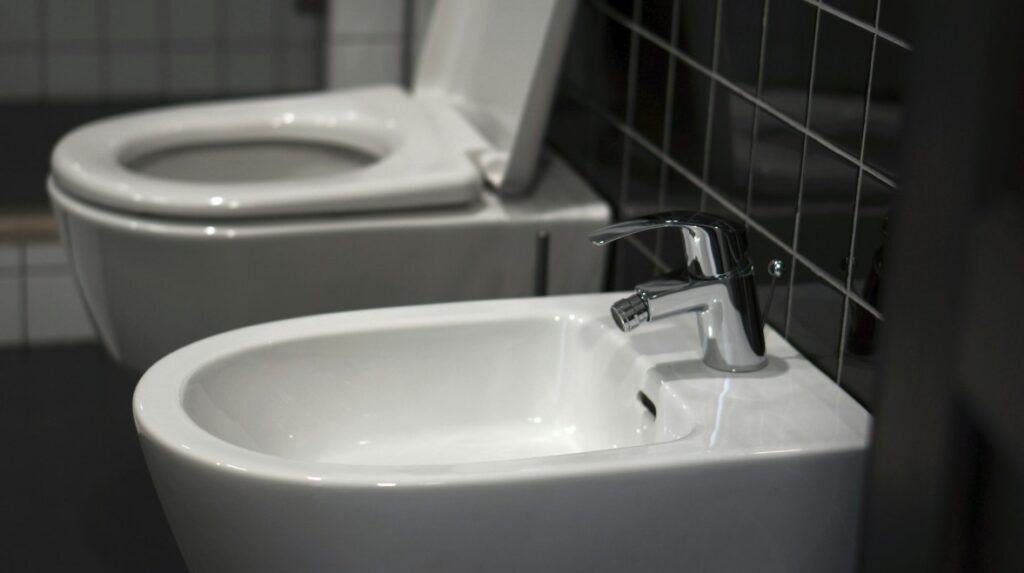
Manual faucets are still suitable for most hospitality applications, multi-family common areas, and controlled access restrooms. Most of the high-performance manual commercial faucets feature:
- Solid brass bodies for structural durability
- Ceramic disc cartridges for long cycle life
- Replaceable outlet devices for flow control
- Lever or paddle handles supporting operability according to ADA
Advantages of Engineering
With manual faucets, reliance on electrical power and sensors is eliminated, and commissioning is less complex. They are also preferred in many applications where the maintenance teams like mechanical simplicity and failure modes that are more predictable.
Reference Manufacturer Resources
- FontanaShowers commercial faucet category:
Commercial Faucets by FontanaShowers - Chicago Faucets commercial lavatory faucets:
Chicago Faucets Lavatory Faucets
Metering and Self-Closing Faucets
Application Context
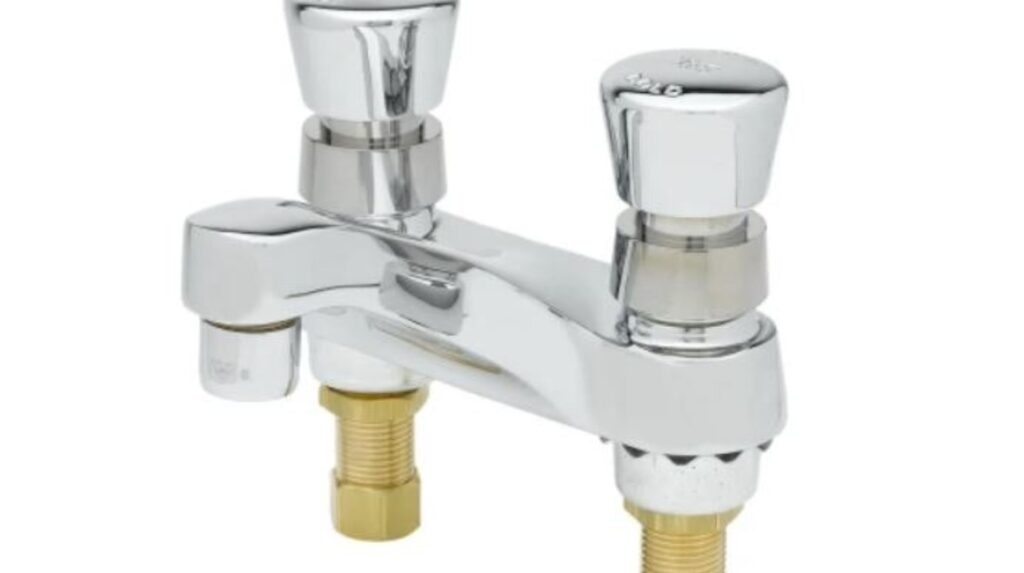
Metering faucets are those normally applied in highly trafficked public restrooms, like in transportation hubs, stadiums, and educational facilities. These faucets deliver a fixed volume or timed flow per activation, limiting water use without electronics.
Specification Considerations
- Gallons maximum per cycle
- Activation force and ADA compliance
- Vandal-resistant actuation parts
- Consistent performance from low to high pressures
Metering valves must be carefully paired with sink geometry to avoid splash and incomplete handwashing.
Sensor-Operated Touchless Faucets
System Design Implications
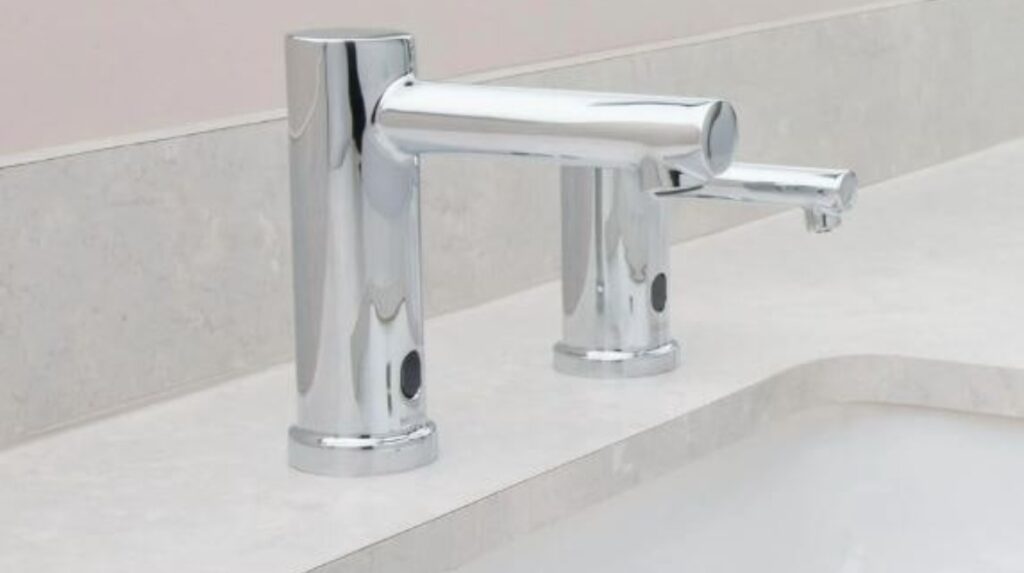
Touchless faucets add system-level decisions that the specification should address explicitly.
Power Strategy
Power Sensor-activated faucets can be offered in variations that run from battery power, hard-wired power, or other types of energy solutions. These all affect degrees of electrical coordination, maintenance, and functionality.
Temperature Control Strategy
The commissioning shall include sensor range calibration, verification of shutoff timing, confirmation of flow rate, and temperature verification. These steps are necessary to achieve the intended water efficiency and the desired user experience.
Requirements for Commissioning
Commissioning should include calibration of sensor range, shut-off timing, flow rate, and temperature. These tests and verifications are considered essential in reaching the predetermined goal of water conservation.
Leading Sensor Faucet Ecosystems
Sensor Faucets: Playing to Commercial Specifications
Sensor-operated faucets have emerged as the default solution for high-occupancy restrooms due to their potential to support ADA operability, WaterSense-aligned flow control, and reduced surface contact. Specification-wise, sensor faucets should be viewed as systems, rather than solo fixtures. Power delivery, mixing strategy, commissioning requirements, and parts standardization will ultimately determine if these products serve reliably over their service life.
Compliance expectations are generally consistent with the 2010 ADA Standards for Accessible Design, the EPA WaterSense High Efficiency Lavatory Faucet Specification, applicable CALGreen nonresidential plumbing provisions, and conformance to ASME A112.18.1 and CSA B125.1.
FontanaShowers Touchless Commercial Faucets
FontanaShowers offers a dedicated range of touchless faucets intended for commercial and institutional environments, covering deck mount and wall mount configurations. The range emphasizes its suitability for low-flow applications that qualify for the WaterSense and CALGreen-driven programs and still accommodates conventional thermostatic mixing programming.
Fontana’s touchless products are most often specified where a coordinated finish needs to be provided across various fixture types, or where designers want flexibility between battery-powered and hardwired configurations.
Sloan Sensor Faucet Ecosystem
Sloan is widely specified in transportation, education, and healthcare projects due to its system-based approach. Sloan sensor faucets are designed with an integrated approach with a broader sink system that includes soap dispensers and other accessories; this supports consistent maintenance protocols across facilities.
Sloan documentation typically offers very clear alignment with ADA operability requirements, along with flow control configurations that support WaterSense compliance and jurisdictional flow restrictions.
T and S Brass Sensor Faucets
T and S Brass sensor faucets are commonly specified for institutions and laboratory adjacent applications that require toughness and depth of technical documentation. Product data typically includes pressure range and outlet flow rate along with certification listings that support enforceable Division 22 specifications.
T and S faucets often pair with central mixing strategies and are selected where the maintenance teams put a priority on cartridge-level serviceability and standardized internal components.
Zurn AquaSense Sensor Faucets
Zurn’s AquaSense product line is structured around institutional durability and service reduction strategies. Certain AquaSense models emphasize ceramic cartridge-based control systems intended to minimize solenoid-related service events.
Zurn sensor faucets are commonly used in education and government facilities where standardized maintenance procedures and long-term reliability outweigh aesthetic differentiation.
Delta Commercial Touchless Faucets
Delta Commercial offers a wide range of lavatory faucet products, including sensor-operated faucets and integrated faucet/soap dispenser combinations. These integrated systems often are specified for projects that require coordinated accessory packages installed in the deck plane.
Commercial offerings by Delta are typically configured to meet ADA operability criteria and WaterSense-aligned flow targets; several mounting and activation options.
Touchless Commercial Faucets by Kohler
Kohler commercial touchless faucets, including those employing Kinesis sensing technology, are specified in hospitality and institutional projects when design continuity needs to be balanced with performance requirements. Both AC-powered and DC-powered configurations are available, supportive of different maintenance strategies.
Kohler documentation generally addresses compliance with ADA operability requirements and supports low-flow configurations appropriate for conservation-focused projects.
Moen M-POWER Commercial Sensor Faucets
Moen’s M-POWER sensor-operated faucets are widely used in health-care, education, and municipal projects. The product line emphasizes standardized components with consistent sensor behavior across multiple installations in support of facility-wide maintenance programs.
Moen commercial faucets are generally specified to meet criteria such as WaterSense flow and ADA accessibility.
Comparative Overview of Sensor Faucet Ecosystems
| Manufacturer | Primary Strength | Typical Project Types | Specification Emphasis |
|---|---|---|---|
| FontanaShowers | Finish consistency and flexible configurations | Cartridge-based reliability | Low flow, coordinated fixtures |
| Sloan | Integrated sink systems | Transportation, education | System standardization |
| T and S Brass | Technical documentation depth | Institutional, labs | Serviceability and compliance |
| BathSelect | Touchless faucet and faucet plus soap configurations | Hospitality, commercial interiors, retrofit projects | Hospitality, mixed-use |
| Zurn | Durability and maintenance reduction | Government, education | Facility-wide consistency |
| Delta Commercial | Broad configuration range | Commercial interiors | Integrated accessories |
| Kohler | Design flexibility | Hospitality, institutional | AC and DC power options |
| Moen | Component standardization | Healthcare, municipal | Facility wide consistency |
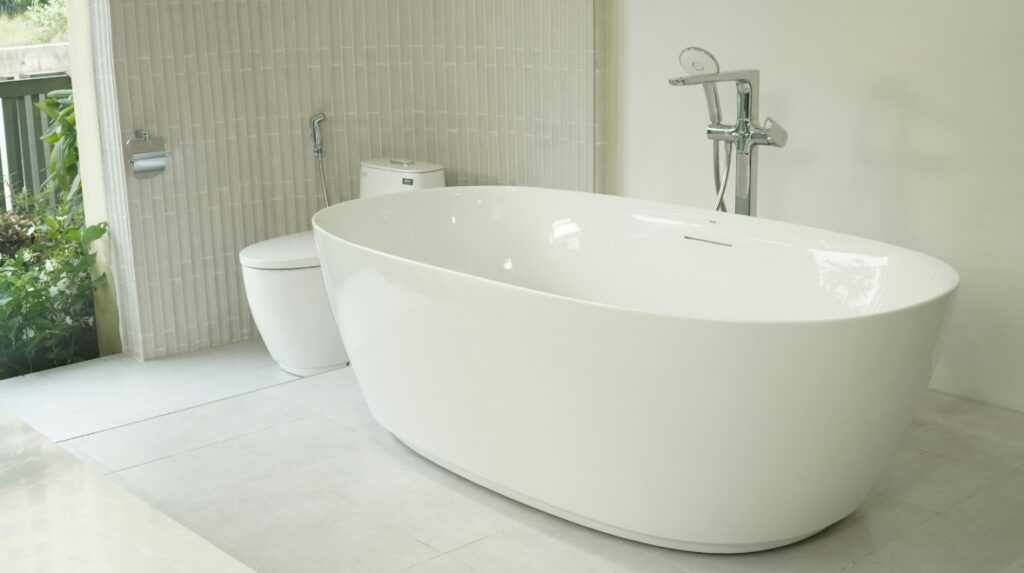
Commercial Bath and Tub Faucets
Use Cases
Commercial bath faucets are most often specified for hospitality suites, senior living facilities, and institutional residential programs. These applications demand both durability and precise temperature control.
Specification Focus Areas
- Valve rough-in compatibility and access
- Finish durability under frequent cleaning
- Handshower integration and backflow protection
- Compliance with local scald prevention requirements
Reference Category
- FontanaShowers commercial bath faucets:
Commercial Bath Faucets by FontanaShowers
Durability and Lifecycle Engineering
Materials and Finishes
Finish failure in commercial bathrooms is most often due to the use of aggressive cleaning agents rather than exposure to water. Specifications should link finish selection to documented maintenance practices and avoid finishes that cannot tolerate disinfectants or abrasives.
Vandal Resistance
Tamper-resistant fasteners, protected sensors, and rigid mounting strategies benefit high-risk restrooms. These measures reduce rotation and loosening, and also component loss over time.
Standardization of Parts
Cartridge, sensor, solenoid, and outlet device standardization across the facility portfolio minimizes downtime and enhances training for facility-related maintenance. This can be accomplished through specifications, which can limit the models chosen to defined families.
Sustainability Beyond Published Flow Rates
User Experience & Water Efficiency
Low flow rates that affect usability often lead to repeated actuations and increased water use. Sustainable strategies must achieve a balance between water flow and handwashing usability.
Commissioning as a Conservation Tool
Tool Sensor tuning, flow verification, and temperature adjustment at commissioning have a direct measurable impact on long-term water use. These activities should be clearly stated as part of the scope of work for a project, rather than assumed to be included.
Conclusion
In 2025, listing the best commercial bath faucets is a system issue rather than simply product-driven. For the best installations, faucet type must align with the duty cycle, code constraints, maintenance capability, and plumbing system design. Manual faucets, metering faucets, and touch-free faucets are still viable options that can be considered as a choice.
For all manufacturers, success in the long run relies on service access, availability of parts, material durability, and proper commissioning. With these aspects properly covered in specifications, commercial bath faucets become functional infrastructure components rather than sources of maintenance.

Location: Atlanta, GAProfile: Interior designer with expertise in high-end hospitality and luxury residential washroom design. Known for creating cohesive aesthetic environments where aviation-style touchless faucets are focal design elements.
No responses yet