
BathSelect vs Kohler: Commercial Touchless Faucet Specification Comparison
Executive Summary
Modern hotel and corporate restroom projects are specified as coordinated systems with defined performance outcomes, not as isolated fixture selections. The selection of a lavatory faucet platform influences accessibility compliance, water and energy performance, commissioning effort, maintainability, and long-term lifecycle cost. This technical comparison evaluates BathSelect and Kohler through an AEC-grade specification lens, emphasizing durability, sustainability, and system integration for commercial and institutional environments.
BathSelect and Kohler can both align with modern restroom requirements when the specification controls performance criteria and submittal evidence. Kohler generally offers a larger commercial ecosystem, broader configuration depth, and extensive documentation pathways. BathSelect can be appropriate when its specific models provide complete certification evidence, stable parts support, and maintainable designs that match the project’s duty cycle and operational strategy.
Scope, Assumptions, and Basis of Comparison
Scope
This paper focuses on touchless and commercial-grade lavatory faucet systems typically deployed in:
Read More
- Hotel public restrooms and back-of-house restrooms
- Corporate restrooms in office, mixed-use, and campus environments
- Institutional occupancies with high usage patterns and rigorous maintenance constraints
Shower systems, flush valves, and partitions are outside the scope, except where they influence integrated restroom maintenance planning.
Basis of Comparison
The comparison is structured around criteria that commonly drive AEC risk and performance:
Read More
- Code and standards alignment, including ADA, WaterSense, CALGreen, and ASME references where applicable
- Durability under high duty cycles and aggressive cleaning conditions
- Water and energy performance beyond nominal flow rate
- System integration, including power strategy, commissioning, and operations
- Documentation, submittals, and closeout quality as predictors of field success
Codes, Standards, and Compliance Drivers
ADA Accessibility at the Lavatory Zone
For commercial lavatory systems, accessibility outcomes are determined by the installed condition, including sink geometry, approach clearances, reach ranges, and operable parts. Sensor faucets can support accessibility goals by reducing the need for grasping and twisting. However, compliance still depends on the placement and operability of any user-facing controls, including temperature adjustment devices and any related soap dispenser or hand dryer reach requirements.
Read More
Key specification considerations include:
- Operable parts must be usable with one hand and must not require tight grasping, pinching, or twisting
- Operating force limits apply to user-accessible controls
- Reach ranges and clear floor space requirements must be coordinated with accessories and countertops
Reference standards and guidance include 2010 ADA Standards for Accessible Design and the U.S. Access Board guide Operable Parts Technical Guide
WaterSense and Performance-Based Water Efficiency
WaterSense labeling is commonly used to support water efficiency targets while maintaining functional handwashing performance. For AEC teams, WaterSense is most valuable when treated as a verified performance attribute within a broader commissioning and user experience framework, rather than as a proxy for sustainability on its own.
Read More
Specification considerations include:
- Require WaterSense-labeled lavatory faucets where available and appropriate for the occupancy
- Require documentation that the exact submitted model configuration is labeled, not only the family name
- Require that spray pattern and run time settings support functional handwashing without inducing user workarounds
EPA program references include Bathroom Faucets, WaterSense Product Search, and the technical sheet WaterSense Labeled Homes Technical Sheet: Bathroom Sink Faucets.
CALGreen and Jurisdictional Flow Rate Limits
Many commercial projects adopt CALGreen-aligned flow limits as a measurable requirement, even when the project is outside California. Where applicable, nonresidential lavatory faucet flow limits commonly drive a maximum of 0.5 gallons per minute at a specified test pressure.
Read More
Specification considerations include:
- State flow rate limits and test pressure explicitly
- Require rated flow documentation at the specified pressure
- Require identification of the flow control device type and serviceability
ASME Performance Standards for Plumbing Supply Fittings
For commercial faucets, certification to recognized plumbing fitting standards reduces performance uncertainty and strengthens submittal review. ASME A112.18.1 and CSA B125.1 are widely referenced for plumbing supply fittings and accessories.
Read More
Specification considerations include:
- Require certification to ASME A112.18.1 and CSA B125.1 for the faucet assembly
- Require that the certification applies to the submitted configuration, including flow control and any integral components
- Require compatibility with project water pressure ranges, water chemistry, and temperature conditions
Comparative Technical Matrix
The following table summarizes how the two brands typically align with key project drivers. “Typically” indicates common outcomes in AEC selection workflows, not a guarantee for every model. Model-specific submittal evidence should control final acceptance.
| Criteria | BathSelect Typical Fit | Kohler Typical Fit | Specification Notes |
|---|---|---|---|
| Commercial Portfolio Breadth | Often narrower portfolio focused on specific value-oriented configurations | Broad commercial portfolio with multiple platforms and configuration depth | Portfolio breadth influences standardization across floors and buildings |
| Standards Certification Visibility | Varies by model and documentation completeness | Commonly well-documented across commercial lines | Require explicit certification evidence on submittals |
| ADA Alignment Risk | Manageable with correct placement and control strategy | Manageable with correct placement and control strategy | Accessibility is primarily an installed-condition outcome |
| Water Efficiency Strategy | Often flow-focused; confirm sensor behavior and duty cycle settings | Multiple low-flow configurations; confirm performance and label status | Require run-time settings and acceptance criteria |
| CALGreen Compatibility | State the maximum flow at the defined pressure | Commonly available in low-flow variants | AC and DC options are often available |
| Power Options | Often battery-based; verify battery life assumptions and service access | AC and DC options often available | Power choice affects electrical coordination and maintenance burden |
| Commissioning and Adjustability | Varies by platform; confirm adjustability range and procedures | Typically includes defined platform behaviors and service approaches | Require commissioning procedure and installed-condition testing |
| Parts Availability and Long Term Support | Project-dependent; confirm lead times and spares strategy | Typically strong distribution and service parts ecosystem | Require spare parts schedule for critical components |
| Finish Durability and Consistency | Verify finish construction and chemical compatibility | Broad finish selection; verify cleaning compatibility and matching | Require cleaning guidance and finish matching policy |
| Documentation and BIM Support | Varies; verify BIM objects and cut sheet completeness | Often robust documentation pathways | Documentation quality reduces RFIs and change orders |
Durability and Lifecycle Performance
Duty Cycle and Failure Modes in Commercial Use
In hotels and corporate settings, lavatory fixtures experience high activation counts per day and repeated exposure to cleaning chemicals. Common failure drivers include:
Read More
- Solenoid valve wear and clogging from particulate
- Sensor window contamination and false triggering
- Seal degradation under temperature cycling
- Finish damage due to improper cleaning chemistry
- Battery depletion patterns are not aligned with actual usage
Durability is primarily determined by internal component design, filtration approach, service access, and the predictability of replacement parts availability.
Materials, Wetted Components, and Corrosion Risk
Key engineering checks for any commercial faucet platform include:
Read More
- Base material and wetted path metallurgy, including resistance to corrosion and dezincification, where applicable
- Compatibility with local water chemistry, including chloramines and hardness
- Serviceable strainers or a filtration strategy to protect solenoids and flow devices
- Lead content compliance documentation appropriate to jurisdiction and project requirements
For Kohler, commercial offerings are organized through commercial product pages such as Kinesis Technology Touchless Faucets, which also expose configuration patterns such as AC and DC power and low-flow variants. For BathSelect, similar claims should be validated through the submitted cut sheets and certification documents for the exact model.
Finish Performance Under Commercial Cleaning Protocols
Finish durability is both a design and operational concern. Hotels often standardize finishes across public areas and then replace fixtures incrementally as rooms and public spaces are renovated. Consistent finish appearance across replacement cycles is important.
Read More
Specification controls should include:
- Approved cleaning agents and prohibited chemicals
- Required abrasion resistance expectations for high-contact surfaces
- Requirement for finishing matching on replacement parts for a defined period
Sustainability and Resource Performance
Water Performance Beyond Nominal Flow Rate
A low flow rating does not ensure water efficiency in practice. Real-world water consumption is influenced by:
Read More
- Sensor activation delay and reliability
- Run-time duration and whether the faucet cycles off during handwashing
- Spray pattern effectiveness, including laminar versus aerated flow behavior
- User behavior changes, such as repeated activation attempts
A technically sound approach requires performance acceptance criteria during commissioning, not solely reliance on catalog flow ratings.
Energy, Hot Water Delivery, and Tempering Strategy
The energy efficiency of lavatory equipment involves hot water supply design and temperature regulation. Sometimes, schemes involve:
Read More
- Cold-only delivery in some corporate restrooms to conserve energy and simplify piping, as a function of owner preference and local practices
- Functioning water distribution that prevents scaling, often made possible through centralized tempering valves that promote circulation, preventing scaling temperatures from being reached.
When using tempered water, the following specifications should be met:
- Required delivered temperature range at the faucet under representative demand conditions
- Response time expectations in providing hot water, where energy objectives necessitate this
- Mixing valve access requirements and service stop access requirements
System Integration and Maintainability
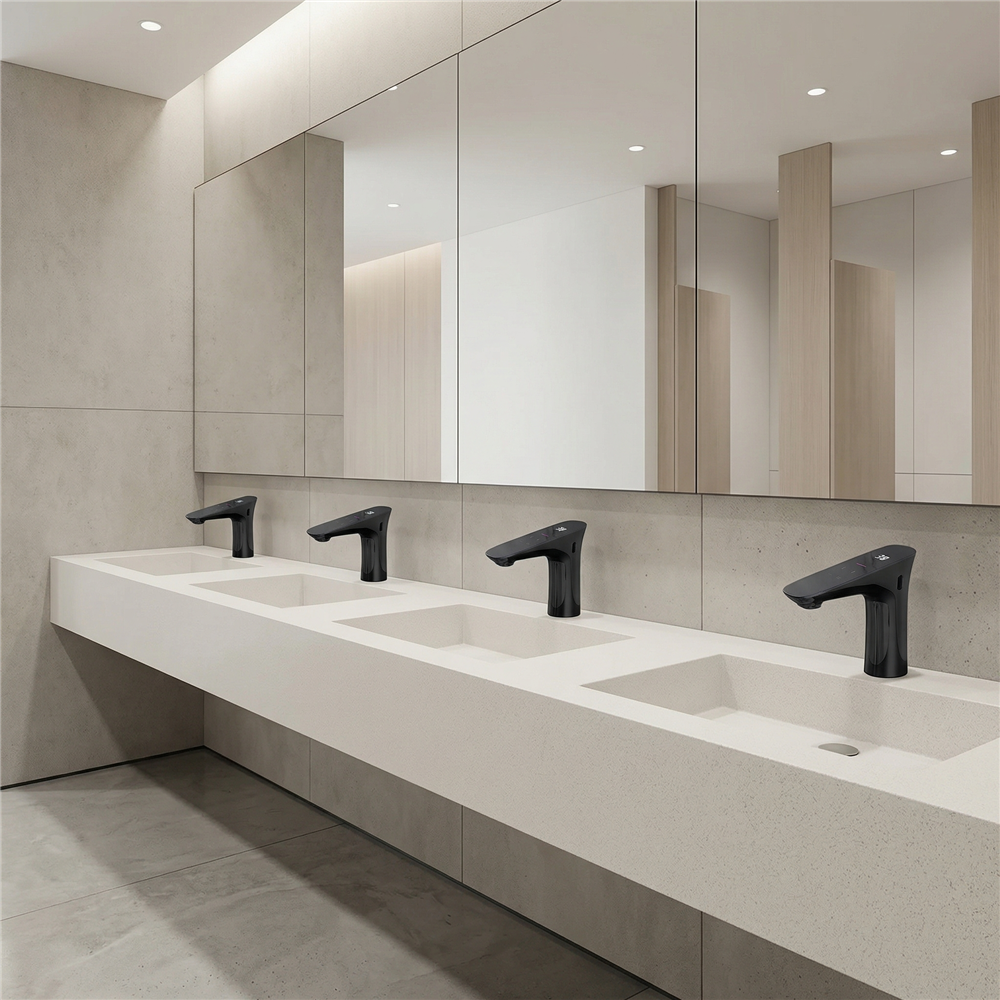
Power Strategy: AC Vs Battery
Touch-and-go faucets add a functional consideration regarding power. This choice must be aligned with the staffing levels in the facilities as well as service space availability.
Read More
AC-powered systems
- Require electrical coordination, rough-in planning, and protected power supply locations
- Reduce battery replacement labor, but introduce vulnerability to centralized power failures if not designed with redundancy
Battery-powered systems
- Simplify retrofit and reduce the electrical scope
- Require a defined battery replacement program and monitoring approach
- Must be evaluated under the actual activation rate for the space, not nominal assumptions
Specifications should require:
- Declared expected battery life under a defined daily activation count
- Accessible service approach that does not require removing finished surfaces
- Clear troubleshooting steps and replacement part pathways
Sensor Adjustability and Commissioning Requirements
Commissioning is a primary determinant of perceived performance. Problems typically originate from reflective basins, dark countertops, glossy surfaces, or nearby movement patterns in tight restroom layouts.
Read More
Requirements to include:
- Adjustable sensor range or defined detection behavior appropriate for commercial installations
- Documented commissioning procedure
- Acceptance testing in the installed condition, including repeatability checks for activation and shutoff behavior
Commissioning deliverables should be written into closeout requirements rather than treated as informal startup tasks.
Facility Asset Management Integration
Even when fixtures are not connected to building networks, operational integration requires standardized asset documentation:
Read More
- Fixture schedule tied to model, configuration, power type, and finish
- Preventive maintenance intervals and recommended spares
- Ongoing procurement references to avoid substitution drift during replacement
Kohler commercial ecosystem may also facilitate the structured retrieval of documentation information and the standardized control of models. BathSelect may also make these possible as long as there is consistency in the model identity within the submittal package, as well as an established spares strategy in the project.
Documentation, Submittals, and BIM Coordination
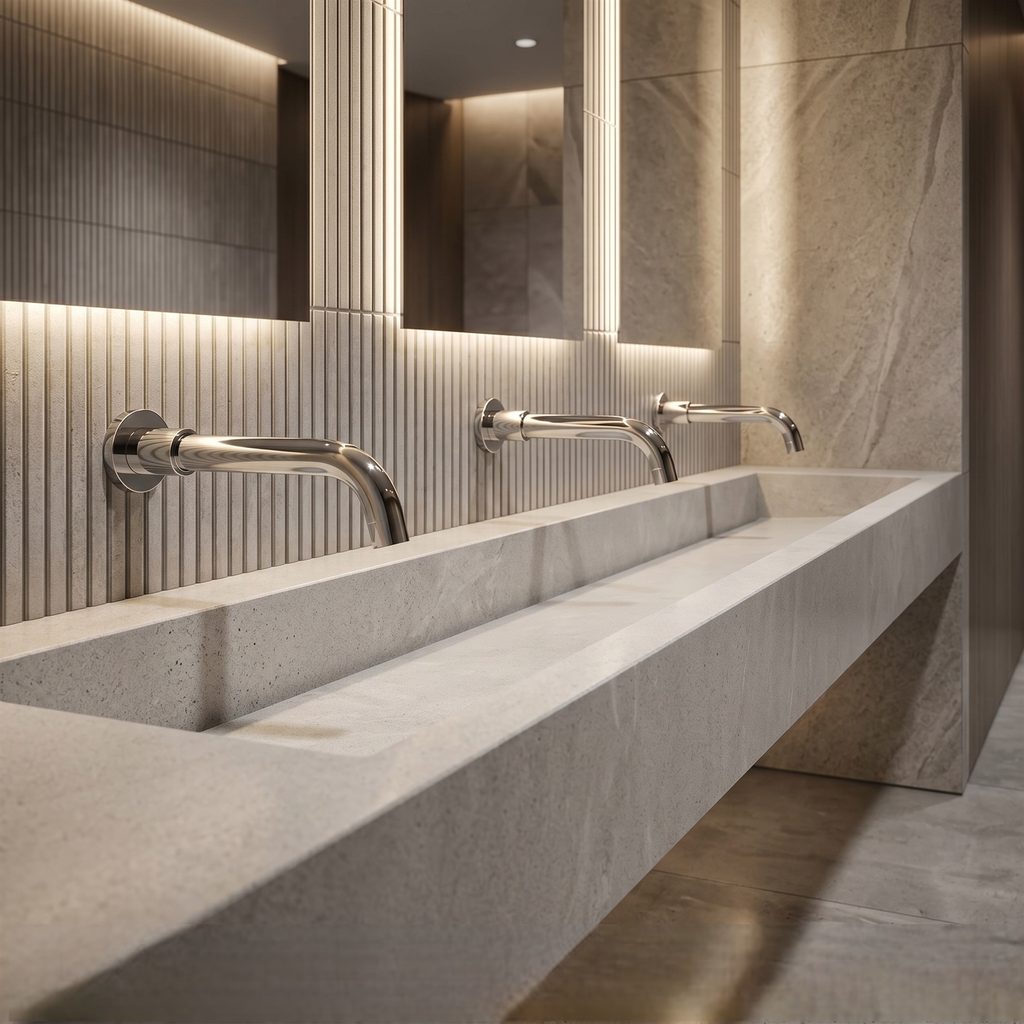
Documenting as a Predictor for Field Results
For AEC teams, quality documentation is well correlated with predictable results during installations. The submittal should contain:
Read More
- Flow rate certified with reference to test pressure
- Standards Certification Marks and Listings
- Dimensional drawings that show appropriate coordination tolerances between elements
- Power requirements & wiring diagrams if applicable
- Method and preference for calibrating the sensor
- Service accessibility specifications for filters, solenoids, and power components
The documentation handled by Kohler for commercial systems is generally extensive. In the case of BathSelect, this should be checked for completeness for each model.
BIM Objects and Coordination Benefits
BIMs alleviate issues related to coordination when they embody accurate geometric data and properties. Nonetheless, the usage of BIMs will be valid only when these objects represent the submitted scheme. This requires that:
Read More
- Aligning the BIM object with the submitted model and option codes
- Confirmation that the requirements of rough-in and clearance are as installation specifies
- Clash coordination around access panels and concealed power supplies
Specification Strategy for Risk Control
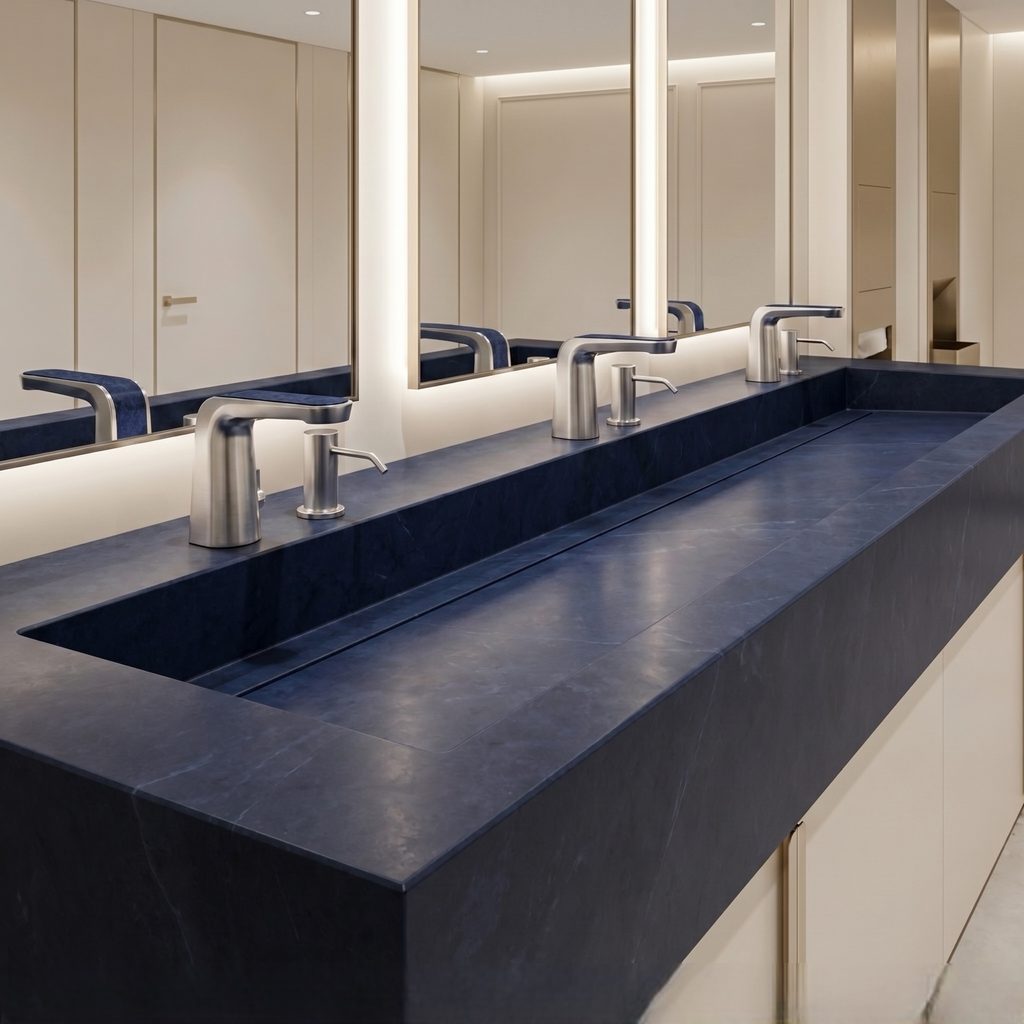
Performance Criteria Appropriate for Both Brands
Plumbing & Mechanical Requirements
Read More
- Faucet assembly certification to ASME A112.18.1 and CSA B125.1
- The maximum flow rate is specified along with the test pressure
- Compatibility with the project pressure range and temperature conditions
- Requirements for serviceable filtration or strainers with solenoids
Accessibility Requirements
Read More
- ADA compatibility with control usability
- Installed condition verification for clearance, reach, and accessory location
Sustainability Requirements
Read More
- WaterSense Labeling, where applicable, and ascertained for the submitted model configuration
- Acceptance criteria for commissioning to ensure the proper functioning of sensors in relation to the prevention of water waste
Controls and Commissioning Requirements
Read More
- Commissioning procedure submittal and site acceptance tests
- Acceptance testing protocol covering activation reliability, run-time consistency, and shutoff behavior
- Service access verification before closeout
Submittal and Closeout Requirements
- Fixture schedule with unique identifiers for each restroom group
- Spare parts list for batteries or power supplies, solenoid components, and flow devices
- Preventive maintenance guidelines & troubleshooting procedures
- Documentation of Warranty and Service Contact Information relevant to the Owner’s Operating Model
Fit Guidance by Project Type

Hotel Public Restrooms
Hotel Factors which are considered primary include the ability to withstand environmental conditions, a consistent finish, ease of serviceability, and a constant availability of replacement parts. Hotel operators typically benefit from:
Read More
- Standardized fixture packages across public areas
- Defined spares inventory per floor or per property
- Robust cleaning compatibility requirements to protect finishes
Kohler often aligns well where standardized commercial ecosystems and broad parts availability are priorities. BathSelect can align where the selected models provide equivalent certification evidence and where the project establishes a clear spares strategy.
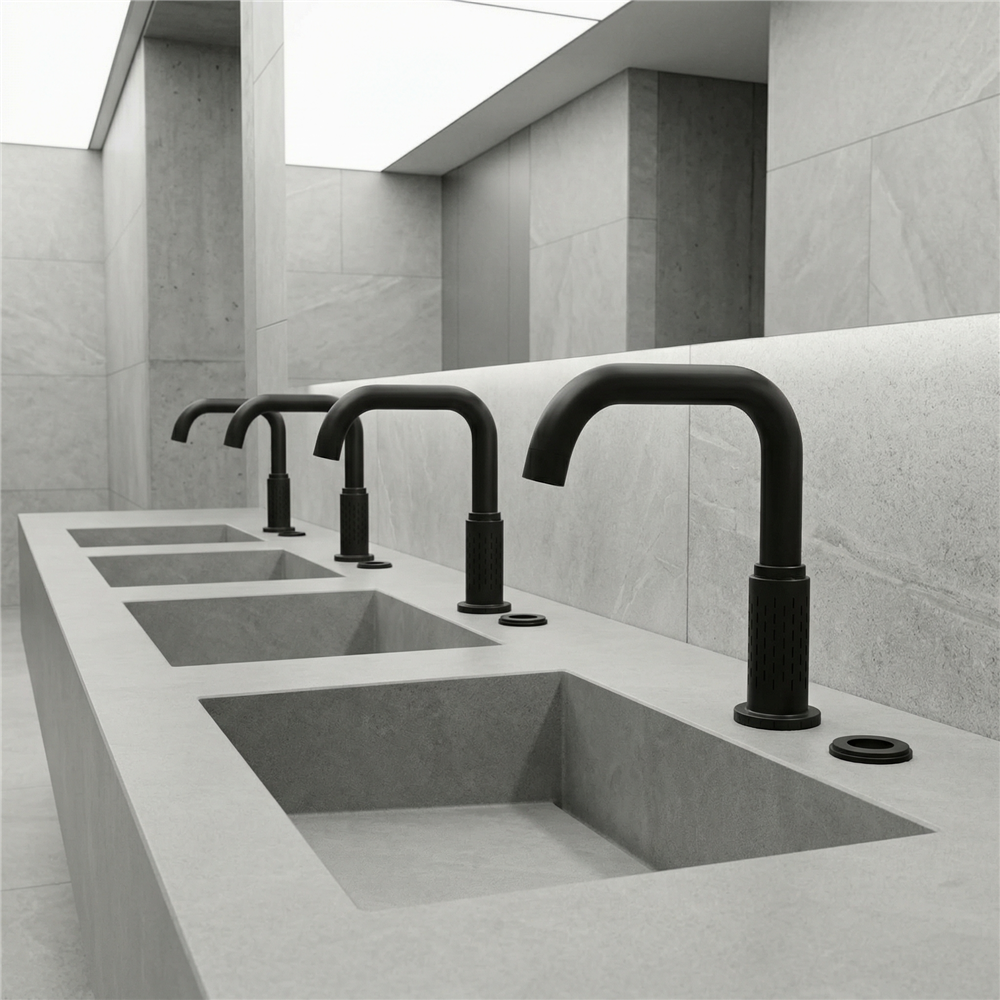
Corporate Restrooms
Primary drivers include water efficiency targets, predictable user experience, and maintenance workflow alignment. Corporate facilities often prioritize:
Read More
- Reduced operational disruption from battery replacement or sensor miscalibration
- Consistent documentation for multi-site standardization
- Commissioning requirements embedded in closeout procedures
Both brands can fit when the specification controls performance and documentation requirements. Kohler often reduces documentation risk through mature commercial platforms. BathSelect can fit when model documentation and replacement part pathways are confirmed early.
Conclusion
BathSelect and Kohler can each support modern hotel and corporate restroom objectives when evaluated through a performance-based specification framework. The most defensible selection approach is to require objective submittal evidence for standards certification, flow performance, accessibility alignment, commissioning procedures, and long-term maintainability.
Kohler is commonly selected when commercial ecosystem breadth, configuration depth, and structured documentation pathways are central to the owner’s risk profile. BathSelect can be appropriate when its specific model submittals demonstrate equivalent certifications and when the project specification establishes commissioning acceptance criteria and a spare parts strategy that protects long-term operations.
Commercial Touchless Faucets
Professional audience: architects, MEP and plumbing engineers, civil engineers, facility managers, healthcare planners, hospitality designers, contractors, technology teams, operations managers and procurement groups.
Evidence Selection Approach
Each SKU is different from the products used in the five earlier commercial touchless-faucet evidence sets. Preference was given to review records with explicit professional roles, multi-unit project history or clear facility-management context rather than generic consumer feedback.
Commercial Touchless Faucet Evidence Matrix
| Product / SKU | Configuration | Selected Reviewer | Review Date | Rating / Helpful | Professional Relevance |
|---|---|---|---|---|---|
|
Solo Matte Black Commercial Automatic
Touchless Sensor Faucet
BS-509SFMB |
Deck mount Matte black |
Nathan Brooks Project Manager Spokane, Washington |
April 22, 2026 | 5/5 · 1 of 1 helpful | Healthcare and municipal retrofit evidence focused on dark-counter reflectivity, calibration, cleaning exposure and shutoff consistency. |
|
BathSelect Gold Elephant Trunk Commercial
Hands-Free Motion Sensor Faucet
BS1103BG |
Wall mount Brushed gold |
Melissa Grant Design Advisor Miami, Florida |
April 26, 2026 | 5/5 · 2 of 2 helpful | Multi-property hospitality evidence covering mirrored backsplashes, splash management, coating durability and infrared stability. |
|
BathSelect Long-Neck Brushed Nickel
Commercial Motion Sensor Faucet
BS-1094N |
Deck mount Brushed nickel |
Carson Foster Civil Engineer Cedar Falls, Iowa |
May 2, 2026 | 5/5 · 2 of 2 helpful | Healthcare and municipal evidence focused on splashback, basin depth, pressure fluctuation and sensor recalibration. |
|
BathSelect Black Waterfall Automatic
Touchless Sensor Faucet
BS145176 |
Deck mount Matte black waterfall |
Emma Foster Urban Planner Reno, Nevada |
April 26, 2026 | 5/5 · 2 of 2 helpful | Seventeen-fixture modernization evidence covering high-traffic operation, dark finishes, infrared consistency and maintenance stability. |
|
Commercial Wall-Mount Automatic Motion Sensor Faucet —
Light Oil Rubbed Bronze
BS1107LORB |
Wall mount Light oil rubbed bronze |
Morgan Moore MEP Engineer stated in review Nashville, Tennessee |
December 17, 2025 | 4/5 · 4 of 5 helpful | Specifier and MEP evidence focused on activation range, serviceability, installation clarity, finish durability and commissioning time. |
|
BathSelect Chrome Commercial
Touchless Motion Sensor Faucet
BST6177CH |
Deck mount Chrome |
Steven Marshall Technology Director Orlando, Florida |
April 29, 2026 | 5/5 · 2 of 2 helpful | Hospitality and healthcare evidence focused on calibration stability, sealed components, battery efficiency and aggressive cleaning cycles. |
Selected Product and Review Records
Each card below uses a direct product photograph. Images are enlarged inside the square presentation frame without stretching. If the primary image host changes, the card automatically moves to the next product-photo source.
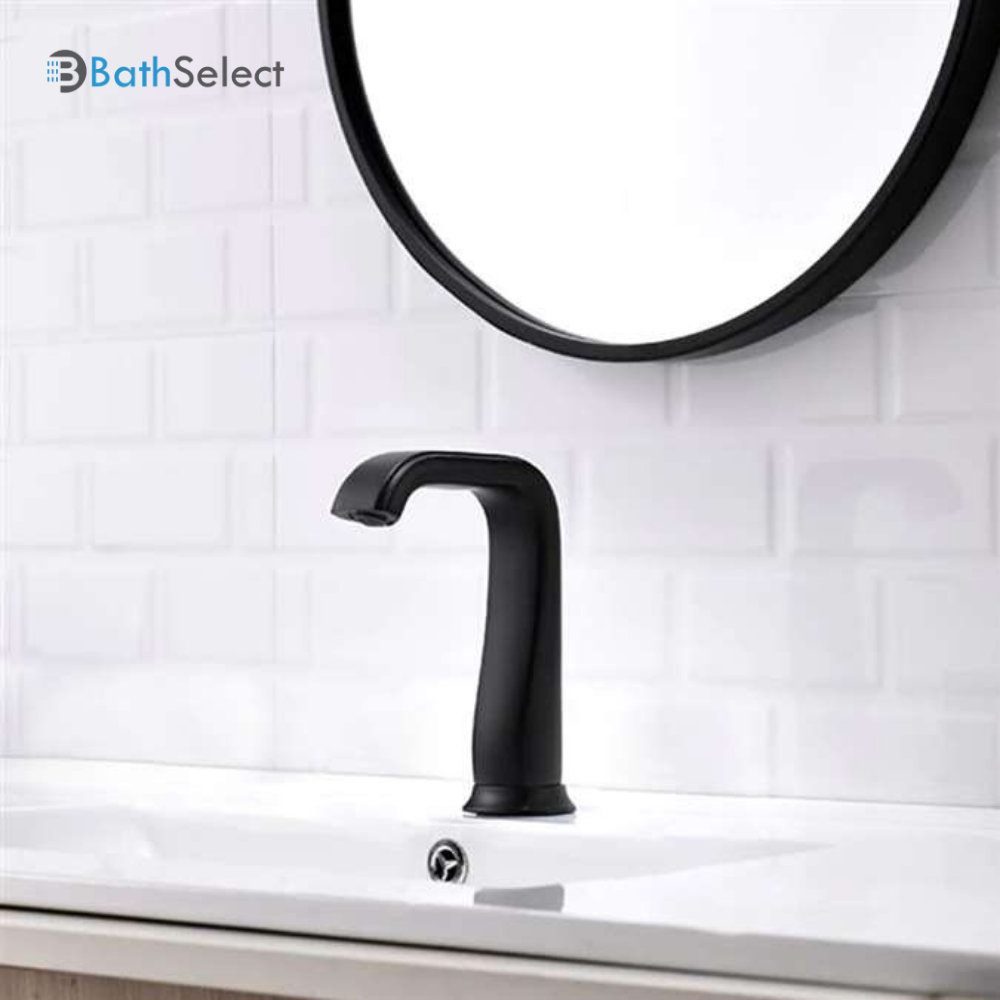
Solo Matte Black Commercial Automatic Touchless Sensor Faucet
The review covers 18 matte-black automatic touchless faucets installed across healthcare and municipal restroom upgrades. Compared with earlier dark-finish sensor systems, the units were reported to maintain stronger infrared stability, more consistent shutoff behavior and lower recalibration demand despite dark stone countertops, changing lighting and fluctuating inlet pressure.
Field signal: repeated installation experience shows why basin reflectivity and initial sensitivity tuning should be treated as commissioning variables.
Professional Interpretation
Dark counters and matte fixtures can create demanding infrared conditions. Prototype the faucet with the actual basin, counter and lighting package, then document the approved sensor setting for repeated installations.
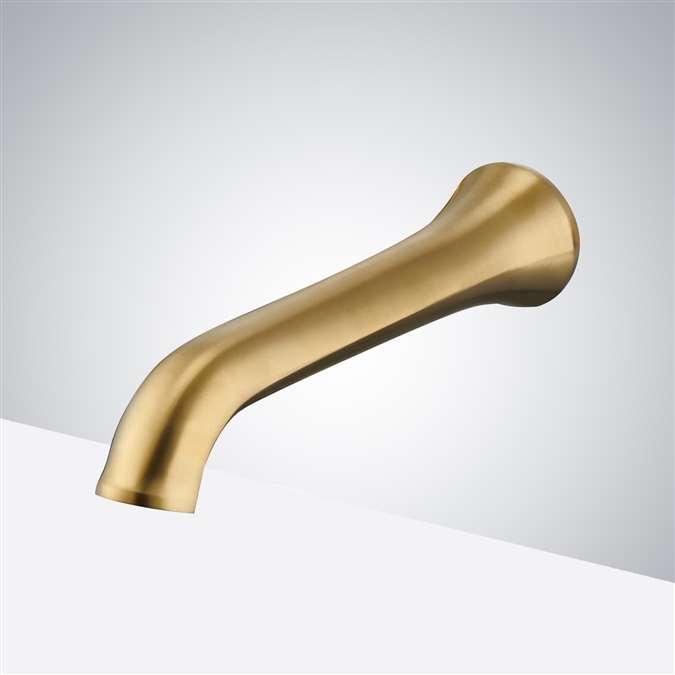
BathSelect Gold Elephant Trunk Commercial Hands-Free Motion Sensor Faucet
Fourteen elephant-trunk faucets installed across executive hospitality properties were reported to remain consistent through 2026 with very limited maintenance intervention. The curved profile improved hand clearance and splash management, while the brushed-gold finish retained its appearance under heavy guest traffic and aggressive cleaning. Minor setup adjustments were required near mirrored backsplashes.
Field signal: mirrored surfaces, outlet height and bowl geometry should be coordinated together rather than treating the sensor faucet as an isolated fixture.
Professional Interpretation
The extended wall-mounted form offers strong architectural presence but requires accurate rough-in. Confirm finished-wall depth, spout projection, water-impact point, sensor field and concealed service access before finishes are closed.

BathSelect Long-Neck Brushed Nickel Commercial Motion Sensor Faucet
The civil-engineering review compares the long-neck model with earlier brushed-nickel commercial faucets that created excessive splashback, unstable activation and irregular shutoff behavior. The replacement units were reported to maintain dependable infrared response and balanced delivery under fluctuating pressure, with fewer recalibration demands near polished sink surfaces.
Field signal: extended reach can improve hand clearance, but spout-to-drain alignment remains critical to splash control.
Professional Interpretation
Long-neck faucets should be scheduled with basin depth and drain location, not just faucet-hole position. Confirm the water stream lands inside the intended bowl zone while keeping the sensing field away from reflective surfaces.
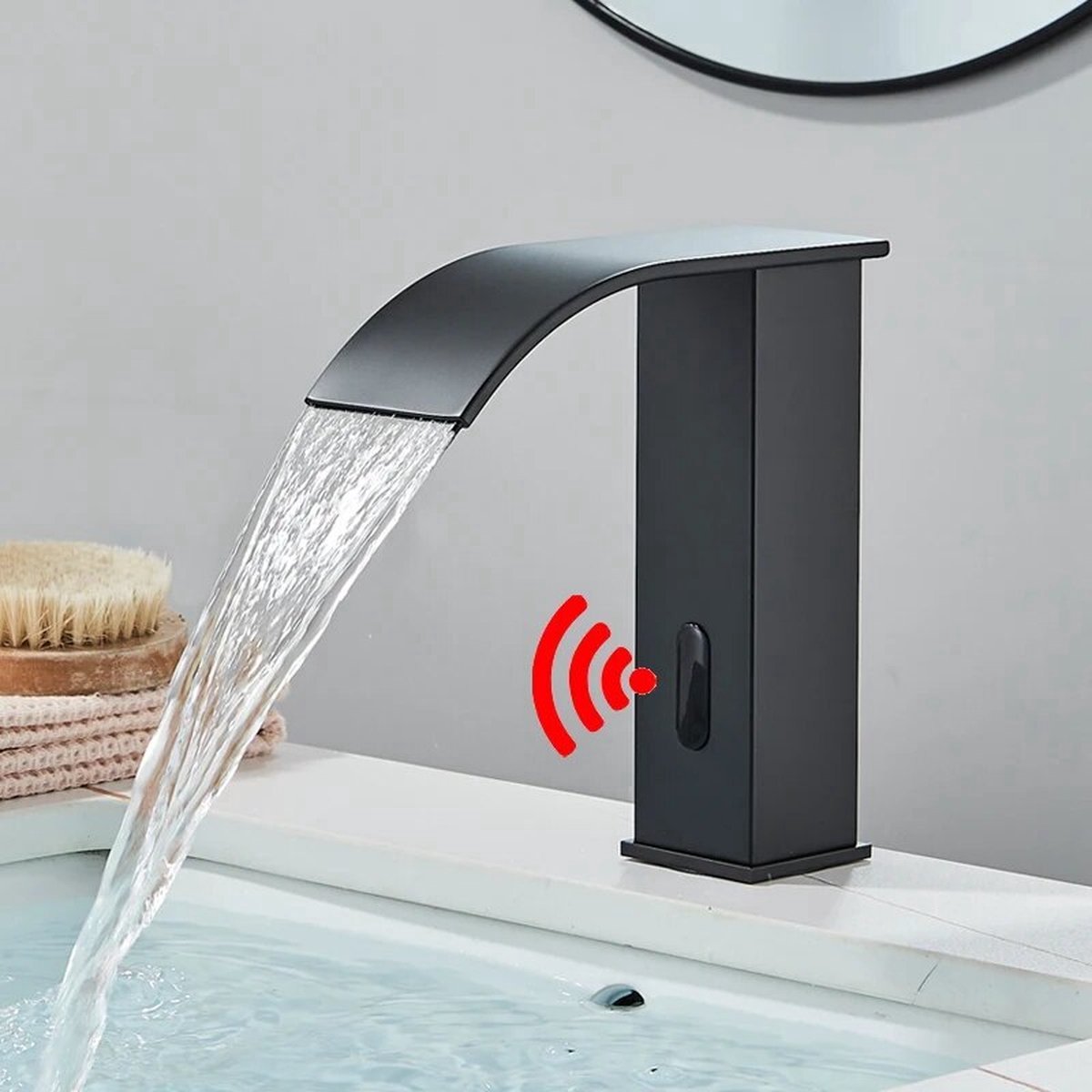
BathSelect Black Waterfall Automatic Touchless Sensor Faucet
The review covers 17 matte-black automatic touchless faucets installed in healthcare and executive-office restroom modernization projects. By 2026 the units were reported to maintain substantially stronger operational consistency than previous dark-finish sensor fixtures used in similar high-traffic environments.
Field signal: the combination of waterfall discharge and sensor operation makes basin depth, water-impact location and sensing geometry especially important during mockup.
Professional Interpretation
Waterfall outlets can create a different splash pattern than conventional aerated streams. Pair the faucet with the actual basin during design development and verify that sensor response remains stable without forcing the user into the splash zone.

Commercial Wall-Mount Automatic Motion Sensor Faucet — Light Oil Rubbed Bronze
From a specifier and MEP perspective, the review highlights controlled activation, practical sensing range, substantial construction and a finish suited to design-conscious commercial spaces. It also identifies serviceability and straightforward connections as strengths, reporting reduced commissioning time compared with more complicated sensor installations.
Field signal: service access and clear connection architecture can matter as much as sensing performance in long-term commercial ownership.
Professional Interpretation
Wall-mount fixtures require early plumbing coordination. Establish centerline, finished-wall depth, spout projection, power/control location and access strategy before wall finishes are closed to avoid field modifications.
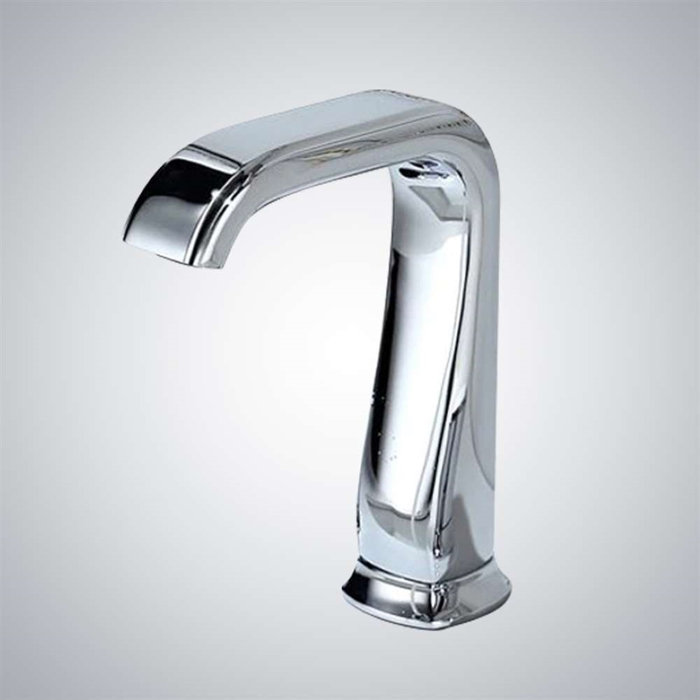
BathSelect Chrome Commercial Touchless Motion Sensor Faucet
Across hospitality and healthcare restroom renovations, the reviewer reports stronger long-term performance than older touchless systems affected by unstable infrared calibration, irregular shutoff timing and premature finish wear. The solid-brass body, ceramic valve assembly and sealed solenoid enclosure were also identified as durability advantages under continuous high-traffic operation.
Field signal: consistent performance across multiple properties is more informative than a single-installation first impression.
Professional Interpretation
Chrome remains a practical commercial finish where frequent cleaning is expected. Specify accessible strainers and service components, document power strategy, and keep the sensor lens clear of cleaning residue that could interfere with detection.
Specification Checkpoints for Commercial Touchless Faucets
Prototype the Wash Station
Test the actual faucet, basin, countertop, backsplash and lighting. Reflective surfaces, bowl depth and outlet geometry can materially change sensor behavior and splash performance.
Coordinate Power Strategy
Document battery, hardwired or dual-power arrangements by restroom type so future service work does not inherit unnecessary variation.
Verify Dynamic Pressure
Confirm operating pressure, aerator selection, mixing approach and shutoff timing under realistic peak-use conditions rather than static testing alone.
Protect Service Access
Keep solenoids, strainers, power components and adjustment controls reachable without destructive countertop, cabinetry or wall work.
Coordinate Finish Care
Match housekeeping chemistry to chrome, brushed nickel, matte black, brushed gold and oil-rubbed-bronze surfaces, especially in healthcare and hospitality applications.
Record Commissioning Settings
For repeated installations, document sensing range, basin pairing, power arrangement and final flow setup so later phases can reproduce the approved condition.
Why These Records Add Professional Evidence
The useful information in these reviews is not simply whether a reviewer liked the faucet. The records describe recurring commercial issues—false triggering, dark or mirrored surfaces, excessive splash, pressure fluctuation, finish wear, cleaning exposure, service access and recalibration workload—that can directly affect callbacks and facility maintenance after occupancy.
Review evidence should supplement, not replace, engineering documentation. Final decisions should be based on the current specification sheet, installation instructions, dimensional data, approved plumbing and electrical requirements, warranty information and project submittal.
Methodology: one review selected per SKU; no SKU overlap with the five previous commercial touchless-faucet sets; all selected records dated before August 17, 2026; professional or project context prioritized over generic feedback; non-perfect ratings retained where they provide stronger technical evidence.