
Architectural Trends 2026: Integrating Modern Faucet Design Into Commercial Interiors
Commercial interiors in 2026 are being shaped by a mix of clean modernism, wellness-driven planning, and measurable sustainability. What’s new is that fixture selection—especially faucets—is no longer treated as a background specification. In high-traffic restrooms, hospitality amenity spaces, workplace wash zones, and public facilities, faucets are now design elements that can reinforce an architectural concept and support performance goals like water efficiency, hygiene perception, and lifecycle maintainability.
For architects, interior designers, and MEP engineers, integrating modern faucet design means balancing three realities:
This guide breaks down the most relevant architectural and commercial interior trends for 2026 and translates them into practical faucet-selection considerations for AEC teams—without pushing any brand.
Trend: “Quiet, Minimal, and Refined” Interiors… but With Stronger Material Intent
Many commercial interior trend forecasts for 2026 point to spaces that look visually quieter—but feel richer through texture, tactility, and material integrity. That includes warmer neutrals, micro-textures, and fewer but better-specified elements. Biophilic layers and sustainable materials also remain central in trend summaries for commercial spaces.
You’ll see this in office, hospitality, and retail designs emphasizing:
- Simplified forms
- Natural finishes and muted palettes
- Sustainable material selections
- A stronger focus on long-term durability over novelty
Support References
How This Impacts Faucet Specification
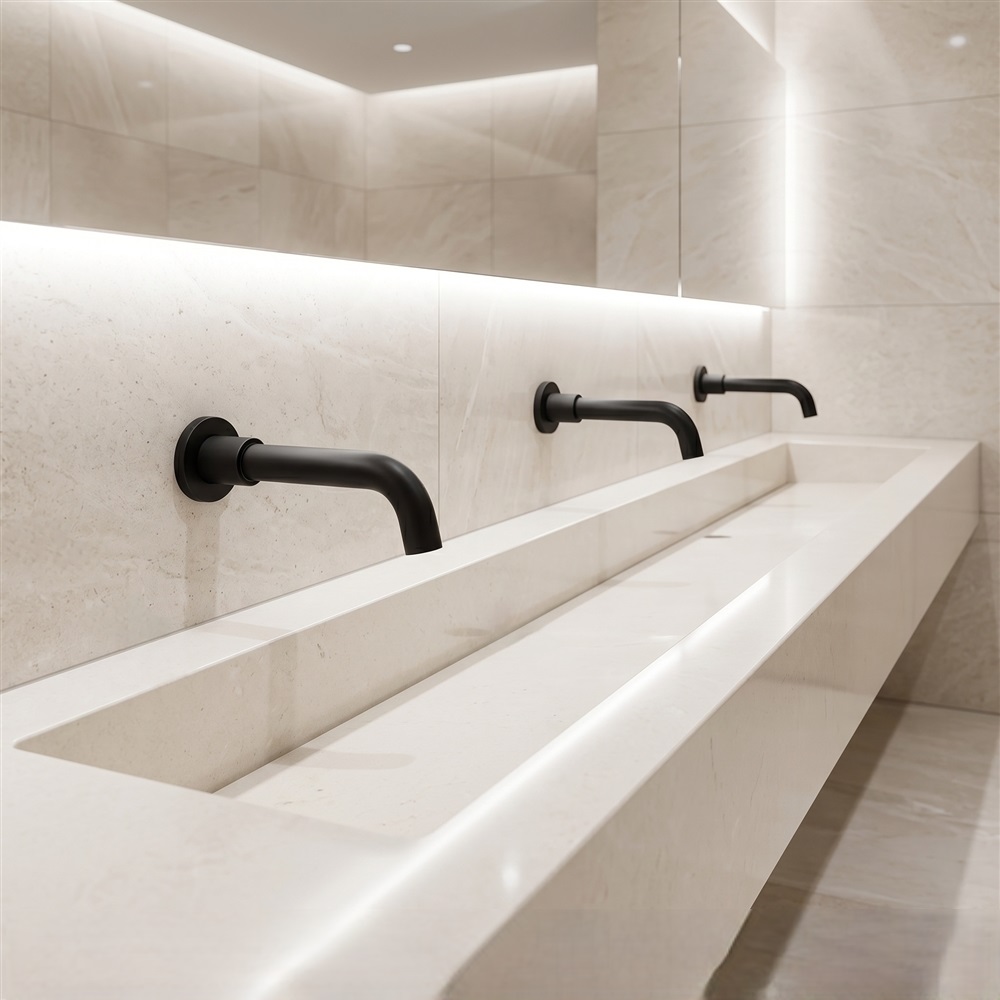
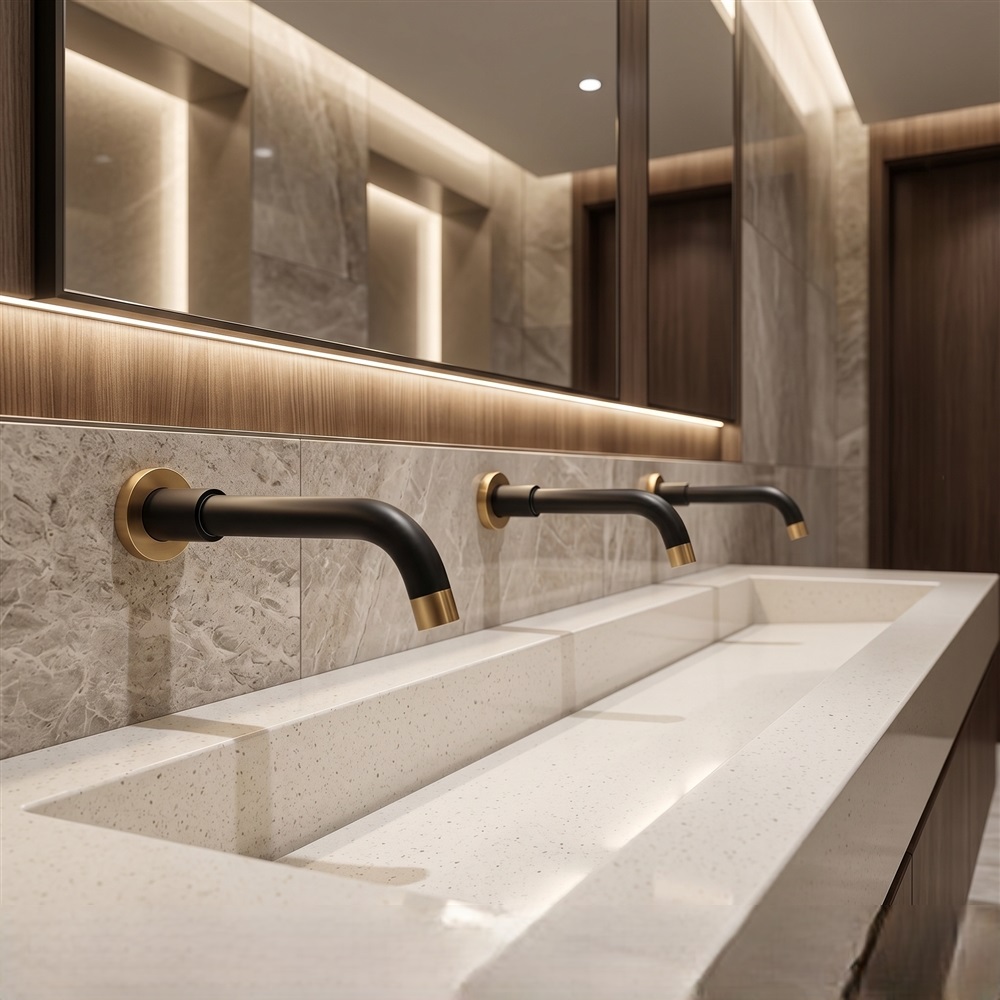
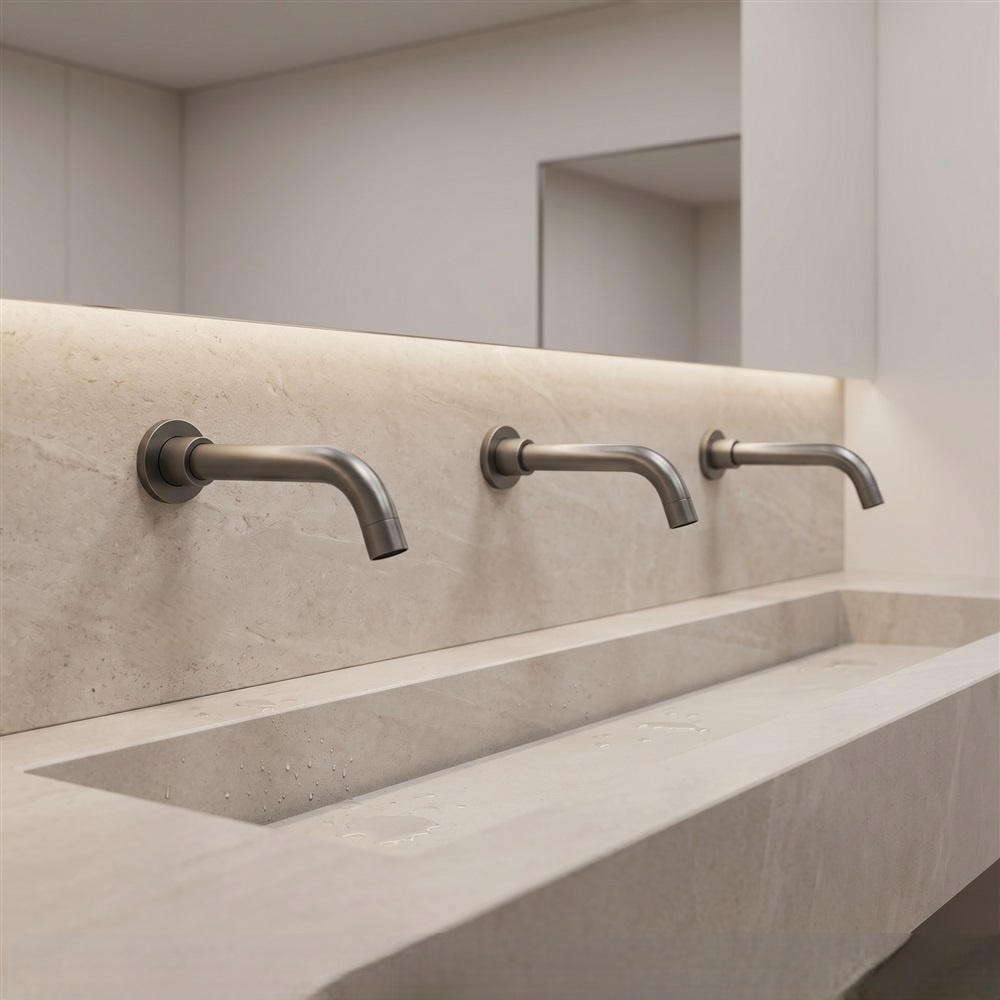
Minimal interiors don’t necessarily mean “invisible” faucets. In refined, low-noise interiors, faucets often function as the one precision object on the countertop. That means:
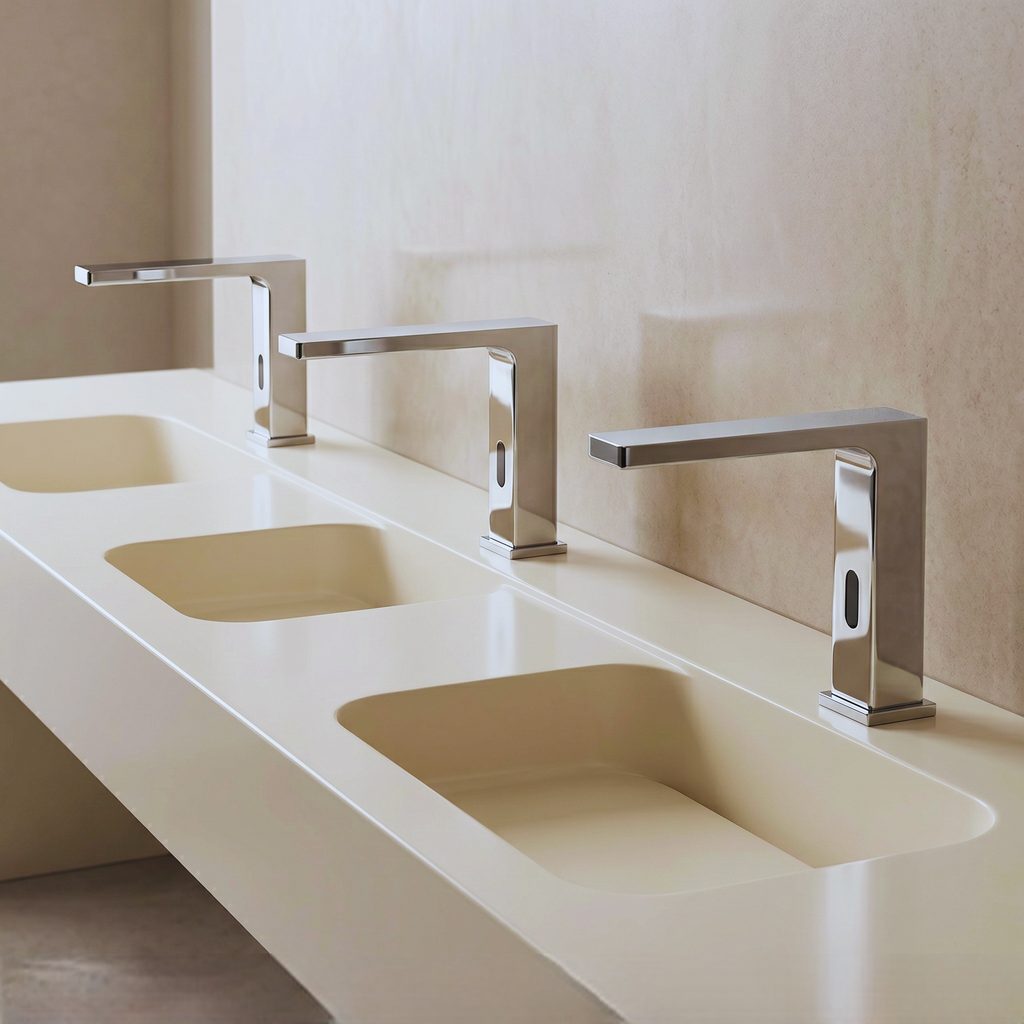
- Cleaner silhouettes — cylindrical, planar, or softly radiused forms read better than overly complex shapes.
- Finish selection becomes architectural, not decorative — matte, brushed, and satin tones.
- Spout geometry matters because it defines the sink zone visually and functionally.
- Laminar flow is often preferred in contemporary interiors where splashing, mess, and water pattern are scrutinized.
A practical spec approach is to match faucet geometry to the rest of the interior “hardware language” — door levers, grab bars, dispensers, and cabinet pulls — so the restroom reads as part of the overall design system.
Trend: Biophilic Design and Wellness Cues Are Influencing Restroom Design Choices
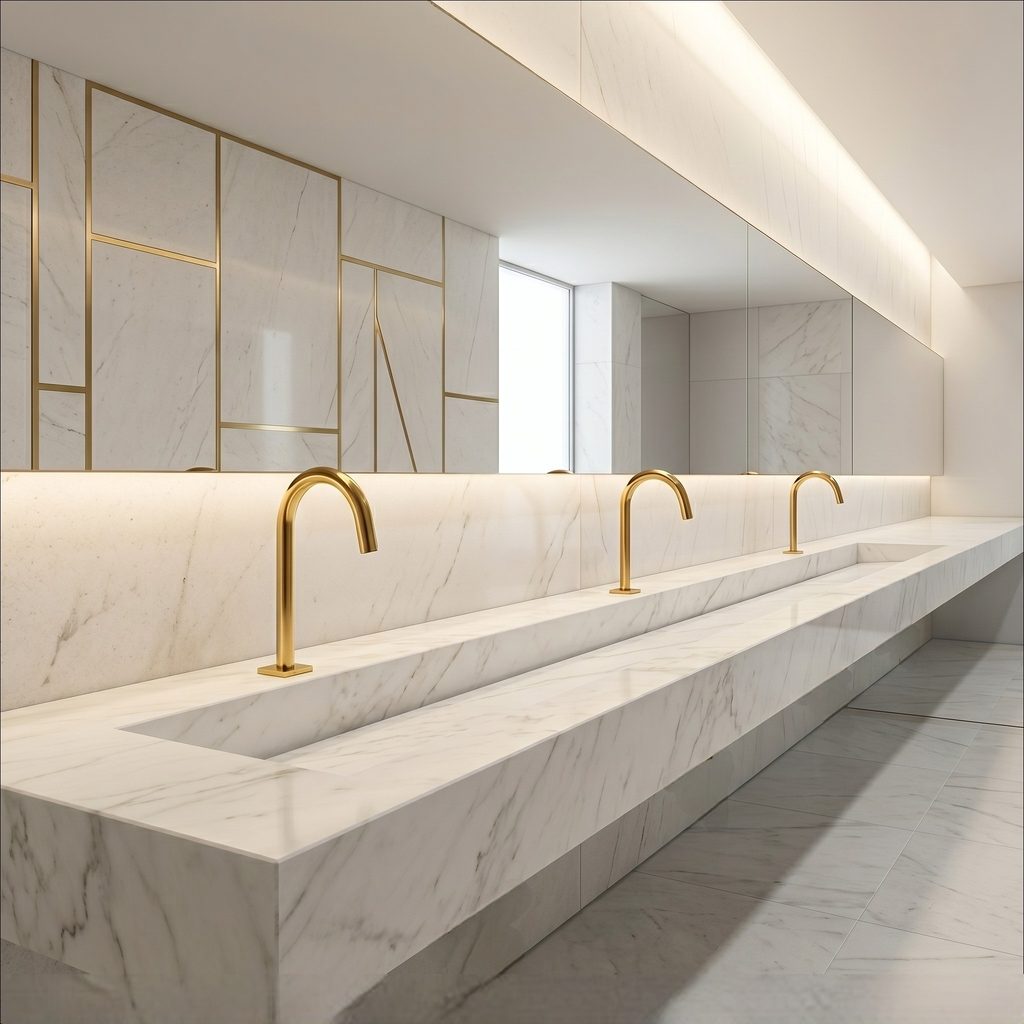
Biophilic design in 2026 is not just about putting plants in a lobby. Trend summaries highlight stronger indoor-outdoor connections, natural materials, and design decisions that reinforce calm and comfort—especially in hospitality and premium workplace environments.
How This Impacts Faucet Specification
Restrooms are increasingly designed as “micro-wellness” spaces—especially in Class A offices, hotels, and restaurants. Faucet selection supports this trend when it reduces friction and improves user perception:
- Stable water temperature behavior where available reduces discomfort.
- Lower splash + cleaner sink decks supports perceived cleanliness and reduces housekeeping effort.
- Soft, controlled water delivery can matter in environments that prioritize calmness.
- Sound profile becomes a subtle design issue—laminar flow often reads “quieter” than aerated in some installations.
This is also where hands-free operation intersects with wellness and hygiene perception.
Support References
Trend: Touchless and Smart Restroom Features Are Becoming Baseline, Not Premium
Many commercial bathroom trend roundups for 2025 emphasize touchless fixtures and “smart restroom” features as standard expectations in public and high-traffic environments. Touchless faucets are frequently highlighted as part of that shift because they reduce touchpoints and can support consistent run times—assuming sensors are tuned and maintained properly.
How This Impacts Faucet Specification
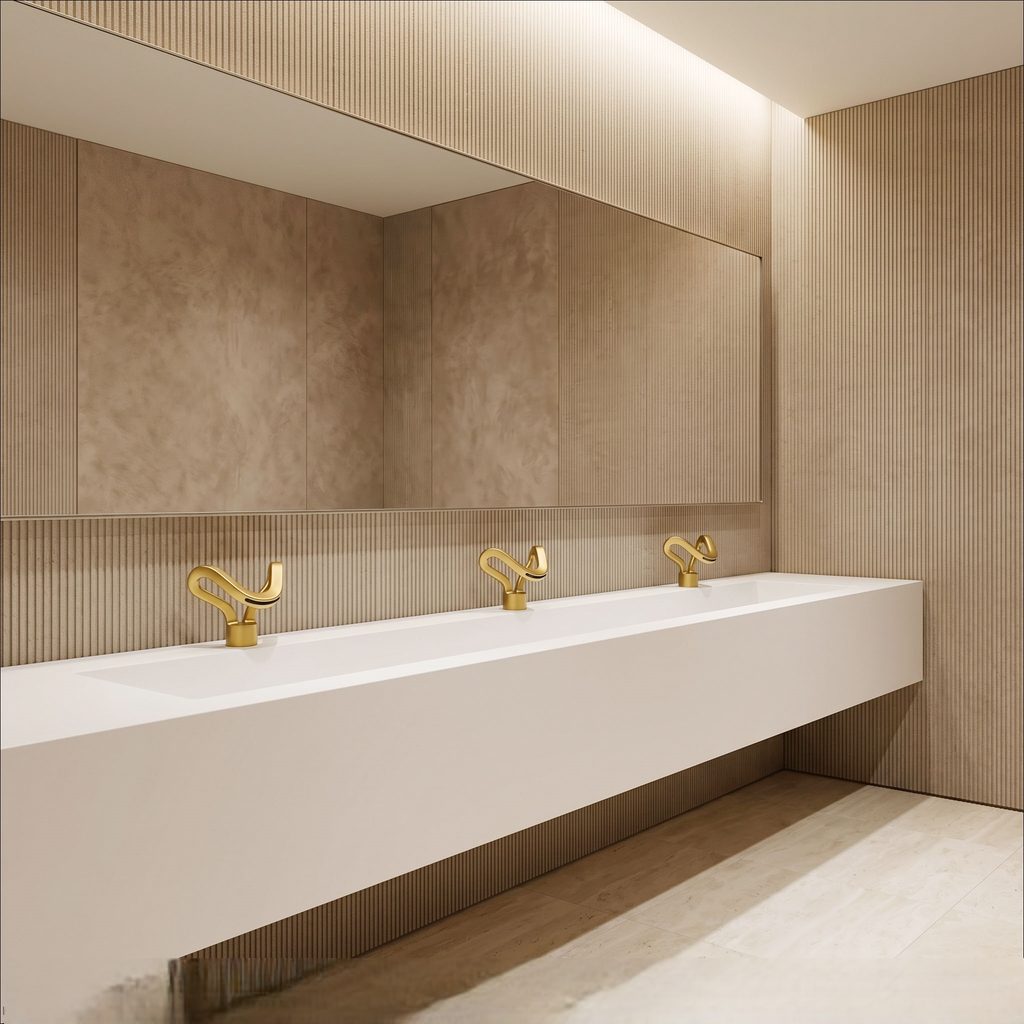
Touchless is not one category—it’s a performance decision. For AEC teams, the goal is to specify touchless faucets that:
- Activate predictably and minimize false triggers
- Shut off quickly without frustrating users
- Allow maintenance teams to adjust sensor windows and run times
- Support water-efficiency goals without hygiene trade-offs
References and Operational Guidance
EPA’s WaterSense at Work guidance also notes that sensor fixtures don’t automatically save water unless they’re maintained and adjusted correctly, avoiding phantom runs and excessive durations.
Trend: Water Efficiency Remains a Visible Sustainability Credential in Commercial Interiors
Even in design-led projects, sustainability metrics still matter. Water efficiency remains one of the most measurable outcomes a project can demonstrate—especially when owners are tracking ESG performance or certification targets.
WaterSense Baseline
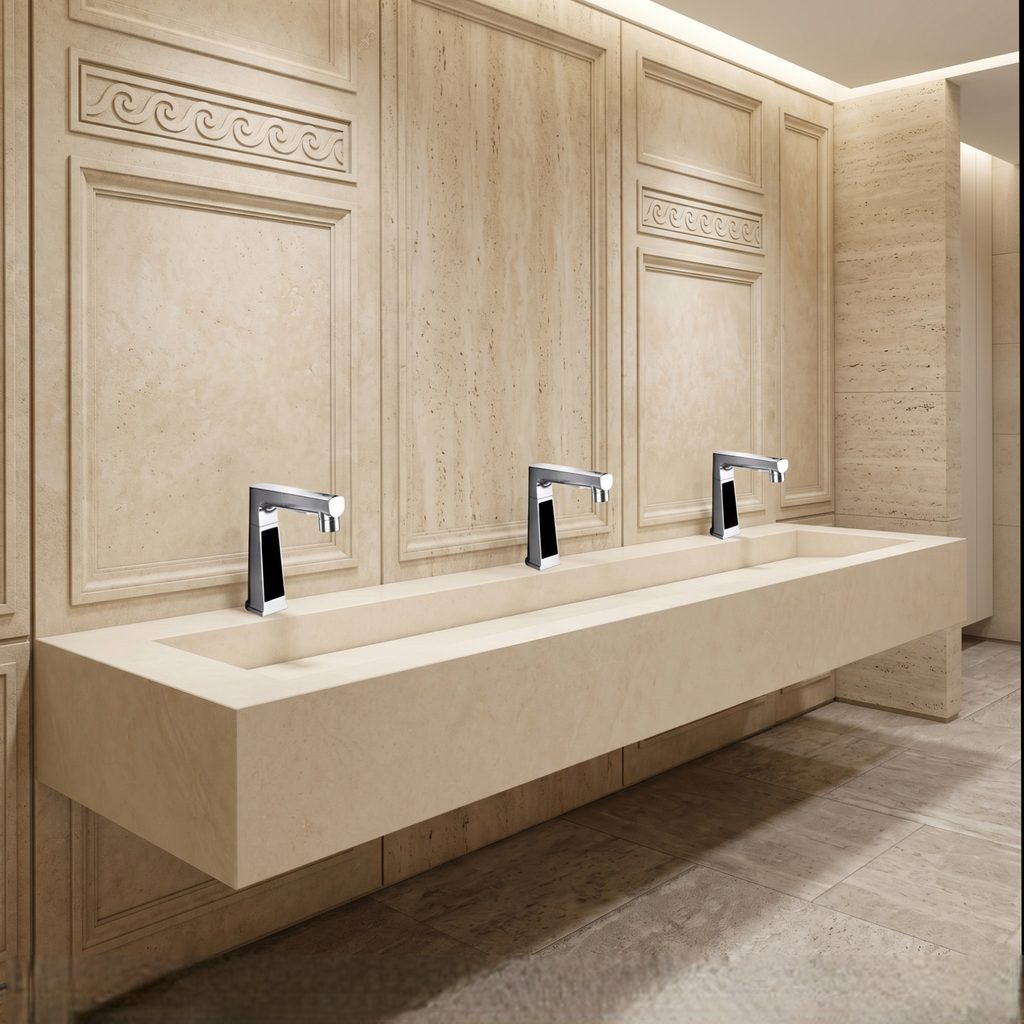
EPA WaterSense provides a recognized baseline for bathroom faucets and accessories: WaterSense labeled models use a maximum of 1.5 gpm and are designed to reduce flow compared with standard 2.2 gpm products.
EPA’s commercial guidance expands on operational practices and selection considerations for commercial facilities.
How This Impacts Faucet Specification
In 2026 interiors, the “green” choice is expected to be invisible and seamless. That means:
- Selecting faucets that meet water targets without usability complaints
- Ensuring flow performance holds under typical building pressures
- Aligning faucet flow devices with the actual occupancy profile — public vs private, office vs stadium
- Preventing post-install tampering — aerator removal is common when users are unhappy
Trend: Lighting Design Is More Human-Centric—and Fixtures Are Expected to Look Correct Under It
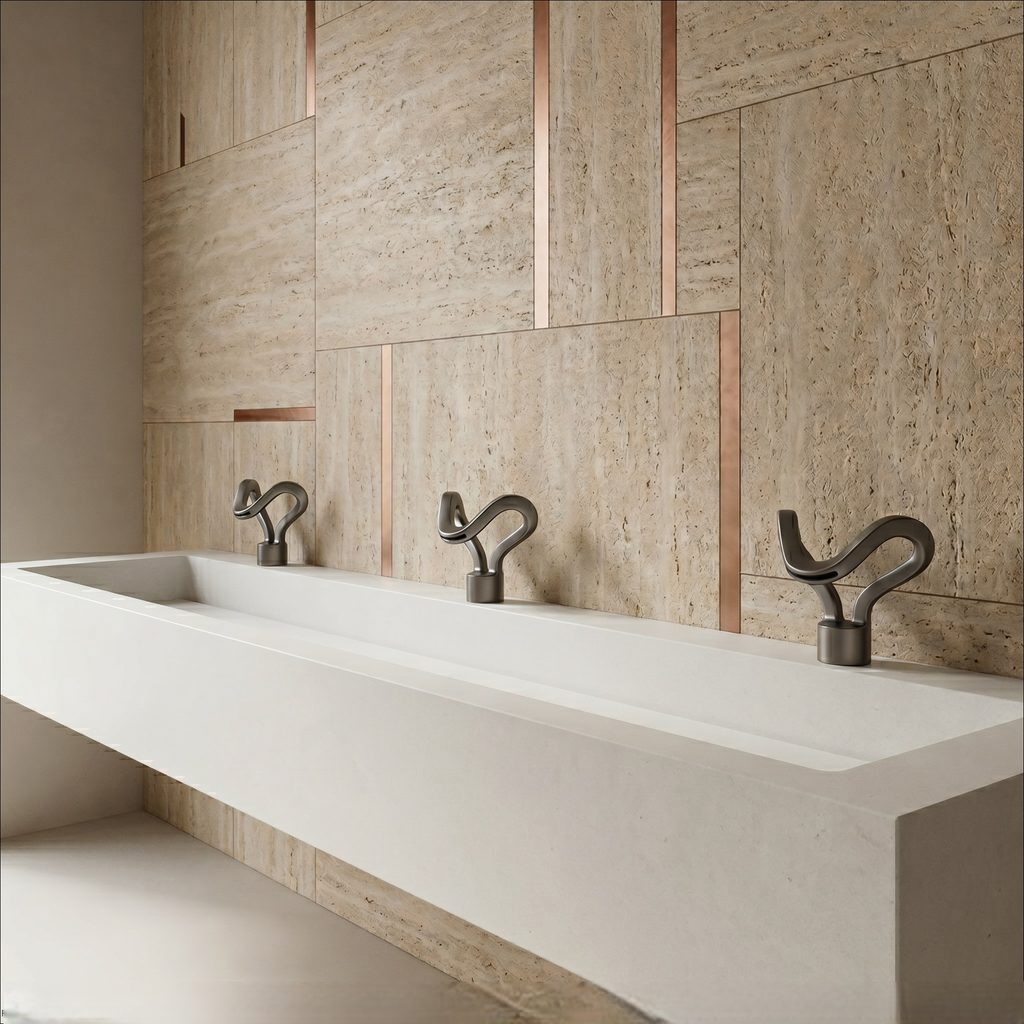
Commercial lighting trends for 2026 highlight human-centric approaches and refined minimalist fixtures. In many modern commercial interiors, brighter, better-distributed lighting means every detail is more visible—including fixture finishes, fingerprints, water spots, and alignment issues.
How This Impacts Faucet Specification
A faucet finish that looked perfect in a catalog can look wrong under high-CRI LEDs and glare-controlled lighting. Modern interior lighting increases scrutiny on:
- Finish consistency across restroom components
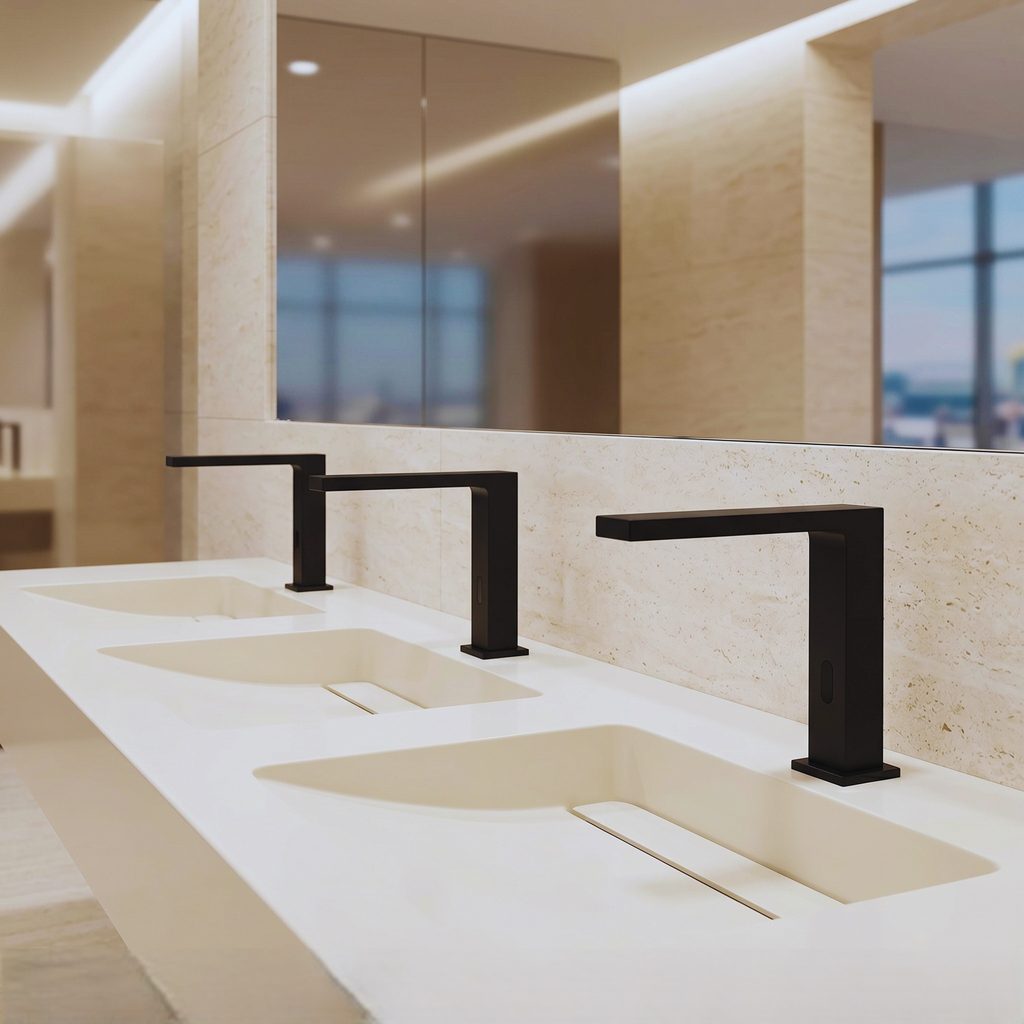
- Smudge and water-spot behavior, especially polished finishes
- Edge quality and machining detail on minimalist forms
- Alignment with the mirror line, counter geometry, and dispenser centers
If the design intent includes high visual clarity, pick finishes and geometries that hold up under real light.
Support Reference
Trend: Restroom Design Is Being Treated Like a Brand Touchpoint
A growing number of commercial restroom trend discussions for 2026 describe restrooms as part of brand perception—especially in hospitality, retail, and premium workplace environments. The restroom is increasingly designed like a “mini interior,” not a back-of-house space.
How This Impacts Faucet Specification
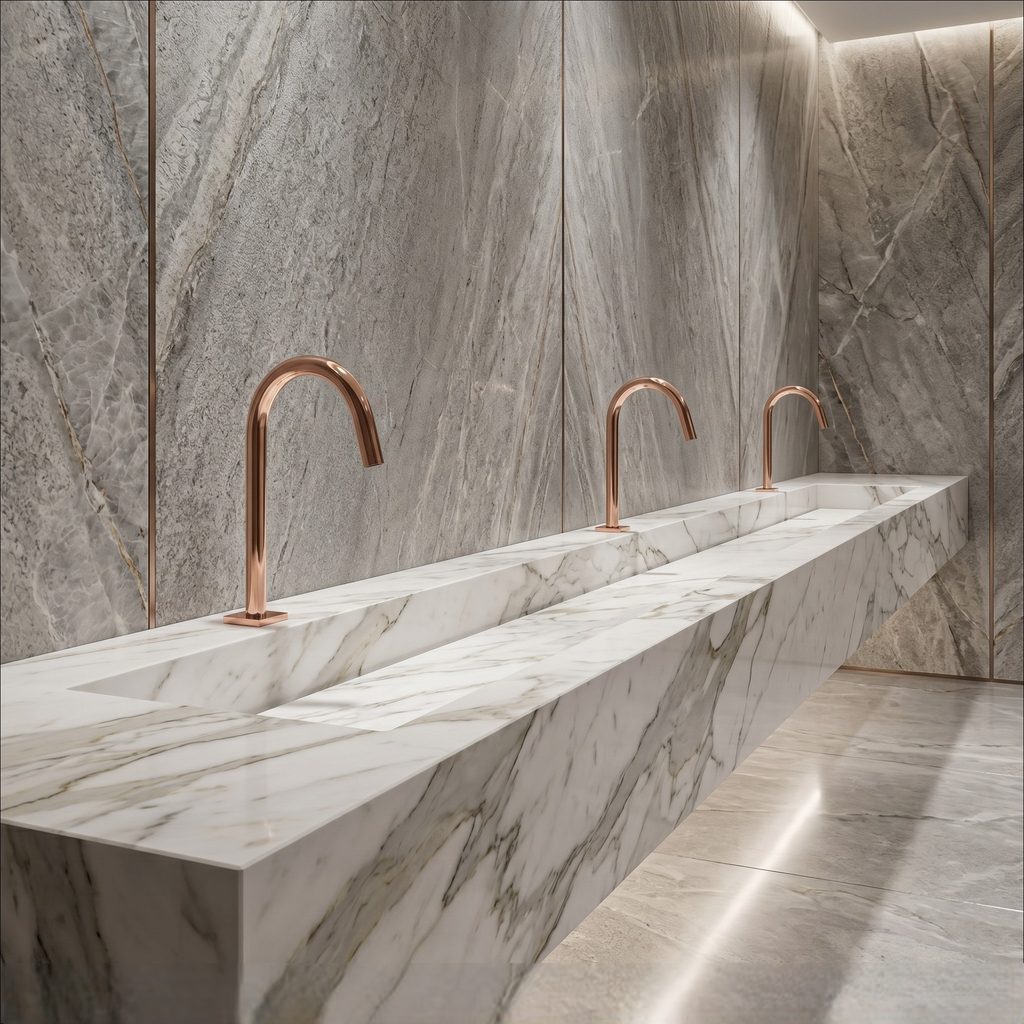
If restrooms are brand touchpoints, faucets act like “handshake objects.” The user experience is shaped by:
- How easy the faucet is to trigger
- Whether it splashes or leaves the deck wet
- Whether the water stream feels controlled
- Whether the fixture looks clean after a day of use
In practical terms: choose designs that maintain a clean appearance, tolerate heavy use, and integrate cleanly with soap dispensers and hand-drying solutions.
AEC Integration Guide: Turning 2026 Trends Into a Faucet Spec That Works
Below is a technical checklist you can apply when integrating modern faucet design into commercial interiors.
A) Aesthetics + Architectural Language
- Match faucet geometry to the project’s interior hardware vocabulary
- Specify finish families that align with lighting and cleaning realities
- Require consistent finish across faucet, drain trim if applicable, and accessories
B) Performance + Water Behavior
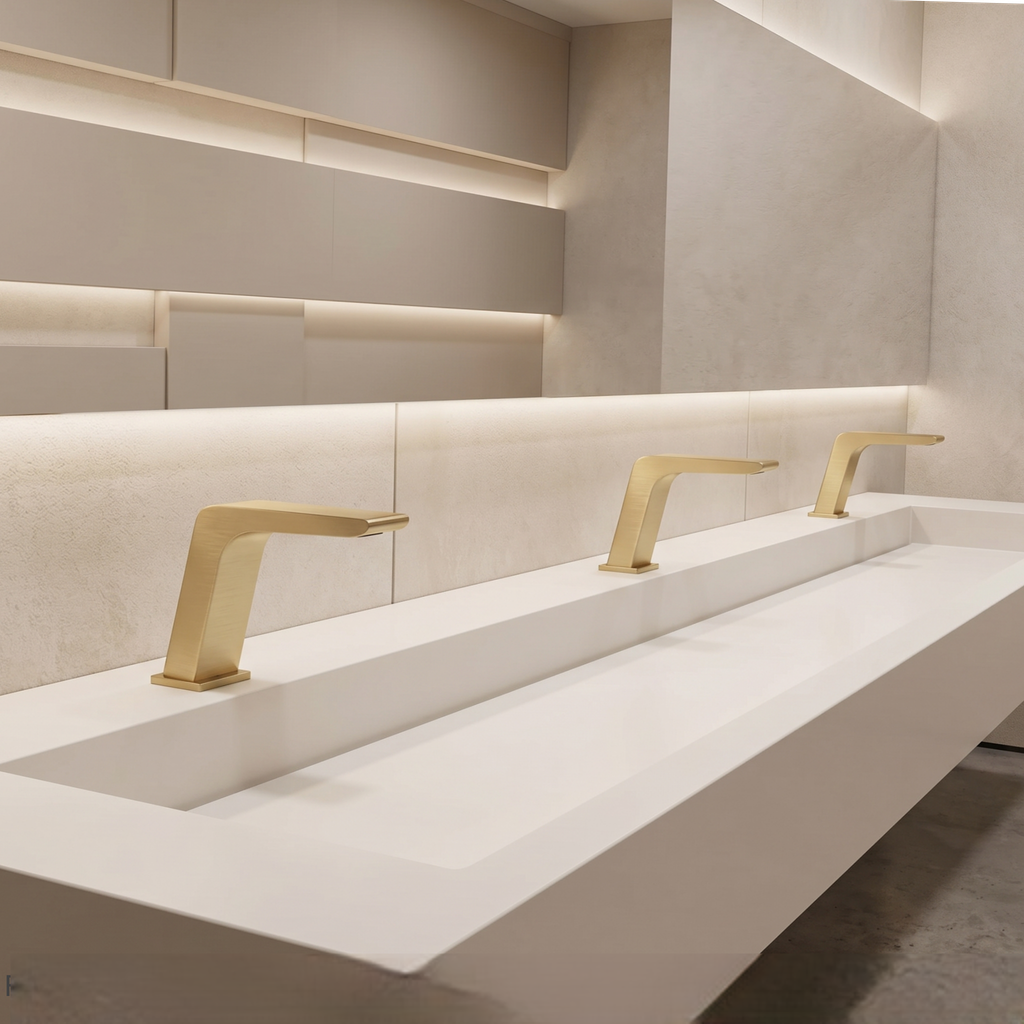
- Confirm flow rate at a stated test pressure, often 60 psi
- Decide aerated vs laminar based on splash, sound, and cleanliness goals
- Confirm water delivery fits the sink bowl geometry — avoid hitting the drain directly
C) Touchless Controls
- Require adjustable sensor settings and accessible service mode
- Confirm run-time, range, and power type
- Include commissioning steps to prevent false activations
D) Maintainability + Lifecycle Value
- Confirm parts availability and maintenance access
- Specify vandal-resistant features for high-risk facilities
- Avoid overly specialized finishes that require gentle cleaning only
E) Safety and Drinking-Water Contact Compliance
Even though this article is design-driven, many owners still require documented compliance for drinking-water contact components. Third-party standards can be important in public and institutional projects.
References
| Specification Area | Primary Coordination Focus | Design Objective |
|---|---|---|
| Aesthetics | Geometry, finish family, hardware vocabulary | Consistent architectural language |
| Water Behavior | Flow rate, stream type, basin geometry | Splash control and usable handwashing zone |
| Touchless Controls | Sensor range, run time, power and commissioning | Predictable activation and controlled water use |
| Lifecycle | Parts, service access and finish maintenance | Long-term maintainability |
| Compliance | Drinking-water contact and owner documentation | Project-specific safety documentation |
The Most Common Mistakes When “Modern Faucet Design” Is Specified Without a Technical Lens
-
Choosing a sculptural faucet without validating the sink geometry
A modern faucet can still create splashback, deck puddling, or awkward hand clearance.
-
Assuming touchless equals water savings
Poorly tuned sensors can run long, false-trigger, or create user frustration.
EPA WaterSense at Work -
Specifying a finish that looks great but fails in maintenance reality
High visibility lighting and frequent cleaning will reveal whether the finish was a good choice.
-
Not aligning faucet selection with the broader restroom system
Faucets should coordinate with dispensers, partitions, mirrors, and lighting—not compete with them.
Conclusion: 2026 Faucet Design Is an Architectural Tool, Not a Decorative Afterthought
Architectural trends in 2026 are pushing commercial interiors toward refined minimalism, wellness cues, smart integration, and measurable sustainability. Faucets sit directly at the intersection of all four. When chosen intentionally, they support the interior concept while improving performance, reducing water use, and simplifying long-term operations.
The best modern faucet design for a commercial interior is not the most eye-catching one. It’s the one that:
- Holds up under real lighting, cleaning, and maintenance cycles
- Fits the architectural language
- Performs reliably in high traffic
- Maintains a clean sink zone
- Supports water efficiency goals
Wellness, Biophilia, Smart Restrooms & Human-Centered Commercial Spaces
Commercial interior design in 2026 is moving beyond appearance into measurable performance. According to 2026 commercial interior design forecasts , modern spaces must support wellness, flexibility, brand trust, sustainability, and long-term operational value.
For architects, developers, designers, and facility managers, the strongest projects now combine natural materials, adaptable layouts, touchless restroom technology, durable finishes, and healthier user experiences.
EEAT Design Authority
A high-performing commercial interior proves expertise through every specification: materials, lighting, acoustics, restroom fixtures, partitions, greenery, accessibility, maintenance planning, and occupant comfort.
Human-Centered Interiors
Reports from Construction Specialties highlight flexible planning, healthier materials, acoustic comfort, and wellness-driven environments as key commercial priorities for 2026.
Biophilic Wellness
Studies from Ambius , GrowUp Green , and Green Plants for Green Buildings show rising demand for plants, daylight, organic textures, and nature-inspired interiors.
Smarter Commercial Restrooms
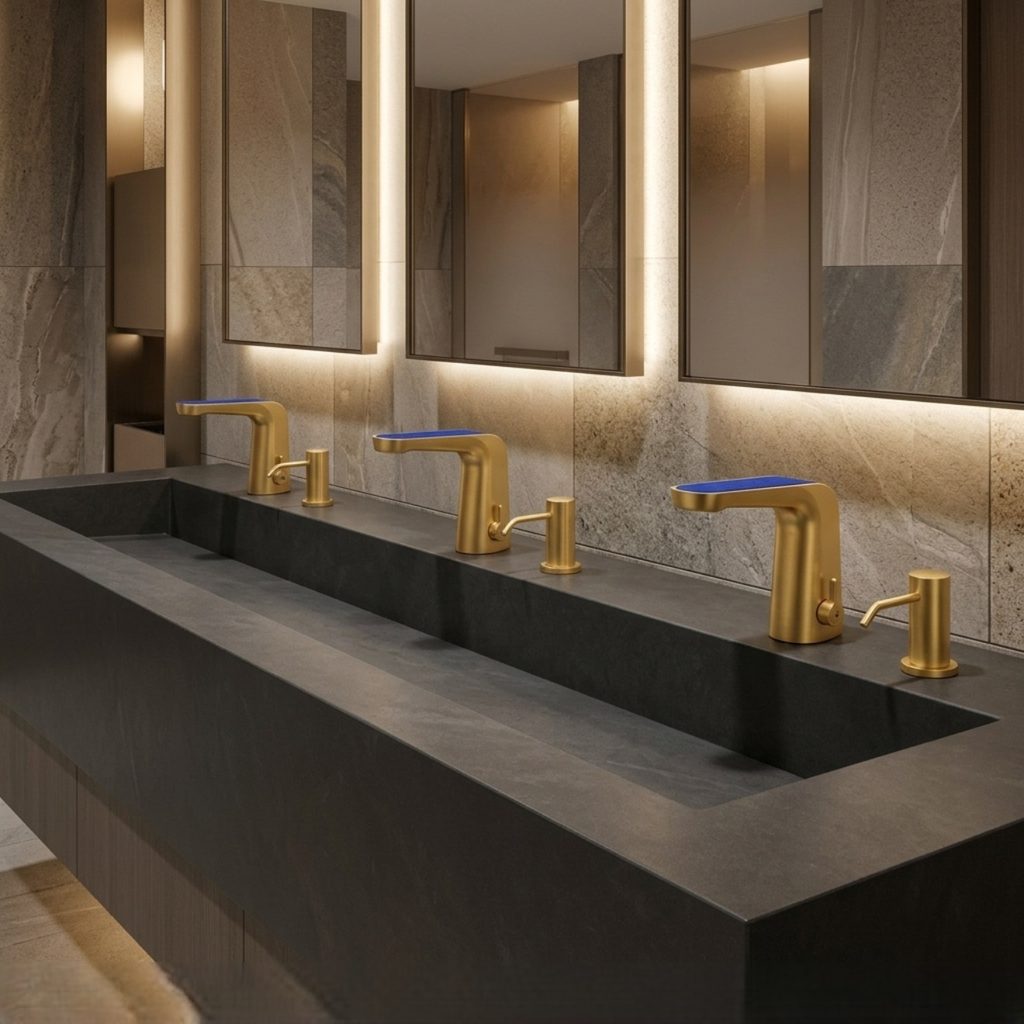
Commercial restroom upgrades are now central to user experience. Sources covering bathroom remodeling ROI and 2026 fixture trends point to touchless faucets, automatic soap dispensers, water efficiency, and premium hygiene.
Privacy & Durability
Modern restroom planning also emphasizes stronger privacy, moisture resistance, compact laminate, floor-to-ceiling partitions, and refined hardware, as shown in 2026 toilet cubicle partition trends .
Luxury Bathroom Influence
Design inspiration from Decorilla and Hano Decor shows warm neutrals, organic forms, textured finishes, and spa-like comfort moving into commercial environments.
Future-Ready Spaces
Insights from Estate Innovation and Naturalist reinforce the shift toward healthier, more adaptive, and emotionally supportive commercial interiors.
Why This Matters
The best commercial interiors of 2026 do more than look impressive. They improve comfort, hygiene, wellness, accessibility, maintenance efficiency, sustainability, and brand perception. For commercial projects, every design decision should prove value — from biophilic materials to touchless restroom fixtures and durable privacy systems.