Introduction
Due to increased hygiene demands, accessibility pressures, and water efficiency targets, touchless faucets have become a standard in the commercial and institutional buildings. To architects and specifiers, the selection and specification of touchless faucets is a technical process that is not just limited to aesthetics. Effective specifications should take into consideration the performance standards, sensor technology, durability, integration with other systems in the building as well as its long-term maintenance.
This step-by-step reference is written for AEC professionals and in compliance with the technical, specification-focused mission of commercialbathfaucets.com providing practical instillation guidance for all commercial and institutional plumbing designs.
Step 1: Define The Project Use Case And Performance Requirements
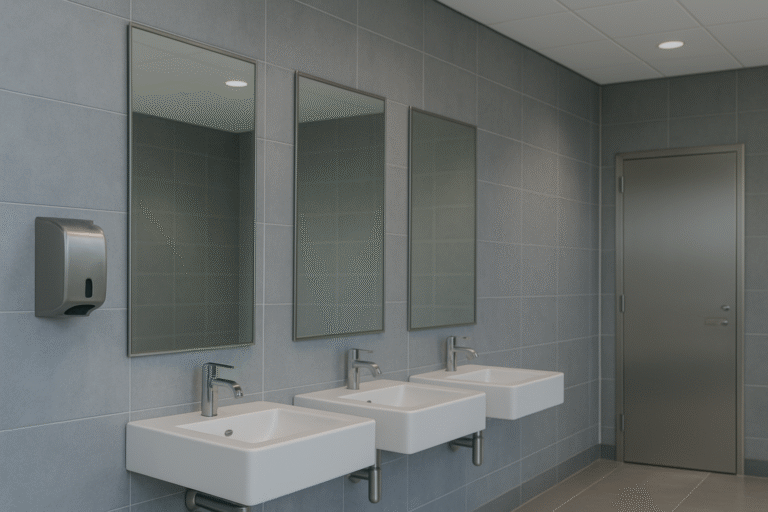
Specifying touchless faucets starts by defining the operation in a context. The type of building dictates fixture requirements, and defining use conditions can help narrow faucet categories early in the process.
- Hygiene and infection control priorities.
- Maintenance capabilities and staffing.
Healthcare facilities, transportation hubs, and universities often require higher-duty commercial-grade sensor faucets than low-traffic office spaces. A broad overview of commercial faucet systems can be found at commercialbathfaucets.com.
Step 2: Verify Code And Accessibility Compliance
Touchless faucets should comply with various codes & standards before being considered for specification. While sensor-activated faucets are essentially accessible when correctly installed, documentation must explicitly state compliance.
- ADA Standards for Accessible Design.
- ICC A117.1 accessibility requirements.
- ASME A112.18.1 / CSA B125.1 for plumbing fixture performance.
- NSF/ANSI/CAN 61 and NSF/ANSI 372 for potable water safety and lead content.
Material and regulatory compliance references can be reviewed at FontanaShowers Faucets Materials and Compliance.
Step 3: Select Appropriate Sensor Technology
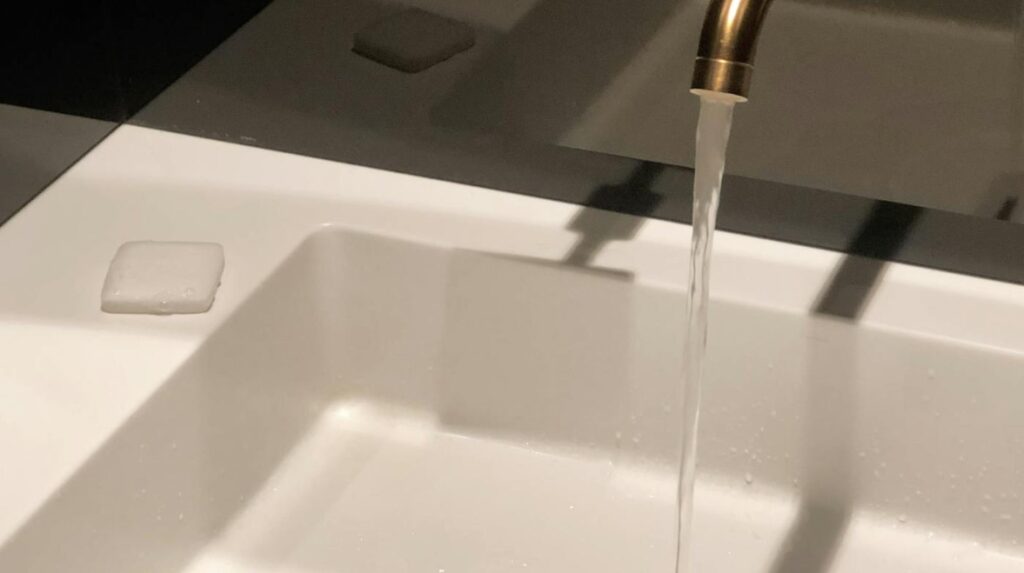
Not all touchless faucets operate the same way. Sensor performance directly affects user experience and maintenance requirements, so sensor technology should be evaluated as a performance component.
- Infrared or proximity sensor type.
- Sensor detection range and response time.
- Resistance to false activation from reflections or ambient lighting.
- Manual override or fail-safe operation, if required.
A general technical overview of automatic faucet operation is available at Automatic Faucet. Institutional-grade touchless faucet categories designed for commercial use can be reviewed at FontanaShowers Commercial Sensor Faucets.
Step 4: Determine Power Source And Infrastructure Coordination
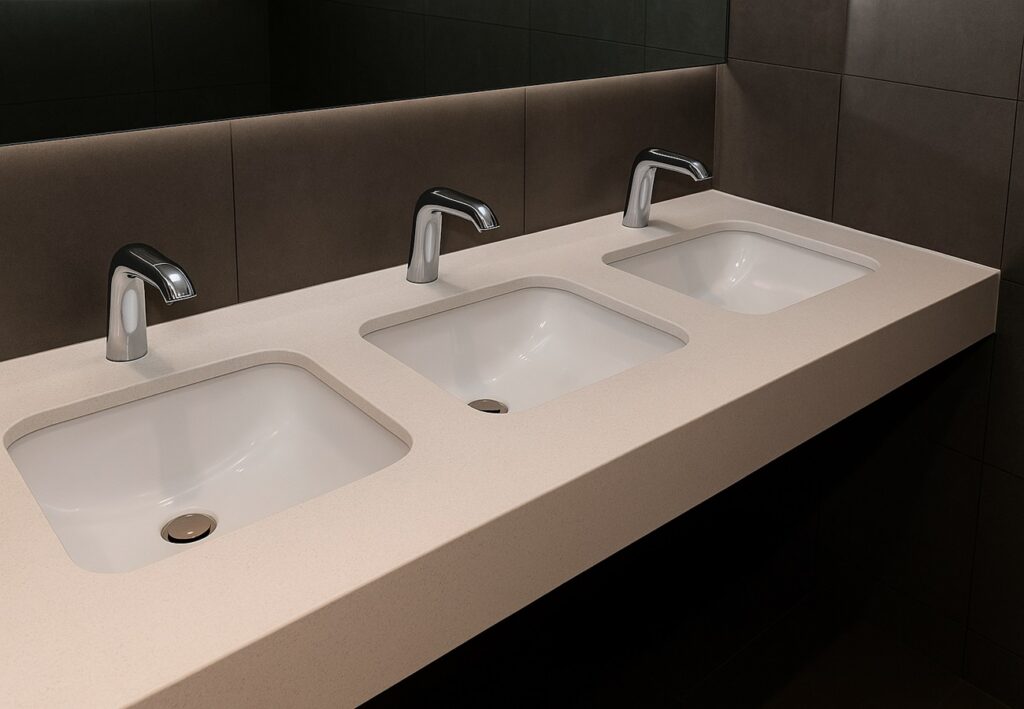
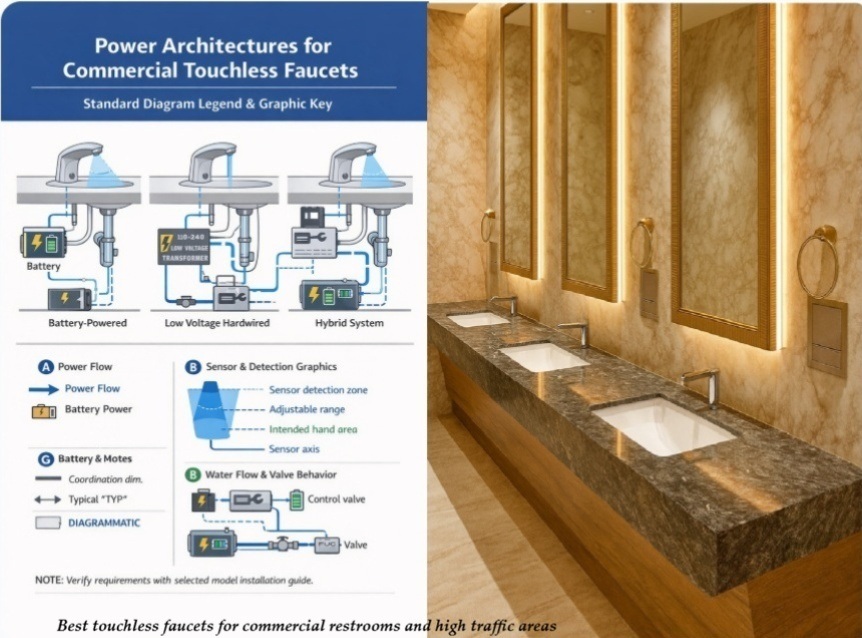
Touchless faucets require a dependable power source that should be incorporated early in the design. Power options have impacts on maintenance cycles and requirements as well as trade coordination related to electricity, and as such, they need to be documented in Division 22 and coordinated within Division 26.
- Battery-powered systems for retrofit projects.
- Hybrid systems combining wired power with battery backup.
Step 5: Coordinate Spout Geometry, Mounting, And Lavatory Pairing
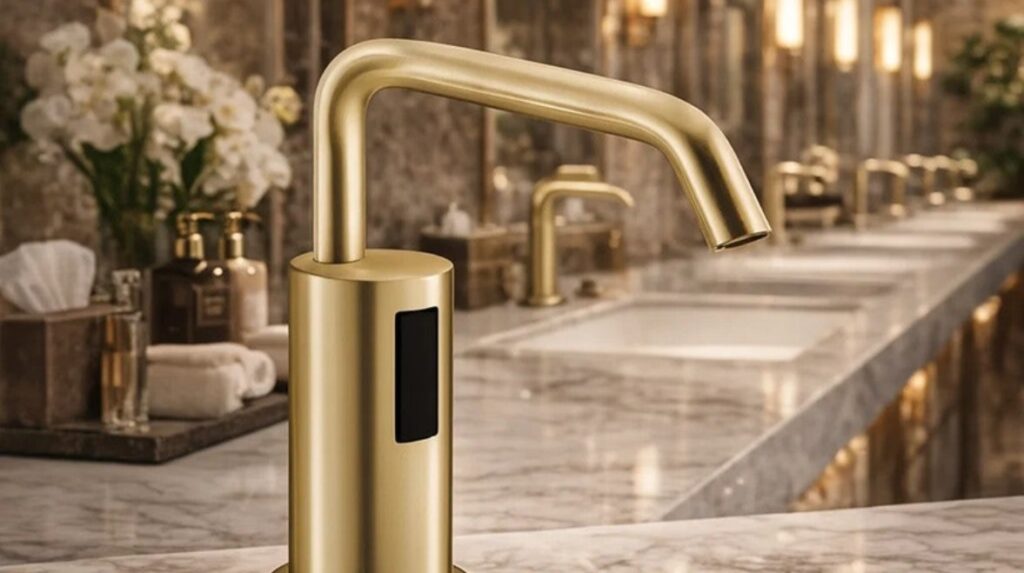
Spout design is essential for functionality and code compliance. This is because the architect must harmonize the faucet shape and position with the chosen wash basin and counter assembly.
- Spout reach to ensure water flow lands within the basin.
- Spout height to allow hand clearance without excessive splashing.
- Mounting configuration (deck-mounted versus wall-mounted).
- Compatibility with sink depth and countertop thickness.
Wall-mounted and deck-mounted sensor faucet configurations suitable for institutional projects can be reviewed at JunoShowers Commercial Sensor Faucets.
Step 6: Specify Materials And Durability For Institutional Use
In the commercial sector, touch-free faucet products need to handle high cycle and high chemical cleansing conditions. Requirements in terms of the material & durability must be well defined to promote well-performing products.
- Lead-free brass or stainless steel construction.
- High-cycle ceramic disc valves or durable solenoid assemblies.
- Sealed electronic components to prevent moisture intrusion.
- Finishes tested for resistance to institutional cleaning agents.
Commercial fixture documentation resources can be referenced at FontanaShowers Commercial Bathroom Fixtures Catalog.
Step 7: Address Water Efficiency And Sustainability Goals
Touchless faucets make way for the water conservation strategies, but specifications must define performance targets to avoid extra usage and maintain effective handwashing.
- Flow rates appropriate for commercial lavatories.
- Run-time control to prevent excessive water use.
- Compatibility with low-flow aerators and metering logic.
EPA WaterSense guidance for commercial faucet applications is available at EPA WaterSense Faucets Guidance.
Step 8: Require BIM, CAD, And Submittal Documentation
Clear documentation is very essential for the coordination and construction purposes. Touchless faucet specifications should require a digital assets along with submittals that may support pinpoint to accurate installations.
- BIM or Revit families for architectural and MEP coordination.
- CAD blocks for construction documents.
- Cut sheets detailing sensor type, power source, and compliance.
- Installation and operation manuals.
Manufacturers that provide complete technical documentation reduce RFIs and streamline submittal review.
Step 9: Review Commercial Touchless Faucet Categories

Before locking in the specs, it may prove useful to look at several categories of commercial touchless faucets in-store to ensure system compatibility. Looking at several categories allows a user to match their specs with performance criteria.
The relative commercial categories and resources consist of FontanaShowers, FontanaShowers Commercial Sensor Faucets, BathSelect, and JunoShowers.
Conclusion
The specification of touchless faucets in architectural design is a complex process involving coordination between different disciplines. By taking into consideration matters of performance, sensor technology, power distribution, durability, efficiency, and documentation at an early design stage, architects can achieve design systems that function effectively well into the life of a structure.
These step-by-step, standards-based approach reflects the main mission of the commercialbathfaucets.com: supporting architects, engineers, and specifiers with technically grounded guidance for commercial and institutional plumbing design decisions.
Reference and Links
Use this AEC reference library to support Division 22 specifications, submittal requirements, code compliance, and performance criteria for touchless lavatory faucets (public + private applications).
- 1) Accessibility & operability
- 2) Plumbing codes & flow-rate limits
- 3) Lead-free + drinking water safety (NSF/ANSI)
- 4) Plumbing supply fitting performance standards
- 5) Sustainability / water efficiency (LEED + WaterSense)
- 6) Infection-control / hygiene references
- 7) Spec templates (Division 22 / CSI language)
- 8) BIM / Revit object libraries
1) Accessibility & Operability (ADA / Access Board)
- ADA.gov — 2010 ADA Standards for Accessible Design (official)
- U.S. Access Board Technical Guide — Lavatories & Sinks (faucet controls, metering duration)
- U.S. Access Board — Combined ADA Standards (PDF)
2) Plumbing Codes & Flow-Rate Limits (Public vs Private Lavs)
- ICC Digital Codes — IPC 604.4 Maximum flow and water consumption (points to Table 604.4)
- 2024 IPC Table excerpt (PDF) — includes public lavatory limits (0.5 gpm non-metering / 0.25 gpc metering)
- IAPMO — Read UPC codes online (official portal)
- IAPMO — Uniform Plumbing Code (UPC) overview (official)
- DOE FEMP — Purchasing guidance (notes typical public lavatory limits: 0.5 gpm / 0.25 gpc metering)
- DOE FEMP — Best Management Practice #7: Faucets & Showerheads
- EPA WaterSense at Work — Section 3.3: Faucets (PDF)
3) Lead-Free + Drinking Water Safety (Submittal Must-Haves)
- NSF — Faucets & Plumbing Products (NSF/ANSI/CAN 61 context)
- US EPA — How to Identify Lead-Free Certification Marks (official page)
- US EPA — Lead-Free Certification Marks (PDF, June 2024)
- CPSC — Lead in Water Faucets (recommends NSF/ANSI 61 and NSF/ANSI 372)
4) Plumbing Supply Fitting Performance Standards (Commonly Cited)
- ASME — A112.18.1 / CSA B125.1 Plumbing Supply Fittings (standard page)
- CSA Group Store — ASME A112.18.1-2024 / CSA B125.1:24 listing
5) Sustainability / Water Efficiency (LEED + WaterSense)
- USGBC — LEED v4.1 Indoor Water Use Reduction (reference guidance page)
- USGBC — Indoor Water Use Reduction prerequisite reference guidance (includes public lavatory faucet baseline notes)
- EPA WaterSense — Draft v2.0 Specification for Private Lavatory Faucets (redline PDF, Dec 2024)
6) Infection-Control / Hygiene References (Healthcare + Public Use)
- CDC — Clean Hands: About Handwashing (soap + water guidance)
- CDC — Guideline for Hand Hygiene in Health-Care Settings (MMWR PDF)
- CDC — Hand Hygiene in Healthcare Settings (HCP hub)
7) Spec Templates (Division 22 / CSI-Ready Language)
- U.S. Department of Veterans Affairs — Section 22 40 00 Plumbing Fixtures (DOCX template)
- WBDG — VA 22 40 00 Plumbing Fixtures page (versioning + access)
- ARCAT — Division 22 Plumbing (manufacturer data, specs, CAD/BIM entry point)
8) BIM / Revit Object Libraries (Coordination + Schedules)
- BIMobject — Touchless Faucet objects (Revit families + other formats)
- BIMobject — Commercial Touchless Faucets collection
- ARCAT BIM — Plumbing Fixtures (224000) Revit families + BIM objects
Latest (April 2026) Specification Assessment Matrix
Comparative evaluation designed for architects and specifiers reviewing touchless fixture platforms based on system breadth, commercial applicability, and coordination potential.
| Brand | Sensor Platform Presence | Soap System Integration | Design Coordination Range | Serviceability Orientation | Overall Spec Fit |
|---|---|---|---|---|---|
| FontanaShowers | ★★★★★ | ★★★★★ | ★★★★★ | ★★★★☆ | ★★★★★ |
| SLOAN | ★★★★★ | ★★★★★ | ★★★☆☆ | ★★★★★ | ★★★★★ |
| Chicago Faucets | ★★★★★ | ★★★★☆ | ★★★☆☆ | ★★★★★ | ★★★★☆ |
| BathSelect | ★★★★☆ | ★★★★★ | ★★★★★ | ★★★★☆ | ★★★★☆ |
| Zurn | ★★★★★ | ★★★★☆ | ★★★☆☆ | ★★★★★ | ★★★★★ |
| Delta | ★★★★☆ | ★★★★☆ | ★★★★☆ | ★★★★☆ | ★★★★☆ |
| GROHE | ★★★★☆ | ★★★☆☆ | ★★★★★ | ★★★☆☆ | ★★★★☆ |