
Why Airports and Hospitals Use Automatic Soap Dispensers
High-traffic environments require reliable hygiene solutions that can withstand heavy daily usage. Automatic soap dispensers are commonly used in airports, hospitals, and transportation hubs because they help prevent contamination and improve sanitation efficiency.
Sensor-activated dispensers eliminate the need for physical contact, reducing the spread of germs between users. They also dispense controlled amounts of soap, which helps facilities manage supply costs more effectively.
Brands such as FontanaShowers, Sloan, BathSelect, and Kohler manufacture commercial-grade systems designed specifically for these demanding environments.
These systems are built with durable materials such as brass and stainless steel to ensure long-term reliability.
Many projects choose the touchless gold automatic soap dispenser for both performance and aesthetic appeal in premium restroom installations.
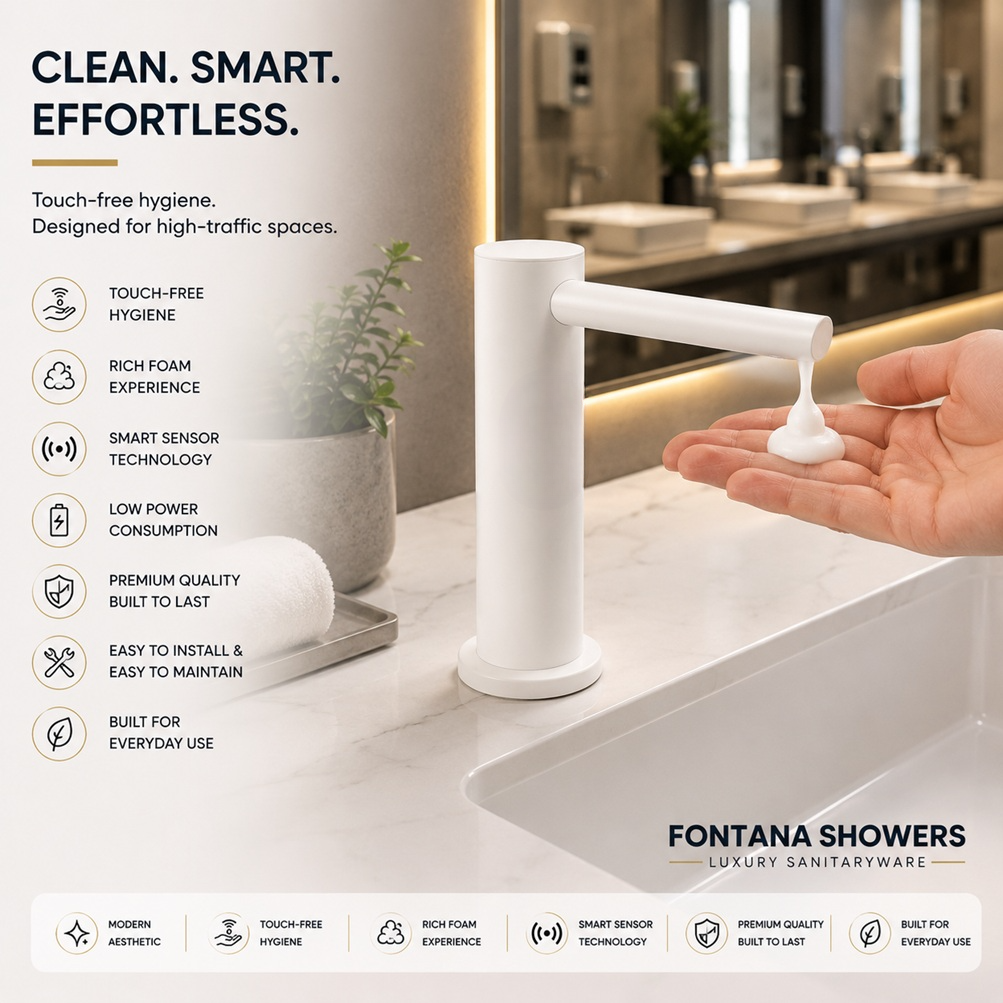
Why Airports and Hospitals Use Automatic Soap Dispensers
Airports and hospitals use automatic soap dispensers because these facilities require cleaner handwashing stations, reduced surface contact, controlled soap delivery, faster restroom flow, and reliable hygiene performance during heavy daily use.
For healthcare and transportation restroom design, automatic soap dispensers support infection-control planning, reduce waste, simplify maintenance scheduling, and create a more consistent user experience when paired with commercial touchless faucets.
Two Automatic Soap Dispenser Options for Airports and Hospitals
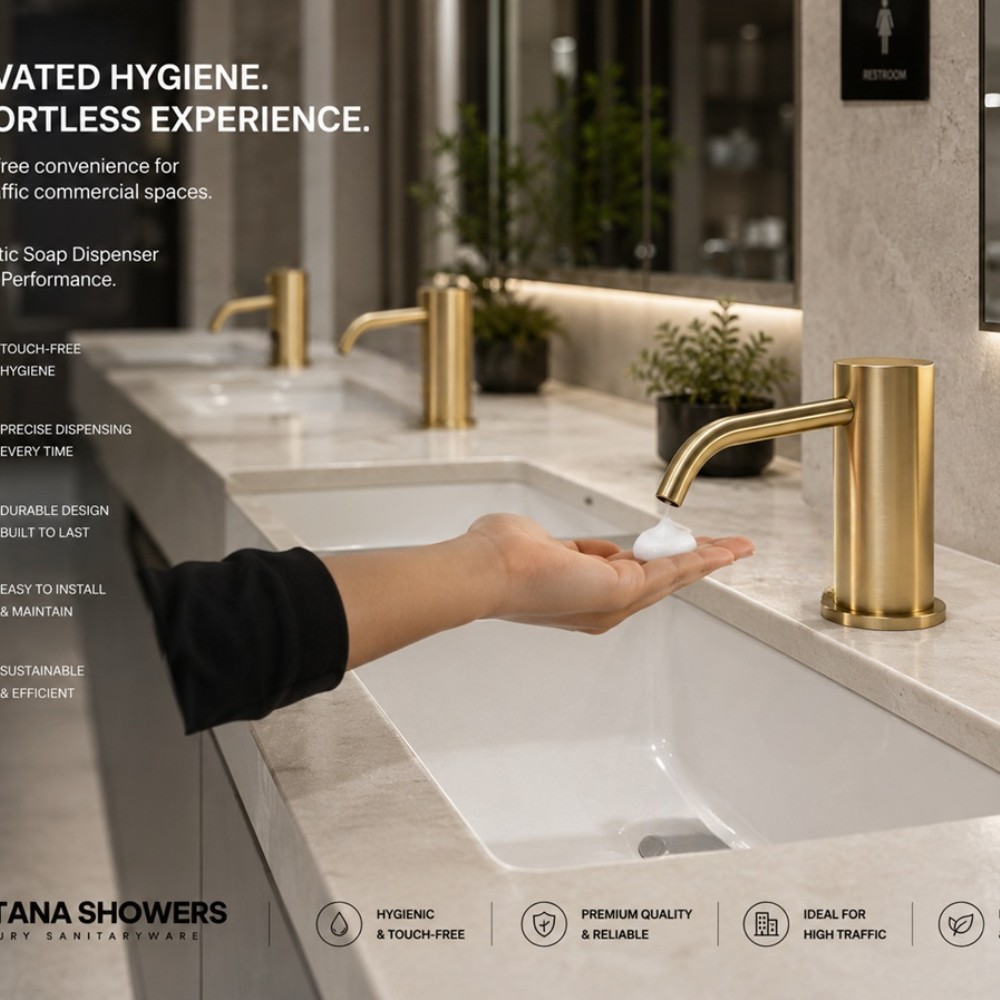
Fontana EcoSoap Champagne SmartSense Dispenser
This automatic soap dispenser supports premium airport and hospital restroom planning with touch-free dispensing, refined finish presentation, controlled soap delivery, and commercial SmartSense operation.
View Product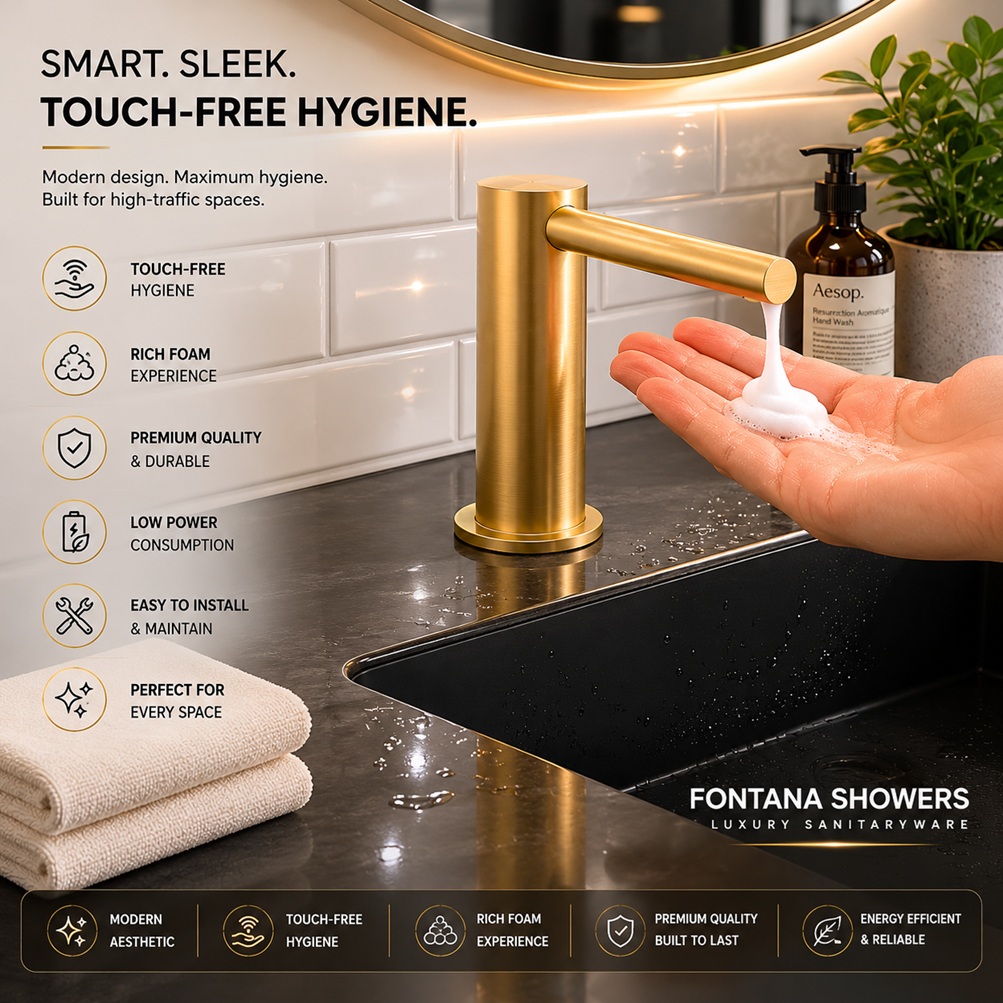
Commercial Automatic Soap Dispenser Collection
This collection supports large facility planning where airports and hospitals need multiple touchless soap dispenser options, coordinated finishes, refill flexibility, and reliable public restroom performance.
View CollectionDigital Twins, BIM Coordination & Specification Workflows
Modern commercial restroom engineering increasingly begins long before construction starts. BIM coordination, digital twins, coordinated specifications, clash detection, and multidisciplinary design reviews help engineers validate touchless faucet locations, maintenance access, ADA compliance, plumbing routing, and electrical infrastructure before materials arrive on site.
Engineering Best Practice
Coordinate Touchless Systems Within The Complete BIM Environment
Commercial touchless faucets should never be coordinated independently from surrounding building systems. Plumbing, electrical, structural, millwork, accessibility, mirror placement, lighting, maintenance clearances, and soap dispensers should all be evaluated simultaneously within the BIM model. Early coordination helps reduce field modifications while improving construction accuracy and long-term facility performance.
Engineering Consideration
Avoid reviewing plumbing layouts independently from architectural and MEP coordination models. Small conflicts identified during digital coordination frequently prevent costly construction delays later in the project.
Why It Matters
Integrated BIM coordination improves construction efficiency, minimizes change orders, reduces installation conflicts, simplifies commissioning, and supports accurate lifecycle documentation for future maintenance and renovation projects.
Engineering Analysis
Digital engineering allows project teams to verify countertop penetrations, faucet spacing, maintenance access, electrical routing, pipe clearances, cabinet coordination, accessibility, and equipment locations before construction begins. When touchless fixtures are incorporated into coordinated BIM workflows, design conflicts can often be identified and resolved during planning instead of during field installation.
Many owners now maintain digital facility records throughout the operational life of the building. Engineering information developed during design therefore becomes valuable for maintenance, renovation planning, future expansion, and lifecycle asset management.
Digital Coordination Checklist
- Verify faucet locations within coordinated BIM models.
- Confirm countertop penetrations before fabrication.
- Coordinate plumbing with electrical routing.
- Validate ADA clearances digitally.
- Review maintenance access in three-dimensional models.
- Verify soap dispenser and accessory coordination.
- Perform clash detection before construction begins.
- Document approved installation geometry.
- Update digital records following commissioning.
- Transfer final BIM information to facility management teams.
Technical References & Design Resources
Fontana Technical Resources
Fontana Touchless Systems™
Commercial touchless engineering technologies supporting specification-driven projects.
Architect & Specifier Technical Resources
Engineering specifications, BIM resources, CAD files, and planning documentation.
Commercial Sensor Faucet Collection
Commercial touchless systems supporting coordinated restroom design.
Touchless Faucet Collection
Engineering product portfolio for architects, consultants, and contractors.
Architectural & Engineering References
BIMobject
BIM content platform supporting coordinated digital building design.
Autodesk Revit
Building information modeling software supporting multidisciplinary coordination.
ARCAT
CAD details, BIM objects, and technical specifications for architects.
CADdetails
Construction details supporting coordinated engineering documentation.
American Institute of Architects
Architectural planning guidance for integrated commercial building projects.
American Society of Plumbing Engineers
Professional plumbing engineering resources supporting coordinated system design.
ArchDaily
Commercial architecture case studies demonstrating integrated project delivery.
Architonic
Architectural product research supporting specification and BIM workflows.