
How Automatic Soap Dispensers Improve Public Hygiene
Maintaining hygiene in public spaces is essential for protecting health and preventing the spread of germs. One of the most effective improvements businesses can make in restroom sanitation is installing automatic soap dispensers.

Reducing Shared Touchpoints in Public Restrooms
These devices use motion sensors to release soap when hands are detected beneath the nozzle. Because users do not need to touch the dispenser, the risk of transferring bacteria between individuals is significantly reduced.

How Automatic Soap Dispensers Support Cleaner Facilities
Touchless Dispensing
Soap is released without requiring physical contact with the dispenser.
Reduced Touchpoints
Shared restroom surfaces can be reduced through sensor-based operation.
Public Confidence
Touchless fixtures can help users feel more confident about restroom hygiene.
High-Traffic Use
Automatic dispensers are well suited to busy public and commercial facilities.


Where Touchless Soap Dispensers Are Most Beneficial
Touchless dispensers are particularly beneficial in high-traffic environments such as hospitals, airports, schools, and shopping centers. By reducing shared touchpoints, they help maintain cleaner restrooms and improve user confidence in facility hygiene.
Automatic Soap Dispenser Use in Public Environments
| Facility Type | Hygiene Consideration | Automatic Dispenser Benefit |
|---|---|---|
| Hospitals | Frequent handwashing and sensitive hygiene conditions | Reduces the need to touch a shared soap dispenser |
| Airports | High restroom traffic throughout the day | Supports touchless handwashing in heavily used facilities |
| Schools | Large numbers of users sharing restroom fixtures | Provides simple sensor-based soap dispensing |
| Shopping Centers | Continuous public use and frequent restroom turnover | Helps reduce shared touchpoints around sink areas |
How Touchless Soap Dispensing Works
These devices use motion sensors to release soap when hands are detected beneath the nozzle.
Read More
Because users do not need to touch the dispenser, the risk of transferring bacteria between individuals is significantly reduced.

Automatic Soap Dispenser Brands for Commercial Restrooms
Manufacturers like FontanaShowers, BathSelect, Sloan, Bobrick, and Dyson provide a wide range of commercial automatic soap dispensers designed for durability and long-term performance.
FontanaShowers
Commercial automatic soap dispenser options for modern restroom applications.
BathSelect
Touchless dispenser solutions for contemporary commercial restroom design.
Sloan
Commercial restroom fixture systems including automatic soap dispensing.
Bobrick & Dyson
Commercial washroom products designed for public and high-traffic environments.


Supporting Cleaner Shared Restroom Environments
Maintaining hygiene in public spaces is essential for protecting health and preventing the spread of germs.
Read More
One of the most effective improvements businesses can make in restroom sanitation is installing automatic soap dispensers.
Touchless dispensers are particularly beneficial in high-traffic environments such as hospitals, airports, schools, and shopping centers. By reducing shared touchpoints, they help maintain cleaner restrooms and improve user confidence in facility hygiene.
Evaluating Automatic Soap Dispensers for Modern Restroom Design
To explore the advantages of these systems in greater detail, read this guide explaining why automatic soap dispensers are a smart investment for modern restroom design.

Commercial Sensor Faucet Reviews · Collection 22
Six Commercial Sensor Faucets Reviewed for High-Use Restroom Projects
This collection compares six additional touchless faucet configurations used in commercial restroom, restaurant, office, hospitality and architecture-led projects. The review evidence centers on sensor response, water delivery, installation quality, splash control, finish maintenance and repeat specification.
What the Reviews Show
The strongest observations address practical commercial performance: reliable activation, controlled water delivery, straightforward installation, finish durability, basin coordination and lower maintenance burden in frequently used restroom settings.
For Architects, Engineers and Facility Teams
The set includes deck-mounted and wall-mounted fixtures, chrome, brushed-gold and matte-black finishes, and both AC/DC and battery-powered configurations. Review each model against basin geometry, power strategy, service access and project-specific flow requirements before final specification.
Commercial Performance Overview
| Product | Configuration | Reviewer | Project Context | Review Focus | Review Strength |
|---|---|---|---|---|---|
| FS1023 Fontana Rennes Automatic Brushed Gold Motion Sensor Faucet | Deck mount · brushed gold · solid brass · AC/DC · active infrared | Pascal Arquitectos Wausau, WI | Commercial restroom upgrade | Build quality · leak-free operation · installation feedback · commercial restroom use | 5/5 · 2 helpful April 17, 2023 |
| FS15066 Denver Wall Mounted Square Automatic Matte Black Sensor Faucet | Wall mount · matte black · automatic sensor · AC/DC · hot/cold option | S. Ahmed, Metro Facility Services Dallas, TX | Sustainable commercial restroom application | Solenoid reliability · finish durability · hygiene · commercial water control | 5/5 · 6 helpful March 20, 2025 |
| FS6108E Florenza Chrome Commercial Automatic Motion Sensor Faucet | Deck mount · chrome · single hole · AC/DC · adjustable sensing | Tristate Contruction Memphis, TN | Commercial restaurant · 8 faucets | Multi-unit installation · sensor operation · material quality · installation simplicity | 5/5 · 5 helpful February 3, 2023 |
| FS-201R Bravat Commercial Motion Chrome Automatic Sensor Faucet | Deck mount · chrome · brass · AC110–220V/DC6V · infrared | WXY architecture California | Architecture-led commercial fixture installation | Repeat specification · contractor installation · sensor performance · overall quality | 5/5 · 5 helpful April 8, 2023 |
| FS15069MB Fontana Commercial Touchless Automatic Matte Black Finish Sensor Faucet | Deck mount · matte black · single hole · brass · AC/DC | J&J Heating & Cooling Oregon | Office building · 8 faucets | Office-building deployment · product quality · support · multi-unit purchase | 5/5 · 2 helpful March 20, 2023 |
| FS-509MB Solo Black Touchless Motion Activated Sink Faucet | Deck mount · matte black · DC6V · DN15/G1/2 · infrared | R. Bennett, Studio Axis Collaborative Seattle, Washington, USA | Hospitality lounge restroom retrofit | Splash control · basin coordination · sensor timing · finish maintenance | 5/5 · 8 helpful February 3, 2026 |
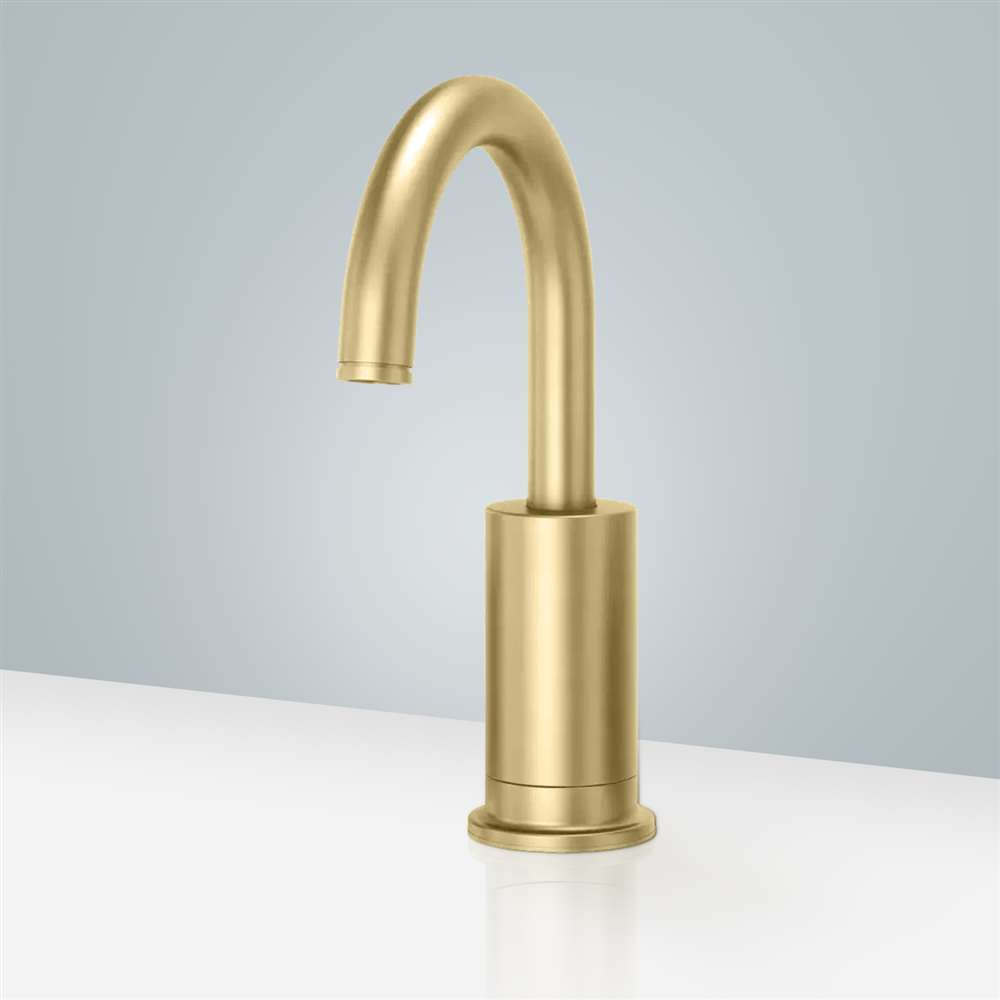
FS1023
Fontana Rennes Automatic Brushed Gold Motion Sensor Faucet
“Easy touchless operation”
Why This Review Matters
- Architecture reviewer
- Multiple faucet installation
- Plumber feedback included
- Leak-free field performance noted
Product Specifications
Solid-brass brushed-gold sensor faucet with AC110V/DC6V power, active infrared sensing, 0.3-second response, 2-second shutoff delay, 1/2-inch NPT supply and ADA-oriented commercial use.
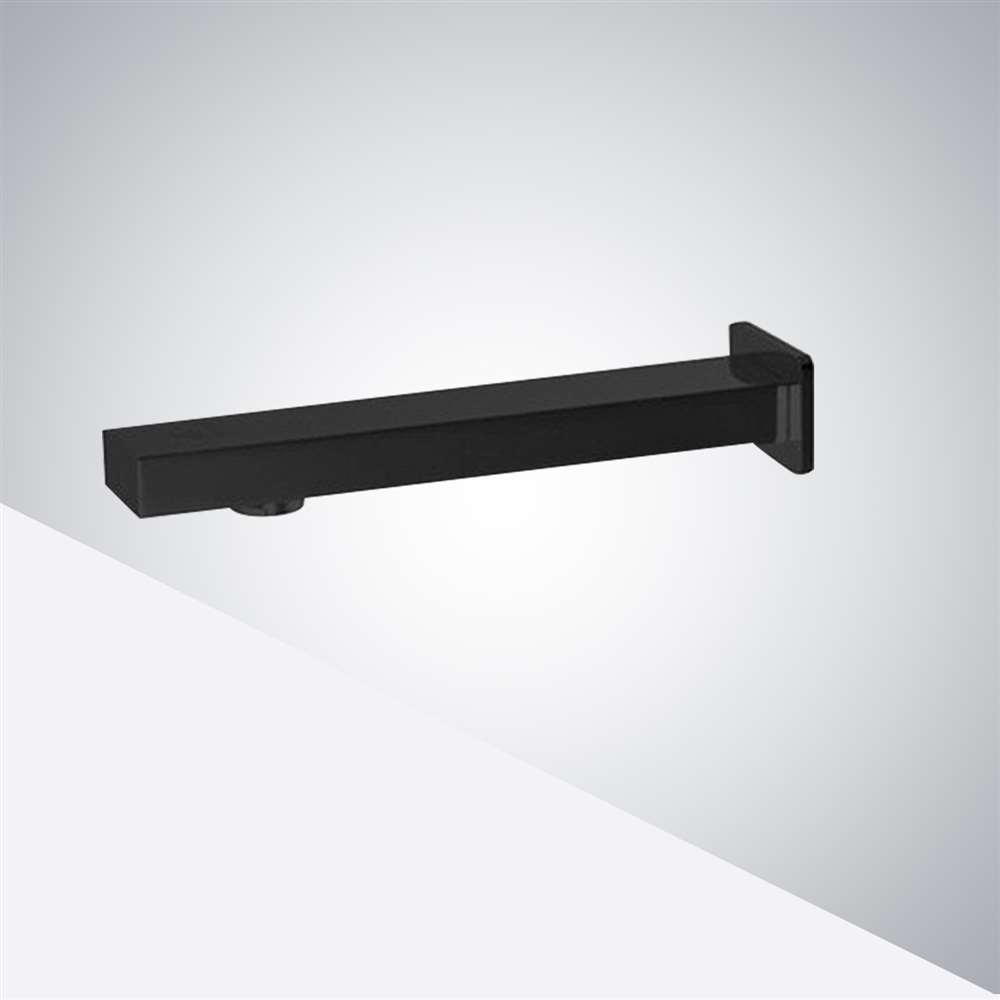
FS15066
Denver Wall Mounted Square Automatic Matte Black Sensor Faucet
“Exceptional Build Quality”
Why This Review Matters
- Facility-services reviewer
- Commercial restroom context
- Water-control components evaluated
- Finish maintenance discussed
Product Specifications
Wall-mounted automatic sensor faucet in matte black with AC/DC power capability, commercial hot/cold configuration, self-adjusting detection behavior and a listed 10–125 psi operating range.

FS6108E
Florenza Chrome Commercial Automatic Motion Sensor Faucet
“Great Design Works flawlessly”
Why This Review Matters
- Commercial contractor context
- Eight-faucet installation
- Material quality compared with prior projects
- Installation effort discussed
Product Specifications
Chrome single-hole deck-mount commercial sensor faucet with AC/DC power, adjustable 6.2–12.4-inch sensing distance, 0.05–0.6 MPa operating pressure and sub-second opening response.

FS-201R
Bravat Commercial Motion Chrome Automatic Sensor Faucet
“Awesome”
Why This Review Matters
- Architecture reviewer
- Contractor-installed fixture
- Additional units purchased after installation
- Commercial sensor performance evaluated
Product Specifications
Chrome brass automatic sensor faucet with AC110–220V/DC6V power, factory-set 10-inch detection zone, automatic 30-second timeout, vandal-resistant aerator and ADA-oriented commercial configuration.
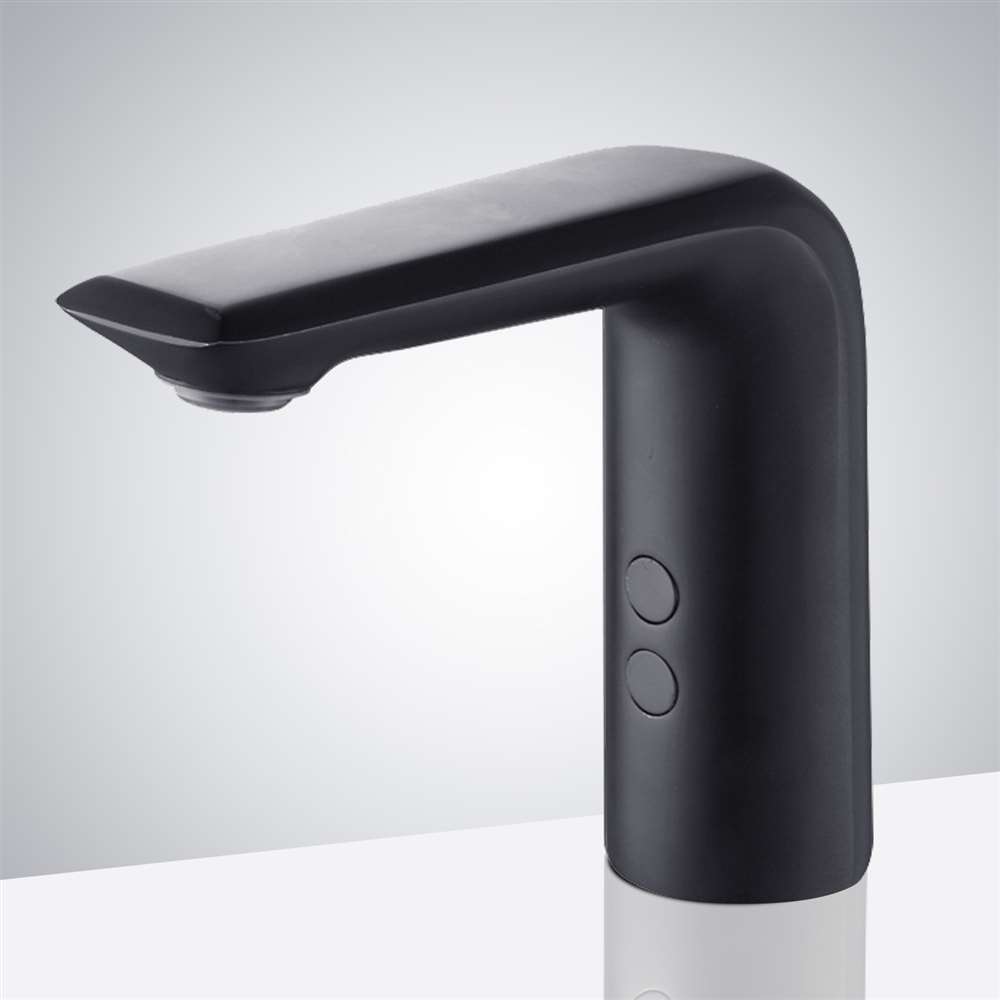
FS15069MB
Fontana Commercial Touchless Automatic Matte Black Finish Sensor Faucet
“Love it! Looks amazing!”
Why This Review Matters
- Mechanical-services reviewer
- Eight-unit office installation
- Product support discussed
- Commercial quality assessed
Product Specifications
Single-hole matte-black brass sensor faucet with AC/DC power, 0.1–0.6 MPa working pressure, 4.5 L/min listed flow, preset 15 cm detection zone and ADA-compliant commercial configuration.

FS-509MB
Solo Black Touchless Motion Activated Sink Faucet
“Less Splash During Usage”
Why This Review Matters
- Architecture/design reviewer
- Hospitality application
- Splash behavior evaluated
- Basin clearance and maintenance discussed
Product Specifications
Matte-black sensor faucet with 7.87-inch overall height, 4.13-inch spout length, 0.05–0.7 MPa water pressure, DC6V power, 25 cm sensing distance, 0.5-second delay and 60-second automatic cutoff.