
How Architects Should Compare IR, ToF and mmWave Sensor Faucets
To compare IR, ToF and mmWave sensor faucets responsibly, architects must look beyond the phrase “touchless.” The defensible choice is the sensing-and-plumbing assembly that performs reliably with the specified basin, user reach, lighting, adjacent fixtures, control system and maintenance plan.
The essential comparison: sensing physics is only the beginning
Conventional active infrared (IR) normally uses reflected near-infrared light intensity to infer that a hand or object is present. Optical time-of-flight (ToF) also uses light—commonly infrared—but estimates distance from the time or phase characteristics of the returned signal. Millimeter-wave (mmWave) sensing uses high-frequency radio waves and, depending on its radar architecture and software, can derive information about range, movement and sometimes direction.
These are sensing principles, not guarantees about an installed faucet. Valve actuation, control firmware, detection-zone design, surface conditions and user behavior determine what actually happens at the lavatory. A well-integrated IR system can outperform a poorly integrated ToF or radar system; the reverse can also be true.
There is no credible basis for declaring one universal winner without a controlled, application-specific trial. Optical ToF engineering literature documents cover-window crosstalk and ambient-light effects; radar engineering literature demonstrates motion, range and gesture capabilities but does not automatically establish faucet-level reliability.
IR vs. ToF vs. mmWave: how each sensor recognizes a user
These simplified technical diagrams describe typical sensing behavior rather than a specific manufacturer’s product or guaranteed performance in a finished restroom.
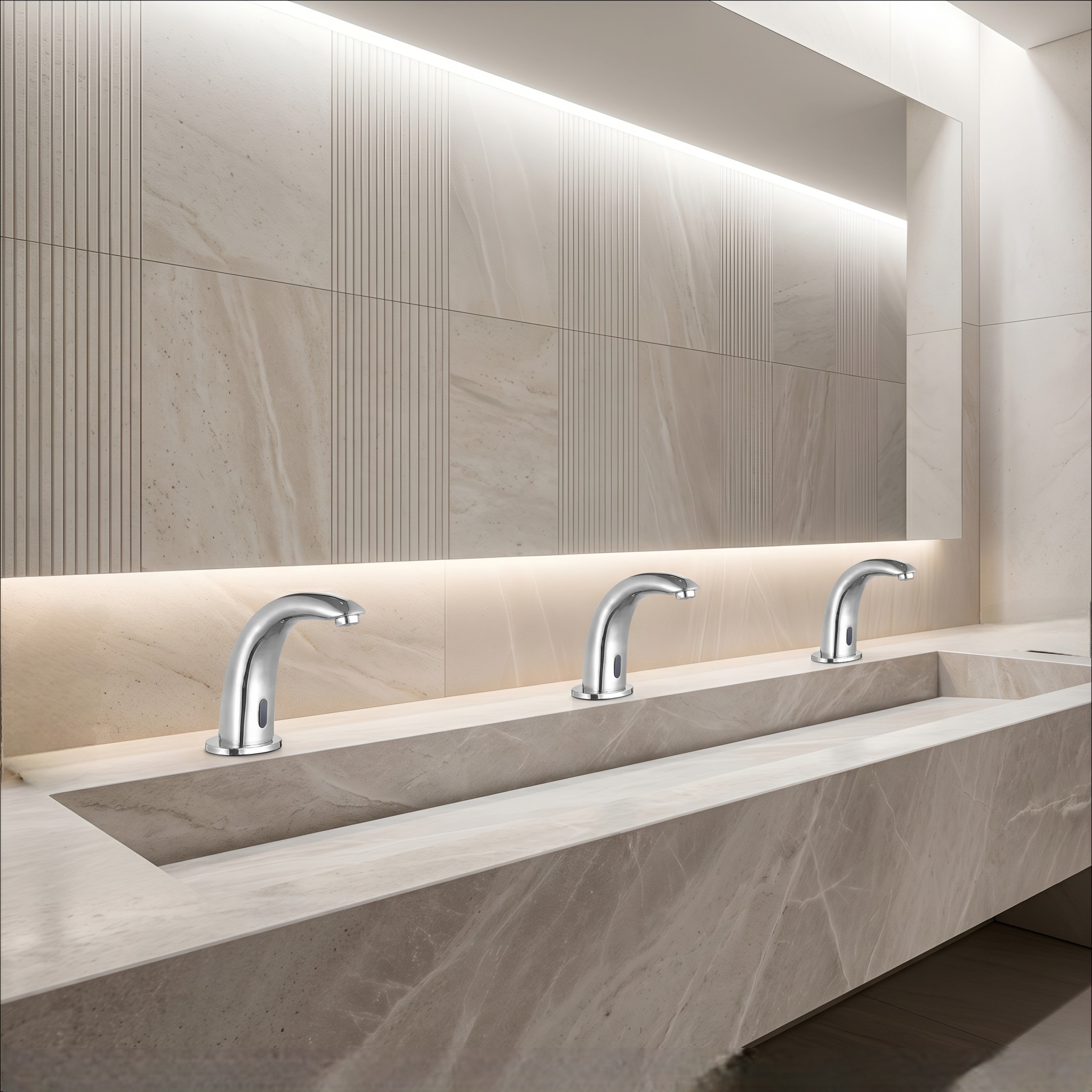
Active IR
Advantages: established architecture, familiar servicing, often compact integration. Watch points: background reflections, dark or bright surfaces, changing sunlight and sensor-window contamination can affect poorly controlled installations.
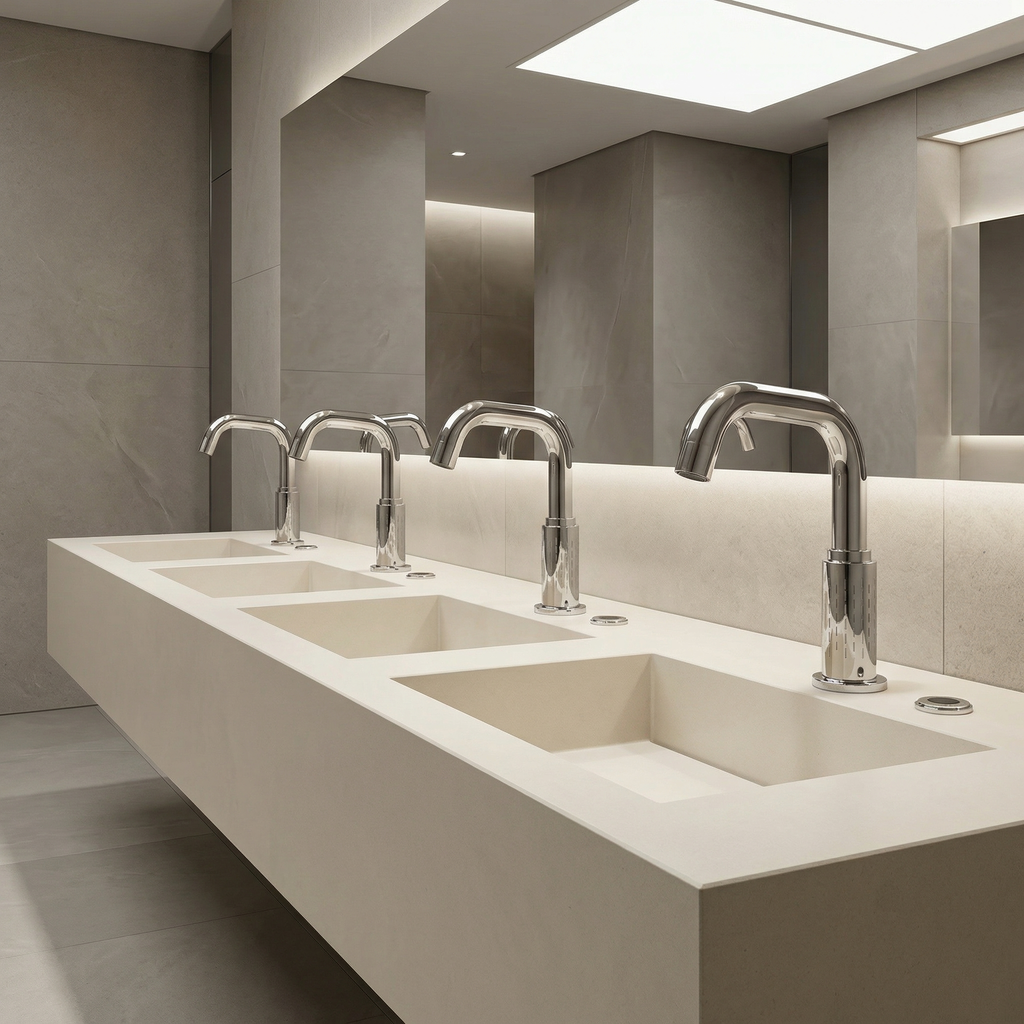
Optical ToF
Advantages: distance-aware decisions can help reject targets outside an intended zone. Watch points: crosstalk at the cover glass, reflectivity, ambient IR, optical alignment and zone thresholds remain material.
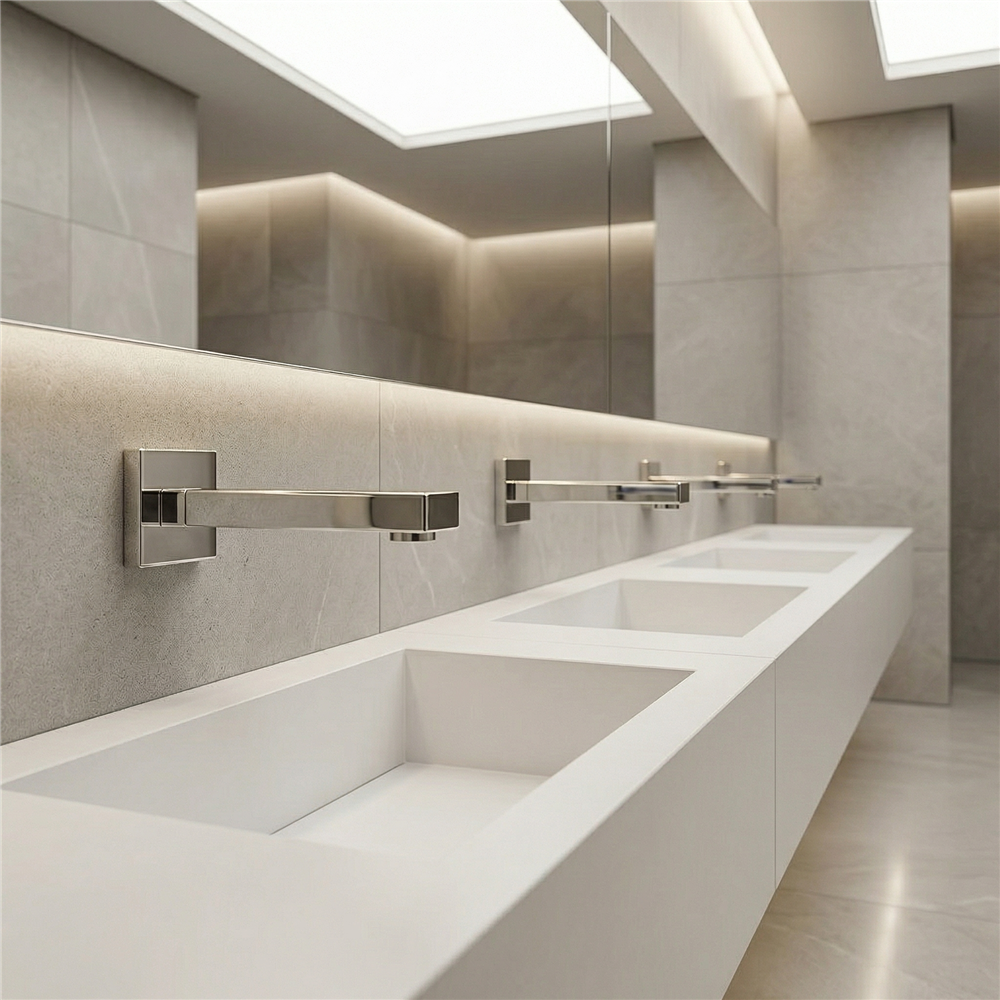
mmWave radar
Advantages: less dependent on room lighting; appropriately designed units may detect range or movement through compatible nonmetallic covers. Watch points: RF reflections, adjacent users, metallic surroundings, power needs and the controller’s classification logic.
| Architectural question | Reflected-intensity IR | Optical ToF | mmWave radar |
|---|---|---|---|
| Primary detection signal | Amount or pattern of returned IR light | Optically measured distance, sometimes multi-zone | Radio-frequency returns interpreted for motion, distance or angle |
| Room lighting | May be influenced by strong ambient IR or glare; modulation helps | Not immune to external infrared interference | RF detection is not driven by ambient light |
| Dark, glossy or reflective finishes | Check threshold and false triggers for actual basin | Check optical return and cover-window crosstalk | Check RF multipath and mounting behind/near metal |
| Intentional sensing zone | Optical field and threshold must be tuned | Distance window can support more explicit range gating | Requires appropriate range/angle filtering and hand classification |
| Serviceability | Evaluate lens cleaning, range settings and controller availability | Also evaluate optical calibration and cover-window replacement | Also evaluate software settings, RF antenna placement and diagnostics |
| Specification decision | Do not infer reliability from the sensor label. Require an identified production model and a tested faucet–basin–controller assembly. | ||
Basin geometry can matter more than the sensing acronym
The same sensor can behave differently when the deck setback changes, the spout projects farther into the bowl or the bottom of the basin presents a strong reflecting surface. The designer should overlay the proposed activation envelope on a sink section and confirm that normal handwashing takes place within that envelope, where the water stream lands comfortably.
Drawings should show the sensor location and orientation, spout projection, bowl depth, backsplash, drain, underside service space, power connection and hot/cold mixing arrangement. A mirrored backsplash, dark stone trough, glossy vessel basin or densely spaced multi-user sink adds different verification needs. Those conditions cannot be solved on a generic faucet cut sheet alone.
Ask for a coordinated fixture section
Require a manufacturer-provided or project-developed section showing a representative hand position relative to the sensor detection envelope and discharge stream. Record countertop elevations, ADA-relevant clearances, installation tolerances and access for solenoid, control module and mixing device.
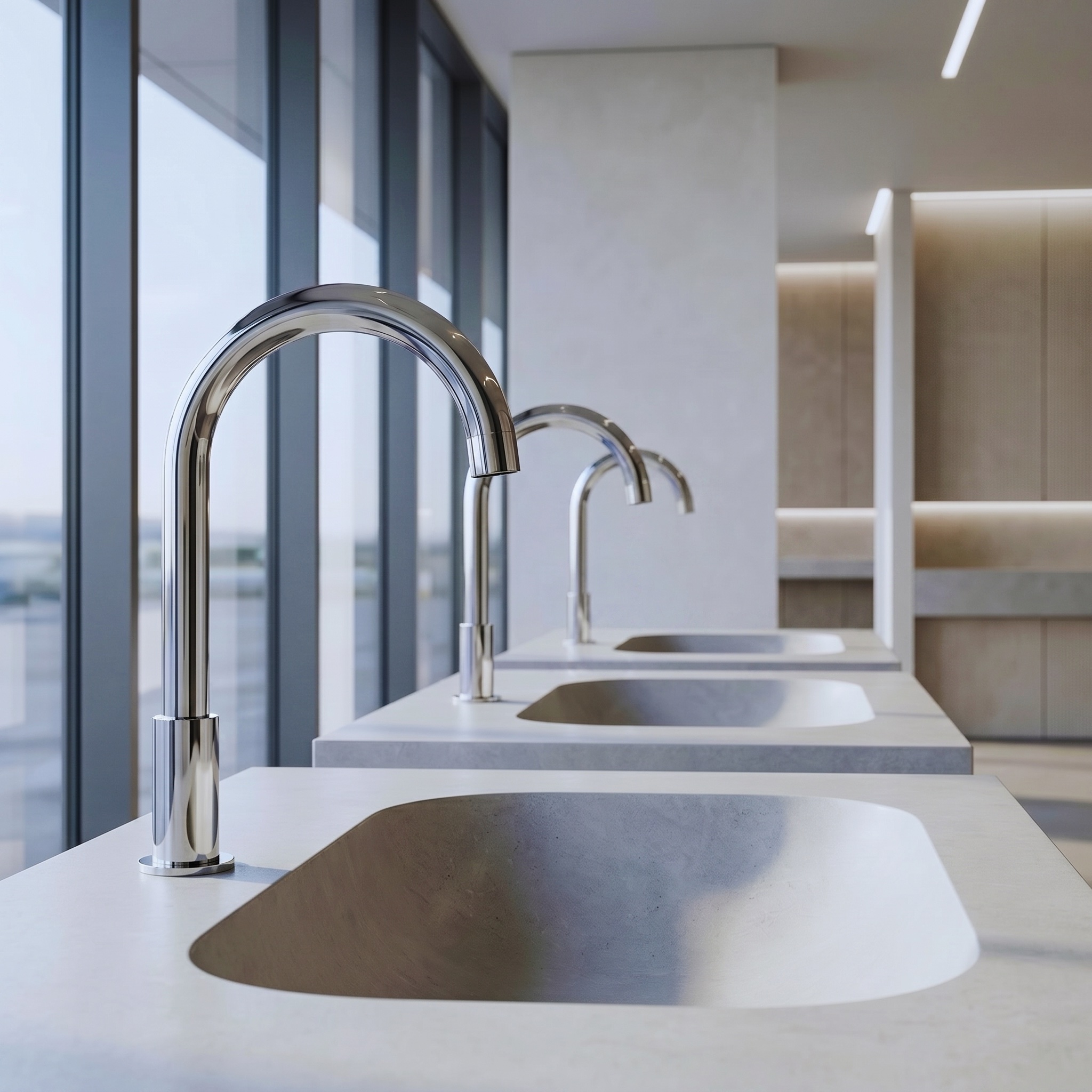
Application-based design scenarios for commercial restrooms
These scenarios are hypothetical specification exercises. Their purpose is to identify the evidence an architect should request—not to report invented project outcomes or assert a preferred brand or sensing category.
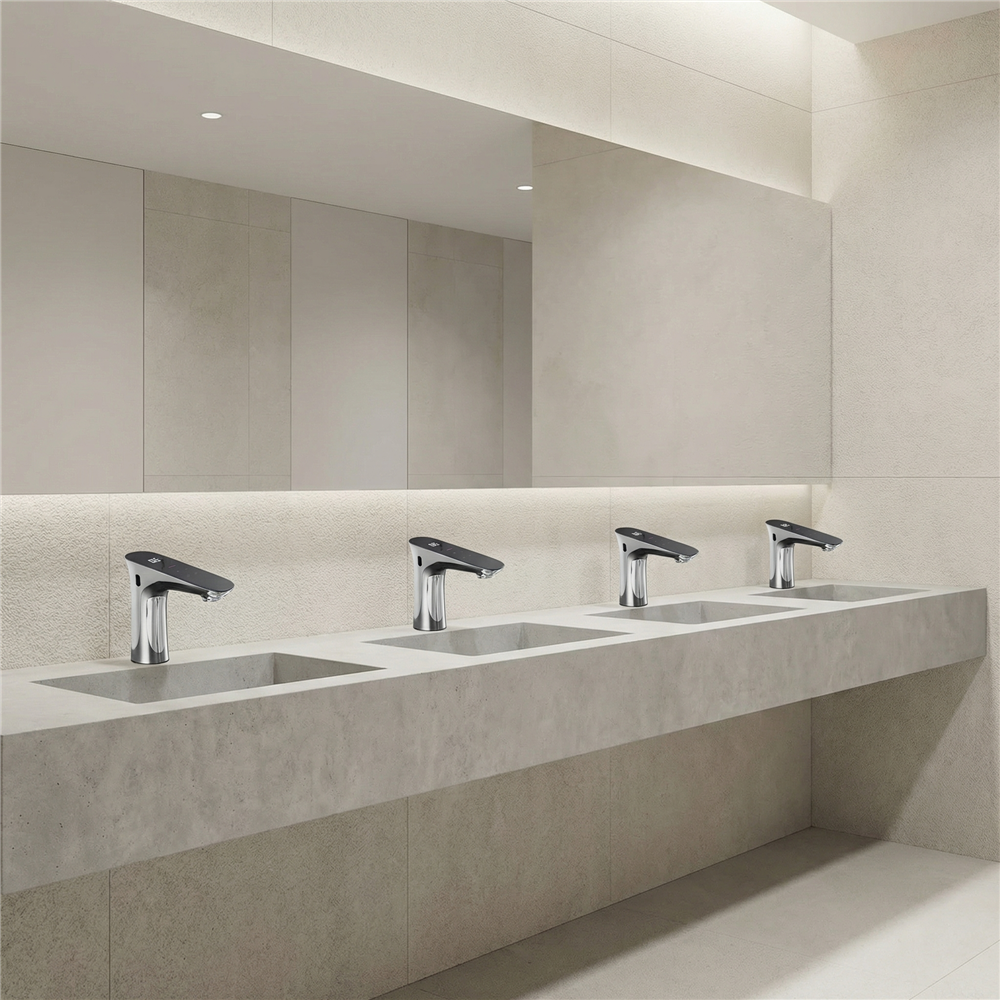
Controlled lighting and standard porcelain basins
Use a conventional IR system as a viable baseline, then compare the same installed geometry against ToF and radar models only if there is an identifiable reliability, access or maintenance objective. Collect activation and shutoff data across ordinary users and cleaning conditions.
Design question: Does additional detection sophistication produce a measurable advantage in this particular restroom?
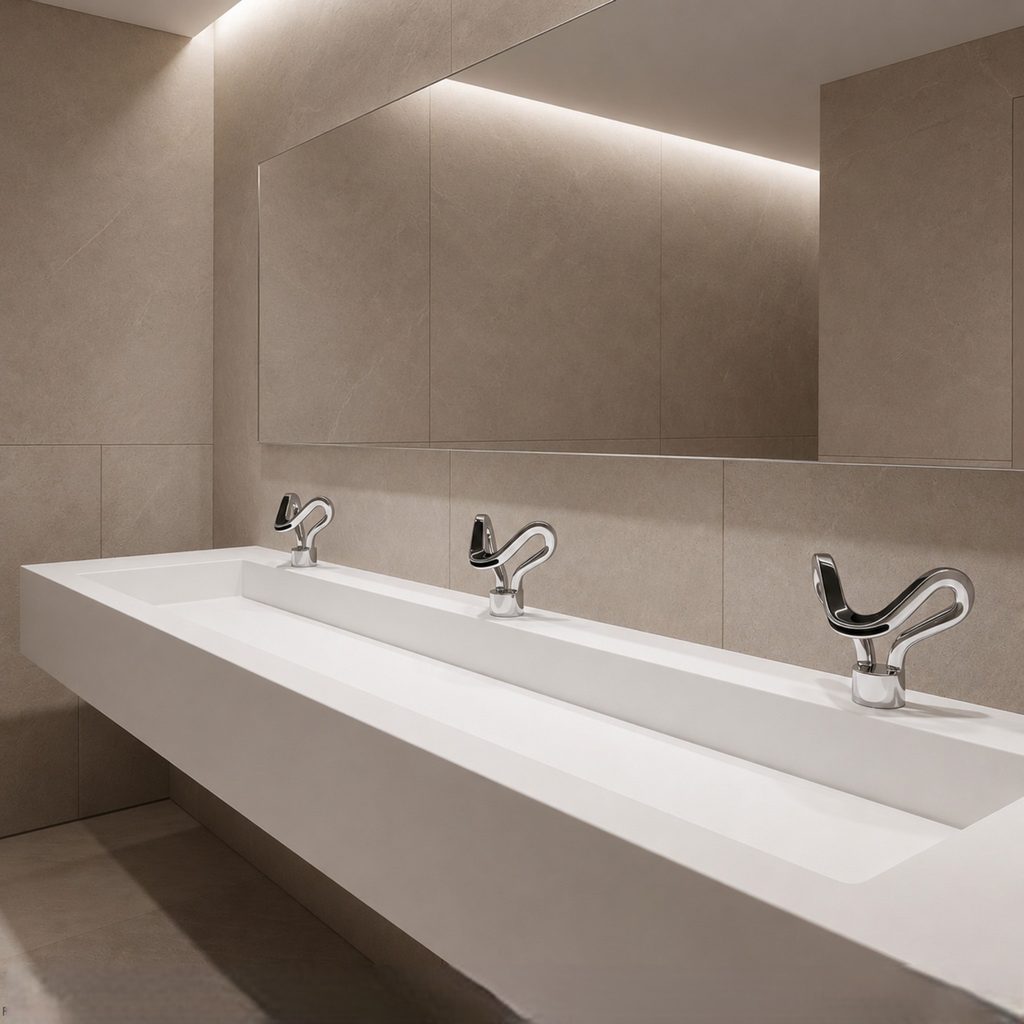
High throughput and adjacent users
Simulate standing queues, sleeves passing near neighboring bowls, repeated wet-hand movements and rapid use cycles. Compare the likelihood of cross-activation, delayed shutoff and service interruptions. A sophisticated wide-angle sensor is not helpful if it repeatedly detects movement outside its intended bowl.
Design question: Can the system reliably isolate one user at one fixture under crowded conditions?
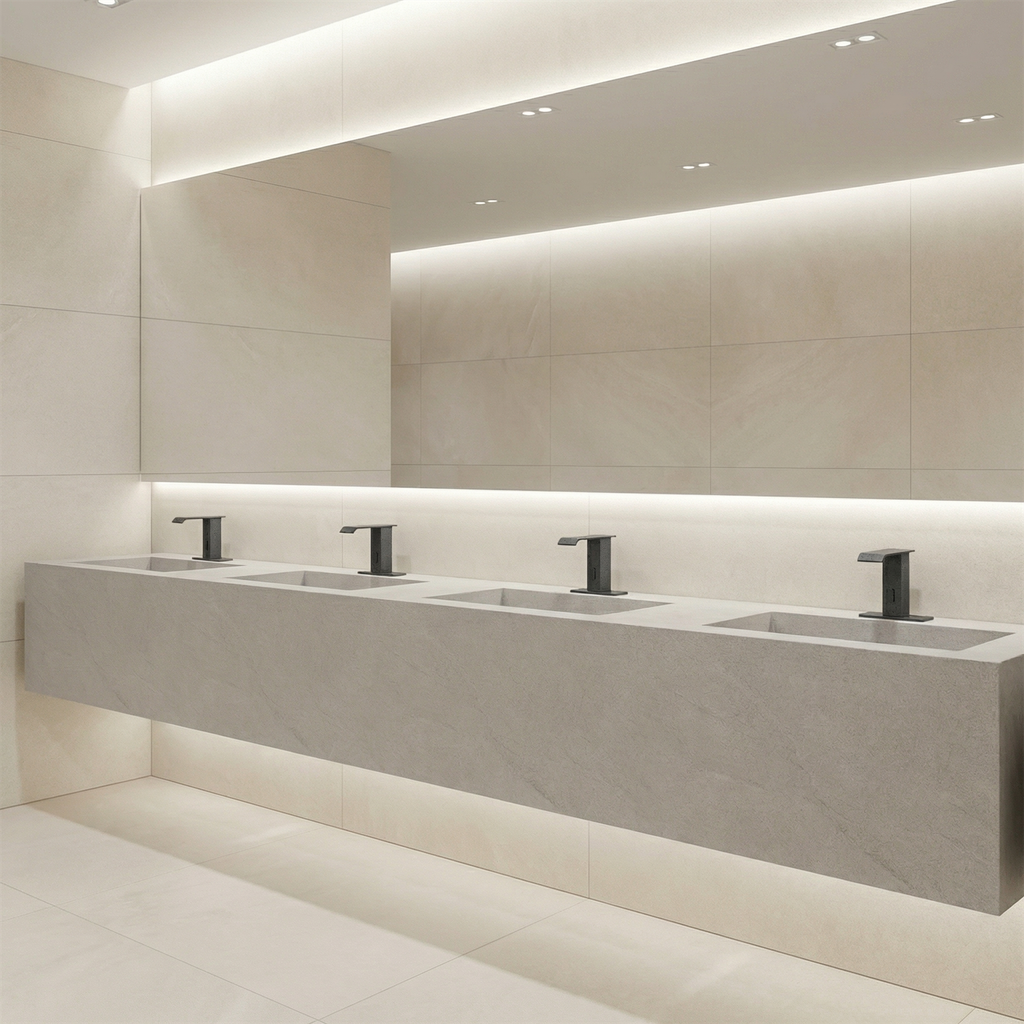
Polished stone, reflective backsplashes and vessel sinks
Test the production finish and lighting design at morning and evening exposures. IR and optical ToF require attention to optical returns; radar requires confirmation of antenna placement, metal shielding and RF reflections. Evaluate the whole installation rather than selecting by trim aesthetics.
Design question: Does the actual finish-and-basin assembly maintain a stable hand-detection boundary?

Infection-control and maintenance constraints
Coordinate fixture selection with the facility’s water management and infection prevention teams. Assess splash behavior, drain proximity, temperature management, cleaning access and potential stagnation. Sensor type by itself is not evidence of pathogen reduction or suitability for a clinical application.
Design question: Can the entire fixture assembly be safely managed, cleaned, monitored and maintained?
A practical mock-up protocol before approval
Architects can specify a repeatable comparison without prescribing a preferred sensor architecture. Use the same basin, spout reach, water pressure, water temperature and nominal flow for candidate fixtures wherever their installation constraints allow. Record the conditions in the commissioning report so a favorable result cannot be attributed solely to a different basin or hydraulic setup.
| Test condition | What to record | Why it matters |
|---|---|---|
| Normal hand entry | Activation success, response time, hand position and repeatability | Tests whether ordinary users can discover and hold the active zone |
| Different users and garments | Responses to differing hand size, skin reflectance, gloves and sleeves | Exposes geometry and target-response variability |
| Unoccupied fixture | False activations during a documented idle observation period | Separates sensor noise from actual intended use |
| Adjacent person / fixture | Cross-activation and unintended run duration | Critical in crowded, multi-user trough applications |
| Bright / low / changing light | Missed activations and false activations at planned exposures | Tests lighting-dependent behavior, particularly optical systems |
| Wet lens / cleaning conditions | Recovery after approved cleaning and normal wet operation | Checks realistic maintenance and environmental effects |
| Power loss / restoration | Safe water-off state, recovery, settings retention and battery status | Verifies building operations rather than sensing alone |
| Hydraulic delivery | Measured flow, volume per use event, pressure, shutoff lag and splash | Distinguishes valve and water performance from detection |
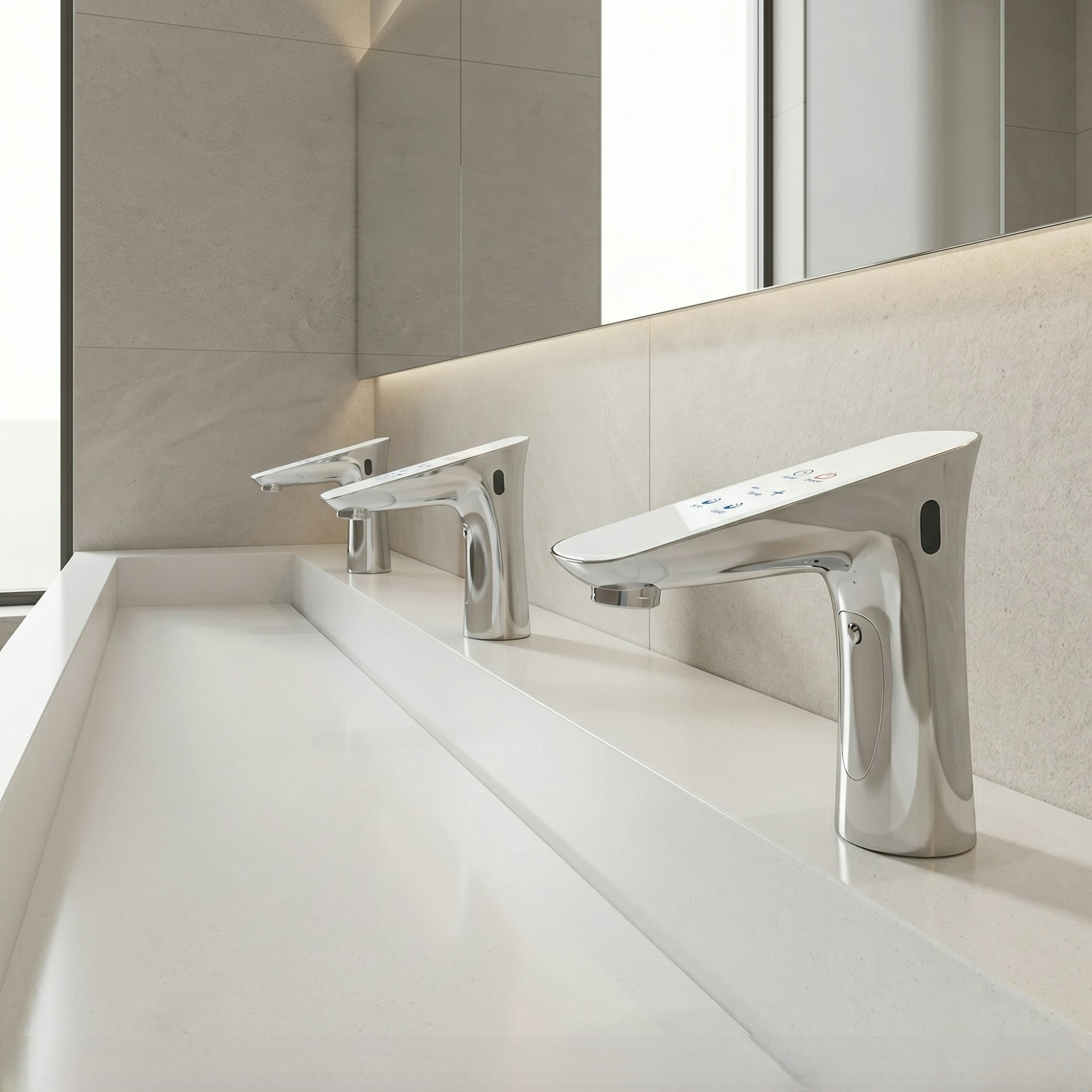
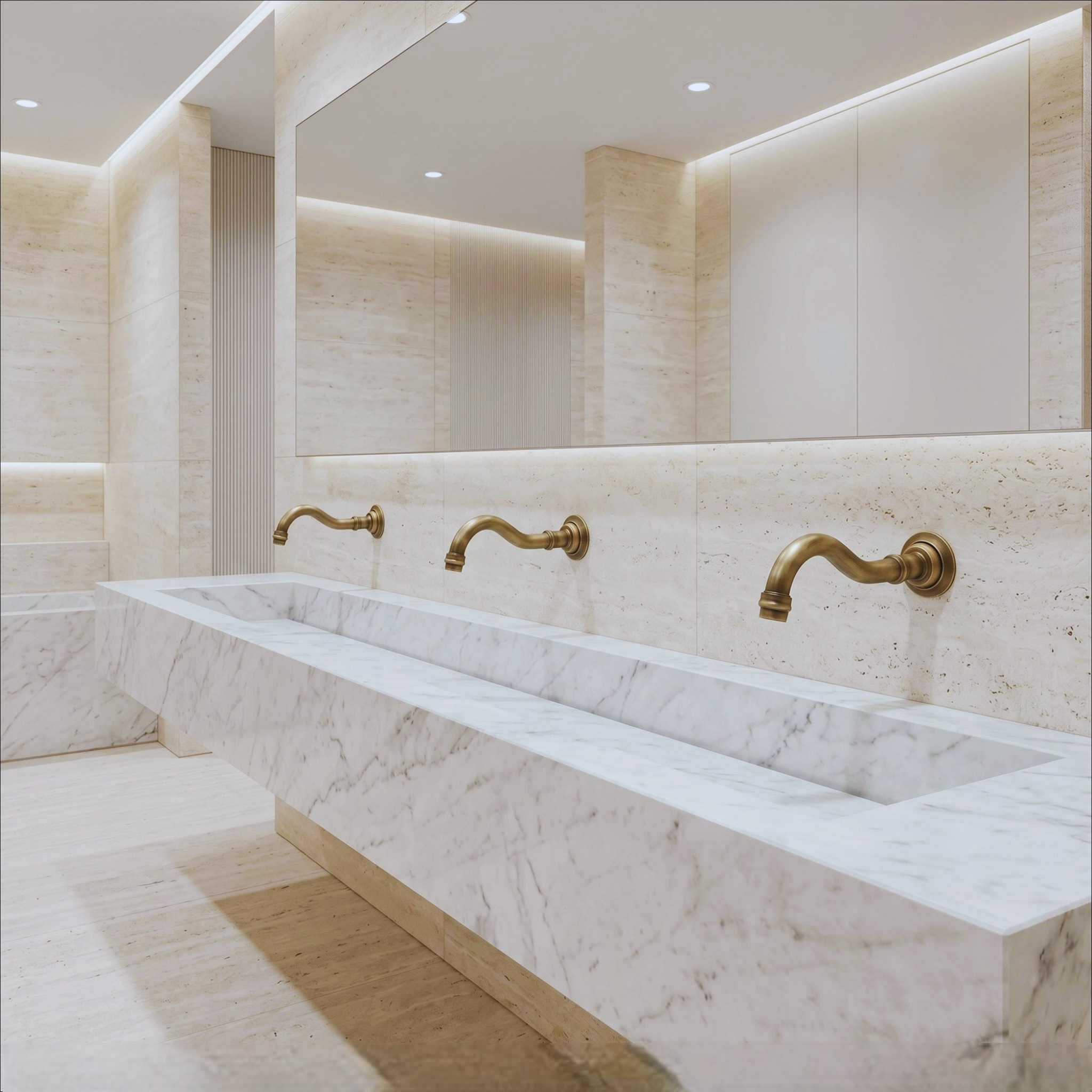
View sample acceptance criteria and data-capture method
Example project-specific criteria—not a code requirement: At each modeled condition, perform 100 intentional activation attempts; set an agreed success-rate threshold before testing. Conduct a timed unattended observation, report any false-start events and their duration, and capture both median and 95th-percentile time from hand entry to stable water flow and from hand exit to complete shutoff. Document the exact sample count, test personnel, operating pressure, lighting, sensor sensitivity and firmware version.
For each technology, compute successful activations / attempted activations, false activations per observed hour, response time distribution, water volume per handwashing event and interventions per operating period. Thresholds must be selected in the project specifications, justified by operational need and approved with the owner and commissioning authority.
Specification language that protects the design intent
Require documented installed-system performance rather than a sensor name alone. A defensible procurement package identifies the production faucet model and control module, detection method, detection-zone drawing, pressure and flow range, electrical architecture, shutoff behavior, mixing and temperature protection, component certifications, access space and replaceable parts.
Performance submittal
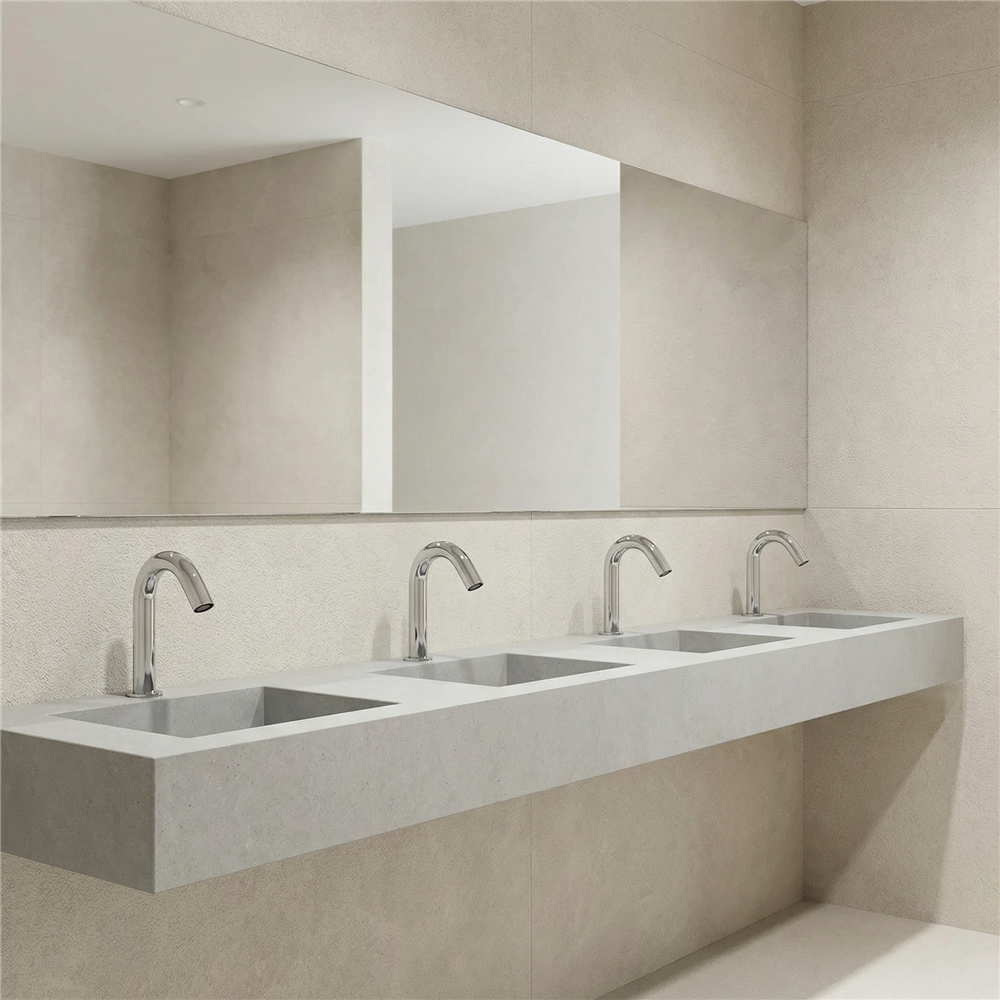
Read full performance submittal
- Actual sensor detection type and, if applicable, ranging or motion algorithm description.
- Diagram of the installed detection envelope at the proposed sink, with range settings and tolerances.
- Activation and shutoff performance supported by test procedure and environmental conditions.
- Power source, outage behavior, battery service access, solenoid and controller placement.
- Cleaning instructions, calibration procedure, software support and replacement-part availability.
Plumbing and coordination submittal
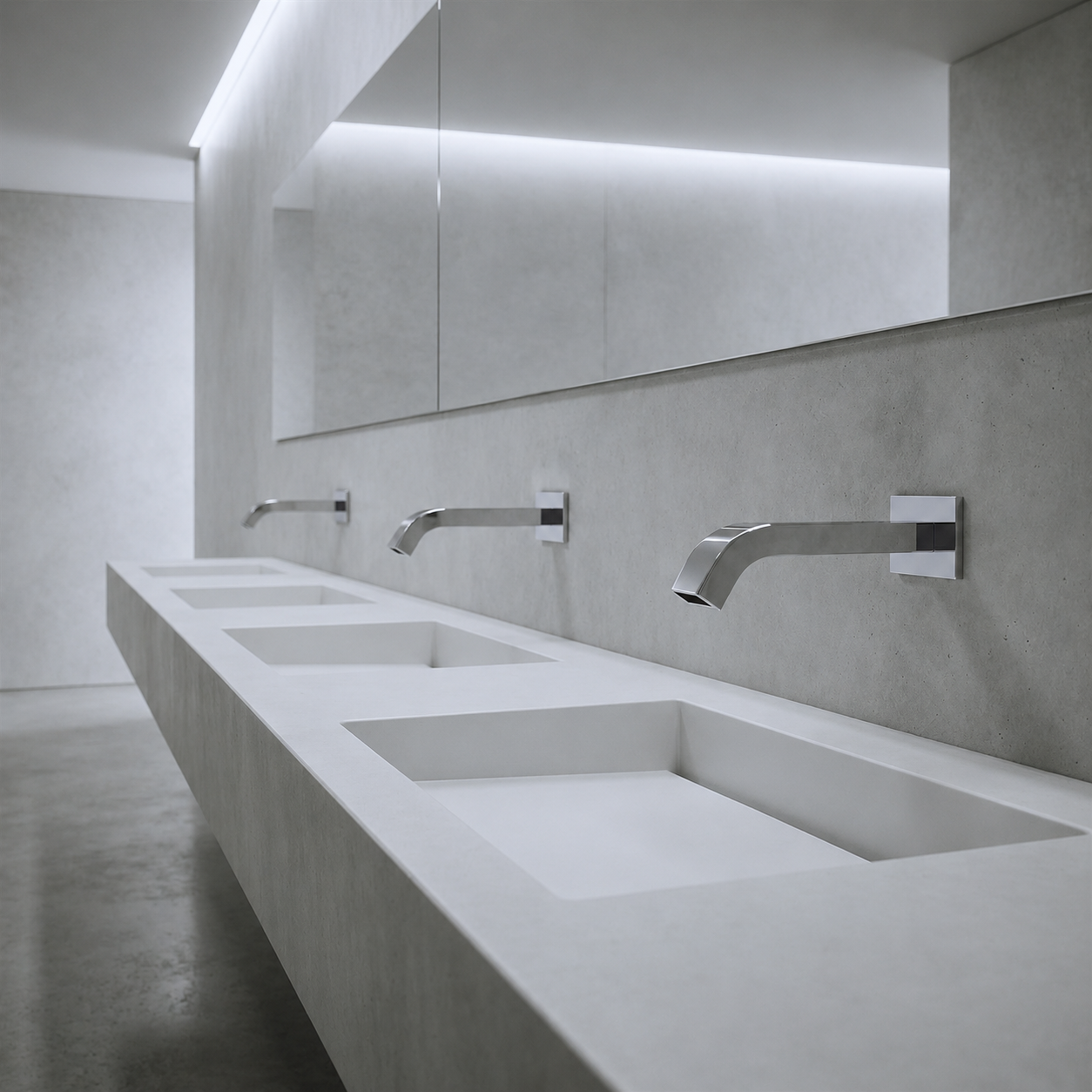
Read full plumbing checklist
- Flow rate at stated test pressure; measured event consumption where claimed.
- Spout reach and stream location relative to bowl geometry, drain and accessible use.
- Temperature and mixing strategy, including applicable scald-protection requirements.
- Evidence for applicable plumbing supply fitting and drinking-water-contact certifications.
- Rough-in dimensions, service access, shutoffs, wiring and facility maintenance plan.
Accessibility, plumbing and water performance: keep claims separate
ADA 2010 and local accessibility rules
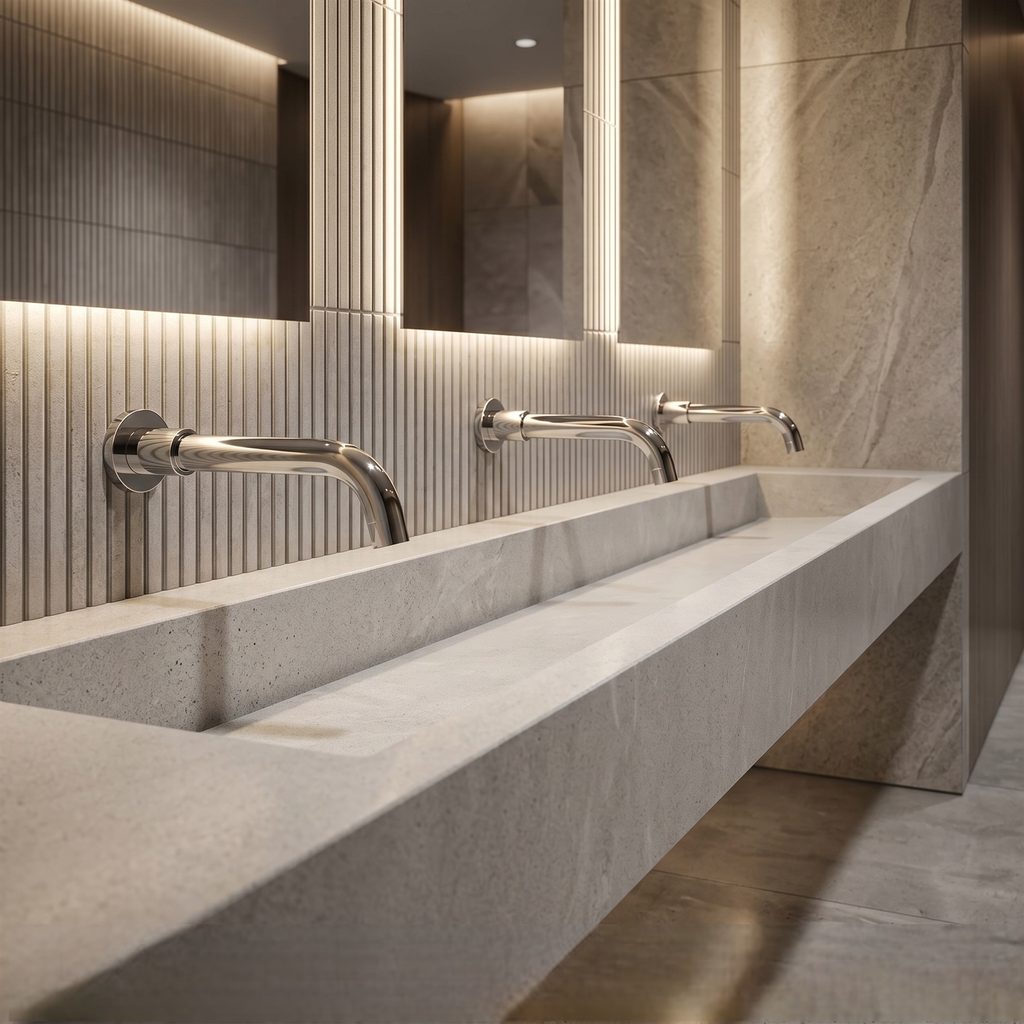
Read accessibility requirements
U.S. ADA §606.4 directs faucet controls to meet §309. Accessible lavatories must also satisfy applicable approach, height and knee/toe clearance criteria. The U.S. Access Board notes that motion-activated controls can support ease of use and are not subject to the ten-second minimum that applies to hand-operated metering faucets. A touchless label alone does not certify a complete accessible installation.
Flow limits and actual water use
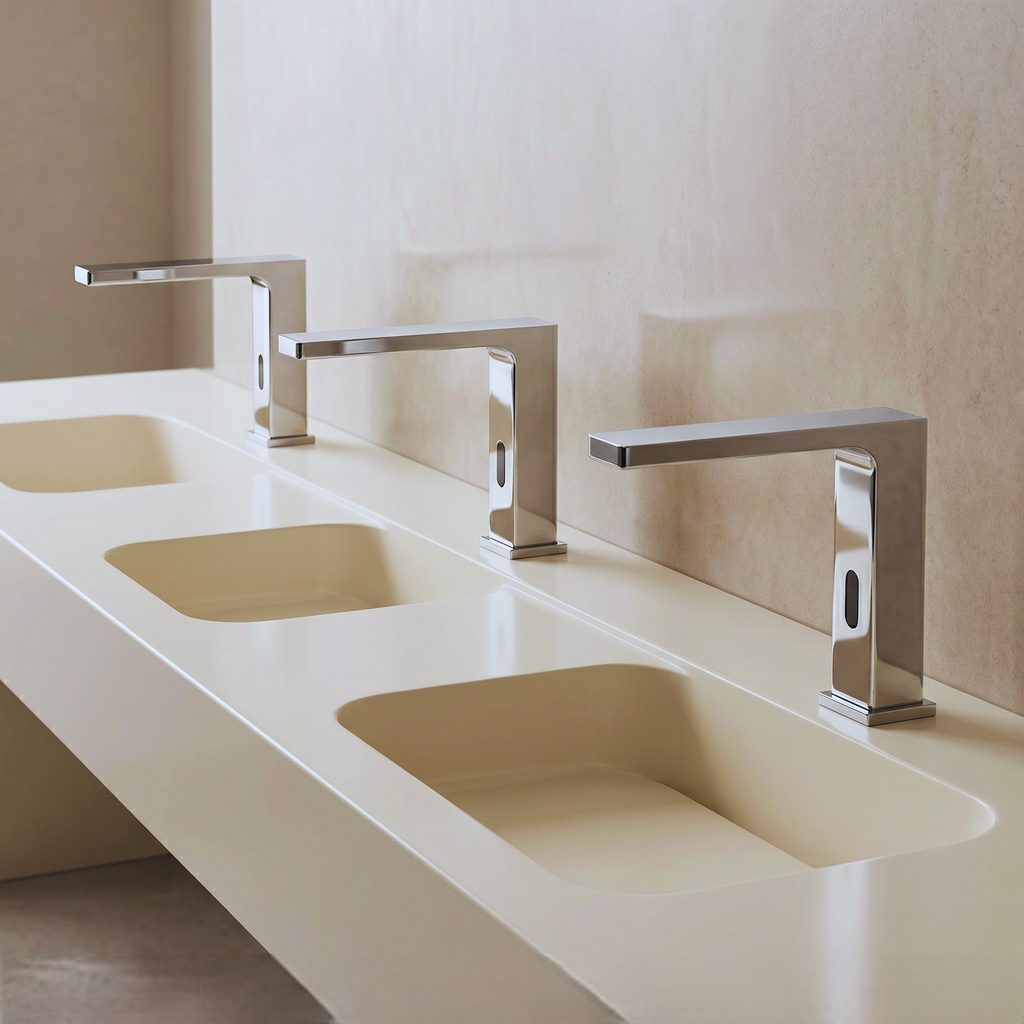
Read water-performance guidance
EPA and U.S. DOE guidance identify 0.5 gpm (about 1.9 L/min) as the common maximum for non-metering public lavatory faucets under referenced plumbing standards and codes. Metering fixtures may be subject to a volume-per-cycle requirement. These are not sensor-accuracy ratings; confirm the applicable jurisdiction and fixture classification. WaterSense residential faucet labeling should not be treated as blanket approval for public-use lavatories.
Fitting and water-contact standards
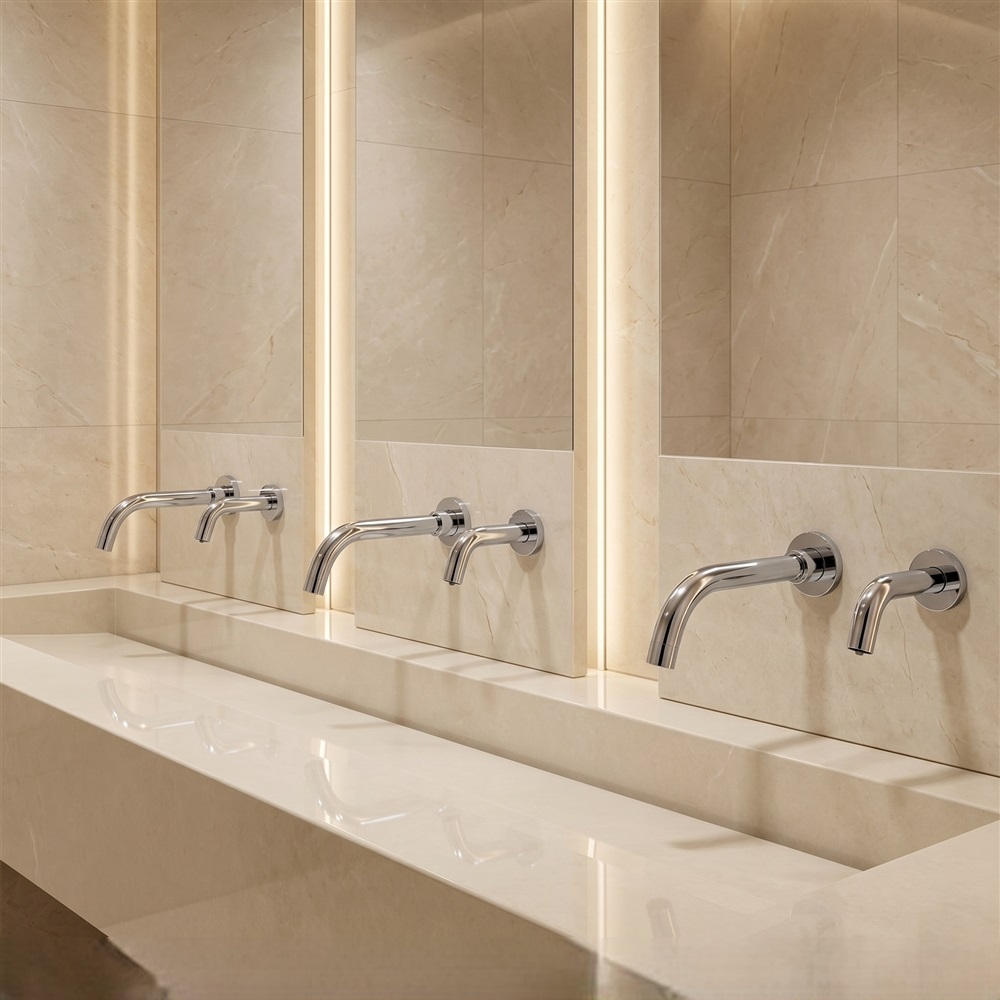
Read product-evidence guidance
Review applicability of ASME A112.18.1/CSA B125.1 for plumbing supply fittings and NSF/ANSI/CAN 61 and 372 for water-contact health effects and lead content. Confirm current, model-specific certification evidence and jurisdictional rules rather than claiming that a sensing technology is itself certified to all of these standards.
A decision matrix for the architect and owner
A successful comparison evaluates evidence, not hype. Use the following unweighted criteria or assign project-specific weights in a design meeting; do not transfer rankings from one basin arrangement or building type to another.
| Review dimension | Evidence to require | Owner sign-off question |
|---|---|---|
| Detection reliability | Mock-up success and false-activation data | Does it work with the specified bowl and real user traffic? |
| Accessibility | Coordinated drawings and observed inclusive-use tests | Can the intended user population operate it without awkward positioning? |
| Hydraulics | Flow/pressure curves, event water volumes, splash review | Is flow comfortable, code-appropriate and efficient in use? |
| Power and controls | Power-failure test, electrical data and shutoff behavior | Can facilities restore service predictably? |
| Maintainability | Spare-parts schedule, cleaning procedures, access section | Who services the equipment, with what tools and at what cost? |
| Health considerations | Water-management and risk-assessment review as appropriate | Does the assembly fit the facility’s health and cleaning protocols? |
| Compliance | Project-specific code schedule and model certifications | Is all required evidence documented for this jurisdiction? |
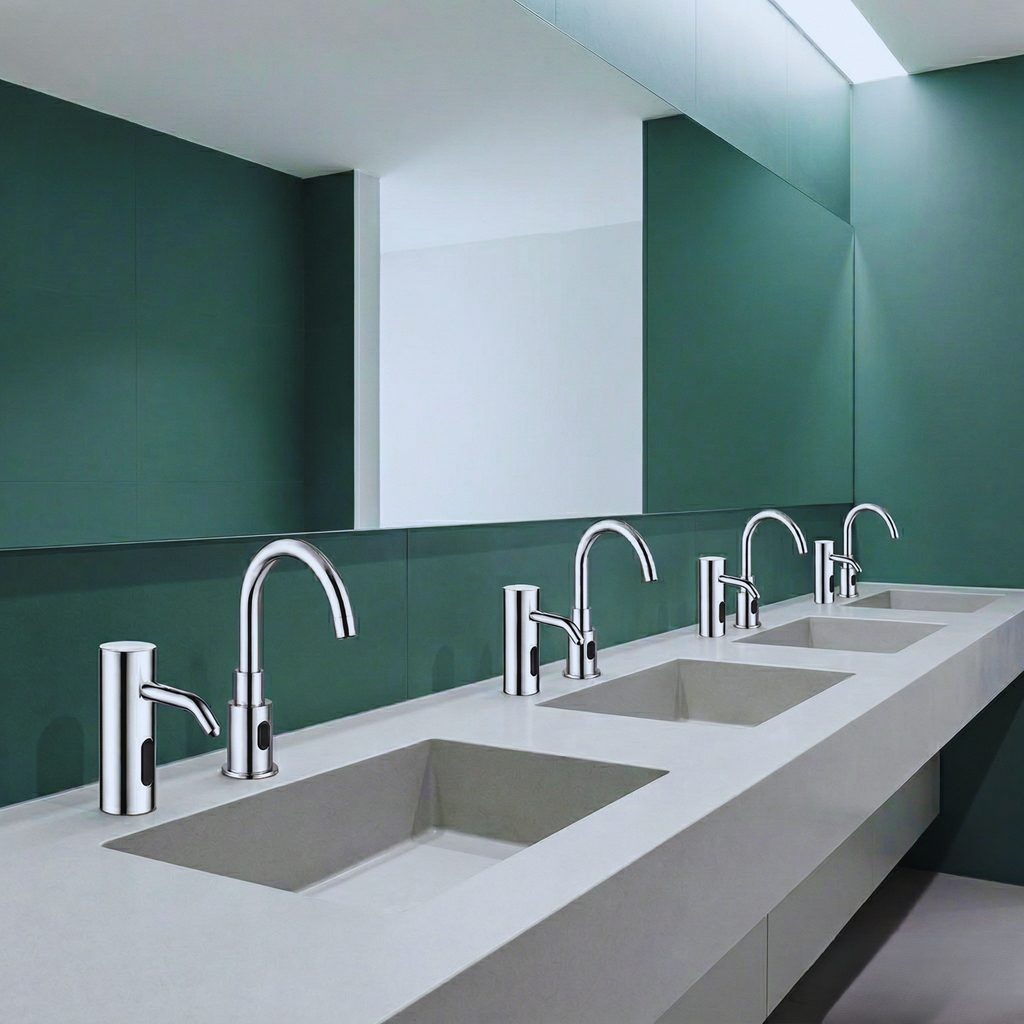
The resulting answer will often be context dependent. Conventional IR may be fully adequate where lighting and geometry are straightforward. Optical ToF may warrant closer evaluation where a defined depth range is valuable. mmWave may deserve consideration where lighting independence or concealed sensing offers a practical integration benefit. None should be approved solely on that anticipated advantage.
Frequently asked AEC specification questions
Is ToF simply a better version of infrared sensing?
No. Optical ToF and reflected-intensity IR process light-return information differently. Distance measurement may support clearer zone selection, but optical crosstalk, reflectance and external light still matter. Evaluate the production controller and its installed performance.
Are mmWave faucets immune to false activation?
No. Although radar is not dependent on ambient illumination, reflected radio waves and motion outside the intended hand zone can complicate detection. Radar type, beam geometry, mounting material and software filtering determine whether a given product avoids cross-activation.
Which sensor faucet saves the most water?
No general answer follows from the acronym. Compare operating flow, successful handwashing events, valve shutoff timing, unintended runs and observed user behavior. Published field research has cautioned that lower nominal flow does not always mean lower event consumption.
Does choosing touchless automatically achieve ADA compliance?
No. Touchless operation can improve usability, but compliance depends on the entire fixture and accessible lavatory arrangement, including required clearances and any applicable controls. Refer to ADA §§309 and 606 and the adopted local accessibility rules.
Should healthcare projects always use the newest sensor?
No. Selection should be coordinated with infection prevention, facility engineering and the water management program. Water quality, internal wetted components, cleaning, flushing and splash reduction are independent of whether the sensor uses IR, ToF or radar.
Research sources and technical references
These sources include government guidance, standards-body documentation, peer-reviewed studies and foundational sensor engineering materials. Sensor-component documentation is included to explain physics, not to endorse the component supplier or imply that its performance has been validated in a commercial faucet.
Optical ToF cover-window and crosstalk engineering
Application note on cover-window configuration, optical crosstalk, signal-to-noise ratio and external near-IR contributors (2026 revision).
Review optical engineering notemmWave radar technology overview
Technical overview of industrial mmWave radar sensing capabilities and device architectures; not a faucet performance study.
Explore radar fundamentalsRadar range, angle and gesture sensing
Technical application article describing radio-frequency gesture interpretation and operation under varied lighting conditions.
Read technical radar articlePerformance evaluation of water-saving taps
Peer-reviewed field study using high-resolution washroom tap observations; investigates flow, duration, use behavior and volume.
Review field studyElectronic-eye faucet and Legionella study
2012 peer-reviewed hospital comparison of water samples from electronic and manual faucets. Historical, site-specific evidence.
Review PubMed abstractCDC: Water risk in healthcare facilities
Guidance on water-management programs, exposure pathways, sink geometry and reducing splashing near drains.
Read CDC guidanceU.S. Access Board: Lavatories and sinks
Guidance on accessible fixtures and faucet operability under the 2010 ADA Standards.
Read accessibility guideEPA WaterSense: Bathroom faucets
Public versus private lavatory flow context and distinctions in WaterSense labeling.
Review EPA guidanceU.S. DOE: Water-efficient fixtures
Federal purchasing guidance for public lavatory and metering-faucet efficiency requirements.
Read federal purchasing guideASME/CSA: Plumbing supply fittings
Scope and edition information for ASME A112.18.1/CSA B125.1 covering plumbing supply fittings.
Review standard scopeNSF: Faucets and plumbing products
Explanation of drinking-water-contact evaluation and relevant certification considerations.
Read certification guidance